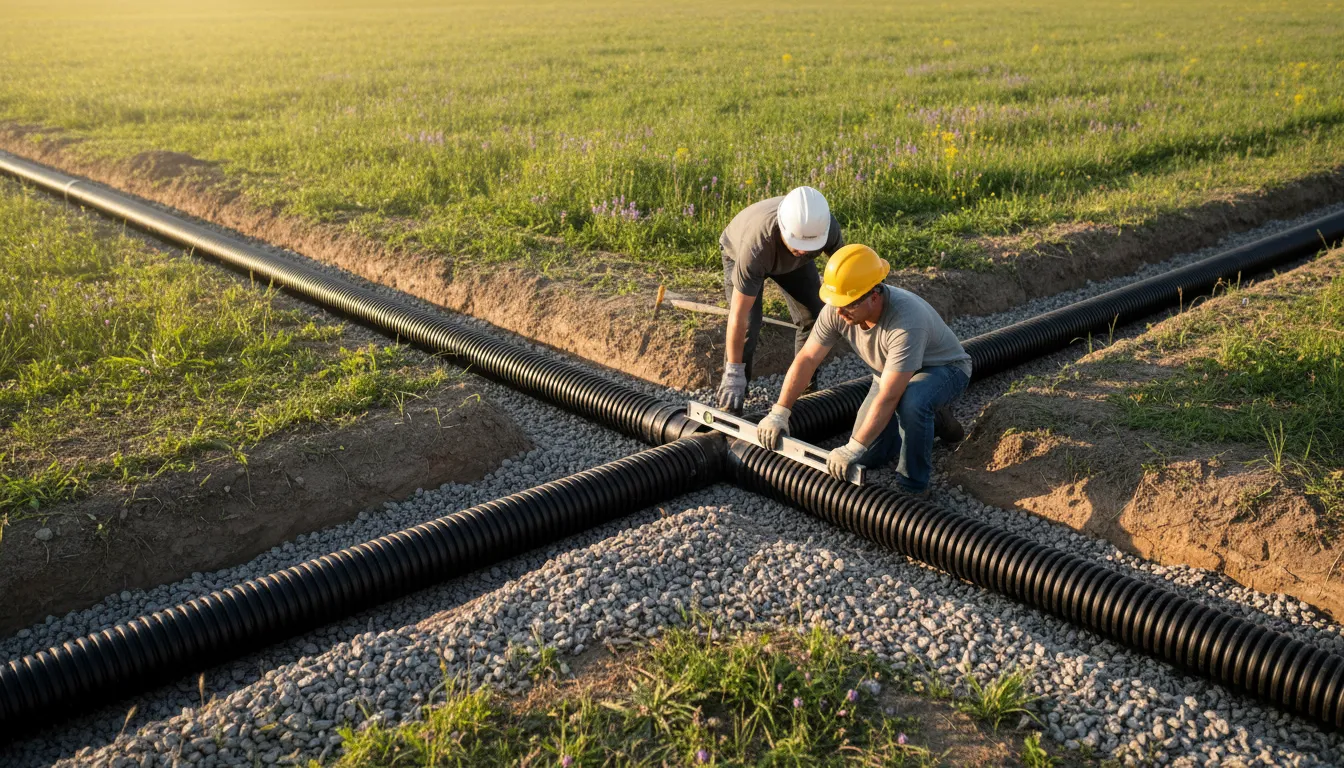
Find the Best Drain Field Repair Companies for Your Business
No obligation • Fast responses • Nationwide coverage

Why you can trust Septic Spot
Septic Spot is a leading United States resource for understanding and comparing septic services. Our editors review providers using consistent criteria and verify key business details. Listings and scores are independent, and companies cannot pay to influence our content.
Search providers near you
Top Drain Field Repair Companies in Rochester, New York Ranked
A failing drain field, also known as a leach field or absorption area, is a serious issue for any Rochester homeowner with a septic system. This critical component is responsible for safely filtering and dispersing treated wastewater into the soil. When it fails, it can lead to sewage backups, environmental contamination, and significant property damage. Understanding the local regulations, diagnostic process, and repair options is essential for protecting your home, your health, and our local waterways like Lake Ontario and the Genesee River. This guide provides the key information you need to navigate the process of diagnosing, permitting, and completing drain field work in Monroe County.
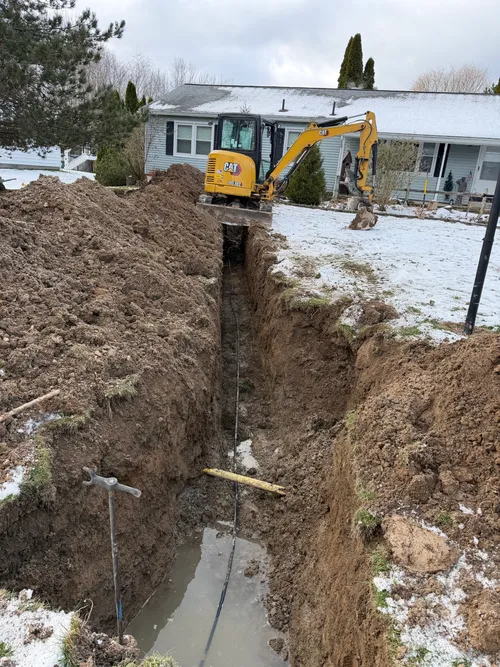
Bianca Excavating
1548 Winterberry Ct, Walworth, NY 14568
Bianca Excavating is a licensed and insured septic service provider based in Rochester, NY. The company offers a range of services including septic tank pumping, inspections, repairs, new system installations, and drain field replacements. Using advanced inspection tools and modern excavation equipment, Bianca Excavating works to diagnose and resolve septic system issues efficiently while minimizing disruption to properties. The business has a long-standing family-owned history serving Ontario and surrounding areas, providing reliable septic solutions tailored to residential and commercial needs. They also offer emergency services when needed.
Chamberlain Septic & Sewer
1835 Ridge Rd Jct, Webster, NY 14580
Chamberlain Septic & Sewer is a family-owned company serving Rochester, NY, and surrounding counties including Monroe, Wayne, and Ontario. With over 57 years of experience, they provide residential and commercial septic system services such as septic tank pumping, inspections, installations, and repairs. Their capabilities include hydro-flushing, power-snaking, and excavation work to address septic and sewer system needs. Founded in the 1960s from a dairy farm drainage operation, the company has grown into a full-service septic and sewer contractor.
Understanding Your Septic System's Drain Field
The drain field is the final stage of a conventional septic system. After solids settle in the tank, liquid effluent flows into a network of perforated pipes buried in trenches filled with gravel or proprietary chambers. This effluent slowly seeps into the surrounding soil, where natural processes provide final treatment. A properly functioning leach field is invisible and odorless. Problems arise when the soil becomes clogged or saturated, preventing absorption. This is often referred to as "system failure" and requires professional attention to assess whether a repair or full replacement is necessary.
Signs of Drain Field Failure
Recognizing early warning signs can prevent more extensive damage and costly emergency repairs. Common indicators of a failing absorption area in the Rochester area include:
- Sewage Odors: Unpleasant smells emanating from drains indoors or in the yard near the drain field location.
- Slow Drains & Backups: Toilets, showers, and sinks draining very slowly or backing up, especially after heavy rain.
- Soggy Ground & Lush Grass: Spongy, wet patches or areas of unusually green, fast-growing grass over the drain field, even during dry weather.
- Standing Water: Pools of grey, foul-smelling water on the lawn's surface.
- Algae Blooms in Nearby Water: Excessive algae growth in nearby ponds or ditches can indicate nutrient-rich effluent is surfacing and running off.
If you notice any of these signs, it's crucial to stop using water extensively and contact a licensed septic professional for an inspection.
The Diagnostic & Inspection Process
A professional evaluation is the first step to confirm a problem and determine its scope. A thorough inspection for potential leach field issues typically involves:
- Locating System Components: The technician will find and expose the septic tank, distribution box, and drain field lines. Monroe County requires tank covers to be accessible at grade for inspection 1.
- Pumping & Tank Inspection: The septic tank is pumped to allow inspection of its structural integrity and the condition of inlet/outlet baffles, which are critical for preventing solids from entering the drain field 2.
- Hydraulic or Dye Testing: This is a key test for the absorption field. A large volume of water (hydraulic load test) or non-staining dye is introduced into the system. The technician then monitors the drain field area for surfacing water or dye, which indicates the soil is no longer absorbing effluent 3.
- Soil Evaluation: For a replacement, a new percolation (perc) test is mandatory. This involves digging test holes in the proposed repair area to measure the soil's absorption rate, which directly determines the size of the new field required 4.
Monroe County Regulations and Permit Requirements
All septic system repair and replacement work in Rochester and Monroe County is strictly regulated by the Monroe County Department of Public Health (MCDPH), which enforces New York State Department of Health Appendix 75-A standards. You cannot legally begin any excavation or construction without following these steps:
- Permit Application: A formal Repair Permit Application must be submitted to the MCDPH along with the required fee (approximately $300 for a new construction/replacement permit, though costs can vary) 5 6.
- Approved Design: The new or repaired system must be designed by a qualified professional to conform to the 2015 Monroe County OWTS Design and Construction Standards and NYS 75-A standards 7.
- Licensed Installer: All construction work must be performed by a qualified, often state-licensed, septic system installer 8.
- Mandatory Inspections: A MCDPH representative must inspect the system during installation. You must request an inspection at least 48 hours before you need it, and no part of the system can be backfilled until it is inspected and approved 9 10.
The property owner is ultimately responsible for ensuring their system is permitted, functional, and maintained.
Key Design and Site Constraints
Local soil conditions and environmental protections create specific rules for drain field construction in our region:
- Soil and Groundwater Depth: A minimum of four feet of usable soil must exist above bedrock and the seasonal high groundwater table. There must also be at least two feet of separation from the bottom of the absorption trench to groundwater or bedrock 11.
- Trench Specifications: Maximum trench depth is 30 inches, and the maximum width for design purposes is 24 inches.
- Setbacks: Drain fields cannot be placed under driveways, paved areas, buildings, or within certain distances from property lines, wells, and water bodies 12.
- Priority Waterbody Areas: If your property is within 250 feet of Lake Ontario, Irondequoit Bay, or specific creeks, it falls into a "priority area." This may qualify you for financial assistance and can trigger requirements for enhanced treatment systems.
Find the perfect drain field repair companies for your needs
Get personalized recommendations and expert advice
Repair vs. Replacement Options
The solution depends on the extent of the failure. A professional assessment will determine the best course.
- Minor Repairs: Issues like a clogged distribution box or a single crushed pipe may be repairable without replacing the entire field. This requires a permit but is generally less invasive and costly.
- Field Line Replacement: If only a portion of the field has failed, it may be possible to install additional trenches in a new area of the yard, sometimes called an "expansion" or "repair area."
- Complete Drain Field Replacement: A total failure requires a brand-new leach field system. This involves designing a new field based on current soil perc tests, obtaining a new construction permit, and installing a modern system, which could be traditional pipe-and-stone or newer chamber systems.
Understanding Costs and Financial Assistance
Drain field work is a significant investment. A complete leach field replacement in the Rochester area can range from several thousand to well over $10,000+, depending on soil conditions, system size, and technology used 13 14.
Important Financial Resource: Monroe County offers a Septic System Replacement Fund for eligible homeowners. This program provides reimbursement for a portion of eligible design and installation costs for properties within 250 feet of priority waterbodies like Lake Ontario and Irondequoit Bay. It is designed to help protect water quality. Note: this fund typically does not cover routine maintenance or permit fees 15 16. Checking your eligibility with the MCDPH is a highly recommended step.
Choosing a Professional in the Rochester Area
Selecting the right contractor is critical. Look for a licensed, insured professional with extensive local experience in Monroe County. They should be fully familiar with MCDPH permit processes, design standards, and inspection protocols. A reputable contractor will handle the permit application, design, and coordinate with county inspectors on your behalf. Always request references and detailed written estimates 17 18.
Maintaining Your New Drain Field
Protect your investment with proper care:
- Direct Water Away: Ensure roof gutters and surface drainage do not flow over the drain field.
- Avoid Compaction: Never drive or park vehicles, or build structures like sheds or patios, over the absorption area.
- Mind Your Planting: Only plant grass over the field. Tree and shrub roots can clog and damage pipes.
- Conserve Water: Spread out laundry loads and fix leaks to avoid hydraulically overloading the system.
- Pump Regularly: Have your septic tank pumped every 2-5 years, as recommended, to prevent solids from escaping into the drain field 19.
Frequently asked questions
Sources
Footnotes
-
Preparing for Septic Tank Inspection: 7 Key Steps - https://septic911.com/preparing-for-septic-tank-inspection/ ↩
-
Septic Inspection Process: What Homeowners Should Know ... - https://www.lunspro.com/vlog/the-septic-system-inspection-process-what-homeowners-should-know ↩
-
Essential Septic System Inspection Guide for Homeowners - https://smartsepticpros.com/blog/septic-system-inspection-for-homeowners/ ↩
-
Conducting a Soil Percolation Test - Nebraska Extension Publications - https://extensionpubs.unl.edu/publication/g1472/2011/html/view ↩
-
monroe county department of public health - https://www.monroecounty.gov/files/health/eh/Repair%20Permit%20Instructions%202016.pdf ↩
-
Septic and Onsite Wastewater Systems | Environmental Health - https://www3.erie.gov/envhealth/septic-and-onsite-wastewater-systems ↩
-
Design and Construction Standards - Monroe County - https://www.monroecounty.gov/files/health/eh/OnsiteSewage/MCDPH%20OWTS%20Design%20Standards%202015%20Edition%20-%20FINAL.pdf ↩
-
Onsite Wastewater Treatment Systems - Monroe County, NY - https://www.monroecounty.gov/eh-individualsewagetreatment ↩
-
Onsite Wastewater Treatment Systems - Monroe County, NY - https://www.monroecounty.gov/eh-individualsewagetreatment ↩
-
Article IIA: Private Sewage Disposal Systems - eCode360 - https://ecode360.com/11943516 ↩
-
View Document - Unofficial New York Codes, Rules and Regulations - https://govt.westlaw.com/nycrr/Document/I4fff5ba8cd1711dda432a117e6e0f345?viewType=FullText&originationContext=documenttoc&transitionType=CategoryPageItem&contextData=%28sc.Default%29 ↩
-
APPENDIX 75-A - New York State Department of Health - https://www.health.ny.gov/environmental/water/drinking/docs/appendix_75a.pdf ↩
-
Septic System - New York State Department of Health - https://www.health.ny.gov/publications/3208.pdf ↩
-
The Ultimate Guide to Replacing a Septic Drain Field - https://www.rciseptic.com/the-ultimate-guide-to-replacing-a-septic-drain-field ↩
-
Monroe County, NY - Septic System Replacement Fund - https://www.monroecounty.gov/eh-septic-system-replacement-fund ↩
-
Septic & Well Inspections in NH: What Buyers Need to Know - https://nhrealestate.com/blog/septic-well-inspections-nh ↩
-
Barefoot Septic & Sewer | Installation, Pumping and Service in ... - https://barefootseptic.com/ ↩
-
Fingerlakes Environmental Inc. - https://www.google.com/viewer/place?mid=/g/11lh6dl1dh ↩
-
Your Septic System - Cornell University - https://www.css.cornell.edu/cwmi/waterquality/septic/CCEWQ-YourSepticSystem-Print.pdf ↩