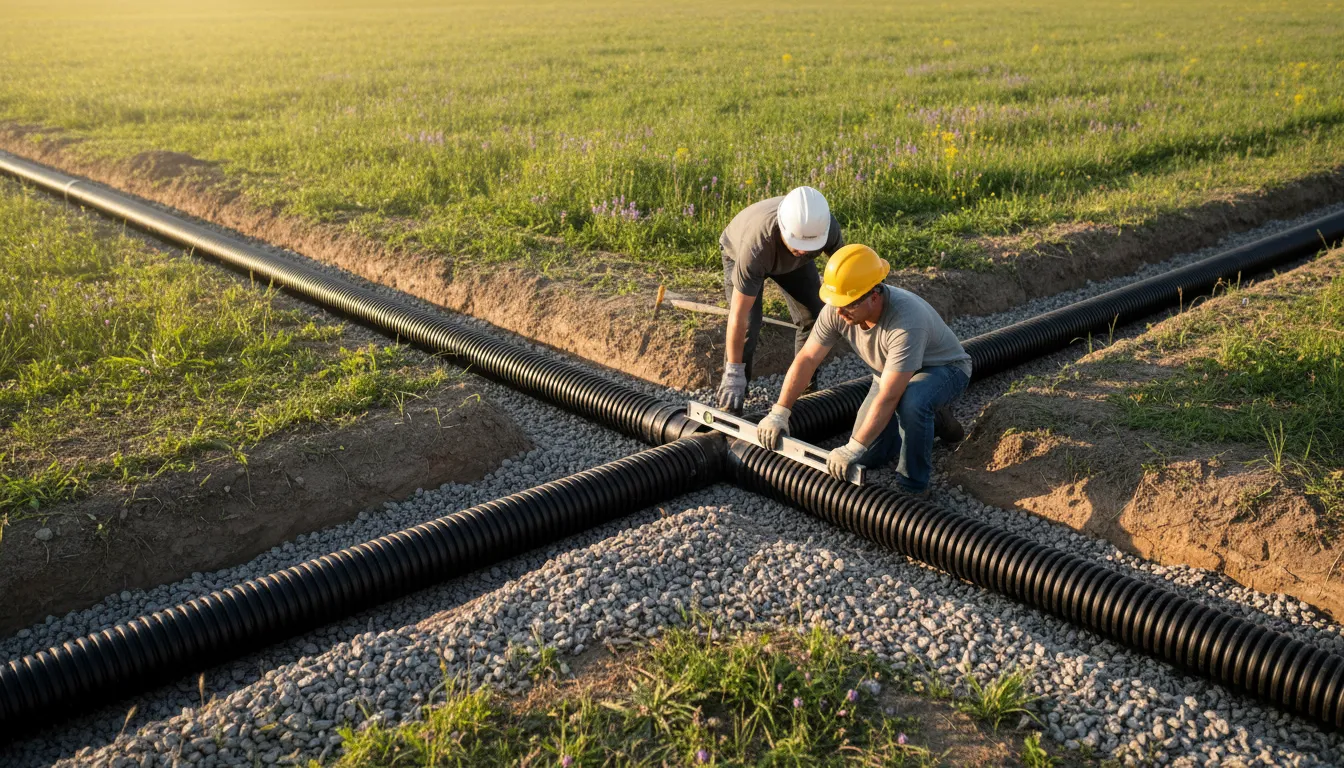
Find the Best Drain Field Repair Companies for Your Business
No obligation • Fast responses • Nationwide coverage

Why you can trust Septic Spot
Septic Spot is a leading United States resource for understanding and comparing septic services. Our editors review providers using consistent criteria and verify key business details. Listings and scores are independent, and companies cannot pay to influence our content.
Search providers near you
Top Drain Field Repair Companies in Syracuse, New York Ranked
A failing drain field is a serious issue for any Syracuse homeowner with a septic system. This critical component, also known as a leach field or absorption area, is responsible for safely filtering and dispersing treated wastewater into the soil. When it malfunctions, it can lead to sewage backups, soggy yards, and environmental contamination. This guide explains the local process, regulations, and costs for drain field repair and replacement, helping you understand your options and connect with qualified professionals in the Syracuse area.
Understanding Your Drain Field and Local Regulations
In Syracuse and throughout Onondaga County, all work on septic systems, including leach field repair or replacement, is strictly regulated. The Onondaga County Health Department (OCHD) enforces New York State Department of Health standards, specifically Appendix 75-A. These rules are designed to protect public health and local water quality, especially in sensitive areas like the Skaneateles and Otisco Lake watersheds.
A key first step is knowing that a permit is always required before any construction or repair begins on a septic system 1. You cannot simply hire a contractor to dig up and replace a failed absorption field without approved plans. These plans must be prepared by a qualified design professional, such as a Professional Engineer or Licensed Land Surveyor 2. Furthermore, if your system has failed, any replacement must be upgraded to meet current NYS standards, which are often more stringent than when older systems were installed.
Signs You May Need Drain Field Service
How do you know if your leach field is failing? Catching problems early can sometimes mean the difference between a repair and a full, costly replacement. Be alert for these warning signs:
- Sewage Odors or Surfacing Wastewater: The most direct sign is the smell of sewage in your yard or seeing grayish, foul-smelling liquid pooling on the ground above the drain field area.
- Slow Drains and Backups: If all the drains in your home are slow, or toilets gurgle and back up, it could indicate that the absorption area is saturated and not accepting water from the tank 3.
- Unusually Lush, Green Grass: While a healthy lawn is good, patches of grass over the drain field that are significantly greener and grow faster than the rest of your yard can signal a nutrient-rich sewage leak.
- Soggy, Spongy Soil: The ground over the leach field should not remain soggy long after rain has stopped.
If you notice any of these issues, the next step is a professional inspection to diagnose the exact problem.
The Professional Inspection Process
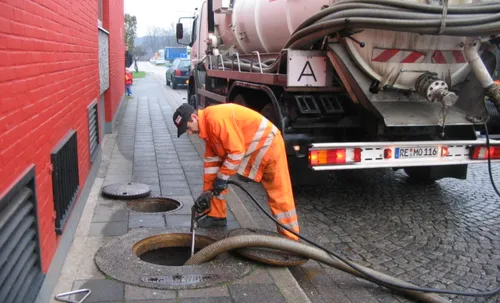
A thorough septic system inspection is essential to determine if a repair or full replacement is necessary. Local professionals typically follow a comprehensive process 4 5:
- Locating System Components: Using specialized locating equipment, the technician will find and expose the septic tank and distribution box lids, and map the approximate layout of the drain field.
- Tank Inspection: The tank is pumped and inspected for structural cracks, and the sludge and scum levels are measured to assess maintenance history.
- Baffle and Outlet Check: The inlet and outlet baffles inside the tank are checked to ensure they are intact and functioning, preventing solids from flowing into the drain field.
- Drain Field Evaluation: The distribution box is checked to see if wastewater is flowing evenly to all trenches. The field itself is examined for signs of failure, like those listed above. A dye test may be used to confirm if wastewater is properly flowing into and through the absorption area 6.
Find the perfect drain field repair companies for your needs
Get personalized recommendations and expert advice
Key Factors Influencing Repair vs. Replacement
The decision to repair or replace your drain field depends on several factors uncovered during the inspection and site evaluation.
- Soil Conditions: NYS standards require a minimum of four feet of usable soil above bedrock or high groundwater. There must also be at least a two-foot vertical separation between the trench bottom and the seasonal high water table 7. Soils that drain too quickly (faster than 1 minute per inch) may need modification 8.
- Setback Requirements: New or replacement systems must be located at least 100 feet from wells and waterbodies. The available space on your property will be a major factor.
- Slope: Properties with slopes greater than 15% are generally not suitable for standard conventional drain fields and may require an alternative system design 9.
- Extent of Failure: If only a small section of piping is clogged or damaged, a localized repair might be possible. However, if the entire soil absorption area is clogged (a condition called "biomat" failure) or the site no longer meets code, a full replacement in a new location is usually required.
Understanding Costs and Financial Assistance
Drain field work is a significant investment. Specific repair costs, such as replacing distribution pipes or leveling a distribution box, can vary but are generally lower than full replacement. However, a complete septic system replacement (including a new tank and leach field) in the Syracuse area typically ranges from $10,000 to $25,000 10.
There is important financial assistance available for eligible homeowners. The NYS Septic System Replacement Fund offers grants to reimburse up to 50% of eligible costs, with a maximum of $10,00011. This program prioritizes homeowners in participating counties like Onondaga who are located in priority watersheds. It's crucial to check your eligibility and apply for this grant before beginning any construction.
Choosing a Local Service Provider
Syracuse has several experienced companies specializing in septic system inspection, repair, and installation, such as Jack's Septic, Brosh Septic & Drain, and Hahn's Septic Tank Service 12 13. Some offer 24/7 emergency response. When selecting a provider, ensure they are familiar with OCHD permitting and inspection procedures. A reputable contractor will guide you through the permit application process, which includes submitting engineered plans and scheduling mandatory county inspections during construction 14 15.
Protecting Your New or Repaired Drain Field
Once your leach field is functioning correctly, proper maintenance is key to its longevity.
- Pump Regularly: Have your septic tank pumped every 3-5 years by a licensed professional to prevent solids from washing out and clogging the drain field 16 17.
- Protect the Area: Never drive or park vehicles, or place heavy structures like sheds, on the absorption field. The weight compacts the soil, destroying its ability to treat wastewater.
- Manage Water: Direct roof gutter downspouts, sump pump discharges, and surface runoff away from the drain field to avoid saturating the soil.
- Mind the Landscape: Avoid planting trees or deep-rooted shrubs over the field, as roots can invade and clog pipes. Grass is the best cover 18 19.
Frequently asked questions
Sources
Footnotes
-
NYS Health Code requires a construction permit to install and ... - https://www.facebook.com/clintonhealth/posts/nys-health-code-requires-a-construction-permit-to-install-andor-replace-a-septic/1275656230999367/ ↩
-
Design Guidelines for Individual Sewage Systems - https://onondaga.gov/health-env/wp-content/uploads/sites/196/2022/08/DesignGuidelinesforIndividualSewageSystems1999.pdf ↩
-
Slow Drains? It Might Be Time for a Septic Inspection - https://mackenservices.com/2025/02/slow-drains-it-might-be-time-for-a-septic-inspection/ ↩
-
Septic System Inspection Syracuse, NY - https://www.septic-service-syracuse.com/septic-system-inspection.html ↩
-
Septic Inspection Process: What Homeowners Should Know ... - https://www.lunspro.com/vlog/the-septic-system-inspection-process-what-homeowners-should-know ↩
-
Frequent Questions on Septic Systems | US EPA - https://www.epa.gov/septic/frequent-questions-septic-systems ↩
-
NY State Septic Repair and Replacement Program Outline | - https://truesdalelake.com/2021/04/ny-state-septic-repair-and-replacement-program-outline/ ↩
-
ON-SITE WASTEWATER TREATMENT SYSTEMS - NY.Gov - https://extapps.dec.ny.gov/docs/water_pdf/onsitewastewater.pdf ↩
-
View Document - Unofficial New York Codes, Rules and Regulations - https://govt.westlaw.com/nycrr/Document/I4fff5ba8cd1711dda432a117e6e0f345?viewType=FullText&originationContext=documenttoc&transitionType=CategoryPageItem&contextData=(sc.Default) ↩
-
Hahn's Septic Tank Service - https://www.google.com/viewer/place?mid=/g/1xn_pcjn ↩
-
New Directions for Local Septic System Management in New ... - https://efc.syr.edu/wp-content/uploads/2025/02/Public-Problem_Private-Property_PDF_2024_FINAL.pdf ↩
-
Jack's Septic Service - https://www.google.com/viewer/place?mid=/g/1tmxgk32 ↩
-
Brosh Septic & Drain - https://www.google.com/viewer/place?mid=/g/11sxx7vjjq ↩
-
Septic Systems - Environmental Health - Onondaga County - https://onondaga.gov/health-env/septic-systems/ ↩
-
131.50 Onondaga County Water Authority. - Westlaw - https://govt.westlaw.com/nycrr/Document/I4fdf9ea2cd1711dda432a117e6e0f345?viewType=FullText&originationContext=documenttoc&transitionType=CategoryPageItem&contextData=(sc.Default) ↩
-
Septic Inspection Specialist In Syracuse, NY - https://www.mrrooter.com/greater-syracuse/residential-services/septic-inspection-specialist/ ↩
-
Septic System Operation and Maintenance - https://www.health.ny.gov/publications/3208/ ↩
-
Your Septic System - Cornell University - https://www.css.cornell.edu/cwmi/waterquality/septic/CCEWQ-YourSepticSystem-Print.pdf ↩
-
Drain Field Service Syracuse, NY - https://www.septic-service-syracuse.com/drain-field-service.html ↩