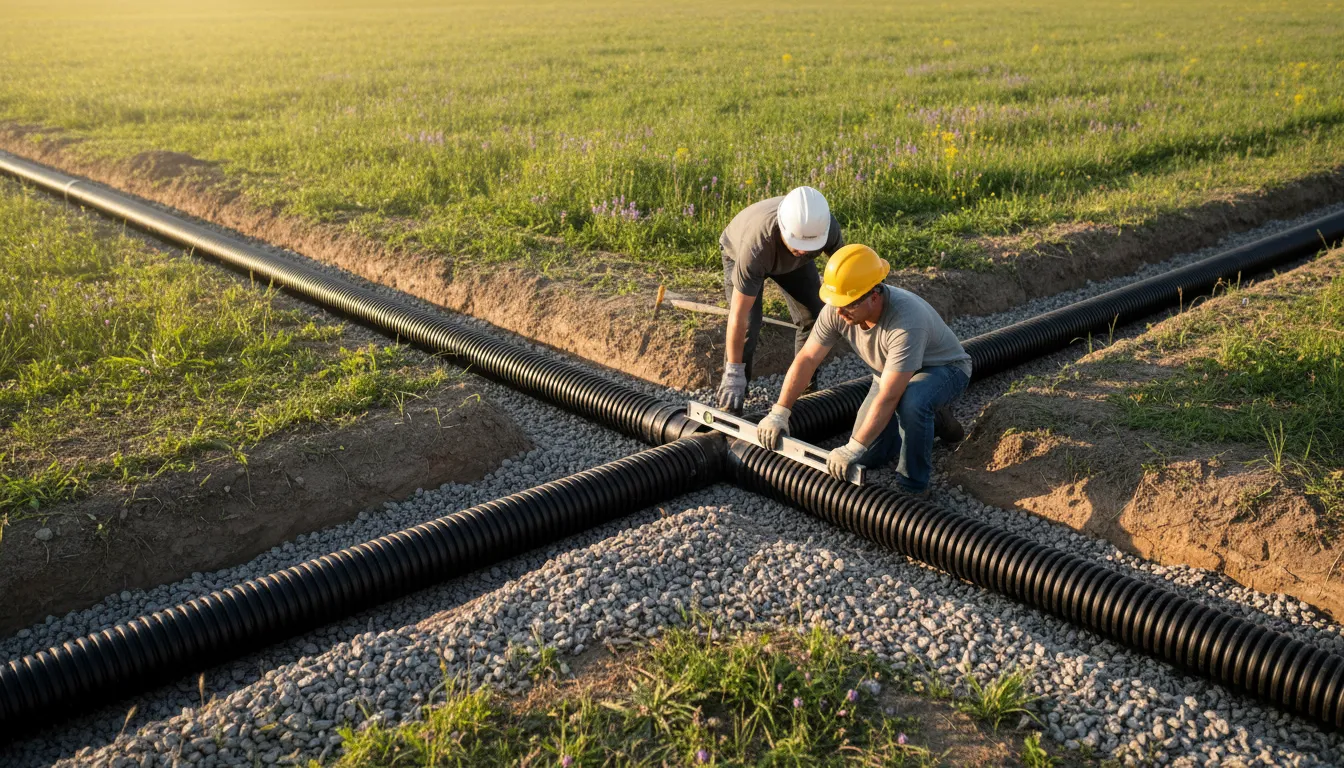
Find the Best Drain Field Repair Companies for Your Business
No obligation • Fast responses • Nationwide coverage

Why you can trust Septic Spot
Septic Spot is a leading United States resource for understanding and comparing septic services. Our editors review providers using consistent criteria and verify key business details. Listings and scores are independent, and companies cannot pay to influence our content.
Search providers near you
Top Drain Field Repair Companies in Akron, Ohio Ranked
A failing drain field is a serious concern for any homeowner with a septic system. This critical component, also known as a leach field or soil absorption system, is responsible for safely dispersing and treating wastewater from your home. When it malfunctions, it can lead to sewage backups, soggy yards, and environmental health hazards. Understanding the local requirements, costs, and process for drain field repair or replacement in Akron is essential for protecting your property and complying with Summit County regulations. This guide will help you navigate the necessary steps to find qualified local professionals and ensure your system is restored to proper function.
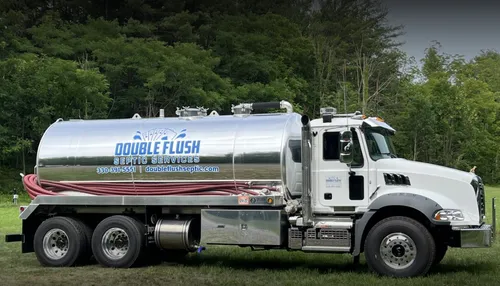
Double Flush Septic Services
2481 Remsen Rd, Medina, OH 44256
Double Flush Septic Services is a family-owned company based in Medina, OH, providing septic system installation, pumping, inspection, and repair services throughout Akron and the surrounding Northeast Ohio counties. They serve a broad area including Medina, Summit, Stark, Wayne, and Cuyahoga counties, offering expertise in maintaining and repairing septic tanks, drain fields, and aeration systems such as Norweco, Hydro-Action, and Marlow-Hunter. The company also provides emergency septic services and commercial grease trap cleaning, with capabilities like hydro jetting and drain snaking to address severe blockages. Double Flush Septic Services emphasizes local knowledge of Ohio's climate and soil conditions to support system longevity and functionality.
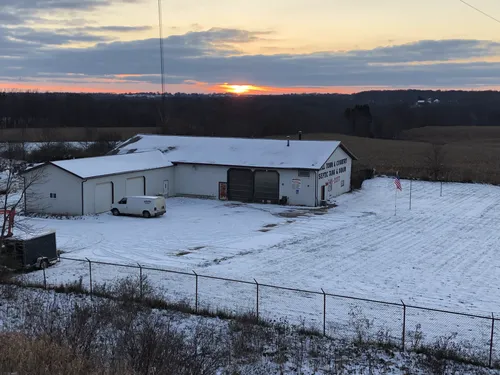
All Town & Country Septic Tank
3500 S Hametown Rd, Norton, OH 44203
All Town & Country Septic Tank is a licensed septic service provider based in Akron, OH, serving multiple counties including Summit, Wayne, Stark, Medina, and Portage. They offer septic tank pumping, inspection, repair, and installation services, along with drain field repair and septic pump replacement. The company is registered with Ohio Local Health Districts and the state EPA, ensuring compliance with strict state and local regulations. They also specialize in maintaining aerobic treatment systems and provide routine inspections to help prevent system failures. All Town & Country handles necessary permits and paperwork, supporting residential septic system operation and maintenance.
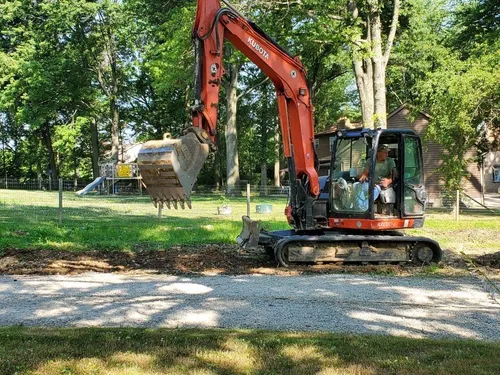
Summit Excavating
Akron, OH
Summit Excavating is a septic service company based in Akron, OH, offering a range of services including septic tank pumping, system repairs, installations, and drain field repair. The company also provides aeration unit installation and waste water pumping and disposal. Summit Excavating serves multiple counties including Medina, Portage, Summit, Stark, and Wayne, and is licensed, bonded, insured, and approved by the Ohio EPA. Founded by Marie and Jim Easterling, Sr., the company has a history of community service and expanded its offerings after 2006. They provide flexible scheduling for one-time or routine septic services and work year-round to maintain system performance.
Understanding Your Akron Drain Field
The drain field is the final stage of your onsite wastewater treatment system. After solids settle in the septic tank, liquid effluent flows into a network of perforated pipes buried in trenches filled with gravel. This effluent slowly percolates into the soil, where natural processes remove harmful bacteria, viruses, and nutrients. A properly functioning leach field is invisible and odorless. In Akron and throughout Summit County, these systems are regulated as Household Sewage Treatment Systems (HSTS) by the Ohio Department of Health and local public health authorities 1.
Most conventional soil absorption systems have a lifespan of 20 to 25 years. Failure can occur due to age, hydraulic overloading (using too much water), compaction from vehicles or structures, or a buildup of biomat that clogs the soil pores. Common signs of a failing absorption field include:
- Sewage odors in the yard or home.
- Soggy, spongy, or persistently wet soil over the drain field area, even in dry weather.
- Lush, green grass growing over the field compared to the rest of the yard.
- Slow-draining household fixtures or sewage backups.
If you notice any of these issues, it's crucial to act quickly to prevent a public health nuisance and more extensive property damage.
Summit County Regulations and Permits
Before any work begins on your leach field, you must involve Summit County Public Health (SCPH). Ohio law requires a permit for the installation, alteration, or replacement of any sewage treatment system. You cannot simply hire a contractor to dig up and replace a failed field without official approval. The goal of these regulations is to ensure new systems meet current Ohio EPA standards for environmental protection and public health.
The process is designed to verify that your property can safely handle wastewater. A key regulation is the requirement for a minimum of 36 inches of suitable soil above any limiting layer, such as bedrock or a seasonal high water table. This depth allows for adequate treatment before the effluent reaches groundwater. Because much of Ohio has clay-rich soils, SCPH emphasizes that drain field installation or major repair should only be conducted during dry weather conditions to prevent the smearing and sealing of soil pores, which would render the new field ineffective.
Find the perfect drain field repair companies for your needs
Get personalized recommendations and expert advice
The Step-by-Step Process for Replacement
Replacing a failed soil treatment system is a multi-stage process that involves professionals at each step.
- Site and Soil Evaluation (SSE): This is the mandatory first step. A licensed soil scientist or professional engineer conducts tests, including deep soil pits, to determine the soil type, depth to limiting layers, and percolation rate. This evaluation dictates the type and size of system your property can support. The cost for this evaluation, including perc testing, averages around $1,300 in the region.
- System Design: Based on the SSE report, a certified system designer creates a detailed plan. If your site has shallow soil, high groundwater, or poor percolation, a conventional trench system may not be possible. The design may specify an alternative system, such as a raised sand mound or drip irrigation system, which requires more complex components and controls 2 3.
- Permit Acquisition: The design plans are submitted to Summit County Public Health for review and permitting. SCPH will issue a permit only for a system that complies with all state and local codes.
- Installation/Replacement: A registered septic system contractor must perform the installation. They will excavate the old, failed field (which must be properly abandoned) and install the new piping, distribution box, and gravel according to the approved design. Timing the installation during a dry period is critical for success 4.
Cost Factors for Drain Field Work in Akron
The cost to repair or replace a leach field in Akron varies widely based on system type, soil conditions, and property layout. It's one of the most significant investments in home maintenance for septic system owners.
- Basic Conventional Field Replacement: For a standard trench system on a property with ideal soil conditions, homeowners can expect costs in the range of $6,000 to $10,000 5.
- Average Replacement: A more typical project, accounting for design, permits, and standard site work, often falls between $12,000 and $20,000.
- Complex or Alternative Systems: If your site requires a sand mound, drip dispersal, or other advanced treatment system due to soil or space constraints, costs can rise significantly to $25,000 to $50,000 or more 6 7.
These estimates generally include the drain field component. If the septic tank also needs to be replaced, that would be an additional cost. It's important to note that in the City of Akron, homeowners are responsible for the sewer lateral from their home to the right-of-way; however, for septic systems (which are used outside city sewer areas), the homeowner is fully responsible for the entire private system, including the tank and absorption field 8.
Maintenance and Inspections to Prolong System Life
To avoid premature drain field failure, proactive maintenance is non-negotiable. Summit County Public Health recommends that all HSTS be inspected at least every three years 9. A professional inspection should check sludge and scum levels in the septic tank (pumping is typically needed every 3-5 years) and assess the drain field for signs of ponding or surfacing effluent.
Key maintenance tips include:
- Conserve Water: Spread out laundry loads and fix leaky fixtures to avoid hydraulically overloading the field.
- Divert Water: Ensure roof drains, sump pumps, and surface runoff are directed away from the drain field area.
- Protect the Area: Never drive or park vehicles, build structures, or plant deep-rooted trees and shrubs over the absorption field.
- Mind What You Flush: Only human waste and toilet paper should go into the system. Avoid chemicals, grease, wipes, and other non-biodegradables.
Regular inspections can identify minor issues, like a clogged distribution box or a compromised pipe, which may be repairable for a few hundred dollars, potentially saving you from a full $20,000 replacement down the line 10.
Finding the Right Local Professional
Given the technical and regulatory complexity of leach field work, choosing the right contractor is paramount. Look for professionals who are:
- Registered with the State of Ohio to install sewage treatment systems.
- Familiar with Summit County Public Health procedures and permit requirements.
- Willing to provide references from recent projects in the Akron area.
- Insured and licensed for excavation and plumbing work.
A reputable contractor will never suggest skipping the permit process or the required Site and Soil Evaluation. They should be able to clearly explain the design, provide a detailed written estimate, and guide you through the SCPH requirements 11 12.
Frequently asked questions
Sources
Footnotes
-
Information for Homeowners - https://odh.ohio.gov/know-our-programs/sewage-treatment-systems/INFORMATION-FOR-HOMEOWNERS ↩
-
A GUIDE FOR ON-SITE SEWAGE DISPOSAL ... - Ohio.gov - https://dam.assets.ohio.gov/image/upload/epa.ohio.gov/Portals/35/documents/Sewage2000.pdf ↩
-
Septic Tank: Soil Treatment System - Ohioline - https://ohioline.osu.edu/factsheet/aex-743 ↩
-
Septic Tank Placement Tips for Summit County Contractors - https://www.andersoneng.com/comprehensive-septic-tank-placement-guidelines-for-general-contractors-in-summit-county/ ↩
-
Cost to Replace Septic Tank and Drain Field [2026 Data] | Angi - https://www.angi.com/articles/how-much-new-drain-fields-foot.htm ↩
-
Septic System Cost Estimator | Septic Tank Size Calculator - https://septiccalculator.com/calculator/cost ↩
-
Breaking down expenses: How much does a septic system cost? - https://point.com/blog/how-much-does-a-septic-system-cost ↩
-
Sewer Maintenance Division - Akron, OH - https://www.akronohio.gov/departments/service/water_reclamation_services/sewer_maintenance_division/index.php ↩
-
Septic Tank to Leaching Component - https://www.scph.org/sites/default/files/editor/WQ/Septic%20Tank%20to%20Leaching%20Component.pdf ↩
-
Septic Inspections - Bath Homeowners Association - https://bathhomeowners.org/septic-inspections/ ↩
-
New or Replacement Sewage Treatment Systems - https://www.scph.org/water-quality/new-or-replacement-sewage-treatment-systems ↩
-
Step-by-Step Guide to Installing or Replacing a Septic System in Central Ohio - https://www.tidytimsinc.com/step-by-step-guide-to-installing-or-replacing-a-septic-system-in-central-ohio ↩