Find the Best Drain Field Repair Companies for Your Business
No obligation • Fast responses • Nationwide coverage

Why you can trust Septic Spot
Septic Spot is a leading United States resource for understanding and comparing septic services. Our editors review providers using consistent criteria and verify key business details. Listings and scores are independent, and companies cannot pay to influence our content.
Search providers near you
Top Drain Field Repair Companies in Dayton, Ohio Ranked
A failing drain field, also known as a leach field or absorption field, is a serious issue for any home with a septic system. When this critical component stops properly dispersing treated wastewater into the soil, it can lead to soggy yards, foul odors, and even sewage backups into your home. In Dayton and Montgomery County, addressing drain field problems requires navigating specific local regulations and working with certified professionals. This guide explains the process, costs, and key considerations for leach field repair or full replacement, helping you connect with qualified local specialists to restore your system's function.
Understanding Your Drain Field's Role
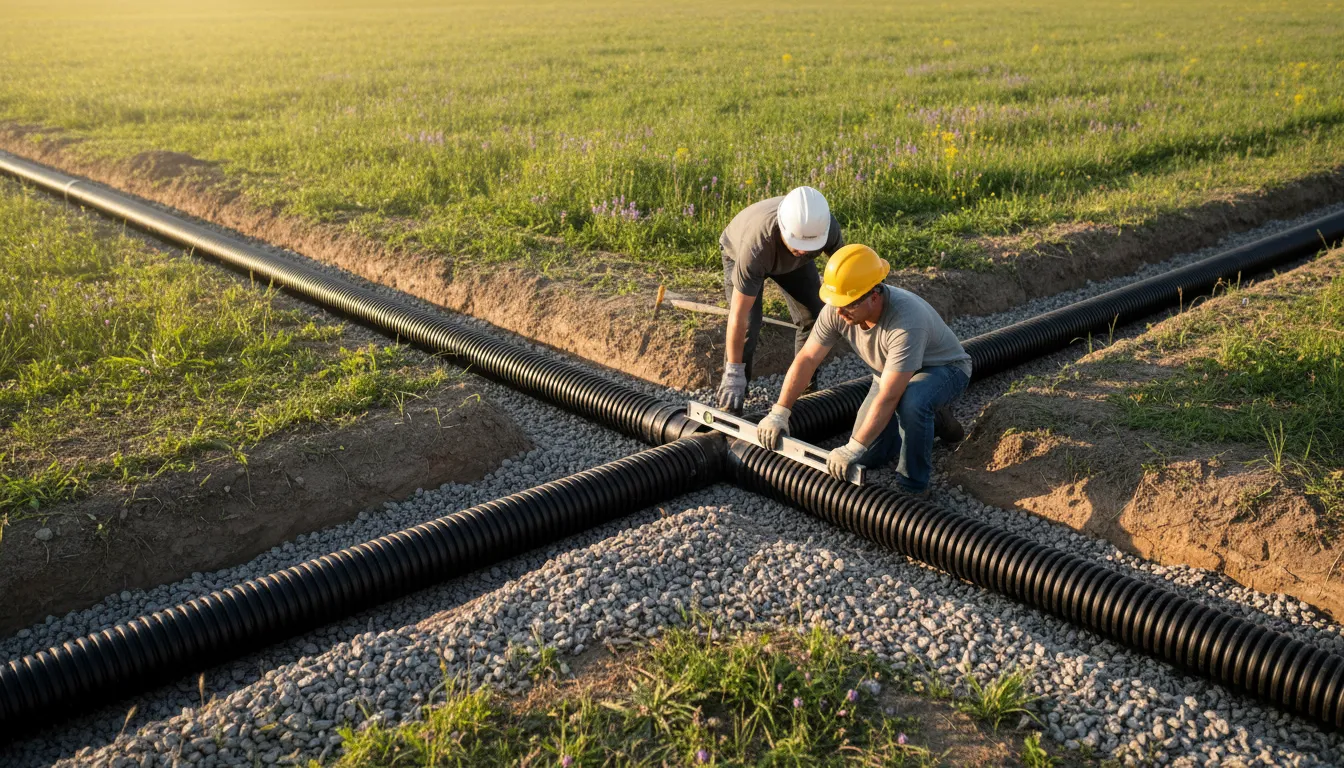
The drain field is the final stage of your onsite wastewater treatment system. After solids settle in the septic tank, the liquid effluent flows into a network of perforated pipes buried in trenches filled with gravel. This effluent slowly percolates down through the soil, where natural processes provide final treatment by removing harmful bacteria, viruses, and nutrients. A functioning leach field is essential for protecting both your property and public health by preventing groundwater contamination.
Common signs of a failing absorption field include:
- Sewage odors in the yard or home.
- Standing water or soggy, spongy soil over the field area, especially when it hasn't rained.
- Slow-draining sinks, toilets, and tubs.
- Unusually green, lush grass over the field.
- Sewage backing up into household drains.
If you notice any of these issues, it's crucial to act quickly. Ignoring them can lead to more extensive environmental damage and significantly higher repair costs.
The Regulatory Landscape in Montgomery County
All major septic system work in Dayton and Montgomery County is regulated by Public Health - Dayton & Montgomery County. Ohio law requires a permit to operate a household sewage treatment system, and this permit mandates regular maintenance. More importantly, a permit is always required to replace or significantly alter a septic system 1. This ensures all work meets state and local health codes designed to protect water quality.
A critical rule for homeowners to understand is that all installations and major repairs must be completed by a registered and bonded installer. You cannot legally replace your own drain field. The health department maintains a list of these qualified contractors, and using one is a non-negotiable first step in the process.
The First Step: Professional Soil Evaluation
Before any new leach field can be designed, a professional site assessment is mandatory. A key change in Ohio regulations is that traditional "perc" (percolation) tests were phased out in 2007. Instead, a licensed soil scientist must perform a detailed soil evaluation.
This evaluation determines the soil's suitability by examining:
- Soil Depth: A minimum of 12 inches of natural, undisturbed soil is required for a conventional trench system.
- Permeability and Texture: How quickly water moves through the soil layers.
- Seasonal Saturation: The depth to seasonal high water tables or restrictive layers like bedrock.
- Site Constraints: Slope, topography, and proximity to wells, property lines, and surface water, all of which have strict setback requirements 2 3.
This soil evaluation, which typically costs a few hundred dollars, is the foundation for the entire project. It dictates not if a system can be installed, but what type of system is necessary.
System Types: From Conventional Trenches to Mounds
Based on the soil scientist's report, a sewage treatment system designer will create a plan. The best system for your property depends entirely on site conditions.
- Conventional Trench Systems: These are the most common and least expensive option, but they require suitable soil depth and permeability. They involve a series of gravel-filled trenches with perforated pipes.
- Mound Systems: If the native soil is too shallow, too permeable, or too slow-draining, a mound system may be required. These involve constructing a raised sand-filled bed over the natural soil and are more complex and expensive to install 4.
- Enhanced Treatment Systems: For sites with severe constraints, advanced systems that provide additional treatment before the drain field may be necessary. These can include aerobic treatment units (ATUs) or media filters.
The design professional will recommend the most effective and compliant system for your specific property conditions in Dayton.
The Step-by-Step Process for Replacement
Navigating a drain field replacement involves a clear sequence of events:
- Site Assessment & Soil Evaluation: Hire a licensed soil scientist to conduct the official evaluation.
- System Design: A designer uses the soil report to create a detailed plan for the new leach field and any other necessary components.
- Permit Application: You or your contractor submits the design plan to Public Health - Dayton & Montgomery County for review and permit approval 5.
- Installation: A registered, bonded installer executes the construction according to the approved plan.
- Final Inspection: The health department or the licensed installer conducts a final walkthrough to ensure the system is installed to code before it is covered.
Find the perfect drain field repair companies for your needs
Get personalized recommendations and expert advice
Understanding the Costs of Repair and Replacement
Costs for addressing drain field issues in the Dayton area vary widely based on the scope of work and site-specific challenges.
- Drain Field Repairs: For isolated issues like a clogged or broken pipe, targeted repairs may be possible. These smaller fixes can start around $2,000.
- Full Drain Field Replacement: This is often necessary when the entire soil absorption area has failed. For a conventional system, replacement typically ranges from $7,000 to over $15,0006 7. The wide range accounts for factors like the size of the home (which dictates the field size), ease of access, and local labor rates.
- Alternative System Installation: If your site requires a mound system or an enhanced treatment unit, costs will be higher. New system installations in Ohio can range from $6,500 on the very low end to $19,000 or more for complex systems 8 9.
- Professional Services: Remember to budget for the required professional services, including the soil evaluation and system design, which typically cost a few hundred dollars each 10.
It's essential to get multiple detailed quotes from registered installers. The lowest bid isn't always the best; ensure each quote is based on the same soil report and design specifications.
Maintaining Your New Drain Field
Protecting your investment in a new leach field is crucial. Proper maintenance can extend its lifespan for decades. Key practices include:
- Regular Septic Tank Pumping: Have your tank pumped every 3-5 years by a licensed professional to prevent solids from washing out and clogging the new field.
- Water Conservation: Spread out laundry loads, fix leaky faucets, and use high-efficiency fixtures to avoid hydraulically overloading the system.
- Mind What You Flush: Only human waste and toilet paper should go down the drain. Never flush chemicals, grease, wipes (even "flushable" ones), or feminine hygiene products.
- Protect the Area: Never drive or park vehicles over the drain field, and avoid planting trees or deep-rooted shrubs nearby.
By following these guidelines and adhering to any maintenance requirements in your Ohio permit to operate, you can ensure your new system functions properly for years to come 11 12.
Frequently asked questions
Sources
Footnotes
-
Septic Tanks Get New Rules in Ohio - Clear Drain Cleaning - https://cleardraincleaning.com/septic-tanks-get-new-rules-ohio/ ↩
-
Information for Homeowners - https://odh.ohio.gov/know-our-programs/sewage-treatment-systems/INFORMATION-FOR-HOMEOWNERS ↩
-
Septic Systems Reports, Regulations, Guidance, and Manuals - https://www.epa.gov/septic/septic-systems-reports-regulations-guidance-and-manuals ↩
-
New household sewage treatment system rules for Ohio - https://ocj.com/2015/05/new-household-sewage-treatment-system-rules-for-ohio-treatment-versus-disposal/ ↩
-
Leach Field Installation in Dayton & Cincinnati OH - SepTek - https://www.septekservices.com/leach-field-installation/ ↩
-
How Much Does a Septic System & Septic Tank Cost - https://www.nexgenseptics.com/septic-system-cost/ ↩
-
Cost to Replace Septic Tank and Drain Field [2026 Data] | Angi - https://www.angi.com/articles/how-much-new-drain-fields-foot.htm ↩
-
Ohio Department of Health Report to the Household Sewage ... - https://downloads.regulations.gov/EERE-2019-BT-STD-0039-0041/content.pdf ↩
-
Understanding the Costs of Septic Tank Installation and Repair: A Guide for Homeowners - https://mathisandsonsseptic.com/mathis-sons-septic-blog-orlando-fl/understanding-the-costs-of-septic-tank-installation-and-repair/ ↩
-
Soil Evaluation for Home Septic Systems - Ohioline - https://ohioline.osu.edu/factsheet/aex-742 ↩
-
Sewage Treatment Systems - Public Health - Dayton ... - https://www.phdmc.org/programs-a-to-z/household-sewage-treatment-system-program ↩
-
Understanding Ohio's Septic System Regulations - https://checkmateohio.com/understanding-ohios-septic-system-regulations/ ↩