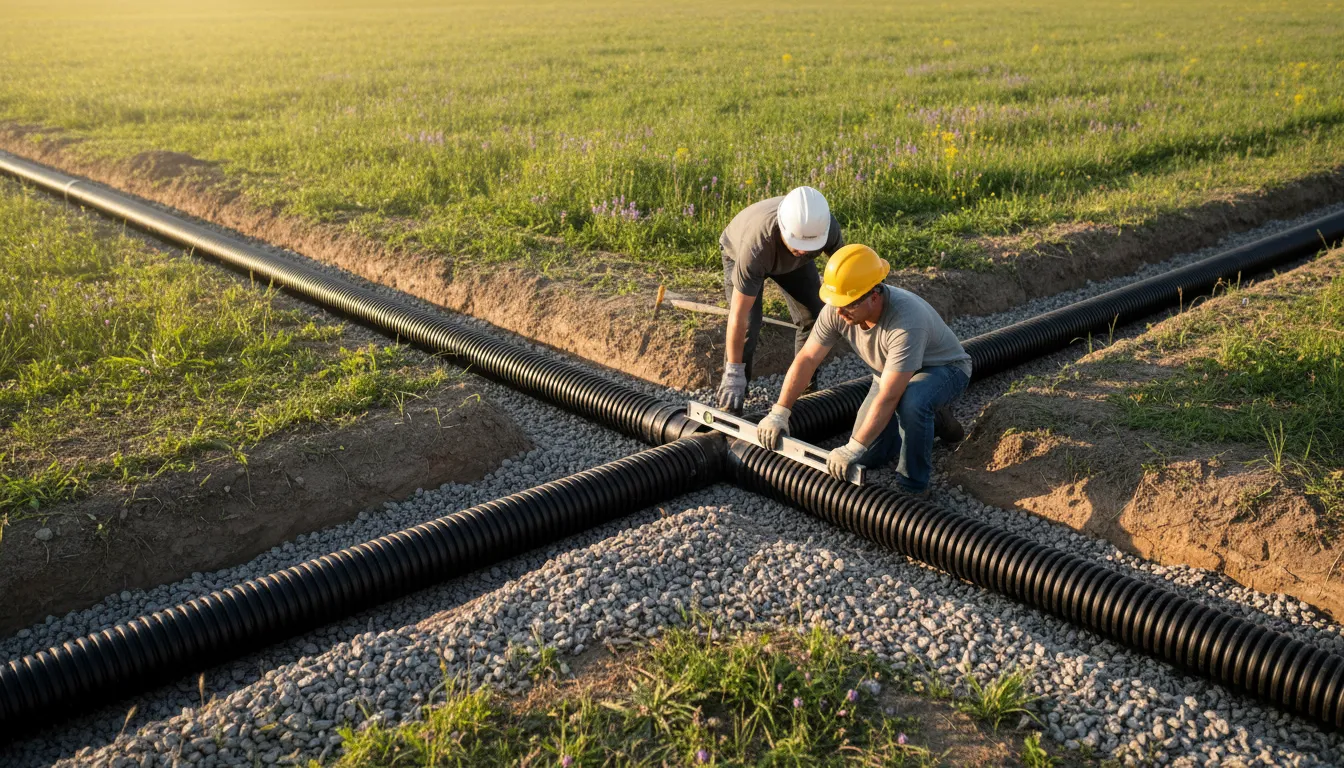
Find the Best Drain Field Repair Companies for Your Business
No obligation • Fast responses • Nationwide coverage

Why you can trust Septic Spot
Septic Spot is a leading United States resource for understanding and comparing septic services. Our editors review providers using consistent criteria and verify key business details. Listings and scores are independent, and companies cannot pay to influence our content.
Search providers near you
Top Drain Field Repair Companies in Cincinnati, Ohio Ranked
A failing drain field is a serious issue for any home with a septic system. This critical component, also known as a leach field or absorption field, is responsible for safely filtering and dispersing treated wastewater into the soil. When it malfunctions, it can lead to sewage backups, soggy yards, and environmental contamination. For Cincinnati homeowners, navigating the repair or replacement of a septic system drain field involves specific local regulations and site challenges. This guide helps you understand the process, key considerations, and how to connect with qualified local professionals to address your system's needs.
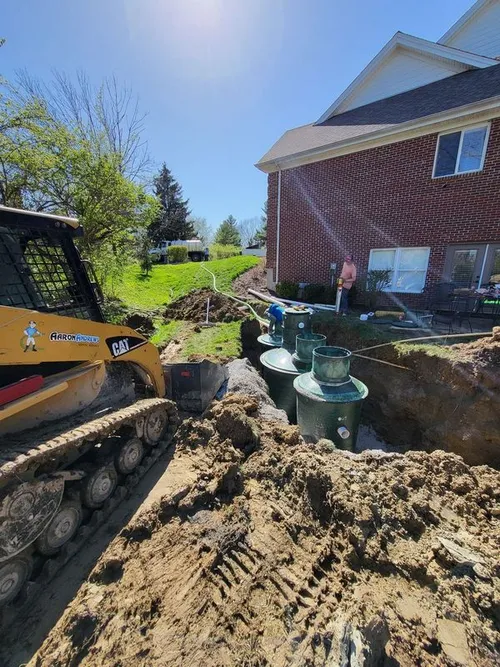
Aaron-Andrews Septic Tank Service
1001 College Dr, Batavia, OH 45103
Aaron-Andrews Septic Tank Service is a family-owned business serving Cincinnati, OH, and the greater Cincinnati area. Established in 1974, the company offers a full range of septic system services including tank pumping, inspections, repairs, drain field replacement, and new system installations. They use advanced equipment to diagnose septic alarms and control panels, providing same-day service when possible. Aaron-Andrews also offers a warranty on all work and special discounts for veterans, seniors, and first responders. Their team is available 24/7 for emergency septic services.
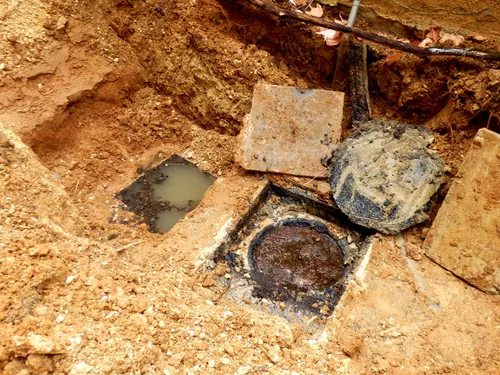
Septic Service Cincinnati
Cincinnati, OH
Septic Service Cincinnati provides comprehensive septic system services in Cincinnati, OH. They handle septic tank pumping, inspections, repairs, installations, and leach field maintenance for both residential and commercial properties. Their team also offers grease trap cleaning and general sewer cleaning to maintain efficient wastewater systems. The company emphasizes safe and environmentally responsible handling of wastewater and offers 24/7 emergency services for urgent septic issues. Septic Service Cincinnati aims to extend the life of septic systems through regular maintenance and timely repairs.
Understanding Drain Field Failures in Cincinnati
The drain field is the final stage of your on-site sewage treatment system (STS). After solids settle in the septic tank, liquid effluent flows into a network of perforated pipes buried in trenches of gravel and soil. The soil acts as a natural filter, removing harmful bacteria and nutrients before the water rejoins the groundwater.
In the Cincinnati area, common causes of drain field failure include soil compaction from driving or parking vehicles over the area, biomat buildup that clogs the soil pores, and high seasonal water tables common in parts of Hamilton County. Symptoms of a failing leach field include:
- Sewage odors in the yard or home.
- Slow draining fixtures and frequent backups.
- Standing water or unusually lush, green grass over the field.
- Gurgling sounds in plumbing.
If you notice these signs, it's crucial to act quickly. A licensed professional should perform an inspection to determine if the issue is a simple repair, like clearing a blocked pipe, or a complete system failure requiring redesign and replacement.
Local Regulations and the Permit Process
All work on septic systems in Hamilton County is strictly regulated. A permit is required for any new, altered, or replaced sewage treatment system. The process is designed to protect public health and groundwater quality.
Key Regulatory Steps:
- Hire a Licensed Professional: Only septic contractors registered with the Ohio Department of Health and Hamilton County Public Health can legally perform installation, major repairs, or abandonment of a system 1.
- Soil Evaluation: This is a mandatory first step. A qualified soil scientist or registered sanitarian must conduct a percolation test and deep hole soil analysis on your property. This evaluation determines the soil's absorption rate and depth to limiting conditions (like bedrock or water table), which dictates the type and size of drain field your site can support.
- System Design: Based on the soil evaluation, a licensed system designer will create a plan. For challenging sites with poor drainage or shallow soil, this may involve alternative systems like elevated sand filters or mound systems.
- Permit Application: Your contractor or designer will submit the system design, application, and the required permit fee (typically $450-$650) to Hamilton County Public Health for review and approval 2.
- Pre-Construction Notification: Once the permit is issued, your contractor must notify the assigned Environmental Health Worker (EHW) at least 48 hours before any work begins 3.
- Final Inspection: After installation, the EHW must conduct a final inspection to ensure the work complies with the approved permit before the system is covered.
Site Considerations and System Design
Cincinnati's varied topography and soil types mean there is no one-size-fits-all solution for leach field repair. Key site-specific factors include:
- Setback Distances: Ohio regulations require strict minimum distances between a drain field and features like wells, property lines, buildings, and streams. These setbacks are non-negotiable and can significantly impact where a new field can be placed on your lot 4.
- Site Drainage: Proper drainage away from the septic system is critical. Hamilton County Public Health often requires interceptor drains or perimeter drains to manage subsurface water and prevent saturation of the absorption field.
- System Type: The soil evaluation will determine the appropriate system.
- Conventional Trenches: Used in suitable, deep, well-drained soils.
- Mound Systems: An elevated bed of sand and gravel used when soil depth is insufficient or the water table is high. These are common in the region 5.
- Sand Filters: A contained box of sand that provides advanced treatment before effluent reaches the soil, used for difficult sites or near water bodies.
- Protecting the New Field: To ensure longevity, never plant trees or shrubs over the field, and strictly prohibit driving or parking any heavy equipment on it. The area should only have a grass cover 6 7.
Find the perfect drain field repair companies for your needs
Get personalized recommendations and expert advice
The Repair and Replacement Process
When a drain field is failing, the path forward typically follows these steps, guided by a licensed contractor:
- Comprehensive Inspection: A professional will inspect the entire system-checking the septic tank's sludge and scum levels, inspecting the distribution box, and assessing the drain field for signs of saturation or surfacing effluent. This determines if pumping the tank or minor repairs can solve the issue, or if field replacement is necessary.
- Evaluation of Options: If the field has failed, the contractor and designer will evaluate your property's constraints (soil, space, topography) to present design options. Sometimes, a section of the field can be repaired or an additional "expansion" field can be added. Often, a full replacement in a new location is required 8.
- Securing Permits: As outlined above, your contractor will manage the soil evaluation, design, and permit application process with the health department 9 10.
- Excavation and Installation: The old field may be abandoned in place (following specific procedures), and the new leaching trenches, chambers, or mound system are constructed according to the approved design.
- Final Approval: After the final inspection by the health department, the system can be backfilled and put into service.
Understanding Associated Costs
The cost of drain field work in Cincinnati varies widely based on system complexity, soil conditions, and the extent of the problem. It's important to get detailed estimates from licensed contractors. General cost ranges include:
- System Design & Soil Evaluation: $600 to $1,500 or more, depending on property complexity 11.
- Permit Fees: $450 to $650 for the application to Hamilton County Public Health 12.
- Septic Tank Work: If the tank is also failing or doesn't meet current standards, replacement can add significant cost.
- Drain Field Repair/Replacement: This is the major variable. Simple repairs may start around $3,000. A full conventional drain field replacement can range from $5,000 to $10,000. For more complex alternative systems like mounds or sand filters, costs can easily reach $15,000 to $25,000 or higher, due to the materials and engineered construction required 13 14.
Always ensure your cost estimates include all phases: inspection, design, permitting, installation, and final inspection.
Maintaining Your New Drain Field
Protecting your investment is key. Proper maintenance includes:
- Having the septic tank pumped regularly (every 3-5 years) to prevent solids from flowing into and clogging the new field 15.
- Conserving water and spreading out laundry loads to avoid hydraulically overloading the system.
- Never flushing chemicals, grease, wipes, or other non-biodegradable items.
- Keeping the area over the field clear of structures, pavement, and deep-rooted plants.
Frequently asked questions
Sources
Footnotes
-
Septic System Policy - Hamilton County Public Health - https://www.hamiltoncountypublichealth.com/wp-content/uploads/2020/02/Septic-Systems-Policy-Revised-2-2020.pdf ↩
-
Septic Tanks Get New Rules in Ohio - Clear Drain Cleaning - https://cleardraincleaning.com/septic-tanks-get-new-rules-ohio/ ↩
-
What You Need To Know About Household Sewage Treatment System Operation Permits - https://ccchd.com/wp-content/uploads/2022/04/HSTS-Ops-Permits-What-You-need-to-Know-brochure.pdf ↩
-
Septic Systems Reports, Regulations, Guidance, and Manuals - https://www.epa.gov/septic/septic-systems-reports-regulations-guidance-and-manuals ↩
-
Soils, Designs and Site Drainage - Ohio Department of Health - https://odh.ohio.gov/know-our-programs/sewage-treatment-systems/information-for-homeowners/soils-designs-and-site-drainage ↩
-
Buying a Home with Septic? Inspection in Kentucky & Ohio - https://kentuckyinspectionservices.com/services/septic-inspection/ ↩
-
A GUIDE FOR ON-SITE SEWAGE DISPOSAL SYSTEMS (SEPTIC ... - https://dam.assets.ohio.gov/image/upload/epa.ohio.gov/Portals/35/documents/Sewage2000.pdf ↩
-
Step-by-Step Guide to Septic System Installation & Replacement - https://www.tidytimsinc.com/step-by-step-guide-to-installing-or-replacing-a-septic-system-in-central-ohio ↩
-
Sewage Treatment Systems - Hamilton County Public Health - https://hamiltoncountyhealth.org/services/water-quality/new-sewage-treatment-systems/ ↩
-
Understanding Ohio's Septic System Regulations - https://checkmateohio.com/understanding-ohios-septic-system-regulations/ ↩
-
Information for Homeowners - https://odh.ohio.gov/know-our-programs/sewage-treatment-systems/INFORMATION-FOR-HOMEOWNERS ↩
-
Dear Property Owner - Hamilton County Public Health - https://www.hamiltoncountyhealth.org/wp-content/uploads/Applications-to-Construct-or-Replace-Packet-3-28-23.pdf ↩
-
Leach Field inspection and repair in Cincinnati - https://www.cincinnatisepticservice.com/leach-field-inspection-and-repair.html ↩
-
Septic Systems - Cincinnati Ohio Home Inspections - https://www.thehome-inspection.com/home-information-center/septic-systems/ ↩
-
STS Components, Systems and Maintenance - https://odh.ohio.gov/know-our-programs/sewage-treatment-systems/information-for-homeowners/sts-components-systems-and-maintenance ↩