Find the Best Drain Field Repair Companies for Your Business
No obligation • Fast responses • Nationwide coverage

Why you can trust Septic Spot
Septic Spot is a leading United States resource for understanding and comparing septic services. Our editors review providers using consistent criteria and verify key business details. Listings and scores are independent, and companies cannot pay to influence our content.
Search providers near you
Top Drain Field Repair Companies in Cleveland, Ohio Ranked
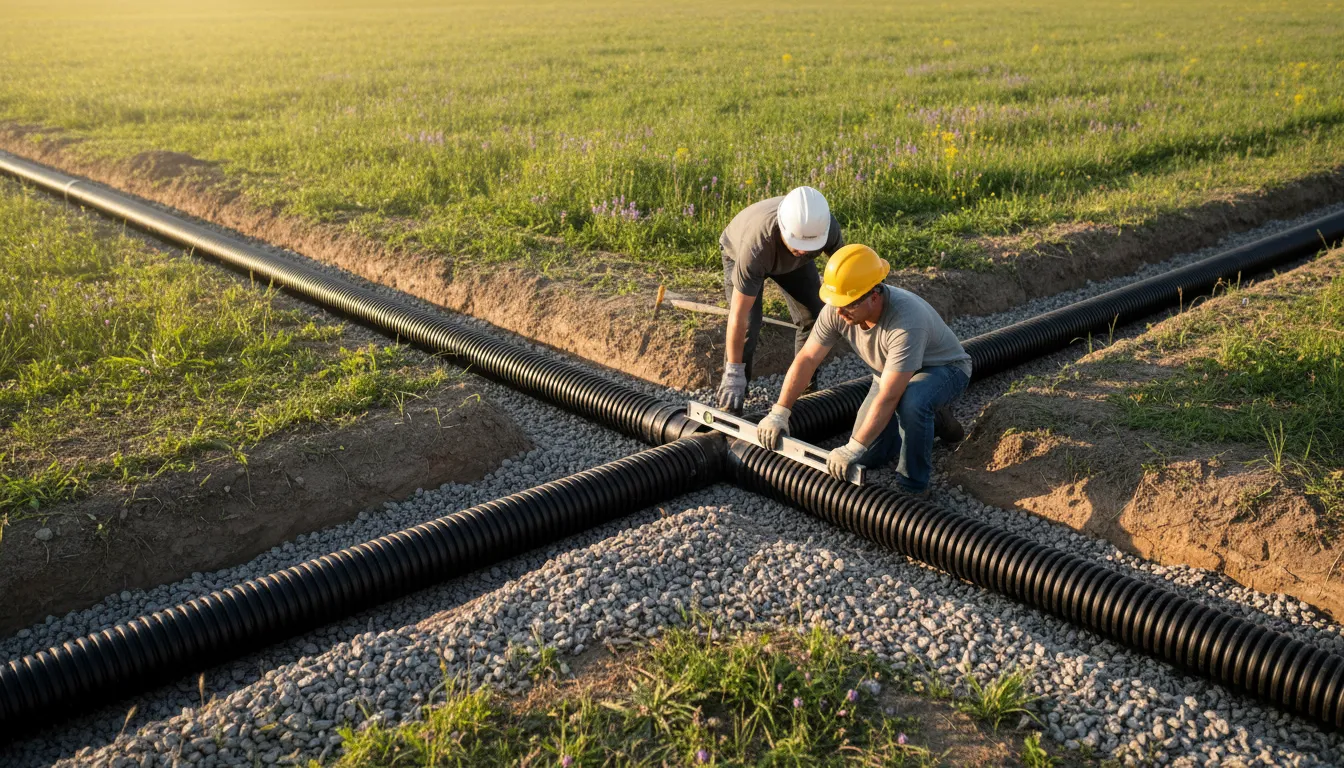
A failing drain field, also known as a leach field or absorption area, is a serious issue for any home with a septic system. When this critical component stops properly filtering and dispersing wastewater, it can lead to sewage backups, soggy yards, and environmental contamination. In Cleveland, where soil conditions and local regulations present unique challenges, addressing drain field problems promptly and correctly is essential. This guide provides the information you need to understand the repair and replacement process, connect with qualified local professionals, and navigate Cuyahoga County's specific requirements to restore your property's wastewater treatment system.
Double Flush Septic Services
2481 Remsen Rd, Medina, OH 44256
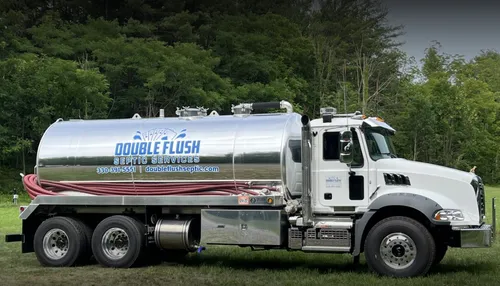
Double Flush Septic Services is a family-owned company based in Medina, OH, providing septic system installation, pumping, inspection, and repair services throughout Akron and the surrounding Northeast Ohio counties. They serve a broad area including Medina, Summit, Stark, Wayne, and Cuyahoga counties, offering expertise in maintaining and repairing septic tanks, drain fields, and aeration systems such as Norweco, Hydro-Action, and Marlow-Hunter. The company also provides emergency septic services and commercial grease trap cleaning, with capabilities like hydro jetting and drain snaking to address severe blockages. Double Flush Septic Services emphasizes local knowledge of Ohio's climate and soil conditions to support system longevity and functionality.
Wolcott Septic
13781 G.A.R. Hwy., Chardon, OH 44024
Wolcott Septic is a septic service provider located near Cleveland, OH. The company offers septic tank pumping, inspection, and repair services to help maintain and restore septic systems. Their expertise includes handling various types of drain fields such as drip, mound, gravity, and pressure systems, as well as advanced pre-treatment systems. Wolcott Septic focuses on preventing septic failures and maintaining system cleanliness through professional pumping and repair services.
Understanding Your Septic System's Drain Field
The drain field is the final stage of a residential sewage treatment system (STS). After solids settle in the septic tank, the liquid effluent flows into a network of perforated pipes buried in trenches filled with gravel. This effluent slowly percolates through the soil, where natural processes remove harmful bacteria, viruses, and nutrients before the water rejoins the groundwater. A properly functioning leach field is invisible and odorless. Problems arise when the soil becomes clogged or "biomat" forms excessively, preventing absorption and causing system failure.
Signs You Need Drain Field Repair or Replacement
Recognizing early warning signs can save you from more extensive and costly damage. Be alert for these indicators of a failing absorption area:
- Soggy Ground or Standing Water: Puddles or persistently wet, spongy soil over the drain field area, especially when it hasn't rained.
- Foul Odors: The smell of sewage in your yard or even inside your home.
- Unusually Lush Vegetation: Grass or plants over the drain field that are greener, thicker, and grow faster than the rest of the lawn due to excess nutrient-rich water.
- Slow Drains and Backups: Gurgling pipes, slow-draining sinks and toilets, or sewage backing up into household drains.
- Algae Blooms in Nearby Ponds or Ditches: This can indicate nutrient-rich effluent is surfacing and running off.
If you notice any of these signs, it's time to contact a licensed professional for an inspection.
The Cleveland and Cuyahoga County Regulatory Landscape
All work on septic systems in Cleveland and Cuyahoga County is regulated by the Cuyahoga County Board of Health (CCBH) under the Ohio Administrative Code 3701-29. You cannot legally begin any repair or replacement without following these steps 1 2:
- Permit Application: A permit is mandatory for any repair, alteration, or replacement of a sewage treatment system. Your licensed contractor will typically handle this application, which requires detailed plans.
- Site and Soil Evaluation (SSE): This is a critical, non-negotiable step. A qualified soil scientist or professional must evaluate your property to determine the suitability of the soil. The evaluation focuses on finding at least 36 inches of suitable soil above limiting layers like bedrock, dense clay, or a high seasonal water table.
- Licensed Contractor: Ohio law requires that all system repairs, replacements, and installations be performed by a licensed sewage treatment system contractor. Always verify a contractor's license with the local health department.
- Inspections: The CCBH will require inspections during and after the installation to ensure it complies with the approved design and code.
- Operation Permit: Once the system is installed, homeowners must maintain an active Operation & Maintenance (O&M) permit, which often involves periodic inspections (e.g., every 5 years) and regular septic tank pumping to keep the entire system, including the new drain field, functioning properly 3 4.
Soil Challenges and System Design in Northeast Ohio
Northeast Ohio's geography directly impacts drain field design and cost. Many areas have shallow soils, clay-heavy compositions, or high groundwater tables, which limit the soil's ability to absorb and treat wastewater 5 6.
- Conventional Trenches: These are the most common and least expensive option, but they require deep, well-drained soil. If the Site and Soil Evaluation finds suitable conditions at the required depth, this may be a viable option.
- Mound Systems: In areas with shallow soil, high water tables, or dense clay, a mound system is often the prescribed solution. This involves constructing an elevated sand-filled mound above the natural grade to provide the necessary depth of treatment 7.
- Site Drainage: Proper grading and sometimes the installation of interceptor or perimeter drains are crucial to manage surface and groundwater around the system, preventing saturation of the drain field.
The design of your replacement system will be dictated almost entirely by the results of the mandatory Site and Soil Evaluation.
Find the perfect drain field repair companies for your needs
Get personalized recommendations and expert advice
The Professional Inspection and Diagnosis Process
Before any repair strategy is decided, a thorough inspection is necessary. A professional inspection typically involves 8 9:
- Locating the System: Finding and uncovering the septic tank and distribution box lids.
- Tank Inspection: Checking the septic tank for structural integrity (cracks, corrosion), sludge/scum levels, and the condition of baffles.
- Hydraulic Load Test: Introducing water into the system to see if the drain field accepts flow or if it quickly backs up, indicating failure.
- Probing the Drain Field: Using a soil probe to check for saturated soil and foul odors in the absorption area.
- Comprehensive Report: The inspector provides a detailed report on the system's condition, which forms the basis for repair recommendations and permit applications.
Understanding Costs for Drain Field Work in Cleveland
Costs can vary widely based on system type, soil conditions, and property accessibility. Here is a general overview based on local data 10 11 12 13:
- Professional Inspection: Generally costs between $200 and $900. This is a vital first investment to accurately diagnose the problem.
- Septic Tank Pumping: Routine maintenance pumping typically costs $100 to $200. This is not a repair but is essential for system health and is often required during the evaluation process 14.
- Drain Field Repair vs. Replacement: Partial repairs (like replacing a clogged section of pipe) are less common and less expensive than full replacement. However, if the soil itself has failed, replacement is the only option.
- Complete Drain Field Replacement: For a conventional system, total drain field replacement in the Cleveland area often costs around $7,000. This is a significant part of the total system cost.
- New Conventional System Installation: Installing an entirely new septic system, including tank and drain field, averages approximately $7,600 in the region.
- Mound or Advanced System Installation: These are more complex and can cost significantly more, sometimes ranging from $10,000 to $20,000 or more.
- Financial Assistance: The Ohio EPA's Water Pollution Control Loan Fund (WPCLF) may provide low-interest loans or other financial assistance for necessary repairs or replacements. This program is often administered through local health departments, so inquire with the CCBH or your contractor about eligibility.
Maintaining Your New or Repaired Drain Field
Protect your investment with proper care. A new leach field can last decades if maintained correctly.
- Pump Regularly: Have your septic tank pumped every 2-5 years, as recommended by your O&M permit and based on household size and usage 15.
- Conserve Water: Spread out laundry loads, fix leaks, and use water-efficient fixtures to avoid hydraulically overloading the system.
- Mind What You Flush: Only human waste and toilet paper should go down the drain. Avoid chemicals, grease, wipes (even "flushable" ones), and medications.
- Protect the Area: Never drive or park vehicles over the drain field. Keep roof drains, sump pumps, and other runoff water directed away from the area. Avoid planting trees or deep-rooted shrubs nearby.
Frequently asked questions
Sources
Footnotes
-
Information for Homeowners - https://odh.ohio.gov/know-our-programs/sewage-treatment-systems/INFORMATION-FOR-HOMEOWNERS ↩
-
Understanding Ohio's Septic System Regulations - https://checkmateohio.com/understanding-ohios-septic-system-regulations/ ↩
-
Operation and Maintenance (O&M) Program | Geauga Public Health - https://gphohio.org/page-title-old/om-septic/ ↩
-
Untitled - https://www.coshoctoncounty.net/health/wp-content/uploads/sites/16/2025/11/Homeowner-Guide-to-Obtain-Sewage-Permit-Application-Soils-Designers-Installers.pdf ↩
-
Soils, Designs and Site Drainage - Ohio Department of Health - https://odh.ohio.gov/know-our-programs/sewage-treatment-systems/information-for-homeowners/soils-designs-and-site-drainage ↩
-
New or Replacement Sewage Treatment Systems - https://www.scph.org/water-quality/new-or-replacement-sewage-treatment-systems ↩
-
Septic Tank: Mound System - Ohioline - The Ohio State University - https://ohioline.osu.edu/factsheet/aex-744 ↩
-
Septic Systems - Orange Village - https://www.orangevillage.com/septic-systems/ ↩
-
Septic Inspections for Real Estate in Ohio | SepTek - https://www.septekservices.com/2025/06/19/what-to-expect-during-a-septic-inspection-for-real-estate-transactions-in-ohio/ ↩
-
Home Sewage Treatment Systems (HSTS) - Ohio EPA - https://epa.ohio.gov/wps/portal/gov/epa/divisions-and-offices/environmental-financial-assistance/financial-assistance/home-sewage-treatment-systems-hsts ↩
-
How Much Does a Septic Inspection Cost? [2026 Data] - Angie's List - https://www.angi.com/articles/septic-inspection-cost.htm ↩
-
Cost to Replace Septic Tank and Drain Field [2026 Data] | Angi - https://www.angi.com/articles/how-much-new-drain-fields-foot.htm ↩
-
Cleveland Septic Systems Costs & Prices - ProMatcher Cost Report - https://septic-systems.promatcher.com/cost/cleveland-oh-septic-systems-costs-prices.aspx ↩
-
Septic System Maintenance | Ohioline - https://ohioline.osu.edu/factsheet/aex-740 ↩
-
STS Components, Systems and Maintenance - https://odh.ohio.gov/know-our-programs/sewage-treatment-systems/information-for-homeowners/sts-components-systems-and-maintenance ↩