Find the Best Drain Field Repair Companies for Your Business
No obligation • Fast responses • Nationwide coverage

Why you can trust Septic Spot
Septic Spot is a leading United States resource for understanding and comparing septic services. Our editors review providers using consistent criteria and verify key business details. Listings and scores are independent, and companies cannot pay to influence our content.
Search providers near you
Top Drain Field Repair Companies in Beavercreek, Ohio Ranked
A failing drain field can lead to soggy lawns, unpleasant odors, and serious environmental health issues. Drain field repair and replacement is a critical service for maintaining a functional and safe on-site wastewater system for your home. This guide explains the process, local regulations, and key considerations for Beavercreek homeowners, helping you understand what's involved in restoring your septic system's most vital component.
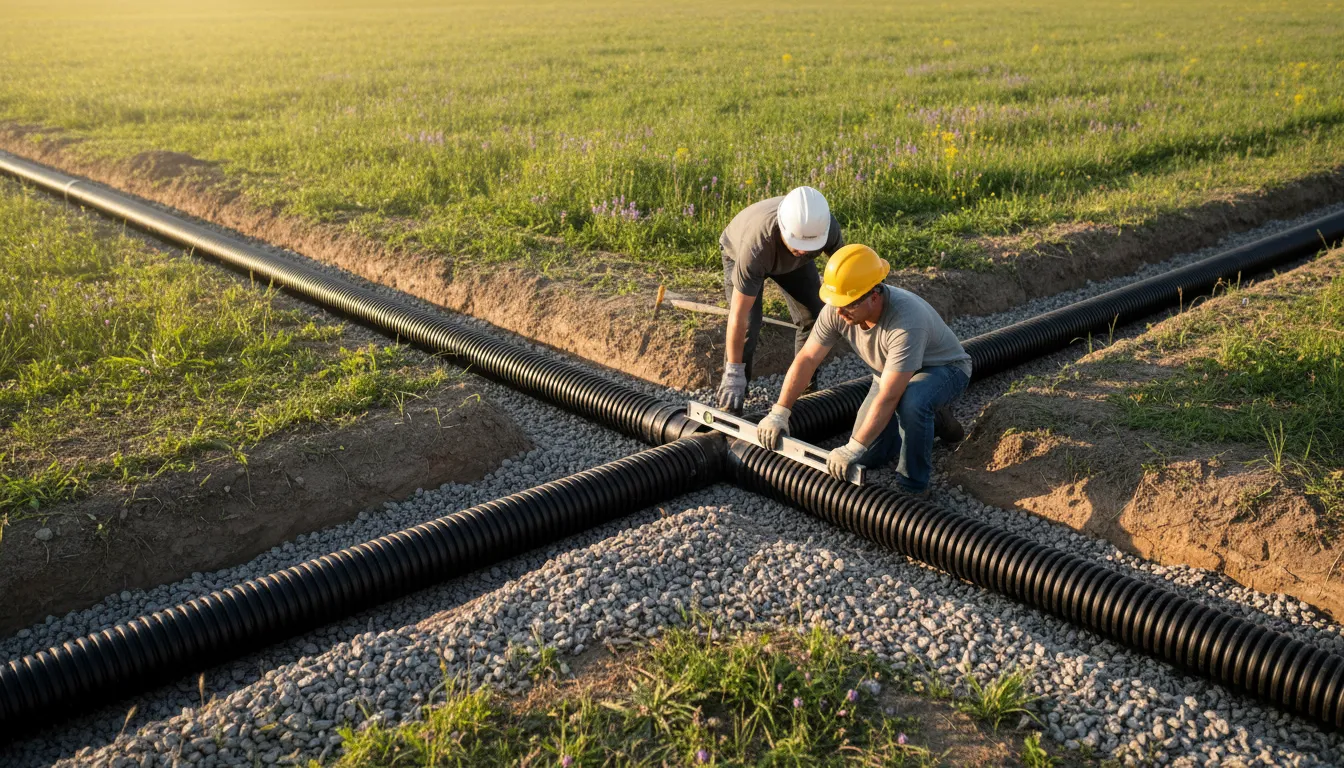
Understanding Your Septic System's Leach Field
The drain field, also known as a leach field or absorption field, is the final stage of your septic system. After solids settle in the tank, liquid effluent flows into a network of perforated pipes buried in trenches. This effluent is then filtered and treated as it percolates through the soil. When this area fails, wastewater can no longer be properly disposed of, leading to system backup and potential contamination. Recognizing the signs of a failing leach field early is crucial for managing repairs before a full, costly replacement is necessary.
Beavercreek and Greene County Regulations
Any work on a septic system in Beavercreek is governed by state and county health codes. A permit must be obtained from Greene County Public Health before any repair or replacement work begins. All work must comply with Ohio EPA rules and the Ohio Administrative Code (OAC 3701-29), as well as the Greene County Sanitary Engineering Department Regulations.1 2 The local health district will conduct a final inspection to approve the installation, ensuring it protects public health by preventing disease and odor. Navigating these regulations is a key reason to work with licensed professionals familiar with local requirements.
The Inspection Process: Diagnosing Drain Field Problems
Before any repair strategy can be determined, a thorough inspection is essential. This process typically involves several steps:
- Locate the System: Professionals may use property records or specialized locating equipment to accurately find the tank and the full extent of the drain field.
- Pump and Clean the Tank: The septic tank should be pumped (a recommended maintenance task every 3-5 years) to allow for a proper inspection of its structure for cracks, leaks, and to check baffle function.
- Evaluate Components: The inspection extends to the distribution box and the drain field trenches themselves. Technicians look for signs of saturated soil, surfacing effluent, or collapsed piping to diagnose failure.3
Inspection costs in the area can range from $200 for a general check to $900 or more for a detailed evaluation, with comprehensive real estate inspections potentially costing up to $1,300.4 5
Key Factors Influencing Repair and Replacement in Beavercreek
Soil Conditions Are Critical
Ohio soil, often with high clay content, presents a unique challenge. Clay soils have reduced drainage capacity, which can limit the effectiveness of a standard drain field and may necessitate a more complex alternative system. For a conventional system, regulations require a minimum of 12 inches of natural, undisturbed soil above limiting conditions like bedrock or water tables, though 3 to 4 feet is ideal for proper treatment.6 Sandy or loamy soils are preferred for their better percolation rates.
Protecting the Absorption Area
Once installed, the drain field must be protected from compaction and damage. Regulations enforce a minimum 10-foot setback from parking areas or heavy equipment to prevent soil compaction that can crush pipes and ruin the soil's absorption quality.7 8 Landscaping choices also matter; trees with shallow, invasive roots should not be planted near the drain field as they can clog and break pipes.9
Scope of Work: Repair vs. Full Replacement
Sometimes, issues can be resolved with targeted repairs, such as fixing a clogged distribution box or replacing a section of crushed pipe. However, when the soil itself has become biomat-clogged or the entire field is saturated, a full leach field replacement is often the only solution. This involves designing and installing a new absorption area, which can be a significant project due to permitting, soil evaluation, and excavation.
Find the perfect drain field repair companies for your needs
Get personalized recommendations and expert advice
Cost Considerations for Leach Field Work
The cost for drain field repair or replacement in Beavercreek varies widely and is highly dependent on the system size, the extent of the failure, and most importantly, the soil conditions on your property. 10 Simple repairs may be a few thousand dollars, while a complete new drain field installation can be a major investment. The specific soil requirements and potential need for engineered alternative systems in poor soils are primary cost drivers.10 Always get detailed, written estimates from multiple licensed contractors that include all costs for excavation, materials, permits, and final inspection.
Choosing a Service Provider
Selecting the right contractor is as important as the technical repair. Look for professionals who are licensed by the state of Ohio and have extensive experience with Greene County Health Department permitting and inspections. They should conduct a thorough site evaluation, including a soil analysis, before proposing a solution. Ask for references from recent similar projects and verify they will handle the entire permit process from application to final approval.
Maintenance to Extend Drain Field Life
Preventative maintenance is the best way to avoid premature drain field failure. This includes regular septic tank pumping every 3-5 years to prevent solids from overflowing into the drain lines. 11 Conserve water to avoid hydraulically overloading the system, and avoid pouring grease, chemicals, or non-biodegradable items down the drain. Direct roof drains and surface water away from the absorption field area. A well-maintained system can protect your property value and prevent environmental issues.
Frequently asked questions
Sources
Footnotes
-
STS Components, Systems and Maintenance - Ohio Department of Health - https://odh.ohio.gov/know-our-programs/sewage-treatment-systems/information-for-homeowners/sts-components-systems-and-maintenance ↩
-
Regulations of The Greene County Sanitary Engineering ... - https://www.greenecountyohio.gov/1454/Greene-County-Regulations ↩
-
Septic Inspections for Real Estate in Ohio | SepTek - https://www.septekservices.com/2025/06/19/what-to-expect-during-a-septic-inspection-for-real-estate-transactions-in-ohio/ ↩
-
Septic Systems Beavercreek, OH - Dooley Service Pro - https://www.dooleyservicepro.com/septic-systems-beavercreek-oh/ ↩
-
How Much Does a Septic Inspection Cost? [2026 Data] - Angi - https://www.angi.com/articles/septic-inspection-cost.htm ↩
-
New household sewage treatment system rules for Ohio - https://ocj.com/2015/05/new-household-sewage-treatment-system-rules-for-ohio-treatment-versus-disposal/ ↩
-
Information for Homeowners - Ohio Department of Health - https://odh.ohio.gov/know-our-programs/sewage-treatment-systems/INFORMATION-FOR-HOMEOWNERS ↩
-
Comparing Septic System Types: Which One Fits Best for Rural Homes in Brown County and Beyond - https://gullettsanitation.com/2025/09/comparing-septic-system-types-which-one-fits-best-for-rural-homes-in-brown-county-and-beyond/ ↩
-
A GUIDE FOR ON-SITE SEWAGE DISPOSAL ... - Ohio.gov - https://dam.assets.ohio.gov/image/upload/epa.ohio.gov/Portals/35/documents/Sewage2000.pdf ↩
-
Considerations for Septic Tank Installation in Ohio - https://supeckseptic.com/considerations-for-septic-tank-installation-in-ohio/ ↩ ↩2
-
Septic | Williams County Health Department - https://www.williamscountyhealth.org/environmental-health/septic-2/ ↩