Find the Best Drain Field Repair Companies for Your Business
No obligation • Fast responses • Nationwide coverage

Why you can trust Septic Spot
Septic Spot is a leading United States resource for understanding and comparing septic services. Our editors review providers using consistent criteria and verify key business details. Listings and scores are independent, and companies cannot pay to influence our content.
Search providers near you
Top Drain Field Repair Companies in Huber Heights, Ohio Ranked
A failing drain field is a serious issue for any home with a septic system, leading to soggy yards, foul odors, and potential environmental contamination. Drain field repair and replacement involves diagnosing and fixing the underground network of pipes and soil that treats wastewater from your home. This guide explains the local process, regulations, and costs for homeowners in Huber Heights, Ohio, to help you understand your options and connect with qualified local professionals who can assess and resolve your system's issues.
Understanding Your Septic Drain Field
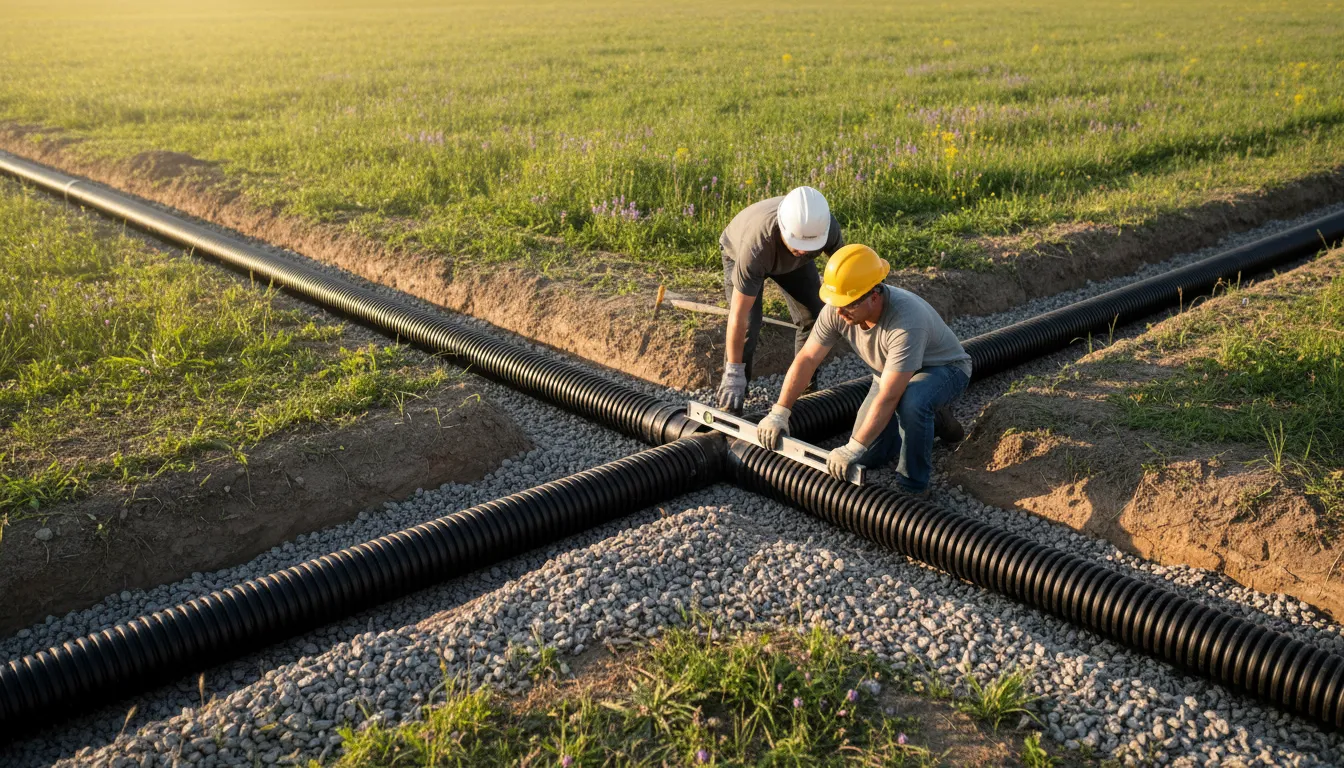
The drain field, also known as a leach field or absorption field, is the final and most critical stage of a septic system. After solids settle in the septic tank, liquid effluent flows into a network of perforated pipes buried in trenches. This effluent slowly percolates through layers of soil, where natural processes remove harmful bacteria, viruses, and nutrients before the water rejoins the groundwater 1. When this area fails, wastewater cannot properly absorb, leading to system backups and surfacing sewage.
Signs You Need Drain Field Service in Huber Heights
Recognizing early warning signs can prevent a minor issue from becoming a catastrophic failure. Look for these indicators around your property:
- Soggy Ground or Standing Water: Persistent wet spots, lush green grass, or pooling water over the drain field area, especially when it hasn't rained.
- Slow Drains and Sewage Backups: Gurgling pipes, slow-flushing toilets, or backups in household drains can indicate a saturated field.
- Foul Odors: Unpleasant sewage smells in your yard or near the drain field.
- Nitrate Contamination: While not visible, a failing system can contaminate nearby wells. Regular well water testing is advised if you have a septic system.
Important: It is prohibited to simply cover surfacing sewage with soil. This does not fix the underlying hydraulic failure and poses a public health risk.
Why Drain Fields Fail in Huber Heights
Several factors common to the Huber Heights area contribute to drain field problems:
- Soil Composition: Much of Ohio, including areas around Huber Heights, has clayey soil. Clay has very small pores that restrict water infiltration, making it difficult for effluent to percolate. This often requires specific, engineered system designs.
- Age and Overuse: Like any component, drain fields have a finite lifespan, typically 20-30 years. Overloading the system with more water than it was designed for (e.g., from large families, excessive laundry, or leaking fixtures) can accelerate failure.
- Physical Damage: Driving or parking vehicles, building structures, or storing heavy materials over the drain field can compact the soil and crush the pipes, destroying the field's functionality 2.
- Lack of Maintenance: Failure to pump the septic tank regularly (typically every 2-5 years) allows solids to wash out into the drain field, clogging the pipes and soil pores.
Local Regulations and Permits for Repair and Replacement
All work on septic systems in Huber Heights is regulated to protect public health and groundwater. The permitting authority is typically Public Health - Dayton & Montgomery County, or the Ohio EPA for larger systems.
- Governing Code: All systems must comply with Ohio Administrative Code (OAC) 3701-29, which mandates that septic systems are designed, installed, and operated to prevent illegal discharge of sewage 3.
- Permit to Repair vs. Permit to Install: A Permit to Repair may suffice for minor fixes like replacing a distribution box or a small section of pipe. A complete Permit to Install (New) is required for a full drain field replacement or a new septic system 4.
- The Replacement Area: Ohio regulations require that a dedicated, undisturbed area be maintained on your property for a potential future drain field replacement. This area must be evaluated during the initial site assessment.
Find the perfect drain field repair companies for your needs
Get personalized recommendations and expert advice
The Step-by-Step Process for Drain Field Work
1. Professional Assessment and Soil Evaluation
The first step is to hire a licensed septic professional to diagnose the problem. If replacement is likely, a certified soil scientist must evaluate the site. This soil evaluation determines the soil's percolation rate ("perc test") and loading rate, which dictates the size and type of system your property can support 5. Given the local clay content, many properties may require an engineered system like a mound system if a traditional trench field is not viable.
2. Design and Permit Application
Your contractor will design a system that complies with OAC 3701-29 based on the soil evaluation. Plans are submitted to the health department along with the permit application. Permit fees in the area can range from $100 to over $300, plus other site-related fees 6.
3. Installation and Inspections
Once the permit is issued, installation can begin. A health department inspector must typically approve the system's design and installation, including inspections of the septic tank and trenches before they are backfilled 7 8. It is illegal to begin construction without the required permit and inspections.
4. Final Approval and Maintenance
After passing final inspection, you will receive approval to use the system. To protect your investment, commit to a regular maintenance schedule, including septic tank pumping and inspections every 2-5 years, which typically costs $100-$200 per visit 9 10.
Cost Considerations for Drain Field Projects in Huber Heights
Costs vary widely based on the extent of the problem, soil conditions, and the system type required. The figures below are estimates to help you budget.
- Minor Repairs: Fixing a distribution box or a small section of lateral line may cost less than $1,000.
- Significant Drain Field Repairs: More extensive repairs to an existing field can run into the thousands of dollars.
- Full System Replacement: Replacing both the septic tank and drain field typically starts around $5,000 and can exceed $20,000. The high end of the range is often due to challenging soil (like heavy clay) requiring specialty systems such as gravel-less chambers or engineered mound systems 11 12 13.
Choosing a System for Challenging Huber Heights Soil
If your soil fails a standard perc test, a traditional trench system may not be an option. Common alternatives include:
- Mound Systems: An elevated drain field constructed with sand and specific fill material. This is a frequent solution for sites with high clay content or a high water table.
- Sand Filter Systems: These systems treat effluent in a sand-filled container before it reaches the drain field, providing advanced treatment for difficult sites.
- Aerobic Treatment Units (ATUs): These systems use oxygen to break down waste more efficiently, often allowing for a smaller drain field.
Your licensed professional and the health department will determine the most appropriate and compliant system for your specific property 14.
Frequently asked questions
Sources
Footnotes
-
Septic Systems and Their Maintenance | NC State Extension Publications - https://content.ces.ncsu.edu/septic-systems-and-their-maintenance ↩
-
Septic System Maintenance | Ohioline - https://ohioline.osu.edu/factsheet/aex-740 ↩
-
Information for Homeowners - https://odh.ohio.gov/know-our-programs/sewage-treatment-systems/INFORMATION-FOR-HOMEOWNERS ↩
-
New or Replacement Sewage Treatment Systems - https://www.scph.org/water-quality/new-or-replacement-sewage-treatment-systems ↩
-
New Jersey Septic System Rules - 2026 Guide - https://thesewerkings.com/blog/new-jersey-septic-system-rules/ ↩
-
Fees | Huber Heights, OH - Hhoh.org - https://www.hhoh.org/155/Fees ↩
-
Rules and Regulations Document (PDF) - Daytonohio.gov - https://www.daytonohio.gov/DocumentCenter/View/993/Rules-and-Regulations-Document-PDF ↩
-
Step-by-Step Guide to Installing or Replacing a Septic System in Central Ohio - https://www.tidytimsinc.com/step-by-step-guide-to-installing-or-replacing-a-septic-system-in-central-ohio ↩
-
STS Components, Systems and Maintenance - https://odh.ohio.gov/know-our-programs/sewage-treatment-systems/information-for-homeowners/sts-components-systems-and-maintenance ↩
-
How Much Does a Septic Inspection Cost? [2026 Data] | Angi - https://www.angi.com/articles/septic-inspection-cost.htm ↩
-
Cost to Replace Septic Tank and Drain Field [2026 Data] | Angi - https://www.angi.com/articles/how-much-new-drain-fields-foot.htm ↩
-
What is the best septic system if your land fails a perc test? - https://www.premiertechaqua.com/en-us/blog/best-septic-system-failed-perc-test ↩
-
Septic System Installation: Essential Steps for a Reliable Setup - https://www.bridgewaterenviro.com/septic-system-installation/ ↩
-
A GUIDE FOR ON-SITE SEWAGE DISPOSAL ... - Ohio.gov - https://dam.assets.ohio.gov/image/upload/epa.ohio.gov/Portals/35/documents/Sewage2000.pdf ↩