Find the Best Drain Field Repair Companies for Your Business
No obligation • Fast responses • Nationwide coverage

Why you can trust Septic Spot
Septic Spot is a leading United States resource for understanding and comparing septic services. Our editors review providers using consistent criteria and verify key business details. Listings and scores are independent, and companies cannot pay to influence our content.
Search providers near you
Top Drain Field Repair Companies in Lakewood, Ohio Ranked
A failing drain field is a serious issue for any Ohio homeowner with a septic system. This critical component, also known as a leach field, is responsible for safely dispersing treated wastewater into the soil. When it malfunctions, it can lead to sewage backups, environmental contamination, and costly property damage. Understanding the repair and replacement process, along with Ohio's specific regulations, is essential for protecting your home, health, and investment. This guide provides the practical information you need to navigate drain field issues, from recognizing early warning signs to working with licensed professionals and complying with state and local health codes.
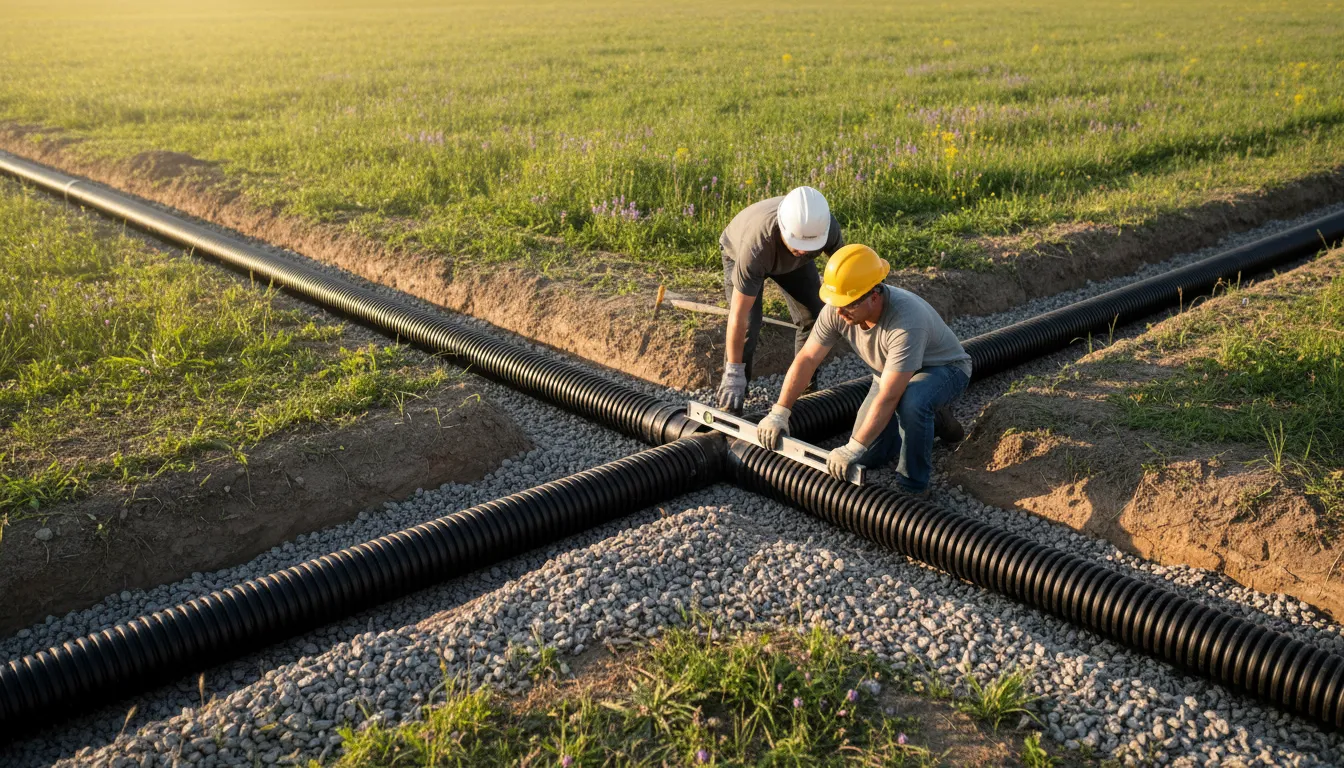
Understanding Your Ohio Drain Field
The drain field is the final stage of a conventional septic system. After solids settle in the septic tank, the liquid effluent flows through pipes into a network of perforated tubes buried in trenches filled with gravel. This effluent slowly percolates through the soil, where natural processes provide final treatment by removing harmful bacteria, viruses, and nutrients.
In Ohio, these systems are formally called Household Sewage Treatment Systems (HSTS) and are governed by state code (Ohio Administrative Code Chapter 3701-29). The system's design is heavily dependent on a site evaluation that tests soil composition, depth to bedrock, and water table levels. This evaluation determines the size and type of drain field suitable for your property. A properly functioning drain field is invisible; you should not see standing water, overly lush grass, or smell odors in the area above it.
Signs Your Ohio Drain Field is Failing
Recognizing the symptoms of a failing leach field early can mean the difference between a manageable repair and a full, expensive replacement. If you notice any of the following, it's time to investigate:
- Sewage Backup: The most alarming sign is sewage backing up into household drains, toilets, or showers.
- Surface Ponding: Standing water, soggy soil, or mud over the drain field area, especially when it hasn't rained, indicates the soil is saturated and can't absorb more effluent.
- Unusual Vegetation: Grass over the drain field that is noticeably greener, lusher, or grows faster than the rest of your lawn can signal a nutrient-rich leak.
- Foul Odors: Persistent sewage smells in your yard or even inside your home are a clear red flag.
- Slow Drains: Chronically slow-draining sinks, tubs, and toilets, particularly if accompanied by gurgling sounds, can point to a system blockage or failure.
- Algae Blooms: In nearby ponds or ditches, sudden algae growth can be caused by nutrient-rich septic effluent reaching surface water.
If you observe these signs, contact a state-registered septic service provider for a professional inspection. A basic inspection in Ohio typically ranges from $200 to $900, while more comprehensive evaluations can cost up to $1,300 1.
Ohio Regulations and Permit Requirements
Ohio law places the responsibility for system maintenance squarely on the homeowner. All work on a drain field is regulated, and understanding the permit process is crucial before starting any project.
The Governing Authority: The Ohio Department of Health (ODH) sets the statewide rules, but permitting and enforcement are handled by your local county or city health district (often called the Board of Health or Health Department). You must work with your local health district for all official steps.
When a Permit is Required: A permit from your local health district is mandatory for any repair, alteration, or replacement of a drain field 2. This includes:
- Repairing or replacing a section of failed distribution lines.
- Adding new trenches to an existing field (an "alteration").
- Completely abandoning an old field and installing a new one in a different location.
The Permit Process: For a replacement, the process usually involves:
- Site Review: A new site and soil evaluation must be conducted, often by a licensed soil scientist or professional engineer, to design a system suitable for current conditions 3.
- Application Submission: Your chosen, state-registered contractor will typically submit the permit application and design plans to the health district.
- Permit Issuance: After review and approval, the health district issues a construction permit.
- Installation & Inspection: The registered contractor performs the work, which must be inspected and approved by the health district before the system is covered.
Operation Permits: Beyond construction permits, every septic system in Ohio requires an Operation Permit, which is essentially a license to operate. These are issued by local health districts, are typically valid for five years, and often cost around $60 4 5. This permit may be contingent on proof of regular maintenance, like septic tank pumping.
Special Cases: If your system includes a discharge of treated wastewater to a stream or ditch, you will also need a permit from the Ohio Environmental Protection Agency (Ohio EPA) Division of Surface Water in addition to the local health district permit 6 7.
Find the perfect drain field repair companies for your needs
Get personalized recommendations and expert advice
The Repair vs. Replacement Decision
Not all drain field problems require a full "dig-up." A professional assessment will determine the best course of action.
Potential Repairs: Minor issues might be solvable with targeted repairs, which can cost a few hundred to a few thousand dollars 8 9. These can include:
- Jet Cleaning: Using high-pressure water to clear clogged pipes.
- Baffle Replacement: Fixing or replacing the inlet/outlet baffles in the septic tank.
- Adding a Cleanout: Installing an access point for easier future maintenance.
- Installing a Distribution Box: Leveling or replacing a faulty box that causes uneven flow to the field.
When Replacement is Necessary: Full replacement is required when the soil absorption area has become permanently clogged or "biomat" has formed, preventing percolation. This is often due to long-term lack of maintenance, hydraulic overloading, or system age. Replacement costs in Ohio can range from $5,000 to over $10,000+, depending heavily on system size, soil conditions, and the need for advanced treatment technologies 10.
System Options: If your original conventional field has failed, your site evaluation may support a similar replacement. However, due to stricter regulations or poor soil, you may need an alternative system, such as:
- Sand Mound: A raised bed of sand used where soil is too shallow or the water table is high.
- Aerobic Treatment Unit (ATU): A mechanical system that injects oxygen to treat effluent more thoroughly before dispersal.
- Drip Irrigation: A system that slowly doses effluent over a larger area.
Working with Contractors and Homeowner Responsibilities
Licensing is Key: In Ohio, only state-registered installers and service providers are legally authorized to install, alter, or service a Household Sewage Treatment System 11. Homeowners can work on their own property only if they pass a state-administered exam and register with the ODH 11. It is strongly recommended to hire a professional for complex work like drain field projects.
Your Ongoing Responsibilities: To maximize the lifespan of a new or repaired drain field, proactive maintenance is non-negotiable 12.
- Pump Regularly: Have your septic tank pumped by a licensed professional at least every five years, or more often based on usage and tank size 13. This prevents solids from washing out into and clogging the drain field.
- Conserve Water: Spread out laundry loads, fix leaky fixtures, and use water-efficient appliances to avoid flooding the drain field.
- Protect the Area: Never drive or park vehicles, build structures, or plant trees and deep-rooted shrubs over the drain field. The soil must remain uncompacted to breathe.
- Mind What You Flush: Only human waste and toilet paper should go down the drain. Avoid chemicals, grease, wipes, and medications that can kill beneficial bacteria or clog the system.
Real Estate Transactions: While Ohio state law does not mandate a septic inspection upon property sale, many local county health districts have their own rules requiring inspection and transfer of the Operation Permit 14. Even if not required, a septic inspection is a standard and highly recommended part of due diligence for buyers and sellers in rural Ohio.
Frequently asked questions
Sources
Footnotes
-
How Much Does a Septic Inspection Cost? [2026 Data] - Angie's List - https://www.angi.com/articles/septic-inspection-cost.htm ↩
-
Septic | Williams County Health Department - https://www.williamscountyhealth.org/environmental-health/septic-2/ ↩
-
Sewage Treatment Systems | Fairfield County Health Department - https://www.fairfieldhealth.org/Environmental-Division/FDH-Household-Sewage-Treatment-Systems.html ↩
-
Septic | Williams County Health Department - https://www.williamscountyhealth.org/environmental-health/septic-2/ ↩
-
Septic Systems | Clermont County Public Health - https://ccphohio.org/septic-system-operation-permits/ ↩
-
Information for Homeowners - https://odh.ohio.gov/know-our-programs/sewage-treatment-systems/INFORMATION-FOR-HOMEOWNERS ↩
-
Household Sewage Treatment Systems - Mercer County Ohio ... - https://mchdohio.org/environmental-health/household-sewage-treatment-systems/ ↩
-
Who Pays For Septic Inspection When Selling a House? - https://ibuyer.com/blog/who-pays-for-septic-inspection-when-selling-a-house/ ↩
-
Understanding the Costs: Septic Inspection and Repair in Bloomington, MN - https://mikesseptic.com/2025/07/understanding-the-costs-septic-inspection-and-repair-in-bloomington-mn/ ↩
-
How Much Does a Leach or Drain Field Replacement Cost? (2026) - https://homeguide.com/costs/drain-leach-field-replacement-cost ↩
-
Information for Contractors - Ohio Department of Health - https://odh.ohio.gov/know-our-programs/sewage-treatment-systems/INFORMATION-FOR-CONTRACTORS ↩ ↩2
-
Onsite Sewage System Owner Responsibilities - Environmental Health - https://www.vdh.virginia.gov/environmental-health/onsite-sewage-system-owner-responsibilities/ ↩
-
10 Signs Your Septic System is Failing (And What to Do About It) - https://www.atsenvironmental.com/blog/10-signs-your-septic-system-is-failing-and-what-to-do-about-it/ ↩
-
Septic System Inspections | Washington County, OH - https://www.washingtongov.org/710/Septic-System-Inspections ↩