Find the Best Drain Field Repair Companies for Your Business
No obligation • Fast responses • Nationwide coverage

Why you can trust Septic Spot
Septic Spot is a leading United States resource for understanding and comparing septic services. Our editors review providers using consistent criteria and verify key business details. Listings and scores are independent, and companies cannot pay to influence our content.
Search providers near you
Top Drain Field Repair Companies in Lorain, Ohio Ranked
A failing drain field is a serious issue for any homeowner with a septic system, often signaled by soggy ground, foul odors, or sewage backing up into the home. In Lorain, Ohio, addressing problems with your leach field or soil absorption system is not just a matter of home maintenance-it's a regulated process designed to protect public health and local waterways like the Black River and Lake Erie. This guide explains the local requirements, processes, and considerations for drain field repair and replacement, helping you understand your options and connect with qualified, registered professionals in the Lorain area.
Understanding Your Drain Field and Local Regulations
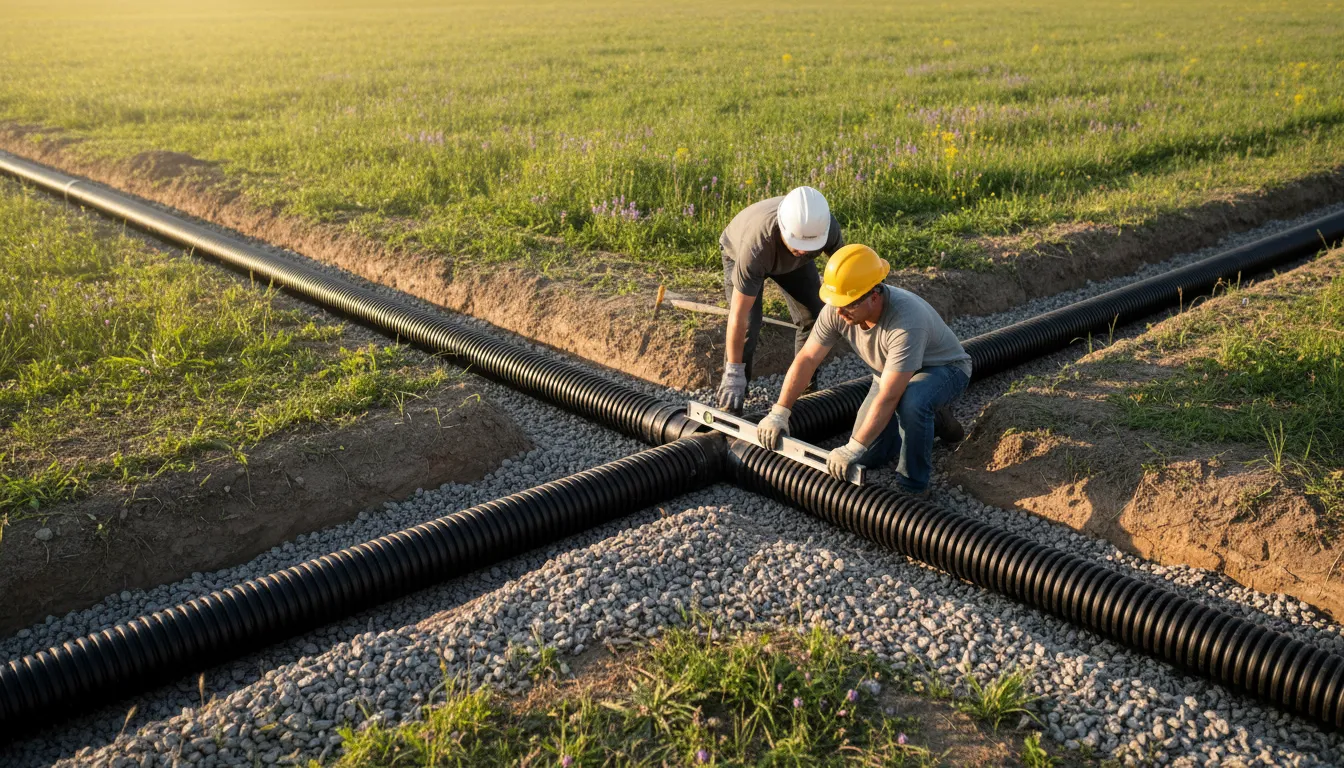
A drain field, also known as a leach field or soil absorption system, is the final and most critical stage of a Home Sewage Treatment System (HSTS). It consists of a network of perforated pipes buried in trenches filled with gravel, allowing pre-treated effluent from the septic tank to slowly percolate into the soil for final purification. When this system fails, it can pose significant environmental and health risks.
In Lorain County, all residential septic systems are governed by a mandatory Operation and Maintenance (O&M) program managed by Lorain County Public Health (LCPH) 1 2. This means every homeowner with an HSTS must have a valid permit from LCPH, which ensures systems are regularly inspected and functioning properly to protect local watersheds 3. The annual permit fee is $40, with a three-year permit available for $120. Crucially, any major alteration or complete replacement of your drain field requires a formal Permit to Install (PTI) from LCPH 3 4. All contractors performing this work must be registered with the county, providing an essential layer of consumer protection and regulatory compliance 4.
Signs You Need Drain Field Service
Recognizing early warning signs can prevent a full system failure and more costly repairs. Be alert for the following:
- Soggy Ground or Surfacing Sewage: The most direct sign of failure is standing water or sewage effluent pooling on the ground above the drain field area, especially after heavy use or rain.
- Slow Drains and Backups: If toilets, showers, and sinks are draining slowly or backing up, and a septic tank pumping doesn't solve the issue, the problem may lie in the saturated drain field.
- Unpleasant Odors: Foul smells of sewage in your yard or near the drain field area indicate the effluent is not properly filtering through the soil.
- Unusually Lush Grass: While sometimes a sign of a healthy lawn, patches of grass over the drain field that are conspicuously greener and thicker than the rest of the yard can signal excess moisture and nutrients from a failing system.
- Nitrate Contamination: Well water tests showing high nitrate levels can sometimes be traced back to a malfunctioning septic system leaching into groundwater.
If you observe sewage surfacing, LCPH considers this a failed system requiring immediate repair or replacement.
The Repair vs. Replacement Decision
Not all drain field problems require a full replacement. A professional inspection by a registered service provider is the critical first step to diagnose the issue.
When Repair Might Be Possible: Minor issues, such as a clogged distribution box, crushed pipes from surface pressure, or a malfunctioning pump, may be repairable without replacing the entire leach field. Some minor repairs may not require a new permit, but it is always best to consult with LCPH to confirm.
When Replacement Is Necessary: A full drain field replacement is typically required when the soil absorption area has become permanently clogged or "biomat-ed," a condition where a thick layer of organic matter forms, preventing proper percolation. This is often the result of long-term neglect, hydraulic overloading, or improper system design for the soil conditions. Replacement is also mandated if the existing system cannot be brought into compliance with current health codes 5.
For new systems and replacements, Lorain County strongly recommends (and often requires) designating a 100% replacement area on your property 6 7. This is an undisturbed, suitable space reserved for a future drain field, ensuring there is room to expand or rebuild the system if needed down the line.
The Step-by-Step Process for Replacement
Replacing a drain field in Lorain is a multi-step process involving professionals and county oversight.
- System Evaluation & Professional Consultation: A registered service provider inspects your entire septic system to confirm failure and determine that replacement is the only viable option 8.
- Site and Soil Evaluation: This is arguably the most important step. A certified soil evaluator must conduct a detailed analysis of your property 9. They will dig test pits to determine the usable soil thickness, texture, and structure, and identify any limiting conditions like a high water table, dense clay layers, or bedrock. This evaluation dictates the type and size of the new system that can be installed.
- System Design and Permit Application: A licensed system designer uses the soil evaluation report to create a detailed plan for the new drain field. This plan is submitted to LCPH as part of the Permit to Install (PTI) application 10. The design must account for site drainage to ensure groundwater does not saturate the field.
- Installation by Registered Contractor: Once the permit is approved, a registered contractor installs the new system according to the approved design. This involves careful excavation to avoid soil compaction, which can ruin the new field's effectiveness.
- Final Inspection and Permit Issuance: LCPH inspectors will check the installation at various stages 11. After passing final inspection, your new system will be issued an O&M permit.
Find the perfect drain field repair companies for your needs
Get personalized recommendations and expert advice
Types of Drain Field Systems for Lorain Properties
The soil conditions on your property will determine the appropriate type of absorption system.
- Conventional Trenches or Beds: The standard system for properties with deep, permeable soil and a low water table. Effluent is distributed via pipes in gravel-filled trenches.
- Mound Systems: Commonly required in Lorain County where soil depth is shallow, permeability is slow, or the water table is high. A mound system involves constructing an elevated sand bed above the natural soil grade, with the drain field built into it.
- Chamber Systems: These use arch-shaped plastic chambers instead of gravel and pipe. They can be a good option in areas with challenging access or where gravel is cost-prohibitive, as they require less excavation.
- Drip Irrigation Systems: An advanced option that uses pressure to slowly drip effluent over a larger, shallower area. They require more components (a pump, filters, controls) but can be ideal for sloped sites or properties with poor soil.
Costs and Key Considerations
Drain field replacement is a significant investment. In the Lorain area, costs for a full drain field replacement typically range from $5,000 to $12,000 or more, depending heavily on the system type and size 12 13 14. A mound system, for example, is generally more expensive than a conventional field due to the additional materials and labor. Remember, this cost is usually in addition to the price of a new septic tank if it also needs replacing.
Additional costs to budget for include:
- Soil evaluation and site survey fees
- System design and engineering fees
- Lorain County permit fees
- Possible costs for an interceptor drain if needed to manage the water table 15
- Landscaping restoration after installation
Protecting Your New Investment: To maximize the lifespan of your new leach field, follow these essential practices:
- Avoid Soil Compaction: Never drive, park vehicles, or place heavy structures (like sheds or pools) over the drain field area 16.
- Divert Water: Ensure roof drains, sump pumps, and surface runoff are directed away from the field.
- Mind Your Planting: Do not plant trees or shrubs with deep, aggressive root systems (like willows, maples, or poplars) near the system 17 18. Grass is the ideal cover.
- Practice Water Conservation: Spread out laundry loads, fix leaks, and use water-efficient fixtures to prevent hydraulic overload.
- Adhere to the O&M Program: Schedule the required periodic inspections with a registered provider to catch small issues before they become big problems 19 20.
Frequently asked questions
Sources
Footnotes
-
Protecting streams, rivers and lakes with safe septic systems - https://www.loraincountyhealth.com/announcements/?action=show&id=8287 ↩
-
Aeration Septic. - Septic Tank Services That Fit Your Schedule - https://www.aeration-septic.com/septic-services/ ↩
-
Information for Homeowners - Ohio Department of Health - https://odh.ohio.gov/know-our-programs/sewage-treatment-systems/INFORMATION-FOR-HOMEOWNERS ↩ ↩2
-
Information for Contractors - Ohio Department of Health - https://odh.ohio.gov/know-our-programs/sewage-treatment-systems/INFORMATION-FOR-CONTRACTORS ↩ ↩2
-
Information for Homeowners - https://odh.ohio.gov/know-our-programs/sewage-treatment-systems/INFORMATION-FOR-HOMEOWNERS ↩
-
Household Sewage Treatment Systems - https://www.loraincountyhealth.com/sewage ↩
-
2026 Onsite Sewage Treatment System Guidance Document - https://dam.assets.ohio.gov/image/upload/epa.ohio.gov/Portals/35/guidance/OSTS_Interim_072011.pdf ↩
-
Commercial Sewage Treatment - Lorain County Public Health - https://www.loraincountyhealth.com/commercialsewage ↩
-
Information for Homeowners - https://odh.ohio.gov/know-our-programs/sewage-treatment-systems/INFORMATION-FOR-HOMEOWNERS ↩
-
Soils, Designs and Site Drainage - Ohio Department of Health - https://odh.ohio.gov/know-our-programs/sewage-treatment-systems/information-for-homeowners/soils-designs-and-site-drainage ↩
-
Commercial Septic Installation in Lorain, Medina, Summit ... - https://septiccleanings.com/commercial-septic-services/installation/ ↩
-
Cost to Replace Septic Tank and Drain Field [2026 Data] | Angi - https://www.angi.com/articles/how-much-new-drain-fields-foot.htm ↩
-
Home Sewage Treatment Systems | Lorain SWCD - https://www.lorainswcd.com/hsts ↩
-
Information for Homeowners - https://odh.ohio.gov/know-our-programs/sewage-treatment-systems/INFORMATION-FOR-HOMEOWNERS ↩
-
Rule 3701-29-16 | Site drainage. - Ohio Laws - https://codes.ohio.gov/ohio-administrative-code/rule-3701-29-16 ↩
-
Site and Soil Evaluation for Sewage Treatment and Dispersal - https://odh.ohio.gov/wps/wcm/connect/gov/f0bffcd7-76cc-42f4-ae6d-1565ab549dca/RES-SSinstruct.pdf?MOD=AJPERES&CONVERT_TO=url&CACHEID=ROOTWORKSPACE.Z18_K9I401S01H7F40QBNJU3SO1F56-f0bffcd7-76cc-42f4-ae6d-1565ab549dca-mtrps4T ↩
-
Septic System Maintenance | Ohioline - https://ohioline.osu.edu/factsheet/aex-740 ↩
-
A GUIDE FOR ON-SITE SEWAGE DISPOSAL SYSTEMS (SEPTIC ... - https://dam.assets.ohio.gov/image/upload/epa.ohio.gov/Portals/35/documents/Sewage2000.pdf ↩
-
Household Sewage Treatment Systems - https://www.loraincountyhealth.com/sewage ↩
-
Lorain County health commissioner explains new septic system ... - https://www.morningjournal.com/2024/01/19/lorain-county-health-commissioner-explains-new-septic-system-program/ ↩