Find the Best Drain Field Repair Companies for Your Business
No obligation • Fast responses • Nationwide coverage

Why you can trust Septic Spot
Septic Spot is a leading United States resource for understanding and comparing septic services. Our editors review providers using consistent criteria and verify key business details. Listings and scores are independent, and companies cannot pay to influence our content.
Search providers near you
Top Drain Field Repair Companies in Mentor, Ohio Ranked
A failing drain field is a serious issue for any home with a septic system, leading to soggy yards, unpleasant odors, and potential environmental contamination. In Mentor, addressing problems with your leach field or soil absorption system is a regulated process that requires professional expertise and adherence to local health codes. This guide explains what you need to know about drain field repair and replacement, from recognizing failure signs to navigating Lake County's permitting process, so you can make informed decisions about restoring your property's wastewater treatment.

Recognizing a Failing Drain Field
The drain field, also known as a leach field or absorption field, is the final and most critical stage of your septic system. It's where treated wastewater from the tank percolates into the soil for final purification. When it fails, the signs are often unmistakable and require immediate attention to prevent health hazards and property damage.
Common indicators include:
- Soggy Ground or Surfacing Sewage: Puddles of wastewater or overly lush, green grass over the drain field area, especially when it hasn't rained.
- Slow Drains and Backups: Gurgling pipes, slow-draining sinks and toilets, or sewage backups in the home.
- Foul Odors: Persistent sewage smells in your yard or near the drain field.
- Nitrate Contamination: High levels of nitrates in nearby well water, which is a serious health risk.
Ignoring these signs can lead to system collapse, costly environmental damage, and violations of Ohio's sewage treatment system regulations 1.
The Regulatory Landscape in Lake County
All work on septic system drain fields in Mentor is governed by the Lake County General Health District (LCGHD) and the Ohio Administrative Code (OAC) Chapter 3701-29. These regulations are designed to protect public health and groundwater quality. A key rule is that any alteration, repair, or replacement of a system component requires a permit from the health district before any work begins. Furthermore, Ohio law mandates that all new and repaired systems operate under an Operation and Maintenance (O&M) Program, which requires regular inspections to ensure ongoing functionality 2.
Find the perfect drain field repair companies for your needs
Get personalized recommendations and expert advice
The Site Evaluation: The First Critical Step
You cannot simply dig up and replace a drain field. The process always starts with a comprehensive site evaluation or soil analysis. A licensed soil scientist or system designer must assess your property to determine the soil's suitability for treating wastewater. This evaluation focuses on:
- Soil Depth and Texture: The depth to limiting layers (like bedrock or clay pans) and the soil's percolation rate (how fast water moves through it).
- Seasonal High Water Table: The highest level the groundwater reaches, which must be well below the bottom of the proposed drain field trenches.
- Slope: The topography of your land, as steep slopes can cause runoff and treatment issues 3.
This evaluation dictates the entire project. Properties in Mentor with high clay content, shallow bedrock, or a high water table may fail a standard perc test and require an alternative treatment system, such as a mound system or aerobic treatment unit (ATU), to overcome the site's limitations 4.
The Step-by-Step Process for Repair or Replacement
Once a failing drain field is confirmed, the path to a solution follows a structured sequence.
- Professional Assessment & Design: A licensed septic system designer uses the site evaluation data to create a detailed plan. This plan specifies the exact type, size, and location of the new leach field or repair, ensuring it meets all OAC 3701-29 standards and required setbacks from wells, property lines, and buildings.
- Permit Submission & Approval: The designer's plan is submitted to the Lake County General Health District for review. The LCGHD will issue the necessary construction permit only after confirming the design complies with all regulations.
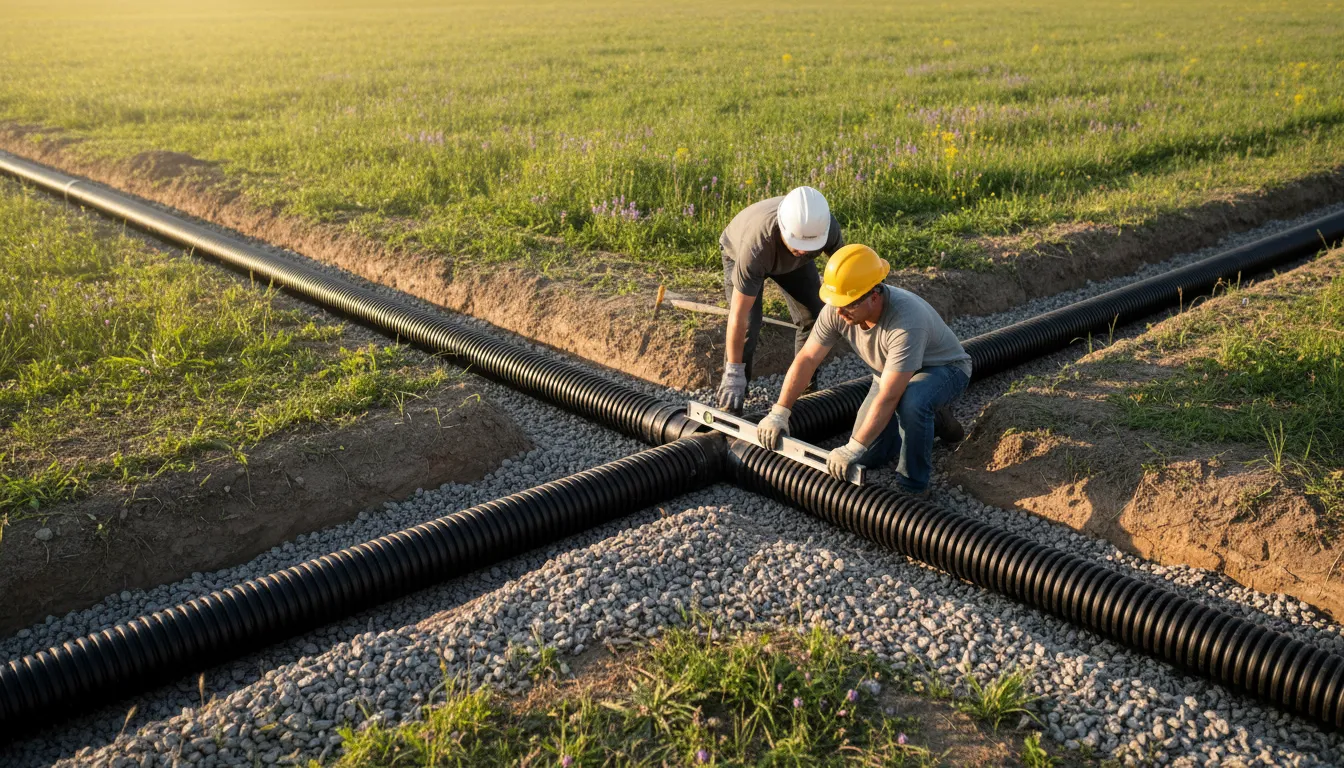
- Licensed Installation: All excavation and construction must be performed by a licensed septic system installer. They will properly excavate the area, install new distribution lines and gravel, and ensure the system is built exactly to the approved design specifications 5.
- Final Inspection: Before the new drain field is covered with soil, a final inspection by the LCGHD is mandatory. This ensures the installation matches the permitted plans. Only after passing this inspection can the system be buried and put into use 6.
Understanding the Costs Involved
Drain field work is a significant investment in your property. Costs vary widely based on the size of your home, soil conditions, and the type of system required.
- Drain Field Replacement: For a standard replacement in a suitable soil location, homeowners can expect costs ranging from $3,000 to $15,000 on average 7.
- Full System Replacement: If the septic tank also needs replacement or a complex alternative system is required, the total cost can exceed $20,000.
- Ongoing Costs: Remember that your new system will require routine maintenance. Budget for septic tank pumping and inspections every 2-5 years, which typically costs between $100 and $200 annually when averaged out 8. This maintenance is not just a recommendation; it's a requirement of the O&M permit for your new system 9.
Protecting Your Investment: Maintenance is Key
A new drain field is designed to last 20 to 30 years or more with proper care 10 11. Protecting this investment starts the day it's installed.
- Avoid Compaction: Never drive or park vehicles, heavy equipment, or build structures (like sheds or patios) over the drain field area. Compaction crushes the soil pores and pipes, destroying the system's ability to absorb water.
- Manage Water Usage: Practice water conservation to avoid hydraulically overloading the system. Fix leaky faucets and toilets promptly, and spread out laundry loads throughout the week.
- Mind the Landscape: Do not plant trees or large shrubs near the drain field, as roots will seek out moisture and infiltrate and clog the pipes. Grass is the ideal cover.
- Pump Regularly: Adhere to a strict schedule for pumping the septic tank (typically every 2-5 years). This prevents solids from escaping the tank and clogging the new drain field, which is the most common cause of premature failure 12.
By following these guidelines and partnering with licensed professionals who understand Lake County's specific requirements, you can successfully navigate a drain field repair or replacement, ensuring your Mentor home has a safe, effective, and long-lasting wastewater treatment system.
Frequently asked questions
Sources
Footnotes
-
Information for Homeowners - https://odh.ohio.gov/know-our-programs/sewage-treatment-systems/INFORMATION-FOR-HOMEOWNERS ↩
-
Septic Tank-Soil Treatment Systems - https://www.browntwp.org/site/assets/files/1090/e939-1.pdf ↩
-
Septic Systems Reports, Regulations, Guidance, and Manuals - https://www.epa.gov/septic/septic-systems-reports-regulations-guidance-and-manuals ↩
-
What is the best septic system if your land fails a perc test? - https://www.premiertechaqua.com/en-us/blog/best-septic-system-failed-perc-test ↩
-
Step-by-Step Guide to Installing or Replacing a Septic System in Central Ohio - https://www.tidytimsinc.com/step-by-step-guide-to-installing-or-replacing-a-septic-system-in-central-ohio ↩
-
The Ultimate Guide to Septic System Installation Process | Septic System Professionals - https://septic911.com/septic-system-installation-process/ ↩
-
Cost to Replace Septic Tank and Drain Field [2026 Data] | Angi - https://www.angi.com/articles/how-much-new-drain-fields-foot.htm ↩
-
STS Components, Systems and Maintenance - https://odh.ohio.gov/know-our-programs/sewage-treatment-systems/information-for-homeowners/sts-components-systems-and-maintenance ↩
-
Operation and Maintenance (O&M) Program | - https://gphohio.org/page-title-old/om-septic/ ↩
-
How long does a septic system last? What you need to know - https://michigansaves.org/news/how-long-does-a-septic-system-last/ ↩
-
Septic Drain Field Replacement Costs Vs. Long-Term Savings - Septic Tank Man - https://www.theseptictankman.com/blog/septic-drain-field-replacement-costs-vs-long-term-savings ↩
-
Septic System Maintenance | Ohioline - https://ohioline.osu.edu/factsheet/aex-740 ↩