Find the Best Drain Field Repair Companies for Your Business
No obligation • Fast responses • Nationwide coverage

Why you can trust Septic Spot
Septic Spot is a leading United States resource for understanding and comparing septic services. Our editors review providers using consistent criteria and verify key business details. Listings and scores are independent, and companies cannot pay to influence our content.
Search providers near you
Top Drain Field Repair Companies in Strongsville, Ohio Ranked
A failing septic system drain field is a serious issue that can lead to property damage, environmental contamination, and health hazards. Drain field repair or replacement involves restoring the underground area where treated wastewater is dispersed into the soil. This guide explains the process, regulations, and costs specific to Strongsville, Ohio, helping you understand your options and connect with qualified local professionals who can assess and address your system's needs.
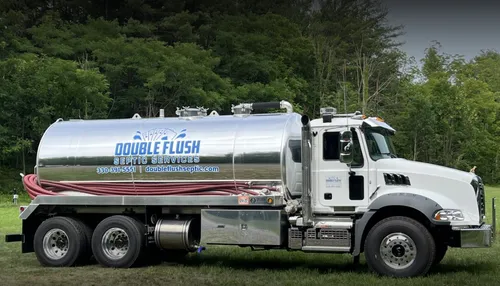
Double Flush Septic Services
2481 Remsen Rd, Medina, OH 44256
Double Flush Septic Services is a family-owned company based in Medina, OH, providing septic system installation, pumping, inspection, and repair services throughout Akron and the surrounding Northeast Ohio counties. They serve a broad area including Medina, Summit, Stark, Wayne, and Cuyahoga counties, offering expertise in maintaining and repairing septic tanks, drain fields, and aeration systems such as Norweco, Hydro-Action, and Marlow-Hunter. The company also provides emergency septic services and commercial grease trap cleaning, with capabilities like hydro jetting and drain snaking to address severe blockages. Double Flush Septic Services emphasizes local knowledge of Ohio's climate and soil conditions to support system longevity and functionality.
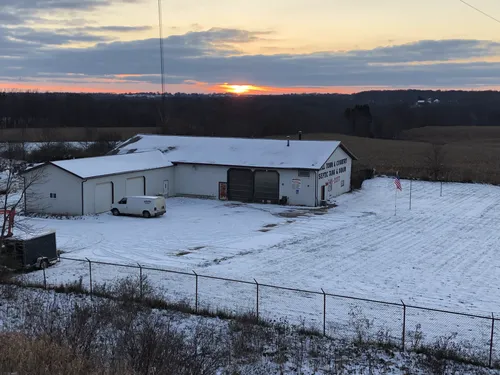
All Town & Country Septic Tank
3500 S Hametown Rd, Norton, OH 44203
All Town & Country Septic Tank is a licensed septic service provider based in Akron, OH, serving multiple counties including Summit, Wayne, Stark, Medina, and Portage. They offer septic tank pumping, inspection, repair, and installation services, along with drain field repair and septic pump replacement. The company is registered with Ohio Local Health Districts and the state EPA, ensuring compliance with strict state and local regulations. They also specialize in maintaining aerobic treatment systems and provide routine inspections to help prevent system failures. All Town & Country handles necessary permits and paperwork, supporting residential septic system operation and maintenance.
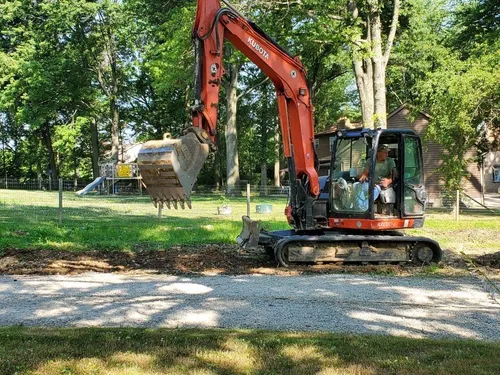
Summit Excavating
Akron, OH
Summit Excavating is a septic service company based in Akron, OH, offering a range of services including septic tank pumping, system repairs, installations, and drain field repair. The company also provides aeration unit installation and waste water pumping and disposal. Summit Excavating serves multiple counties including Medina, Portage, Summit, Stark, and Wayne, and is licensed, bonded, insured, and approved by the Ohio EPA. Founded by Marie and Jim Easterling, Sr., the company has a history of community service and expanded its offerings after 2006. They provide flexible scheduling for one-time or routine septic services and work year-round to maintain system performance.
Understanding Drain Field Failure
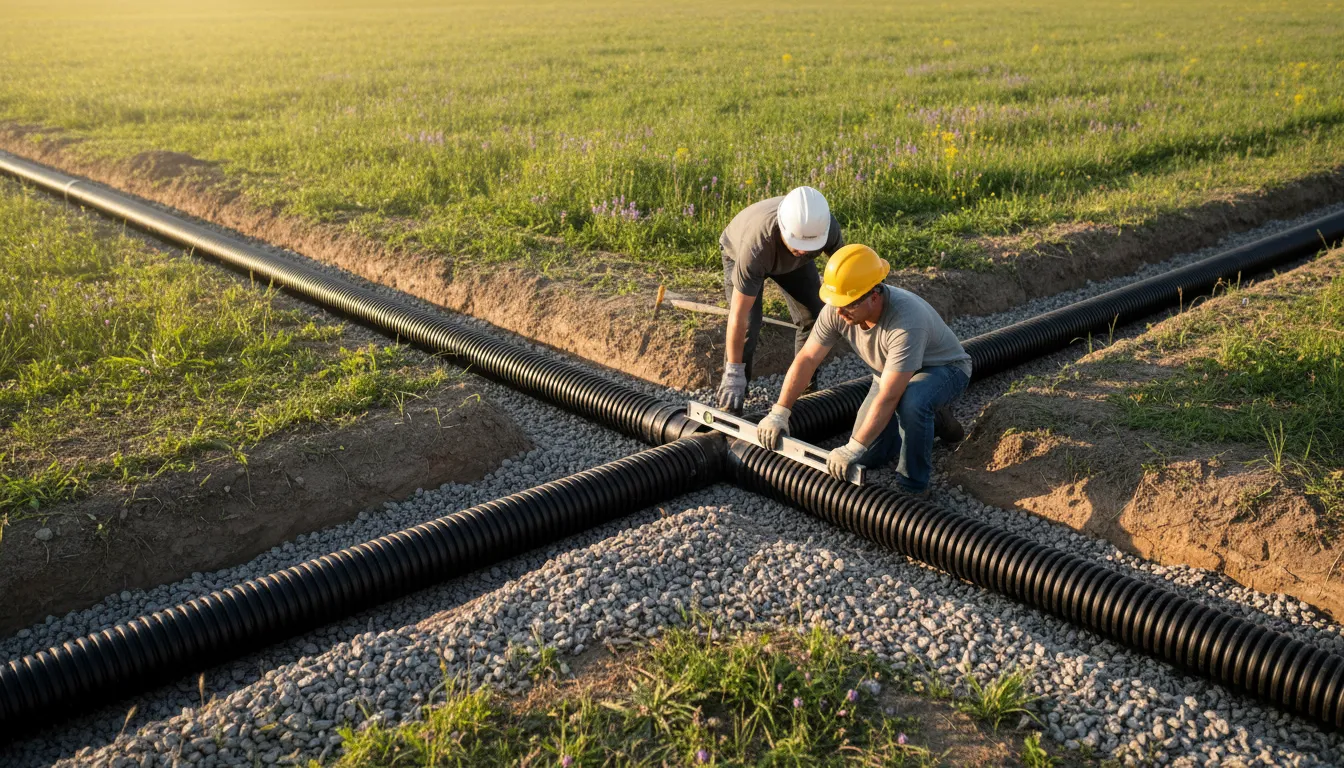
A drain field, also known as a leach field or absorption area, is the final and most critical component of a septic system. After solids settle in the tank, liquid effluent flows into a network of perforated pipes buried in trenches filled with gravel. This effluent slowly percolates into the surrounding soil, where natural processes provide final treatment.
Failure occurs when the soil can no longer absorb the effluent. Common signs in Strongsville include:
- Sewage surfacing in your yard, especially after rain.
- Persistent soggy ground or lush green grass over the drain field.
- Slow drains, gurgling pipes, or sewage backups in the home.
- Unpleasant odors around the tank or drain field area.
In Ohio, a system exhibiting these symptoms is legally considered a "nuisance" and must be repaired or replaced. The first step is always to contact a registered sewage treatment system installer for a diagnosis.
Strongsville and Cuyahoga County Regulations
All septic system work in Strongsville is governed by Ohio Department of Health (ODH) Rule 3701-29 and enforced locally by the Cuyahoga County Board of Health (CCBH) 1. You cannot legally begin any repair or replacement project without understanding these rules.
Key Regulatory Requirements:
- Permit Required: A permit from the CCBH is mandatory for any alteration or replacement of a sewage treatment system (STS) 2. This ensures the work meets current health and environmental standards.
- Registered Contractors: Only installers registered with the Ohio Department of Health can perform this work. In Strongsville, contractors must also be registered with the City 3. Always verify this registration before hiring.
- Operation & Maintenance (O&M): Ohio law requires all septic systems to be under an O&M plan. Following a repair or replacement, your new system will be permitted and require regular inspections-typically every 3-5 years for conventional systems, or annually for advanced treatment systems.
- Design Rules: Replacement systems must comply with the 2015 Ohio sewage rules. A major requirement is the identification of both a "primary" area for the new system and a "replacement" (or reserve) area for future use, which must be protected from disturbance.
The Step-by-Step Process for Repair or Replacement
Addressing a failed leach field is a multi-stage process involving professionals and the health department.
- Professional Assessment: A registered installer will inspect your system. This often involves locating all components, checking for tank integrity, and may include a dye test to confirm failure and pinpoint the problem 4 5.
- Site and Soil Evaluation (SSE): If repair isn't feasible, a registered soil scientist must conduct a formal SSE. This involves taking soil borings to determine:
- Soil Type and Permeability: Clayey soils, common in the region, have slow permeability and require careful installation to avoid "smearing" the trench walls, which can block absorption.
- Depth to Limiting Conditions: The scientist measures the depth to bedrock and the seasonal high water table. These factors dictate the size and type of system you can install 6.
- Replacement Area Identification: The scientist will also designate the legally required reserve area for a future system.
- System Design and Permitting: Using the SSE report, a registered installer designs a system that complies with all Ohio rules. The design and permit application are submitted to the CCBH for approval 7.
- Installation: Once the permit is issued, installation can begin. The old drain field may be abandoned in place. The new system is constructed according to the approved design.
- Final Inspection: The CCBH must inspect and approve the installed system before it is covered with soil 8. Only then can it be put into use.
Find the perfect drain field repair companies for your needs
Get personalized recommendations and expert advice
Soil Considerations and System Types in Strongsville
The soil conditions on your property directly determine the solution for your failing absorption field.
- Conventional Trenches: Suitable for properties with deep, permeable soil and a low water table. This is often the most cost-effective option but may not be viable on many lots due to soil limitations.
- Mound Systems: Commonly used in areas with high water tables, shallow bedrock, or dense clay soils. A mound system involves constructing an elevated sand bed above the natural grade to provide adequate treatment depth. These are more complex and expensive to install.
- Advanced Treatment Systems: These systems treat the effluent to a higher standard inside a tank before it reaches the drain field, allowing for a smaller absorption area. They may be required on challenging sites and come with stricter annual maintenance requirements 9.
The site and soil evaluation is critical because Ohio rules prohibit installing a system in disturbed areas, under driveways, patios, or decks, or in any location that doesn't meet the specific vertical separation requirements 10 11.
Understanding the Costs Involved
Drain field replacement is a significant investment. In Strongsville and Northeast Ohio, total costs typically range from $10,000 to over $30,000 12 13 14. Several factors influence the final price:
- System Type: A conventional system is generally the least expensive. A mound system or an advanced treatment system will increase the cost substantially.
- Site Work: Extensive excavation, tree removal, or difficult access can add to the price.
- Permit and Design Fees: These include the CCBH permit fee and the cost of the mandatory site and soil evaluation by a registered soil scientist, which can be several hundred dollars 15.
- Contractor Rates: Prices will vary between registered installers based on experience, equipment, and project complexity.
Financial Assistance Programs
The high cost can be a burden, but assistance may be available:
- Water Pollution Control Loan Fund (WPCLF): The Ohio EPA administers this program, which provides grants and low-interest loans to eligible low-income homeowners for repairing or replacing failing systems. You should contact the Cuyahoga County Board of Health to see if they are participating and to learn about eligibility 16 17.
- Sewer Connection Projects: In specific areas, the City of Strongsville has undertaken projects to extend public sanitary sewer lines. If your home is in such an area (e.g., the Howe Road area referenced in past ordinances) and your septic system is failing, connecting to the sewer may be an option, and the city may have assistance programs 18. Check with the City Engineering Department for current information.
Maintaining Your New Drain Field
Protecting your investment is crucial. After a repair or replacement, adhere to a strict maintenance plan:
- Pump the Tank Regularly: Even with a new drain field, the septic tank must be pumped every 3-5 years to prevent solids from clogging the new lines.
- Follow the O&M Plan: Comply with all inspection and servicing requirements outlined in your system's Operation and Maintenance permit 19 20.
- Protect the Area: Never drive or park over the drain field or reserve area. Keep roof drains, sump pumps, and other surface water away from it. Avoid planting trees or deep-rooted shrubs nearby.
Frequently asked questions
Sources
Footnotes
-
Sewage Treatment Systems - Ohio Department of Health - https://odh.ohio.gov/know-our-programs/sewage-treatment-systems ↩
-
New or Replacement Sewage Treatment Systems - https://www.scph.org/water-quality/new-or-replacement-sewage-treatment-systems ↩
-
contractors and subcontractors FROM: City of Strongsville - https://www.strongsville.org/CityOfStrongsville/media/StrongsvilleMedia/Documents/plumbing_and_or_sewer-5.pdf ↩
-
Septic Inspection Service in Strongsville, Columbia Station ... - https://wini.com/royalton/services/septic-inspection/ ↩
-
Septic Inspections for Real Estate in Ohio | SepTek - https://www.septekservices.com/2025/06/19/what-to-expect-during-a-septic-inspection-for-real-estate-transactions-in-ohio/ ↩
-
New or Replacement Sewage Treatment Systems - https://www.scph.org/water-quality/new-or-replacement-sewage-treatment-systems ↩
-
Information for Homeowners - https://odh.ohio.gov/know-our-programs/sewage-treatment-systems/INFORMATION-FOR-HOMEOWNERS ↩
-
Sewage Treatment Systems Forms & Bond Lists - https://odh.ohio.gov/know-our-programs/sewage-treatment-systems/forms ↩
-
Information for Homeowners - https://odh.ohio.gov/know-our-programs/sewage-treatment-systems/INFORMATION-FOR-HOMEOWNERS ↩
-
Sewage Treatment System Rules-Regulation 415 - https://ccphohio.org/wp-content/uploads/sites/21/2017/02/reg415effective2012.pdf ↩
-
Septic System Maintenance | Ohioline - https://ohioline.osu.edu/factsheet/aex-740 ↩
-
A GUIDE FOR ON-SITE SEWAGE DISPOSAL ... - Ohio.gov - https://dam.assets.ohio.gov/image/upload/epa.ohio.gov/Portals/35/documents/Sewage2000.pdf ↩
-
The Ultimate Guide to Replacing a Septic Drain Field - https://www.rciseptic.com/the-ultimate-guide-to-replacing-a-septic-drain-field ↩
-
Buying a Home with Septic? Inspection in Kentucky & Ohio - https://kentuckyinspectionservices.com/services/septic-inspection/ ↩
-
Soil Evaluation for Home Septic Systems - Ohioline - https://ohioline.osu.edu/factsheet/aex-742 ↩
-
Home Sewage Treatment Systems (HSTS) - Ohio EPA - https://epa.ohio.gov/wps/portal/gov/epa/divisions-and-offices/environmental-financial-assistance/financial-assistance/home-sewage-treatment-systems-hsts ↩
-
Home Sewage Treatment Systems (HSTS) - Ohio EPA - https://epa.ohio.gov/wps/portal/gov/epa/divisions-and-offices/environmental-financial-assistance/financial-assistance/home-sewage-treatment-systems-hsts ↩
-
city of strongsville, ohio - ordinance no. 2018 - https://www.strongsville.org/CityOfStrongsville/media/StrongsvilleMedia/Legislation/2018/2018-106.pdf?ext=.pdf ↩
-
Ohio's Septic System Operation & Maintenance Regulations - https://supeckseptic.com/operation-maintenance-regs/ ↩
-
Understanding Ohio's Septic System Regulations - https://checkmateohio.com/understanding-ohios-septic-system-regulations/ ↩