Find the Best Drain Field Repair Companies for Your Business
No obligation • Fast responses • Nationwide coverage

Why you can trust Septic Spot
Septic Spot is a leading United States resource for understanding and comparing septic services. Our editors review providers using consistent criteria and verify key business details. Listings and scores are independent, and companies cannot pay to influence our content.
Search providers near you
Top Drain Field Repair Companies in Clarksville, Tennessee Ranked
A failing drain field is a serious issue for any home with a septic system, leading to soggy yards, foul odors, and potential environmental contamination. Drain field repair or replacement is a regulated process designed to restore your property's wastewater disposal system safely and effectively. This guide explains the local requirements, process, and key considerations for managing a septic leach field project in Clarksville, helping you navigate the necessary steps with licensed professionals.
Understanding Drain Field Failure
The drain field, also known as a leach field or absorption field, is the final stage of a septic system where treated wastewater percolates into the soil. Failure occurs when the soil becomes saturated and can no longer absorb liquid. Common signs include:
- Sewage odors in the yard or home.
- Soggy, spongy, or standing water over the drain field area.
- Slow-draining sinks and toilets.
- Unusually lush, green grass over the field.
When these signs appear, immediate action is required to protect public health and the environment. In Clarksville and Montgomery County, all repairs and replacements are overseen by the Tennessee Department of Environment and Conservation (TDEC) through its local Environmental Field Office to ensure compliance with state soil, site, and sewage disposal regulations 1.
The Permit Process: Your First Step
Before any work begins, a Septic System Repair Permit must be obtained. This permit is a legal requirement for addressing a failing system and must be secured by a licensed, state-registered contractor on your behalf.
Key Permit Details:
- Application: Your contractor will submit a repair application to the local TDEC Environmental Field Office. Because it addresses a failure, these applications are often treated with urgency.
- Fee Structure: A significant point for homeowners is that Tennessee state regulations often waive the permit fee for repair permits (as opposed to permits for new systems). However, a construction inspection fee, typically around $100, still applies 2.
- Permit Validity: Once issued, a septic repair permit is generally valid for 12 months, with the possibility of a 6-month extension if needed.
- Public Sewer Mandate: It's crucial to know that if a public sewer line is accessible at the property line, TDEC may deny a permit for septic repair altogether. In such cases, the property will be required to connect to the municipal sewage system 3.
Site Evaluation and Design Requirements
A successful drain field project depends entirely on a proper site evaluation. A TDEC inspector will visit your property to assess the failing system and conduct a soil evaluation. If a reserve area wasn't previously approved, a new percolation test ("perc test") will be required to determine the soil's absorption rate.
The design of your new leach field is governed by strict rules based on this evaluation:
- Soil and Slope: The soil type, percolation rate, and slope of your land are the primary design factors. Steep slopes, high water tables, or poorly draining soils may require an engineered alternative like a mound system.
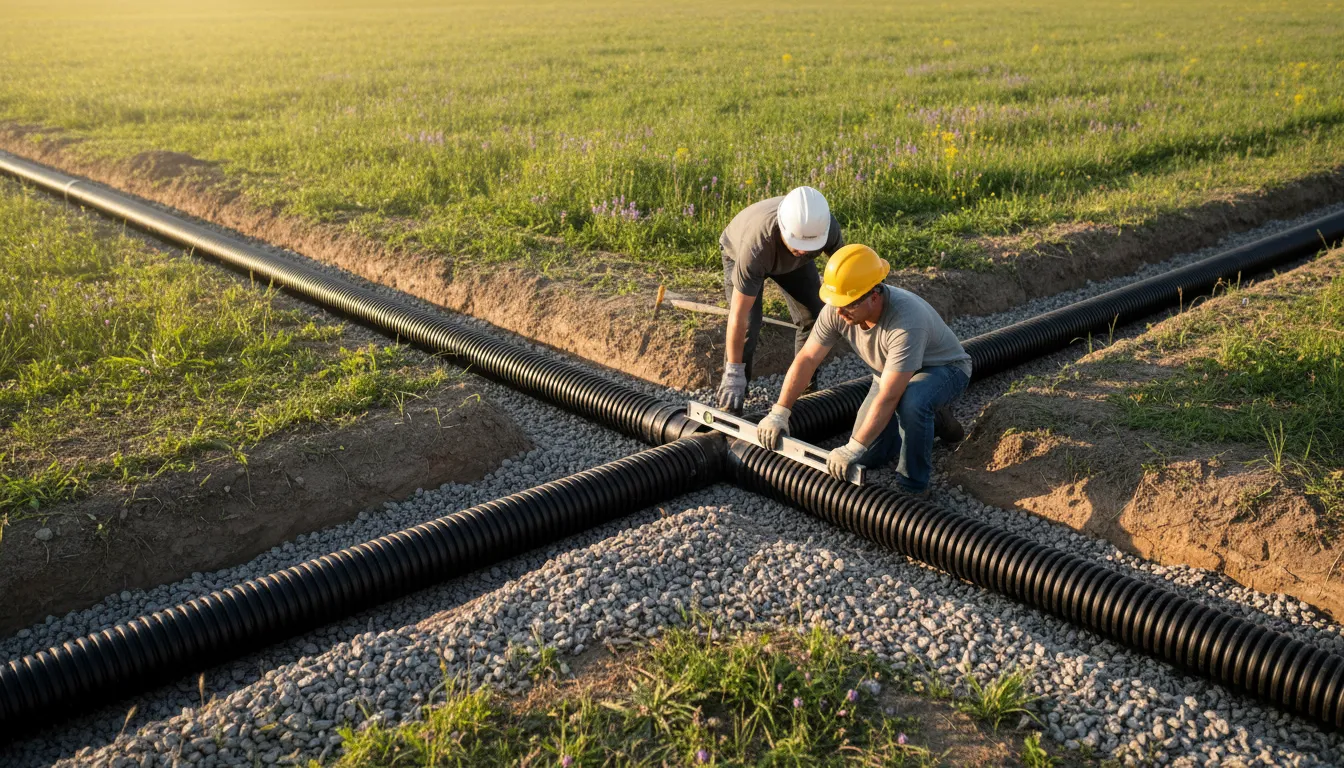
- Trench Layout: Lateral lines must be placed on contour. There is usually a maximum recommended length of 100 feet per line, and a minimum of 6 feet of undisturbed earth must be maintained between trenches 4 5.
- Setbacks: Regulations enforce minimum distances from features like wells, property lines, and buildings. For example, a drain field must typically be at least 100 feet from a private water well.
- Vertical Separation: A critical rule is maintaining a 2-foot vertical separation between the bottom of the drain field trenches and the highest seasonal groundwater level or a restrictive soil layer like bedrock 6 7.
Find the perfect drain field repair companies for your needs
Get personalized recommendations and expert advice
The Step-by-Step Construction Process
Navigating the repair or replacement process involves several defined stages with required inspections.
- Filing for Repair: Your licensed contractor submits the official repair application to the local TDEC office.
- Repair Evaluation & Permit Issuance: A TDEC inspector visits to evaluate the failure and the soil. Based on this, a system design is created and the repair permit is issued.
- Pre-Construction Meeting: Before breaking ground, the installer will often schedule a meeting with the TDEC inspector to review the approved plans on-site.
- Construction Inspection: This is a mandatory checkpoint. Before the new distribution pipes are covered with soil, the TDEC inspector must visit to examine the installation.
- Certificate of Completion: After a final inspection confirms everything is built to code, a Certificate of Completion is issued. Only then can the system be fully covered and put into use 8.
Understanding the Costs Involved
While the repair permit itself may have no fee, the total cost of addressing a failed drain field is a significant investment. It's important to budget for all components.
- Permit & Inspection Fees: The mandatory construction inspection typically costs around $100 9.
- Soil Evaluation & Design: If a detailed, high-intensity soil map from a private soil scientist is needed for design, this can add $500 to $1,000 or more to the upfront cost 10.
- Replacement Cost (Drain Field): The core expense. A full leach field replacement in Clarksville can range from $5,000 to $12,000 or higher, depending heavily on the type of system required. A conventional anaerobic field is on the lower end, while more complex systems like sand filters or mound systems for difficult soils are at the higher end 11 12.
- Contractor Labor: This covers all excavation, installation of pipes and gravel, and restoration of the site.
Note on Property Transfers: If a septic system fails during a home inspection prior to sale, the issue must be addressed immediately. The cost of repair or replacement is typically a point of negotiation between the buyer and seller 13.
Choosing and Working with a Licensed Professional
State law requires that all septic system installers be registered with the Tennessee Board of On-Site Wastewater Professionals. Always verify a contractor's license before signing any agreement. A qualified professional will handle the entire permit process, ensure the design meets TDEC standards, and schedule the necessary inspections. Their expertise is invaluable in navigating local regulations, selecting the right system for your property, and ensuring a long-lasting solution.
Maintaining Your New Drain Field
Once your new leach field is installed, proper maintenance is key to extending its lifespan for decades. This includes regular septic tank pumping (every 3-5 years), conserving water to avoid overloading the system, and never driving or building over the drain field area. Protecting your investment starts the day the new system is activated.