Find the Best Drain Field Repair Companies for Your Business
No obligation • Fast responses • Nationwide coverage

Why you can trust Septic Spot
Septic Spot is a leading United States resource for understanding and comparing septic services. Our editors review providers using consistent criteria and verify key business details. Listings and scores are independent, and companies cannot pay to influence our content.
Search providers near you
Top Drain Field Repair Companies in Nashville, Tennessee Ranked
A failing drain field is a serious issue for any home with a septic system, leading to soggy yards, foul odors, and potential environmental contamination. In Nashville, drain field repair and replacement is a highly regulated process designed to protect our local groundwater and the Cumberland River watershed. This guide explains the critical steps, regulations, and considerations for addressing drain field problems, helping you understand how to navigate the process with local professionals to restore your property's wastewater treatment system.
Shamrock Septic Service
250 Gatemouth Ln, Auburntown, TN 37016
Shamrock Septic Service has been providing septic system services in Nashville, TN, and the surrounding Rutherford County area since 2005. They offer septic tank pumping, inspections, repairs, installations, and drain field maintenance for both residential and commercial properties. Using modern equipment and proven techniques, Shamrock Septic Service focuses on maintaining and repairing septic systems to prevent costly backups and extend system life.

Scott Septic Tank Service LLC
10201 Manchester Pike, Christiana, TN 37037
Scott Septic Tank Service LLC is a locally owned company providing comprehensive septic system services in Nashville, TN, and surrounding areas. They offer septic tank cleaning, inspections, repairs, installations, field line restoration, and riser installation. The company emphasizes accurate evaluations and durable solutions tailored to local soil conditions and regulations. With over 60 years of experience, Scott Septic Tank Service focuses on long-term system performance and environmental protection through careful planning and proven methods.
L&L Septic
2051 Carters Creek Pike, Franklin, TN 37064
L&L Septic is a family-owned septic service provider based in Nashville, TN, serving Franklin and the surrounding Williamson County area for over a decade. They offer a range of residential and commercial septic services including tank pumping, inspections, repairs, installations, and drain field replacements. The company is licensed and certified in Tennessee and Williamson County, ensuring professional and secure handling of septic systems. L&L Septic is known for upfront pricing and a commitment to customer satisfaction, with after-hours service available for emergencies.
Pyburn Plumbing
Nashville, TN
Pyburn Plumbing is a third-generation plumbing and septic service provider based in Nashville, TN, serving the Upper Cumberland region since 1996. They offer a wide range of services including septic tank pumping, septic system repair, septic tank installation, drain field repair or replacement, and septic pump repair or replacement. Their expertise includes installing new septic pumps and field lines, as well as complete septic system setups. With nearly three decades of experience, Pyburn Plumbing also provides plumbing services such as water heater installation and repiping with durable PEX piping to ensure long-lasting performance.
Understanding Your Drain Field and Signs of Failure
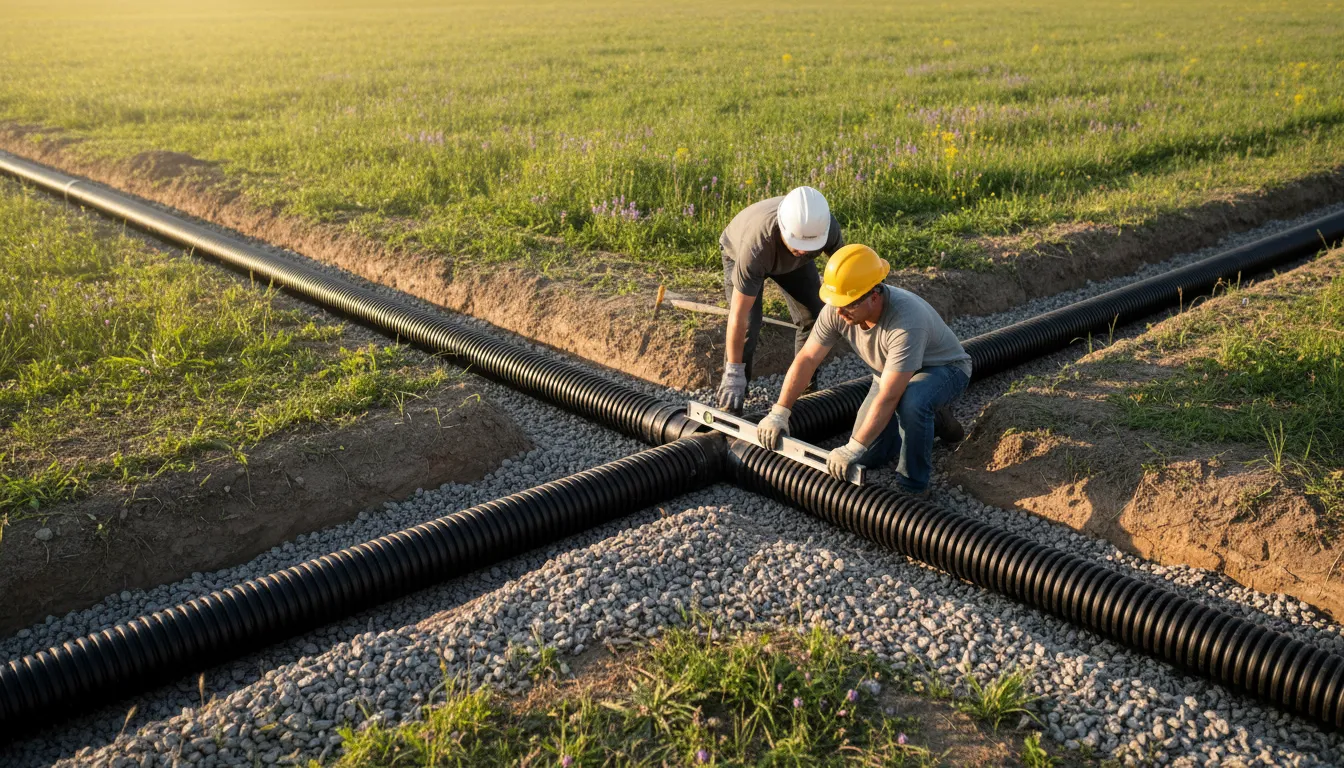
The drain field, also known as a leach field or absorption field, is the final and most crucial stage of your onsite wastewater system. After solids settle in the septic tank, liquid effluent flows into a distribution box and is released through perforated pipes into a network of gravel-filled trenches. Here, the soil acts as a natural filter, removing harmful bacteria and nutrients before the water recharges the groundwater 1.
When this system fails, it's often due to a clogged or saturated drain field. Common warning signs include:
- Sewage odors in the yard or home.
- Standing water or soggy, spongy ground over the field area, especially when it hasn't rained.
- Gurgling sounds in household plumbing.
- Slow drains or toilets backing up.
- Unusually green, lush grass over the field.
If you notice any of these issues, it's time to investigate. A professional inspection can determine if the problem is a simple clog, a crushed pipe, or a complete system failure requiring major repair or a new leach field installation.
Nashville's Regulatory Landscape: Permits and Prohibitions
In Davidson County, all work on septic systems is governed by strict state and local regulations enforced by the Metro Public Health Department's Environmental Health Division and the Tennessee Department of Environment and Conservation (TDEC). Understanding these rules is the first step.
The Permit is Mandatory. Before any repair, alteration, or extension of a failing system can begin, you must obtain a Septic System Repair Permit 2. Starting work without this permit is illegal. The application process ensures the proposed solution meets all health and environmental standards.
No DIY Allowed. Tennessee law requires that all septic system installation and repair work be performed by a state-licensed installer or pumper 3. Homeowners are not permitted to install or repair their own systems, a rule that ensures work is done correctly and safely.
The "Sewer Availability" Rule. A critical regulation in Nashville is that repairs cannot proceed if an accessible public sewer system is available to the property. In such cases, the health department will typically require you to connect to the municipal sewer, which is considered a permanent solution. Always check with Metro Public Health (615-340-5604) to confirm your property's status before planning a drain field project.
Property and Reserve Area Requirements. Your entire septic system, including the tank, drain field, and a mandatory reserve area, must be contained within your property boundaries 4. The reserve area is an untouched portion of land suitable for a future drain field, required by law to be available if the primary field fails 4. This underscores the importance of a proper site evaluation before purchasing property with a septic system.
The Critical Role of Soil and Site Evaluation
The feasibility and design of any drain field repair are entirely dependent on your property's soil conditions and topography. This is why a professional site evaluation and soil analysis is the foundational step in the process 5.
A licensed soil scientist or environmental health specialist will visit your property to:
- Stake Property Lines: Accurate boundaries are verified, often requiring stakes placed 200 feet apart for clear reference.
- Dig Test Pits: These deep holes (often 5-7 feet) reveal the soil profile, identifying the types of soil layers, their depth, and the presence of restrictive layers like bedrock or clay pans 6.
- Determine Percolation Rate: A "perc test" may be performed to see how quickly water drains through the soil.
- Assess Site Constraints: The evaluator will note the slope, proximity to wells, streams, property lines, and the house itself 7.
Key standards that must be met include 8 9:
- Soil Depth: A minimum of 12 inches of suitable soil is required between the bottom of the drain field trench and any restrictive layer (like bedrock or hardpan).
- Water Table Separation: There must be at least 2 feet of separation from the bottom of the trench to the seasonal high-water table.
- Trench Specifications: Drain field trenches must be at least 12 inches wide, with typical installation depths ranging from 24 to 48 inches below ground.
The results of this evaluation determine whether a conventional trench system is possible or if an alternative system (like a mound, sand filter, or aerobic treatment unit) is required due to poor soil, high water table, or limited space 10.
Find the perfect drain field repair companies for your needs
Get personalized recommendations and expert advice
The Repair and Replacement Process: From Inspection to Final Cover
Once a permit is secured and a design is approved, the physical work begins. A qualified contractor will follow a meticulous process.
- System Location & Inspection: Using specialized equipment, the contractor will locate the existing tank, distribution box, and drain field lines. A thorough inspection identifies the root cause of failure-whether it's clogged pipes, crushed lines, a damaged distribution box, or a failed absorption area 11 12.
- Excavation: For a replacement, new trenches are excavated in the approved location (either in the reserve area or a newly engineered site). The soil from the excavation is carefully set aside for backfill.
- Installation: Gravel is placed in the trench beds, followed by perforated pipes. A distribution box is installed to evenly split effluent flow between all trenches. Pipes are covered with more gravel and a protective geotextile fabric.
- Final Inspection: This is a critical milestone. A state or county official must inspect the newly installed or repaired system before it is covered with soil. They verify the installation matches the permitted design and meets all code requirements.
- Backfill and Restoration: After passing inspection, the trenches are backfilled with native soil, and the area is graded and seeded to prevent erosion and restore your landscape.
Understanding Costs for Drain Field Projects in Nashville
Costs for drain field repair and replacement in Middle Tennessee vary significantly based on system type, soil conditions, and project complexity. Here is a general breakdown of potential costs 13 14 15:
- Site Evaluation & Soil Analysis: $500 - $1,500. This is the essential first step.
- Permit Fees: Varies based on project complexity, with additional fees for detailed soil mapping.
- Septic Tank Pumping (Initial Step): $300 - $600+. The tank must be pumped to properly inspect the system.
- Minor Repairs: Fixing a damaged distribution box or inlet/outlet baffle may cost $500 - $1,500+.
- Conventional Drain Field Replacement: For a standard trench system in suitable soil, expect costs between $4,000 and $10,000+.
- Alternative System Installation: If poor soil necessitates a mound, sand filter, or aerobic system, costs rise substantially, typically ranging from $10,000 to $25,000 or more 16 17.
These figures are estimates. The only way to get an accurate cost is to have licensed professionals evaluate your specific property and provide detailed quotes.
Choosing a Licensed Professional in Davidson County
Your choice of contractor is paramount. Always verify that any company you contact is on the TDEC Active List of Licensed Installers and Pumpers 18. A reputable professional will:
- Pull the necessary permits on your behalf.
- Understand local Metro Health Department requirements.
- Conduct or arrange for a proper site and soil evaluation.
- Provide a clear, detailed contract outlining the scope of work, approved design, timeline, and payment schedule.
- Schedule and coordinate the required inspections.
Taking the time to find a qualified, experienced installer for your leach field repair or septic absorption field replacement is the best investment in a long-lasting, compliant solution for your Nashville home.
Frequently asked questions
Sources
Footnotes
-
Septic Systems Reports, Regulations, Guidance, and Manuals - https://www.epa.gov/septic/septic-systems-reports-regulations-guidance-and-manuals ↩
-
Tenn. Comp. R. & Regs. 0400-48-01-.06 - CONSTRUCTION PERMIT - https://www.law.cornell.edu/regulations/tennessee/Tenn-Comp-R-Regs-0400-48-01-.06 ↩
-
Septic System Installation - Rocky Top Septic Service, llc - https://rockytopseptic.com/service/septic-system-installation/ ↩
-
Health Department Notice Regarding Properties With Septic ... - https://www.nashville.gov/departments/health/environmental-health/warranty-deed ↩ ↩2
-
Mid TN Soil, LLC - https://www.google.com/viewer/place?mid=/g/11sb0y3qlt ↩
-
How to Inspect a Private Septic System - https://www.youtube.com/watch?v=URhIPaX-csA&t=20 ↩
-
Septic Installation and Repair - Gibbs Excavating & Grading - https://www.gibbsexcavating.net/septic-installation-and-repair.php ↩
-
Tenn. Comp. R. & Regs. 0400-48-01-.07 - Law.Cornell.Edu - https://www.law.cornell.edu/regulations/tennessee/Tenn-Comp-R-Regs-0400-48-01-.07 ↩
-
Tenn. Comp. R. & Regs. 0400-48-01-.15 - Law.Cornell.Edu - https://www.law.cornell.edu/regulations/tennessee/Tenn-Comp-R-Regs-0400-48-01-.15 ↩
-
Septic Systems - Tennessee Valley Authority - https://tva.com/environment/shoreline-construction-permits/section-26a-guidance/septic-systems ↩
-
SSDS FAQs - TN.gov - https://www.tn.gov/environment/permit-permits/water-permits1/septic-systems-permits/ssp/ssds-faqs.html ↩
-
Septic Inspection Process: What Homeowners Should Know - LunsPro - https://www.lunspro.com/vlog/the-septic-system-inspection-process-what-homeowners-should-know ↩
-
Yard - TN.gov - https://www.tn.gov/health/cedep/environmental/healthy-homes/hh/yard.html ↩
-
Notice of Rulemaking Hearing - https://publications.tnsosfiles.com/rules_filings/09-22-08.pdf ↩
-
Effective Septic System Layout Guide for Homeowners - https://www.rciseptic.com/effective-septic-system-layout-a-practical-guide-for-homeowners ↩
-
Brentwood TN Septic System Installation | Williamson County - https://t2groundworks.com/septic-system-installation/ ↩
-
Septic System Installation: Essential Steps for a Reliable Setup - https://www.bridgewaterenviro.com/septic-system-installation/ ↩
-
Licensed Septic System Installers & Septic Tank Pumpers - TN.gov - https://www.tn.gov/environment/permit-permits/water-permits1/septic-systems-permits/ssp/wr-sds-active-installers-pumpers.html ↩