Find the Best Drain Field Repair Companies for Your Business
No obligation • Fast responses • Nationwide coverage

Why you can trust Septic Spot
Septic Spot is a leading United States resource for understanding and comparing septic services. Our editors review providers using consistent criteria and verify key business details. Listings and scores are independent, and companies cannot pay to influence our content.
Search providers near you
Top Drain Field Repair Companies in Murfreesboro, Tennessee Ranked
A failing drain field is a serious issue for any home with a septic system, leading to soggy yards, foul odors, and potential health hazards. Drain field repair and replacement involves diagnosing the cause of system failure and implementing a solution, which can range from minor fixes to a complete installation of a new leach field. This guide explains the local process, regulations, and costs to help Murfreesboro and Rutherford County homeowners navigate this critical home maintenance project and connect with qualified local professionals.
Shamrock Septic Service
250 Gatemouth Ln, Auburntown, TN 37016
Shamrock Septic Service has been providing septic system services in Nashville, TN, and the surrounding Rutherford County area since 2005. They offer septic tank pumping, inspections, repairs, installations, and drain field maintenance for both residential and commercial properties. Using modern equipment and proven techniques, Shamrock Septic Service focuses on maintaining and repairing septic systems to prevent costly backups and extend system life.

Scott Septic Tank Service LLC
10201 Manchester Pike, Christiana, TN 37037
Scott Septic Tank Service LLC is a locally owned company providing comprehensive septic system services in Nashville, TN, and surrounding areas. They offer septic tank cleaning, inspections, repairs, installations, field line restoration, and riser installation. The company emphasizes accurate evaluations and durable solutions tailored to local soil conditions and regulations. With over 60 years of experience, Scott Septic Tank Service focuses on long-term system performance and environmental protection through careful planning and proven methods.
Pyburn Plumbing
Nashville, TN
Pyburn Plumbing is a third-generation plumbing and septic service provider based in Nashville, TN, serving the Upper Cumberland region since 1996. They offer a wide range of services including septic tank pumping, septic system repair, septic tank installation, drain field repair or replacement, and septic pump repair or replacement. Their expertise includes installing new septic pumps and field lines, as well as complete septic system setups. With nearly three decades of experience, Pyburn Plumbing also provides plumbing services such as water heater installation and repiping with durable PEX piping to ensure long-lasting performance.
Understanding Your Septic System's Drain Field
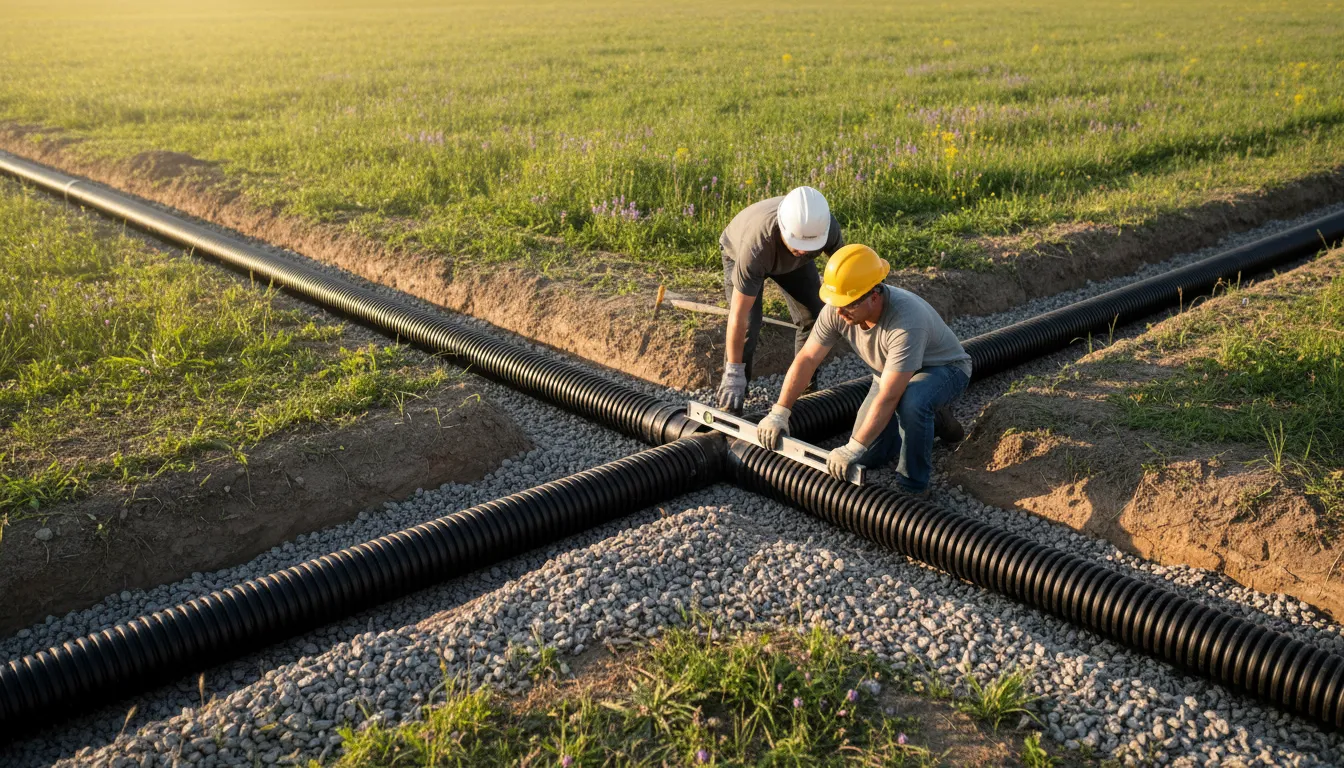
The drain field, also known as a leach field or absorption field, is the final and most crucial stage of your onsite wastewater system. After solids settle in the septic tank, the liquid effluent flows into a network of perforated pipes buried in trenches filled with gravel. This effluent slowly percolates down through the soil, where natural processes filter and purify it before it rejoins the groundwater. When this area becomes saturated, clogged, or otherwise compromised, the entire system fails. Recognizing early signs-like standing water over the field, sewage odors, or toilets draining slowly-is key to addressing problems before they escalate into a full system replacement.
Why Drain Fields Fail in Rutherford County
Several factors common to the Middle Tennessee region contribute to drain field failure. Understanding these can help prevent future issues.
- Soil Composition: Much of Rutherford County has soil with high clay content. Clay particles are very fine and tightly packed, which severely restricts the percolation rate-the speed at which water drains through the soil. A slow percolation rate means the effluent cannot disperse quickly enough, leading to ponding and system overload.
- Hydraulic Overloading: This occurs when more water enters the system than the drain field can handle. Common causes include running too many water-intensive appliances simultaneously, long showers, or undetected leaks from toilets or fixtures. Even a well-designed field can fail prematurely under constant overload.
- Physical Damage: Driving vehicles, parking heavy equipment, or building structures over the drain field can crush the buried pipes or compact the soil, destroying its ability to absorb water.
- Biomat Clogging: Over time, a layer of organic material called a biomat forms at the interface of the gravel and soil. A thin, stable biomat is normal and aids treatment, but an excessively thick one can become impermeable and block effluent from entering the soil.
- Root Infiltration: Trees and large shrubs planted too close to the drain field can send roots into the pipes in search of water, causing blockages and structural damage.
The Regulatory Process: Permits and Professionals in Tennessee
In Tennessee, all work on a septic system, including drain field repair, is regulated by the Tennessee Department of Environment and Conservation (TDEC). You cannot legally begin any corrective work without following their procedures.
1. The Permit Requirement: For any alteration or repair to a drain field, you must obtain a Subsurface Sewage Disposal System (SSDS) Repair Permit from TDEC. This ensures the work meets state health and environmental standards. The application process involves submitting detailed site plans and often the results of a professional site evaluation.
2. Working with Licensed Professionals: State law requires that septic system repairs be performed by a licensed septic system installer or pumper 1 2. These professionals understand local codes, can pull the necessary permits, and have the equipment to perform the job correctly. A critical first step is hiring a qualified contractor or soil scientist to conduct a site evaluation.
3. The Site Evaluation and Soil Analysis: A licensed professional will assess your property to determine the cause of failure and the feasibility of a repair versus a full replacement. This almost always involves a soil analysis, often referred to as a perc (percolation) test, to evaluate the drainage capacity and composition of your soil 3. In areas with high clay content, the results will dictate the size and type of system needed.
4. Setback Compliance: Your repair plan must comply with strict state-mandated setbacks from property lines, wells, streams, buildings, and other sensitive areas. Your contractor will design the new or repaired field to meet these requirements, which can be challenging on smaller or irregularly shaped lots.
Find the perfect drain field repair companies for your needs
Get personalized recommendations and expert advice
Repair vs. Replacement: Assessing Your Options
The solution for your failing drain field depends on the extent of the damage and the site conditions confirmed during the evaluation.
Minor Repairs: If the problem is isolated-such as a damaged distribution box, a clogged pipe segment, or a failing baffle in the tank-a targeted repair may be sufficient. These fixes are less invasive and more affordable, but they only work if the underlying soil and the majority of the drain field are still functional.
Drain Field Rejuvenation: Some techniques aim to restore a clogged field without full excavation. These can include hydro-jetting to clear pipes, adding oxygen-infusing systems to reduce biomat, or using bacterial treatments. While sometimes effective as a temporary measure, these are not permanent fixes for a field that has reached the end of its lifespan or is situated in unsuitable soil.
Full Drain Field Replacement: This is the most common and definitive solution for a complete failure. It involves excavating a new area of your yard to install a completely new network of pipes and gravel. In Rutherford County, due to soil conditions, the replacement field may need to be larger than the original or may require an advanced alternative system, such as a mound or aerobic treatment unit (ATU), to ensure proper treatment 4.
Understanding the Costs in Murfreesboro
The cost for drain field work varies widely based on the solution, soil conditions, and size of the system. It's important to get multiple detailed quotes from licensed contractors.
- Minor Repairs: Fixing specific components like baffles or small sections of pipe can range from $300 to $900.
- Full Drain Field Replacement: This is a major landscaping and construction project. For a conventional system in our area, homeowners can expect costs to start around $7,000 or more. If challenging soil necessitates a larger field or an advanced alternative system, the price can increase significantly.
- Septic Tank Replacement: If your tank is also damaged or outdated, replacing it typically adds $3,000 to $10,000 to the total project cost 5.
- Additional Costs: Remember to budget for the required site evaluation and soil analysis (perc test), permit fees (which may include a $100 inspection fee for repair construction 6), and any necessary landscaping to restore your yard after construction.
The Installation and Inspection Timeline
Once you have a licensed contractor and the TDEC permit in hand, the project follows a structured path:
- Site Preparation: The contractor will mark the new field location and use heavy machinery to excavate the trenches.
- Installation: Gravel is laid, perforated pipes are positioned and connected, and more gravel covers them. A distribution box ensures even wastewater flow to all pipes.
- Critical Inspection: Before the trenches are backfilled with soil, a TDEC official or their designated representative must inspect the installation to verify it matches the permitted design and meets all codes 7. Do not backfill before this inspection.
- Final Backfill and Restoration: After passing inspection, the trenches are filled with soil and the area is graded. Sod or grass seed is laid to prevent erosion and restore your lawn.
Maintaining Your New or Repaired Drain Field
Protect your investment with proper care:
- Mind the Water: Space out laundry loads, fix leaks promptly, and consider installing water-efficient fixtures.
- Protect the Area: Never drive, park, or build on the drain field. Keep large trees and deep-rooted plants at a safe distance.
- Pump the Tank Regularly: Have your septic tank pumped every 3-5 years by a professional to prevent solids from washing out and clogging the new field.
- Watch What You Flush: Only human waste and toilet paper should go down the drain. Avoid chemicals, grease, wipes, and other non-biodegradables.
Frequently asked questions
Sources
Footnotes
-
Subsurface Sewage Disposal System (SSDS) Permits - TN.gov - https://www.tn.gov/environment/permit-permits/water-permits1/septic-systems-permits.html ↩
-
Septic System Installation - Rocky Top Septic Service, llc - https://rockytopseptic.com/service/septic-system-installation/ ↩
-
What the Heck is a "Perc Test" (and How Much Does it Really Matter)? - https://www.youtube.com/watch?v=yp6qPMTkjgE ↩
-
What to Know Before Installing a Septic System in Rural ... - https://www.shamrockdirtandforestry.com/what-to-know-before-installing-a-septic-system-in-rural-tennessee ↩
-
Cost to Replace Septic Tank and Drain Field [2026 Data] | Angi - https://www.angi.com/articles/how-much-new-drain-fields-foot.htm ↩
-
Septic System Construction Permit - TN.gov - https://www.tn.gov/environment/permit-permits/water-permits1/septic-systems-permits/ssp/permit-water-septic-system-construction-permit.html ↩
-
Septic System Related Permits - TN.gov - https://www.tn.gov/environment/permit-permits/water-permits1/septic-systems-permits/ssp/permit-water-septic-system-related-permits.html ↩