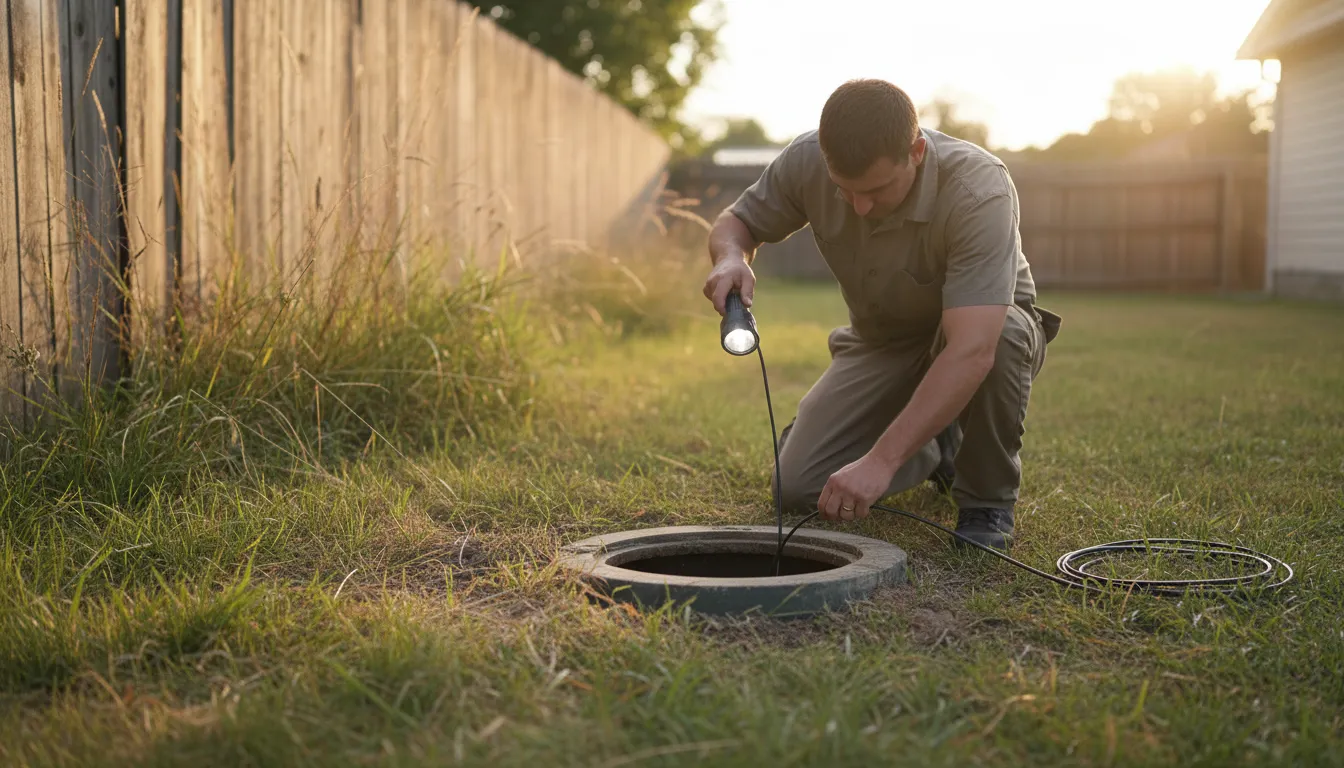
Find the Best Septic Tank Inspection Companies for Your Business
No obligation • Fast responses • Nationwide coverage

Why you can trust Septic Spot
Septic Spot is a leading United States resource for understanding and comparing septic services. Our editors review providers using consistent criteria and verify key business details. Listings and scores are independent, and companies cannot pay to influence our content.
Search providers near you
Top Septic Tank Inspection Companies in Belleville, Illinois Ranked
A septic tank inspection is a critical evaluation of your home's private sewage disposal system to ensure it is functioning safely and efficiently. For Belleville homeowners, these assessments are not just about maintenance; they are often a legal requirement for property transfers and system modifications. This guide will help you understand the local regulations, what a thorough inspection entails, and how to connect with qualified professionals to protect your property and investment.
Shults Septic Service, LLC
5656 Saxtown Rd, Millstadt, IL 62260
Shults Septic Service, LLC is a locally owned company based near St Louis, MO, specializing in septic system design, installation, inspection, and repair. They provide customized solutions tailored to each customer's specific septic needs and offer service and maintenance agreements to help keep systems functioning properly. Their team focuses on identifying problems accurately and delivering appropriate services to address them.
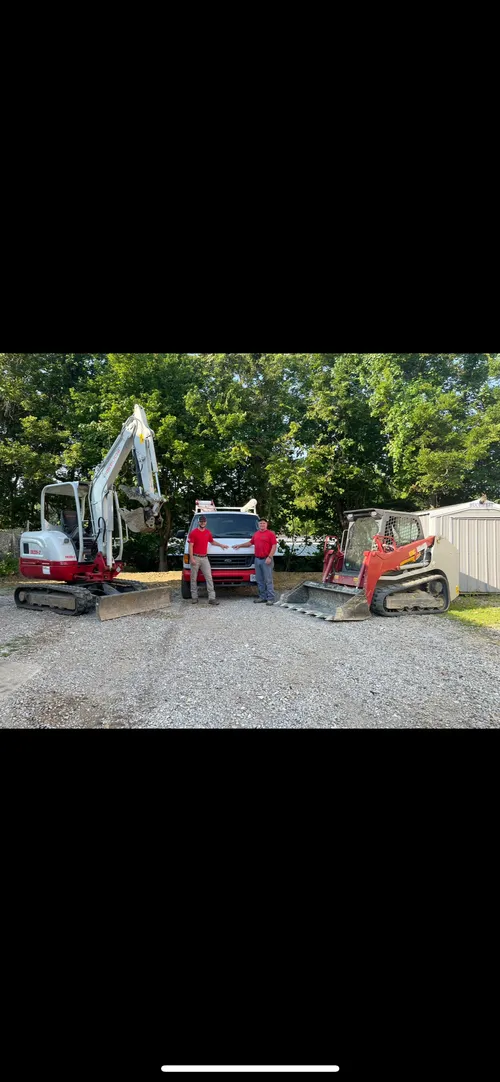
Bob Mahoney Plumbing and Excavating
699 Biltmore Dr, Fenton, MO 63026
Bob Mahoney Plumbing and Excavating is a licensed plumbing and excavation company based in St Louis, MO. They offer a range of services including septic system design, installation, inspections, and maintenance, as well as sewer drain cleaning and general plumbing repairs. The company serves several Missouri communities including Arnold, Festus, Desoto, Barnhart, Fenton, Imperial, and Hillsboro. Their excavation services support new construction and septic installations with professional-grade equipment and experienced operators. Bob Mahoney Plumbing and Excavating emphasizes comprehensive solutions and community-focused service.
Understanding Local Septic System Regulations
In Belleville and the surrounding St. Clair County, septic systems are regulated by the St. Clair County Health Department. Compliance with local and state codes is mandatory, and understanding these rules is the first step for any homeowner with an on-site wastewater system.
A key regulation is the permit requirement. Before constructing, repairing, or significantly altering any private sewage disposal system, you must obtain a permit from the Health Department. All installation and repair work must be performed by a contractor who holds both a State of Illinois license and a St. Clair County Private Sewage Disposal Contractor license.
Key Setback Requirements
Illinois state code specifies minimum distances that septic system components must be from other structures and features. Adhering to these setbacks protects groundwater and prevents nuisances. Key distances for Belleville include:
- Septic Tank or Aeration Unit: Must be at least 5 feet from any dwelling or property line, and 50 feet from any well or sinkhole.
- Drain Field (Effluent Reduction Area): Must be at least 10 feet from dwellings, 5 feet from property lines, and 75 feet from wells or sinkholes.
- Prohibited Connections: It is against code to direct "clear water" from sources like sump pumps, foundation drains, or roof gutters into the septic system, as this can overload it 1.
The Importance of Regular Septic System Evaluations
Why should Belleville residents prioritize a septic system evaluation? For most, it's because their home relies entirely on this underground system to treat and disperse wastewater. A failure can lead to costly repairs, environmental contamination, and health hazards.
Routine checks are the most effective way to catch small issues before they become major problems. The U.S. Environmental Protection Agency (EPA) recommends having your system inspected at least every three years by a qualified professional, and your tank pumped typically every three to five years. The Illinois EPA also emphasizes that regular maintenance is far less expensive than replacing a failed system 2.
The Property Transfer ("Homeloan") Inspection
A very common reason for a septic inspection in Belleville is a real estate transaction. The St. Clair County Health Department conducts a specific property transfer inspection, often called a "homeloan" inspection, for a fee of $300. This inspection is a standard part of due diligence when buying or selling a home with a septic system. Furthermore, if you are purchasing a home within Belleville city limits, you will need a Certificate of Occupancy, which includes verifying the plumbing system is fully functional 3.
Find the perfect septic tank inspection companies for your needs
Get personalized recommendations and expert advice
What a Professional Septic Inspection Involves
A comprehensive septic tank and system assessment is a multi-step process conducted by a licensed professional. Knowing what to expect can help you prepare your property. A standard inspection generally includes the following key steps 4:
- Locating and Accessing the System: The inspector will locate the tank and distribution box, then dig to uncover and open the access ports.
- Measuring Scum and Sludge Layers: Using specialized tools, the inspector measures the depth of the scum layer (floating solids) and sludge layer (settled solids) at the bottom of the tank. This determines if the tank needs immediate pumping.
- Checking Tank Integrity: The tank walls, baffles, and lids are inspected for cracks, leaks, signs of corrosion, or root intrusion that could compromise the structure.
- Inspecting Inlet and Outlet Baffles: These components are crucial for preventing solids from flowing out into the drain field. The inspector ensures they are intact and functioning properly.
- Evaluating the Drain Field: This is a critical component. The inspector examines the soil absorption area for signs of failure, such as soggy or spongy ground, surfacing sewage, or unpleasant odors.
- Conducting a Flow Test: Water is run through the household plumbing to check for proper drainage from the home into the tank and to observe the system's response.
Costs Associated with Septic Services in Belleville
Understanding the potential costs helps homeowners budget for necessary services. It's important to distinguish between different types of fees.
- Official Health Department Fee: The St. Clair County Health Department's property transfer inspection has a set fee of $300 5.
- Professional Inspection Cost: When you hire a licensed contractor to perform a standard septic system inspection, the cost typically ranges from $250 to $600, depending on the size of the tank, the complexity of the system, and the property's accessibility 6. This is a separate charge from the Health Department fee.
- Pumping/Cleaning Cost: If the inspection reveals the tank needs to be pumped, that service generally costs between $300 and $600, varying with tank size and location 7 8. Regular pumping every 3-5 years is a core part of system maintenance.
Maintaining Your System Between Inspections
Professional evaluations are essential, but day-to-day homeowner habits greatly impact your septic system's longevity. Follow these guidelines to keep your system healthy:
- Conserve Water: Fix leaks and spread out laundry loads to avoid hydraulically overloading the system.
- Mind What You Flush: Only human waste and toilet paper should go down the drain. Avoid flushing chemicals, oils, grease, diapers, wipes (even "flushable" ones), and coffee grounds.
- Protect the Drain Field: Never park vehicles or build structures over the drain field. Keep roof drains, sump pumps, and other surface water away from the area.
- Keep Records: Maintain a detailed log of all inspections, pumpings, repairs, and the system's design (the "as-built" diagram).
Staying compliant with local septic system regulations helps you avoid significant fines and ensures your system protects both your family's health and the local environment. By scheduling regular inspections and practicing good maintenance, you can ensure your Belleville home's wastewater system operates reliably for years to come.
Frequently asked questions
Sources
Footnotes
-
ST. CLAIR COUNTY HEALTH DEPARTMENT - https://www.co.st-clair.il.us/WebDocuments/Departments/Health/water/Private%20Sewage%20Disposal%20Installation%20Application.pdf ↩
-
Septic System Maintenance - Illinois EPA - https://epa.illinois.gov/topics/drinking-water/private-well-users/septic-system-maintenance.html ↩
-
Health, Housing & Building | Belleville, IL - Official Website - https://www.belleville.net/345/Health-Housing-Building ↩
-
Understanding Septic Tank Inspections: A Complete Homeowner's ... - https://septic-masters.com/septic-tank-inspection-homeowner-guide/ ↩
-
Water & Private Sewage | St. Clair County Health Department - https://scchealthdept.com/environmental-programs/water-private-sewage/ ↩
-
Septic System Inspections: A Step-by-Step How-To Guide - https://westcoastsanitationinc.com/septic-inspection-service/ ↩
-
Frequent Questions on Septic Systems | US EPA - https://www.epa.gov/septic/frequent-questions-septic-systems ↩
-
Stay Compliant: Avoid Fines with Septic System Regulations - https://smartsepticpros.com/blog/septic-system-regulations/ ↩