Find the Best Septic Tank Inspection Companies for Your Business
No obligation • Fast responses • Nationwide coverage

Why you can trust Septic Spot
Septic Spot is a leading United States resource for understanding and comparing septic services. Our editors review providers using consistent criteria and verify key business details. Listings and scores are independent, and companies cannot pay to influence our content.
Search providers near you
Top Septic Tank Inspection Companies in Buffalo, New York Ranked
A septic system inspection is a critical evaluation of your home's on-site wastewater treatment system, ensuring it is functioning safely and efficiently. In a city like Buffalo, where many homes rely on these private systems, regular checks are essential for protecting your property value, your family's health, and the local environment. This guide will help you understand the inspection process, local requirements, and how to find qualified professionals in the Buffalo area to assess your septic tank and drain field.
Why Septic System Inspections Are Crucial in Buffalo
For homes not connected to municipal sewer lines in Erie County, the septic system is a vital, hidden piece of infrastructure. A failing system can lead to sewage backups in your home, contamination of groundwater, and costly environmental hazards. In Buffalo's climate, with freeze-thaw cycles and varying water tables, systems can be particularly vulnerable to stress and failure. Regular septic evaluations are not just a good idea-they are often mandated by local health codes, especially during a property transfer 1. Proactive maintenance through inspections can identify minor issues before they become major, expensive repairs or a full system replacement.
Understanding Erie County's Inspection Requirements
The Erie County Department of Environmental Health sets the standards for septic system inspections, particularly for real estate transactions. Knowing these rules is the first step for any homeowner or prospective buyer.
- Property Transfer Inspections: If you are buying or selling a home with a septic system in Erie County, an inspection is typically required. The seller must often submit official documentation from a qualified inspector to the Health Department to complete the transfer.
- The Standard Dye Test: A cornerstone of the local inspection process is the dye test. This generally involves running a significant amount of water-often cited as 100 gallons per bedroom per day-through the system for a period of three days. A non-toxic dye is introduced, and the inspector monitors the drain field for any surfacing, which would indicate a failure.
- Consequences of a Failing System: If an inspection deems a system to be failing, the property owner may qualify for assistance through programs like the Septic System Replacement Fund Program 2. However, addressing a failure is ultimately the homeowner's responsibility, making pre-purchase inspections especially important.
What a Comprehensive Septic Inspection Involves
A thorough septic system assessment goes beyond just the dye test. A full evaluation, often performed alongside pumping the tank, provides a complete picture of system health.
1. Locating and Accessing the System
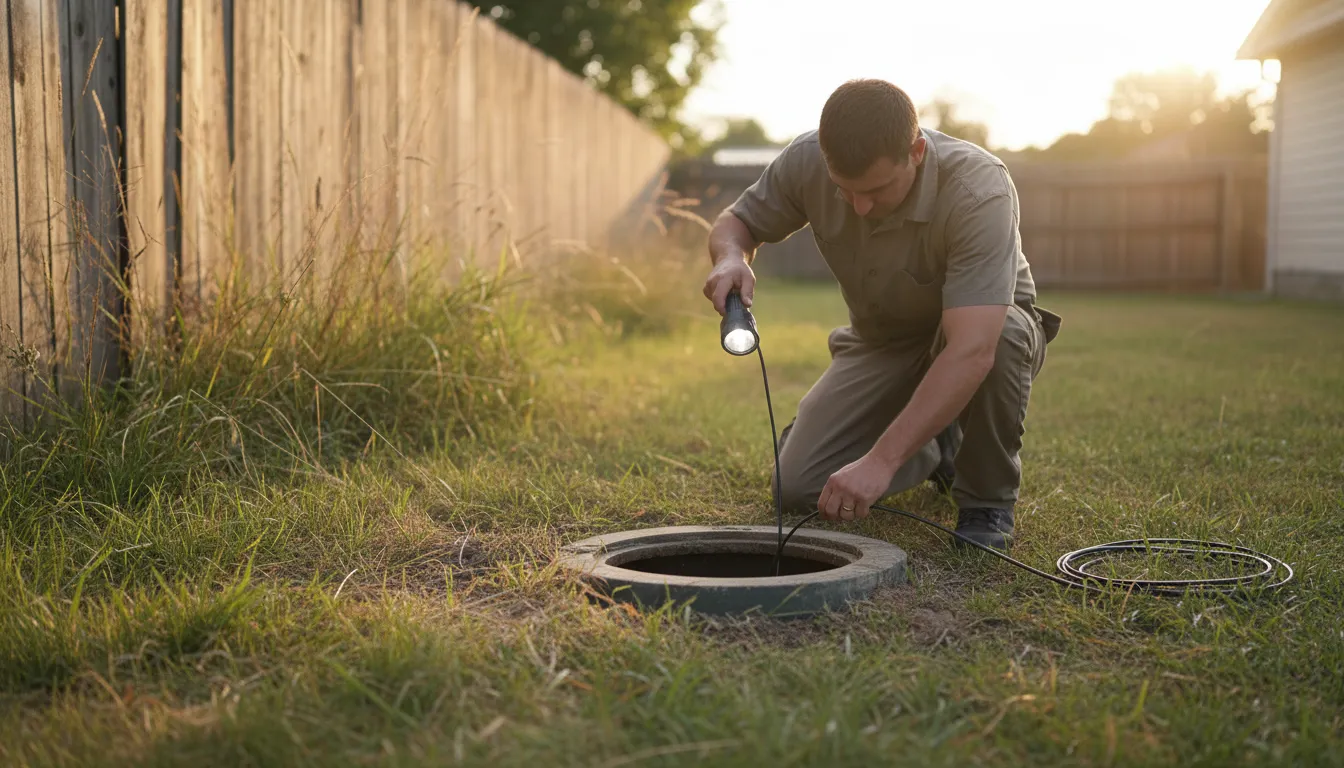
The inspector will first locate all components: the septic tank, distribution box, and drain field (leaching field). This may involve probing the yard or referring to property records. The tank's manhole covers will then be uncovered to allow for internal inspection.
2. Tank Pumping and Internal Inspection
For a proper evaluation, the tank usually needs to be pumped out. This allows the inspector to:
- Check the tank's structural integrity for cracks, leaks, or corrosion.
- Examine the inlet and outlet baffles or tees to ensure they are intact and functioning. Damaged baffles can allow solids to escape into the drain field, causing premature failure.
- Measure the scum layer (floating fats/oils) and sludge layer (settled solids) to determine if pumping is overdue.
3. Component Evaluation
After the tank is assessed, the inspector examines the rest of the system:
- Distribution Box: This component, if present, distributes liquid effluent evenly to the drain field lines. The inspector checks for levelness and blockages.
- Drain Field (Leaching Field): This is the most critical area for the dye test. The inspector looks for visual signs of failure, such as soggy soil, ponding wastewater, or unusually lush and green vegetation over the field lines 3 4.
4. Hydraulic Load Test (Dye Test)
As required by Erie County, the inspector will supervise the hydraulic load test 5. This confirms the system can handle a full household's water usage. The introduced dye makes it easy to spot any untreated wastewater that surfaces, providing clear evidence of a drain field failure. It's crucial that the test is run with adequate water; failure to do so may require an extension or a complete restart of the test.
Find the perfect septic tank inspection companies for your needs
Get personalized recommendations and expert advice
Costs and Frequency of Septic Inspections in Buffalo
Budgeting for septic maintenance is part of responsible homeownership. Costs can vary based on the depth of the inspection and the size of your system.
- Inspection-Only Cost: For a routine visual and dye-test inspection (not including pumping), homeowners in Buffalo can generally expect to pay between $100 and $2506. This is typical for a standard, non-engineered system inspection for a real estate transaction.
- Combined Inspection and Pumping Cost: A more thorough service that includes pumping the tank for internal inspection typically ranges from $300 to $700, with the final price depending on tank size (e.g., 1,000-gallon vs. 1,500-gallon), accessibility, and the company's pricing structure 7 8.
- Recommended Frequency: The New York State Department of Health and the EPA recommend having your septic system inspected at least every year9. Pumping is generally needed every 3 to 5 years, but this interval can be shorter if you use a garbage disposal, have a large household, or have a smaller tank. Annual inspections help determine the optimal pumping schedule for your specific usage.
Finding the Right Professional for Your Inspection
Not all septic service providers are qualified to conduct official inspections for Erie County. When searching for a septic system evaluator or wastewater system inspector, ensure they are familiar with local codes. For complex systems or major repairs, you may need to consult a professional licensed by the NYS Department of Environmental Conservation 10 11. Look for companies with strong local reputations, proper licensing, and insurance. They should be able to clearly explain the inspection process, provide a detailed report of their findings, and understand the specific documentation required for property transfers with the Erie County Health Department.
Maintaining Your System Between Inspections
An inspection tells you the current state of your system, but proper daily care determines its future. To keep your Buffalo-area septic system healthy:
- Conserve water to avoid hydraulically overloading the drain field.
- Never pour grease, chemicals, paints, or non-biodegradable items down the drain.
- Avoid using a garbage disposal frequently, as it adds significant solids to the tank.
- Keep vehicles and heavy structures off the drain field area to prevent soil compaction and pipe damage.
- Divect downspouts and surface runoff away from the septic system area.
By combining annual professional evaluations with smart daily habits, you can ensure your septic system provides reliable, long-term service for your home.
Frequently asked questions
Sources
Footnotes
-
Property Transfers | Environmental Health - | Erie County - https://www3.erie.gov/envhealth/property-transfers ↩
-
Septic System Replacement Fund Program | Environmental Health - https://www3.erie.gov/envhealth/septic-system-replacement-fund-program ↩
-
What to Expect from a Septic Inspection - Wind River Environmental - https://www.wrenvironmental.com/blog/2023/may/what-to-expect-from-a-septic-inspection/ ↩
-
Inspecting Your Septic Tank - https://s3.us-west-2.amazonaws.com/thurstoncountywa.gov.if-us-west-2/s3fs-public/2023-02/Inspecting%20Your%20Septic%20System.pdf ↩
-
What Does a Septic Inspection Entail? - HomeLight - https://www.homelight.com/blog/septic-inspection/ ↩
-
Exploring the Costs of Septic Tank Inspections: What to Expect - https://www.theflushfellas.com/exploring-the-costs-of-septic-tank-inspections-what-to-expect ↩
-
Septic System Operation and Maintenance - https://www.health.ny.gov/publications/3208/ ↩
-
2026 Septic Inspection Costs | Tank, System, & Title 5 - HomeGuide - https://homeguide.com/costs/septic-tank-inspection-cost ↩
-
Frequent Questions on Septic Systems | US EPA - https://www.epa.gov/septic/frequent-questions-septic-systems ↩
-
Your Septic System - Cornell University - https://www.css.cornell.edu/cwmi/waterquality/septic/CCEWQ-YourSepticSystem-Print.pdf ↩
-
Septic Tank Home Inspection - what to expect? : r/nova - Reddit - https://www.reddit.com/r/nova/comments/71fv3h/septic_tank_home_inspection_what_to_expect/ ↩