Find the Best Septic Tank Inspection Companies for Your Business
No obligation • Fast responses • Nationwide coverage

Why you can trust Septic Spot
Septic Spot is a leading United States resource for understanding and comparing septic services. Our editors review providers using consistent criteria and verify key business details. Listings and scores are independent, and companies cannot pay to influence our content.
Search providers near you
Top Septic Tank Inspection Companies in Rochester, New York Ranked
A septic tank inspection is a professional assessment of your onsite wastewater treatment system to ensure it is functioning safely and efficiently. This process is critical for protecting your property investment, safeguarding your family's health, and preventing environmental contamination of local groundwater. For Rochester homeowners, understanding the local regulations and finding qualified professionals for this essential service is the first step in responsible system ownership.
Bianca Excavating
1548 Winterberry Ct, Walworth, NY 14568
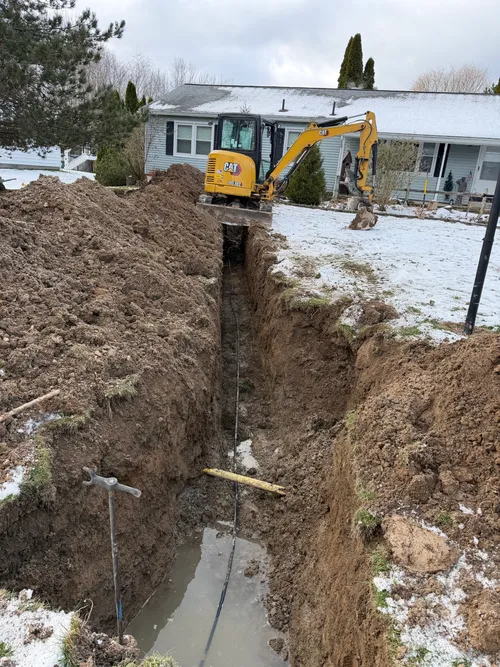
Bianca Excavating is a licensed and insured septic service provider based in Rochester, NY. The company offers a range of services including septic tank pumping, inspections, repairs, new system installations, and drain field replacements. Using advanced inspection tools and modern excavation equipment, Bianca Excavating works to diagnose and resolve septic system issues efficiently while minimizing disruption to properties. The business has a long-standing family-owned history serving Ontario and surrounding areas, providing reliable septic solutions tailored to residential and commercial needs. They also offer emergency services when needed.
Chamberlain Septic & Sewer
1835 Ridge Rd Jct, Webster, NY 14580
Chamberlain Septic & Sewer is a family-owned company serving Rochester, NY, and surrounding counties including Monroe, Wayne, and Ontario. With over 57 years of experience, they provide residential and commercial septic system services such as septic tank pumping, inspections, installations, and repairs. Their capabilities include hydro-flushing, power-snaking, and excavation work to address septic and sewer system needs. Founded in the 1960s from a dairy farm drainage operation, the company has grown into a full-service septic and sewer contractor.
Why Septic System Inspections Are Essential in Monroe County
Your septic system is a private wastewater treatment plant buried in your yard. Unlike a municipal sewer connection, you are solely responsible for its maintenance and repair. Regular septic system evaluations are not just a good idea-they are a key part of protecting your home. A failing system can lead to sewage backups into your home, foul odors, and contamination of your property and nearby water sources, including the Finger Lakes watershed. In Rochester and Monroe County, local codes explicitly state that property owners are responsible for the proper maintenance of private sewage systems 1. Proactive inspections help you catch small issues before they become expensive, disruptive emergencies.
Local Regulations and Inspection Requirements
Navigating the rules for onsite systems in New York is straightforward when you know the guidelines. The Monroe County Department of Public Health (MCDPH) oversees the permitting and inspection of individual sewage treatment systems within the county.
- Routine Inspection Frequency: The U.S. Environmental Protection Agency (EPA) recommends having your system inspected every 1 to 3 years. This regular check-up is crucial for monitoring the health of your system.
- Pumping Frequency: Alongside inspections, systems typically need to be pumped every 3 to 5 years, though this varies based on household size and usage.
- Mandatory Construction Inspections: For any new installation, repair, or replacement of a system, the MCDPH must perform a construction inspection. The department aims to conduct this inspection within 48 hours of a request 2.
- Special Considerations: If your home uses an advanced or alternative treatment system (like an aerobic treatment unit or peat filter), Monroe County may require more frequent inspections and servicing to ensure these complex components are operating correctly.
What a Professional Septic Inspection Involves
A comprehensive septic tank assessment is a detailed process conducted by a licensed professional. Knowing what to expect can help you prepare and understand the value of the service. A standard inspection typically includes the following steps:
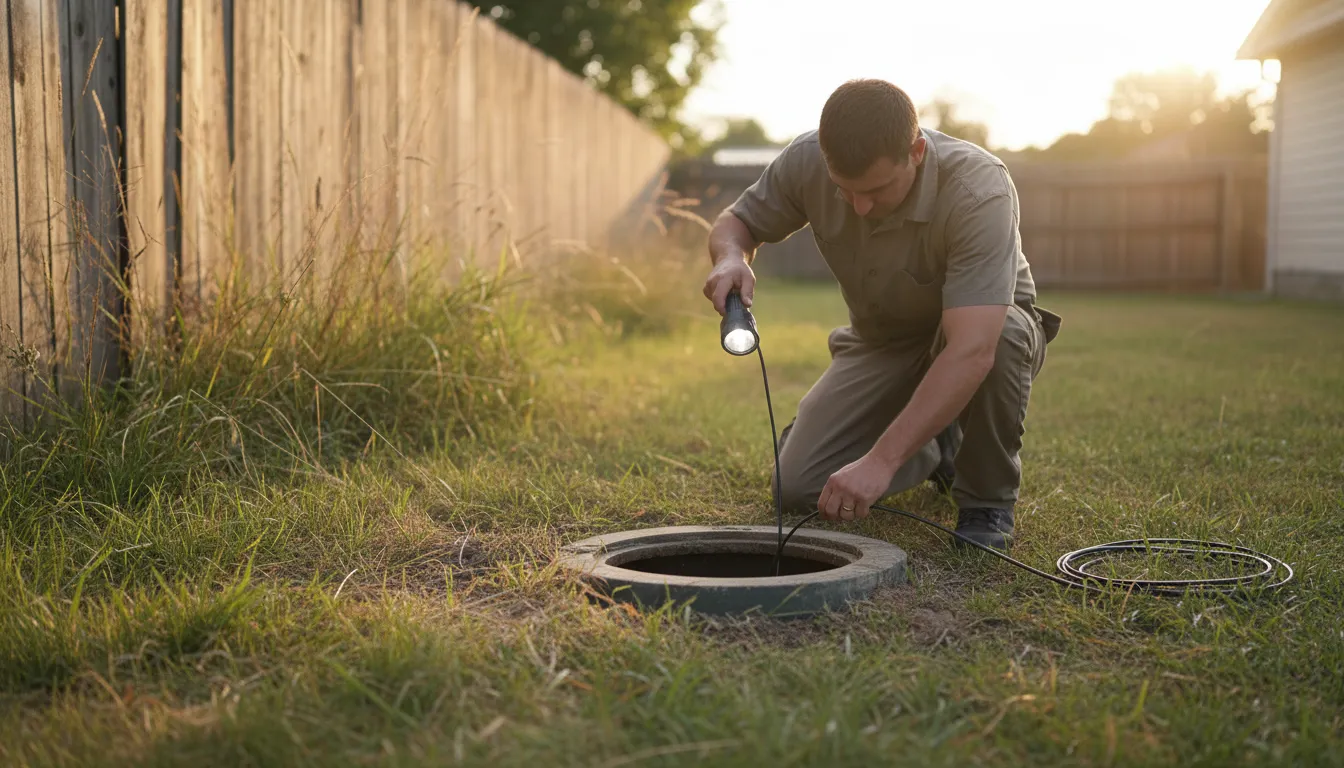
- System Location and Access: The inspector will locate your tank and distribution box, often using probe rods if a map is not available. The New York State Department of Health advises homeowners to keep a sketch or map of their system's location to prevent damage during digging. The inspector will then excavate and open the manhole cover for access.
- Liquid Level Check: The inspector checks the level of liquid in the tank. It should be slightly below the outlet pipe baffle. A level that is too high can indicate a blockage in the drain field, while a level that is too low may suggest a leak in the tank.
- Scum and Sludge Measurement: This is a key part of determining if pumping is needed. The inspector measures the thickness of the scum layer (floating solids) and the sludge layer (settled solids) at the bottom of the tank. If the sludge depth is too great, it can start flowing into and clogging the drain field 3 4.
- Baffle and Component Inspection: The inlet and outlet baffles (or tees) inside the tank are checked to ensure they are intact and properly secured. Damaged baffles can allow solids to escape into the drain field. The inspector will also look for signs of backflow from the field into the tank.
- Drain Field Evaluation: While the drain field itself is mostly underground, the inspector will look for telltale signs of failure. This includes checking for surfacing sewage, overly lush or soggy grass above the field, and testing the distribution box (if accessible) for even flow to all trenches 5.
- Overall System Integrity: The inspection includes a visual check of the tank's structural integrity for cracks, the condition of the cover, and the proper operation of any pumps, alarms, or components associated with advanced systems.
Find the perfect septic tank inspection companies for your needs
Get personalized recommendations and expert advice
Understanding Costs for Inspection and Related Services
Budgeting for septic maintenance is an important part of homeownership. Costs can vary based on the size of your tank, its accessibility, and the scope of the inspection.
- Septic Tank Inspection: A standard visual inspection in the Rochester area can start around $100. A more comprehensive inspection, which may include a full scum/sludge measurement and a detailed drain field assessment, typically ranges from $300 to $500, with complex systems costing up to $1,000.
- Septic Tank Pumping: If your inspection reveals the tank needs to be pumped, this is a separate service. The average cost for pumping in the region falls between $300 and $600, though prices can range from $200 for a simple job to over $1,000 for a large or hard-to-access tank 6 7.
- Major Repairs or Replacement: This is where costs escalate significantly. Replacing a failing drain field or installing an entirely new septic system is a major construction project. In New York, full system replacement costs often range from $10,000 to $25,000 or more, depending on soil conditions and system type 8.
Preparing for Your Septic Inspection
A little preparation can make the inspection process smoother and more efficient. Here's what you can do:
- Locate Your System: If you have a map or diagram of your septic system from your home's closing documents, have it ready. If not, note the location of any cleanout pipes or areas where the grass grows differently.
- Clear the Area: Ensure the path to your tank and the area around the manhole cover is clear of vehicles, lawn furniture, sheds, or landscaping.
- Know Your System History: Have any records of past pumping, inspections, or repairs available for the inspector.
- Be Available: Plan to be home to provide access and answer any questions the inspector may have about your household water usage.
The Consequences of Neglecting Your Septic System
Skipping regular septic tank check-ups is a risky gamble. A failing system poses serious problems:
- Health Hazards: Untreated sewage contains harmful pathogens like E. coli and viruses that can cause serious illness if they contaminate groundwater or surface water 9 10.
- Property Damage: Sewage backups into your home can ruin floors, drywall, and personal belongings. A saturated drain field can turn your yard into a soggy, smelly mess.
- Environmental Impact: Nutrient pollution (nitrogen and phosphorus) from failing systems can degrade local water quality, contributing to algal blooms in nearby lakes and streams.
- Financial Burden: A complete system failure requiring replacement is one of the most expensive repairs a homeowner can face, far exceeding the cost of a lifetime of routine inspections and pumping.
Choosing a Qualified Septic Service Provider in Rochester
When it's time to schedule your inspection, selecting the right professional is crucial. Look for a contractor who is licensed by the New York State Department of Health and familiar with Monroe County's specific design and construction standards 11. A reputable provider will be willing to explain their inspection process, provide a detailed report of their findings, and offer a clear estimate for any recommended services. They should also be able to assist with any required permitting for repairs through the MCDPH.
Frequently asked questions
Sources
Footnotes
-
Chapter 97: Sewer Use Code - City of Rochester, NY - https://ecode360.com/8678045 ↩
-
Onsite Wastewater Treatment Systems - Monroe County, NY - https://www.monroecounty.gov/eh-individualsewagetreatment ↩
-
Guidance for the Inspection of On-site Sewage Disposal Systems - https://www.mass.gov/guides/guidance-for-the-inspection-of-on-site-sewage-disposal-systems ↩
-
Your Septic System - Cornell University - https://www.css.cornell.edu/cwmi/waterquality/septic/CCEWQ-YourSepticSystem-Print.pdf ↩
-
Septic System Inspections - InterNACHI® - https://www.nachi.org/inspecting-septic-systems.htm ↩
-
Septic System Cost Estimate: A Complete Breakdown - Land Perc - https://landperc.com/septic-system-cost-estimate/ ↩
-
Septic Tank Pumping Cost: Guide & Pricing in 2025 - Splash Plumbing - https://www.splashplumbing.com/how-much-does-it-cost-to-pump-septic-tank-understanding-pricing-and-factors-involved/ ↩
-
New Directions for Local Septic System Management in New ... - https://efc.syr.edu/wp-content/uploads/2025/02/Public-Problem_Private-Property_PDF_2024_FINAL.pdf ↩
-
Frequent Questions on Septic Systems | US EPA - https://www.epa.gov/septic/frequent-questions-septic-systems ↩
-
Septic System Operation and Maintenance - https://www.health.ny.gov/publications/3208/ ↩
-
Design and Construction Standards - Monroe County - https://www.monroecounty.gov/files/health/eh/OnsiteSewage/MCDPH%20OWTS%20Design%20Standards%202015%20Edition%20-%20FINAL.pdf ↩