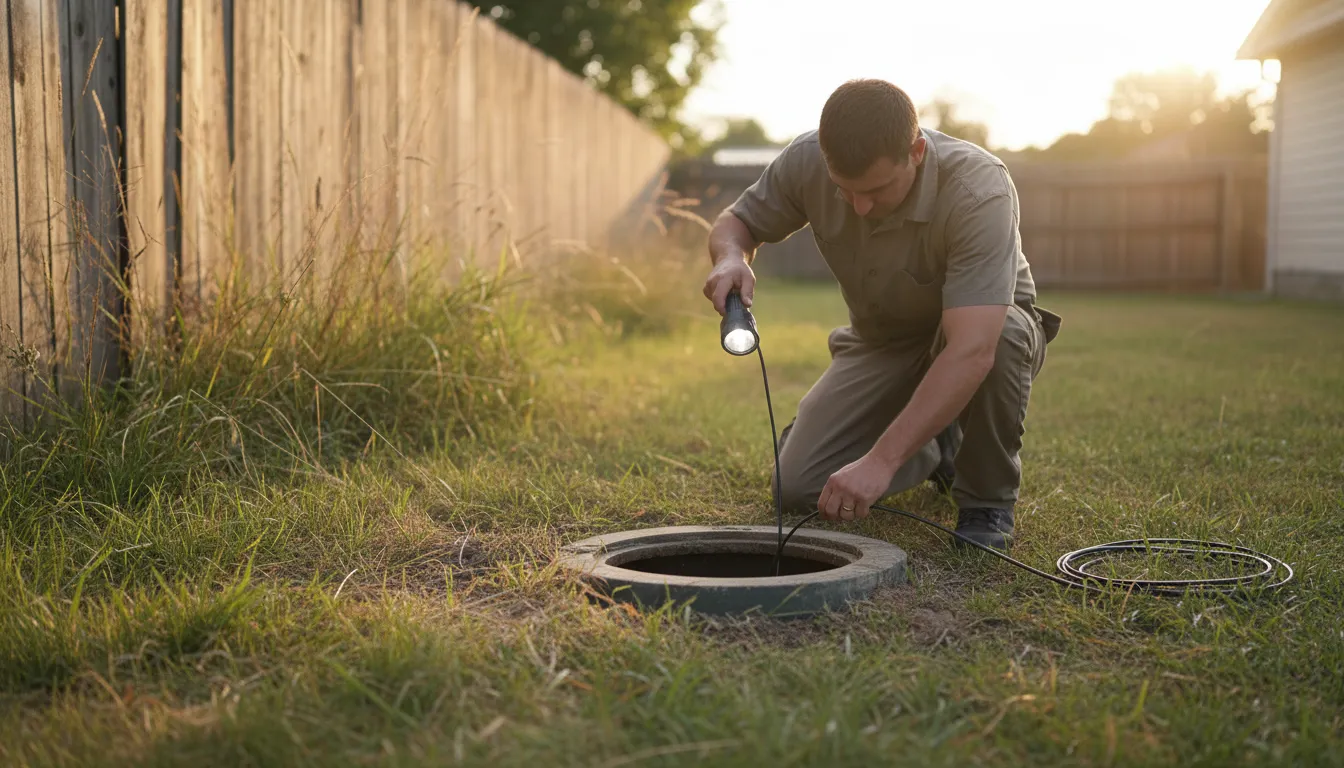
Find the Best Septic Tank Inspection Companies for Your Business
No obligation • Fast responses • Nationwide coverage

Why you can trust Septic Spot
Septic Spot is a leading United States resource for understanding and comparing septic services. Our editors review providers using consistent criteria and verify key business details. Listings and scores are independent, and companies cannot pay to influence our content.
Search providers near you
Top Septic Tank Inspection Companies in New Rochelle, New York Ranked
A septic system inspection is a critical evaluation of your home's private wastewater treatment system, ensuring it is functioning safely and efficiently. For New Rochelle homeowners, these assessments are vital for protecting your property value, complying with local health standards, and preventing costly environmental contamination. This guide helps you understand the process, local requirements, and how to connect with qualified professionals for your system evaluation.
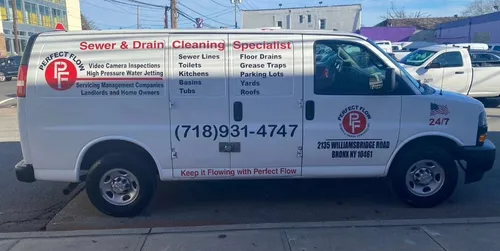
Perfect Flow Sewer & Drain Services
2135 Williamsbridge Rd, Bronx, NY 10461
Perfect Flow Sewer & Drain Services provides septic tank inspection and septic system repair in Yonkers, NY. They offer thorough inspections, efficient cleaning, and precise repairs to maintain reliable sewer and drain systems. Their services focus on ensuring seamless flow and system functionality.
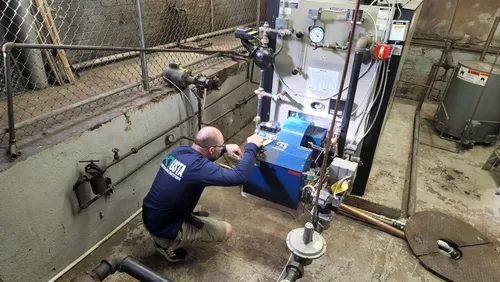
USTA Home Inspections
25 Continental Dr Unit C, Wayne, NJ 07470
USTA Home Inspections is a septic tank inspection company serving New York, NY, and surrounding areas. They provide comprehensive home inspection services covering major components such as roofing, structural elements, electrical systems, HVAC, oil tank sweeps, foundation integrity, radon testing, termite inspections, and septic tank inspections. The company focuses on helping homebuyers make informed decisions by delivering clear and reliable inspection reports. USTA Home Inspections serves multiple counties in New Jersey and New York, including Passaic, Morris, Bergen, Essex, and Union. They emphasize protecting clients' investments and ensuring safety before moving into a new home.
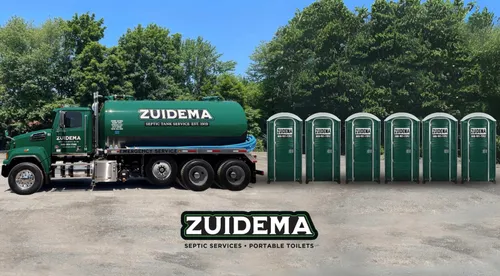
Zuidema Septic Services & Portable Toilets
90 Midland Ave, Midland Park, NJ 07432
Zuidema Septic Services & Portable Toilets provides residential and commercial septic services along with portable toilet and restroom trailer rentals in New York, NY. With over 100 years of experience since 1919, they offer septic tank pumping, inspections, repairs, and grease trap services. Their use of advanced sewer camera technology helps identify and address sewer line issues effectively. Zuidema also offers 24/7 emergency service for septic and portable toilet needs, ensuring support is available at any time.
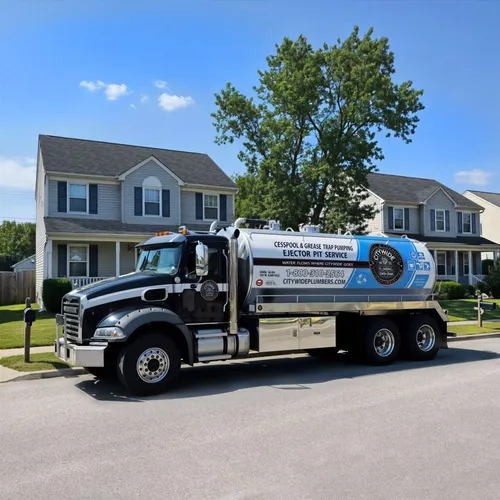
Citywide Grease Trap Maintenance | Cesspool Pumping Service Long Island
110 Voice Rd, Carle Place, NY 11514
Citywide Grease Trap Maintenance | Cesspool Pumping Service Long Island provides septic and cesspool pumping, inspection, repair, and installation services in New York, NY. Serving both residential and commercial clients, they offer comprehensive maintenance and cleaning to prevent system failures. Their skilled technicians use advanced equipment for installations and repairs, including grease trap pumping and sewage ejector pit services. With over 65 years of experience, Citywide operates 24/7 to address emergency needs promptly.
1st Inspection Services - Bergen, NJ
New York, NY
1st Inspection Services - Bergen, NJ provides septic tank inspection and related home inspection services in New York, NY. They follow New Jersey state standards as well as guidelines from national home inspection organizations. Their inspections include detailed digital reports delivered within 24 hours. The company offers various inspections such as termite, radon, oil tank scans, and sewer scopes, adhering to recognized industry standards.
Understanding Septic System Evaluations in Westchester County
In New Rochelle and throughout Westchester County, septic systems are a common solution for wastewater management in areas not served by municipal sewer lines. A thorough system inspection, often called a septic evaluation or assessment, is the best way to gauge the health of this essential infrastructure. While New York State does not have a universal mandatory inspection law, local health department guidelines strongly recommend regular checks. Furthermore, it is standard practice-and frequently required by mortgage lenders-to have a certified inspector perform a comprehensive evaluation during a property transfer prior to closing.
These systems are governed by New York State Department of Health regulations, specifically Appendix 75-A, as well as local Westchester County health codes. Adhering to these guidelines through professional inspections helps prevent system failures that can lead to groundwater pollution, property damage, and public health risks.
What a Professional Inspection Involves
A certified septic inspector follows a detailed process to evaluate every component of your system. This is far more than just looking at the tank; it's a systematic review of the entire wastewater treatment chain on your property.
Initial System Location: The first step often involves locating all system components. The inspector may use property records, metal probes, or even push a camera through the plumbing cleanout to trace lines and find the tank and drain field (absorption field).
Tank Access and Internal Inspection: The inspector will uncover the manhole and inspection ports to access the tank interior. They will check the tank's structural integrity for cracks, inspect the inlet and outlet baffles or tees for damage or blockage, and ensure the tank is watertight.
Sludge and Scum Measurement: This is a core part of the inspection. Using specialized tools, the inspector measures the depth of the sludge layer at the bottom of the tank and the scum layer floating at the top. A critical rule of thumb: if the sludge is within 12 inches of the outlet tee or the scum is within 6 inches, the tank must be pumped to prevent solids from flowing into the drain field 1 2.
Drain Field and Component Check: The inspector will examine the distribution box (if present) for proper flow and check the drain field for signs of failure, such as surfacing sewage, soggy ground, or unusually lush grass. Finally, they will run water in the house to verify the system is accepting and draining effluent properly without backing up 3.
Find the perfect septic tank inspection companies for your needs
Get personalized recommendations and expert advice
Recommended Inspection Frequency and Associated Costs
For a system to operate reliably, proactive maintenance is key. In New Rochelle, industry and health guidelines recommend having your septic system inspected every 1 to 3 years 4. Pumping is typically needed less frequently, every 3 to 5 years, but the required frequency is directly determined by the sludge and scum levels found during an inspection 4 5.
The cost for these services in the New Rochelle area can vary based on several factors:
- Routine Inspection Only: A standard evaluation typically ranges from $150 to $350 6.
- Inspection and Pumping Combo: If pumping is needed, a combined service usually costs between $400 and $700 or more 7 8.
- Factors Influencing Price: The final cost depends on your tank's size, how easy it is to locate and access the tank lids (digging may add cost), and the overall complexity of your system 9.
Key Regulations for New Rochelle Homeowners
Being aware of local rules helps you maintain compliance and protect your investment. New Rochelle septic systems fall under the jurisdiction of the New York State Department of Health and the Westchester County Department of Health. The primary technical standard is NY State DOH Appendix 75-A, which outlines requirements for system design, construction, and maintenance 10.
While there is no state law mandating routine inspections for all existing systems, the guidelines are clear: regular maintenance is the owner's responsibility. The most common regulatory trigger for an inspection is a property transfer. Most lenders will require a passing inspection report before approving a mortgage for a home with a septic system 11 12. This practice protects both the buyer and the lender from unforeseen repair costs.
Best Practices for System Care Between Inspections
A professional inspection gives you a snapshot of your system's health, but daily habits determine its long-term viability. Follow these tips to keep your system functioning well:
- Conserve Water: Spread out laundry loads and fix leaky fixtures to avoid hydraulically overloading the system.
- Mind What You Flush: Only human waste and toilet paper should go down the drain. Avoid chemicals, grease, coffee grounds, and non-biodegradable items.
- Use Garbage Disposals Sparingly: Disposals significantly increase the amount of solids and grease entering the tank, accelerating sludge buildup and the need for more frequent pumping.
- Protect the Drain Field: Never drive or park vehicles over the tank or absorption field, as the weight can crush pipes and compact the soil. Also, divert roof drains and surface water away from this area 13.
- Keep Detailed Records: Maintain a file of all inspection reports, pumping receipts, repair invoices, and a sketch of your system's location. This is invaluable for future maintenance and during a home sale 14.
Frequently asked questions
Sources
Footnotes
-
How to Get Your Septic System Inspected and Pass - https://www.wrenvironmental.com/blog/2020/september/how-to-get-your-septic-system-inspected-and-pass/ ↩
-
How to Get Septic to Pass Inspection - https://www.guardianangelinspections.com/how-to-get-septic-to-pass-inspection ↩
-
Septic System Inspections - InterNACHI - https://www.nachi.org/inspecting-septic-systems.htm ↩
-
Frequent Questions on Septic Systems | US EPA - https://www.epa.gov/septic/frequent-questions-septic-systems ↩ ↩2
-
How Often Should You Pump Your Septic Tank: 3 Factors Solved - https://www.frasiers.com/blog/sewage-tank-pump-frequency/ ↩
-
What are some recommendations for septic tank inspections in Millbrook NY? - https://www.facebook.com/groups/millbrookny/posts/2556395644698722/ ↩
-
Septic System Operation and Maintenance - https://www.health.ny.gov/publications/3208/ ↩
-
How Much Does a Septic Inspection Cost? [2026 Data] | Angi - https://www.angi.com/articles/septic-inspection-cost.htm ↩
-
EPA - NYC.gov - https://www.nyc.gov/assets/dep/downloads/pdf/watershed-protection/east-of-hudson-ms4/epa_guide_to_septic_systems_b.pdf ↩
-
APPENDIX 75-A - New York State Department of Health - https://www.health.ny.gov/environmental/water/drinking/docs/appendix_75a.pdf ↩
-
Buying or Selling a House with a Septic System - https://www.css.cornell.edu/cwmi/waterquality/septic/CCEWQ-YourSepticSystem-BuyingSelling.pdf ↩
-
New York needs stronger laws to regulate septic systems - https://www.protectadks.org/new-york-needs-stronger-laws-to-regulate-septic-systems/ ↩
-
Your Septic System - Cornell University - https://www.css.cornell.edu/cwmi/waterquality/septic/CCEWQ-YourSepticSystem-Print.pdf ↩
-
Septic System - New York State Department of Health - https://www.health.ny.gov/publications/3208.pdf ↩