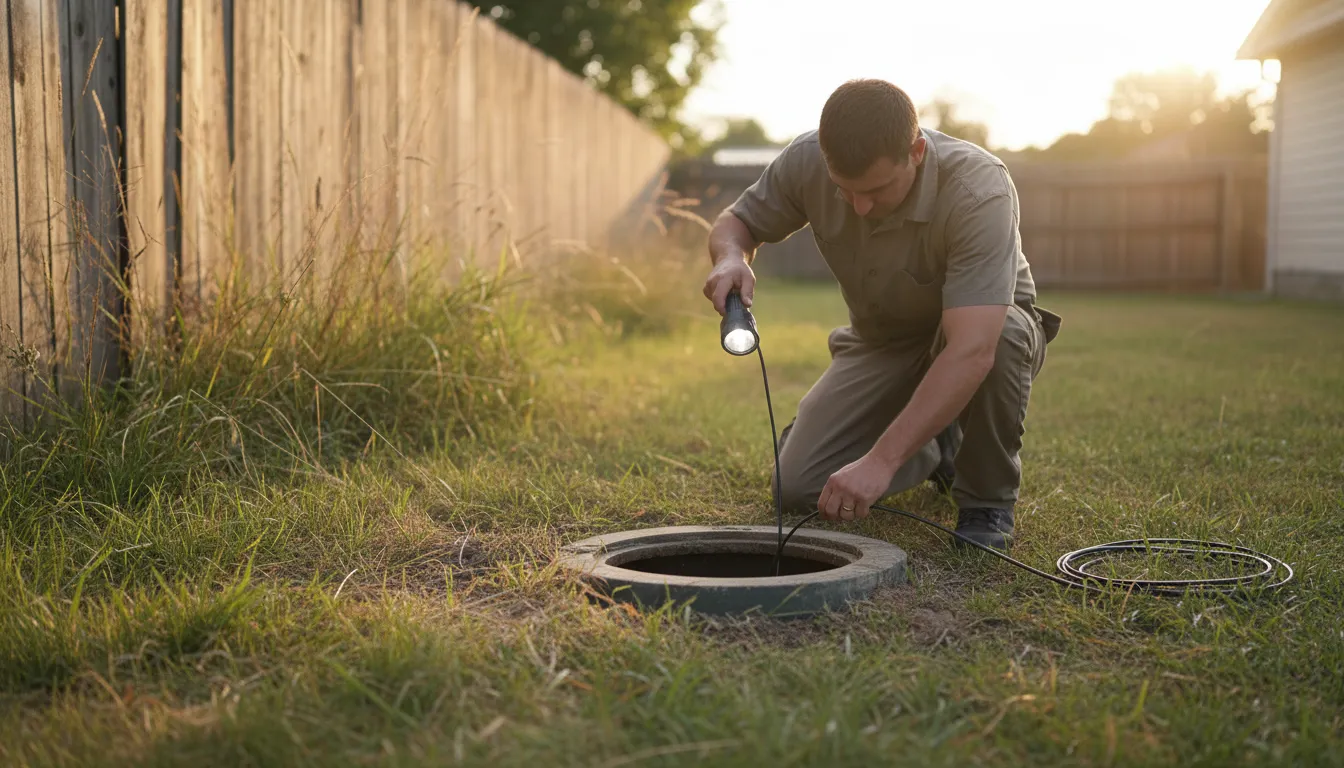
Find the Best Septic Tank Inspection Companies for Your Business
No obligation • Fast responses • Nationwide coverage

Why you can trust Septic Spot
Septic Spot is a leading United States resource for understanding and comparing septic services. Our editors review providers using consistent criteria and verify key business details. Listings and scores are independent, and companies cannot pay to influence our content.
Search providers near you
Top Septic Tank Inspection Companies in White Plains, New York Ranked
A septic tank inspection is a professional assessment of your on-site wastewater system's health and functionality. For homeowners in White Plains, these evaluations are critical for protecting your property value, ensuring public health, and complying with local Westchester County regulations. A thorough septic system check can identify minor issues before they become costly failures, helping you plan for necessary maintenance like pumping or repairs. This guide will help you understand the process, local rules, and what to look for when scheduling a septic inspection service in your area.
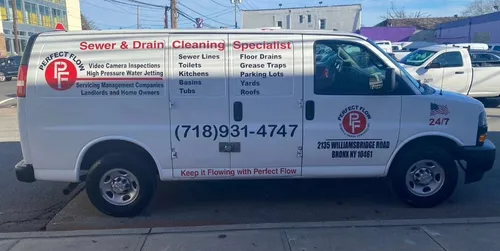
Perfect Flow Sewer & Drain Services
2135 Williamsbridge Rd, Bronx, NY 10461
Perfect Flow Sewer & Drain Services provides septic tank inspection and septic system repair in Yonkers, NY. They offer thorough inspections, efficient cleaning, and precise repairs to maintain reliable sewer and drain systems. Their services focus on ensuring seamless flow and system functionality.
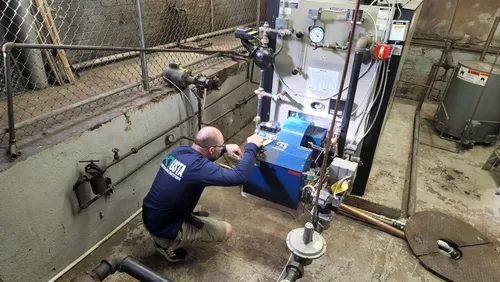
USTA Home Inspections
25 Continental Dr Unit C, Wayne, NJ 07470
USTA Home Inspections is a septic tank inspection company serving New York, NY, and surrounding areas. They provide comprehensive home inspection services covering major components such as roofing, structural elements, electrical systems, HVAC, oil tank sweeps, foundation integrity, radon testing, termite inspections, and septic tank inspections. The company focuses on helping homebuyers make informed decisions by delivering clear and reliable inspection reports. USTA Home Inspections serves multiple counties in New Jersey and New York, including Passaic, Morris, Bergen, Essex, and Union. They emphasize protecting clients' investments and ensuring safety before moving into a new home.
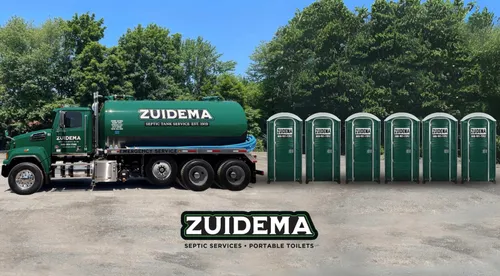
Zuidema Septic Services & Portable Toilets
90 Midland Ave, Midland Park, NJ 07432
Zuidema Septic Services & Portable Toilets provides residential and commercial septic services along with portable toilet and restroom trailer rentals in New York, NY. With over 100 years of experience since 1919, they offer septic tank pumping, inspections, repairs, and grease trap services. Their use of advanced sewer camera technology helps identify and address sewer line issues effectively. Zuidema also offers 24/7 emergency service for septic and portable toilet needs, ensuring support is available at any time.
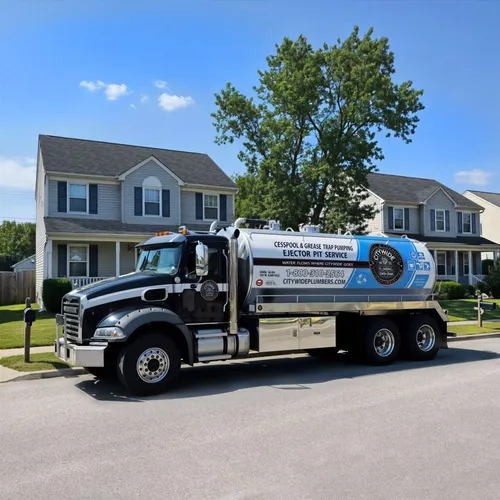
Citywide Grease Trap Maintenance | Cesspool Pumping Service Long Island
110 Voice Rd, Carle Place, NY 11514
Citywide Grease Trap Maintenance | Cesspool Pumping Service Long Island provides septic and cesspool pumping, inspection, repair, and installation services in New York, NY. Serving both residential and commercial clients, they offer comprehensive maintenance and cleaning to prevent system failures. Their skilled technicians use advanced equipment for installations and repairs, including grease trap pumping and sewage ejector pit services. With over 65 years of experience, Citywide operates 24/7 to address emergency needs promptly.
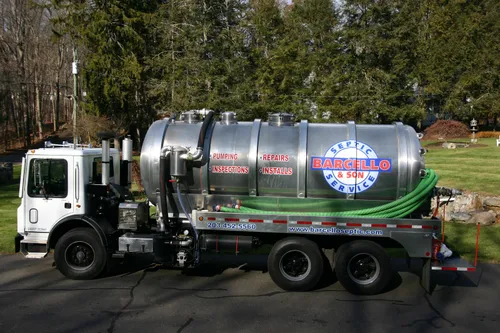
Barcello & Son Septic Service LLC
334 Wilson Rd, Easton, CT 06612
Barcello & Son Septic Service LLC is a family-owned business based in Easton, CT, serving the Bridgeport area with septic tank pumping, inspection, repair, design, and installation services. With over 20 years of experience in Fairfield County, they handle all sizes and types of septic systems using a proprietary 12-step pumping process and the latest equipment. Their expertise covers comprehensive septic system solutions, including real estate appraisal support and system design. The company emphasizes transparent pricing and guarantees their work. Barcello & Son Septic Service LLC is known for clear communication about service timing and procedures, aiming to provide a straightforward and reliable customer experience.
Understanding Septic Systems and Local Regulations
In White Plains, your septic system is a private wastewater treatment plant buried in your yard. It relies on a tank to separate solids from liquids and a drainfield to filter and disperse the treated effluent into the soil. Proper function is not just a convenience-it's an environmental and legal responsibility. The Westchester County Department of Health (WCDH) has strict oversight over all septic systems to protect groundwater and public health.
A key regulation is that all work must be performed by a licensed contractor. You must use a septic tank pumper or inspector who is licensed by the New York State Department of Environmental Conservation (DEC) or is specifically authorized by Westchester County. These professionals are required to submit official reports of their service, including pumping and inspection findings, directly to the WCDH 1. This creates a vital paper trail for your property. Furthermore, any new installation or major modification to your system requires prior approval from the county and an "open works" inspection before the system is backfilled 1.
Why Regular Septic Inspections Are Essential
Scheduling a routine septic system evaluation is one of the most important forms of home maintenance you can perform. Unlike a clogged drain, a failing septic system is a silent crisis that can lead to sewage backing up into your home, foul odors in your yard, and contamination of local waterways.
The U.S. Environmental Protection Agency and local health authorities recommend having your system inspected every 1 to 3 years 2 3. This regular check-up is your first line of defense. It allows a professional to measure sludge and scum levels, check for structural damage, and assess the drainfield's condition. Catching a problem early, such as a failing baffle or a small leak, can save you thousands of dollars compared to the cost of a full system replacement, which can range from $10,000 to $15,000 or more. Keeping a detailed record of all inspections and pumpings is also highly recommended for your own reference and for any future property sale 4.
What Happens During a Professional Inspection?
A comprehensive septic tank assessment is a multi-step process conducted by a trained technician. Here's what you can typically expect during a standard evaluation:
- Locating and Opening the Tank: The inspector will first locate your tank and distribution box, then carefully uncover the manhole and inspection ports to gain access.
- Measuring Sludge and Scum: This is a core part of the inspection. Using specialized tools, the technician measures the depth of the sludge layer at the bottom of the tank and the scum layer at the top. A critical rule of thumb is that pumping is needed if the bottom of the scum layer is within 6 inches of the outlet baffle, or if the top of the sludge layer is within 12 inches of it 5.
- Checking Baffles and Tees: The inlet and outlet baffles (or tees) are inspected for damage, wear, or clogging. These components are crucial for preventing solids from escaping the tank and clogging the drainfield.
- Inspecting Tank Integrity: The inspector will look for cracks, signs of leakage, rust (in metal tanks), and structural soundness of the tank itself.
- Performing a Flow Test: To check the system's hydraulic function, the inspector may run water in the house to ensure wastewater flows freely into the tank and that the tank drains properly to the drainfield without backing up 6.
Find the perfect septic tank inspection companies for your needs
Get personalized recommendations and expert advice
Septic Tank Pumping: The Companion to Inspection
An inspection often reveals the need for pumping. Even if your system seems to be working fine, sludge and scum accumulate over time. If these layers become too thick, they can flow into and destroy your drainfield-the most expensive component to repair.
Pumping frequency is not one-size-fits-all. While the general guideline is every 3 to 5 years, several factors can require more frequent service:
- Tank Size: A smaller tank fills up faster.
- Household Size: More people generate more wastewater and solids.
- Garbage Disposal Use: Disposals significantly increase the amount of solids entering the tank.
- Water Usage Habits: Excessive water use can overwhelm the system.
In White Plains, it's important to remember that the contractor who pumps your tank is legally required to file a report with the county, which helps maintain the official record of your system's maintenance 7.
Costs for Inspection and Pumping Services
Understanding the potential costs helps in budgeting for this necessary maintenance. Prices can vary based on tank size, accessibility, and the scope of service.
- Inspection Only: A standard visual and operational inspection typically costs between $200 and $500.
- Pumping Only: The cost to pump out a residential septic tank in the White Plains area generally ranges from $300 to $600, depending on tank capacity and how easy it is to access 8.
- Combined Inspection and Pumping: Many companies offer a bundled service. Having both done at the same visit often ranges from $400 to $800 or more, which can be more cost-effective than scheduling them separately 9 10.
When comparing providers, always ensure they are licensed by NYS DEC or authorized by Westchester County. The lowest price may not be the best value if the service is incomplete or the contractor is not properly certified to file the required reports.
Maintaining Your System Between Inspections
A professional evaluation is crucial, but day-to-day care extends the life of your system. Be mindful of what goes down your drains. Avoid flushing anything besides human waste and toilet paper. Never pour grease, chemicals, or medications down the drain, as they can kill the beneficial bacteria in your tank and contaminate groundwater. Spread out laundry loads over the week instead of doing many loads in one day to avoid hydraulic overload. Also, know where your system and drainfield are located and avoid driving or parking heavy vehicles over the area, as compaction can damage pipes and the soil's ability to absorb effluent.
Frequently asked questions
Sources
Footnotes
-
on-site wastewater treatment system checklist - https://health.westchestergov.com/images/stories/Environmental%20Forms/Realty/contructionapprovalchecklist25.pdf ↩ ↩2
-
EPA - NYC.gov - https://www.nyc.gov/assets/dep/downloads/pdf/watershed-protection/east-of-hudson-ms4/epa_guide_to_septic_systems_b.pdf ↩
-
Frequent Questions on Septic Systems | US EPA - https://www.epa.gov/septic/frequent-questions-septic-systems ↩
-
Septic System Operation and Maintenance - https://www.health.ny.gov/publications/3208/ ↩
-
Septic System Inspections - InterNACHI - https://www.nachi.org/inspecting-septic-systems.htm ↩
-
What to Expect from a Septic Inspection - https://www.wrenvironmental.com/blog/2023/may/what-to-expect-from-a-septic-inspection/ ↩
-
Septic System Management - https://health.westchestercountyny.gov/septic-systems ↩
-
Step-By-Step Guide to Reviving an Idle Septic Tank on Vacant Land - https://jtserviceco.com/step-by-step-guide-to-reviving-an-idle-septic-tank-on-vacant-land/ ↩
-
What is involved and cost of a full septic system inspection in New ... - https://www.facebook.com/groups/562934644102912/posts/2036326116763750/ ↩
-
Your Septic System - Cornell University - https://www.css.cornell.edu/cwmi/waterquality/septic/CCEWQ-YourSepticSystem-Print.pdf ↩