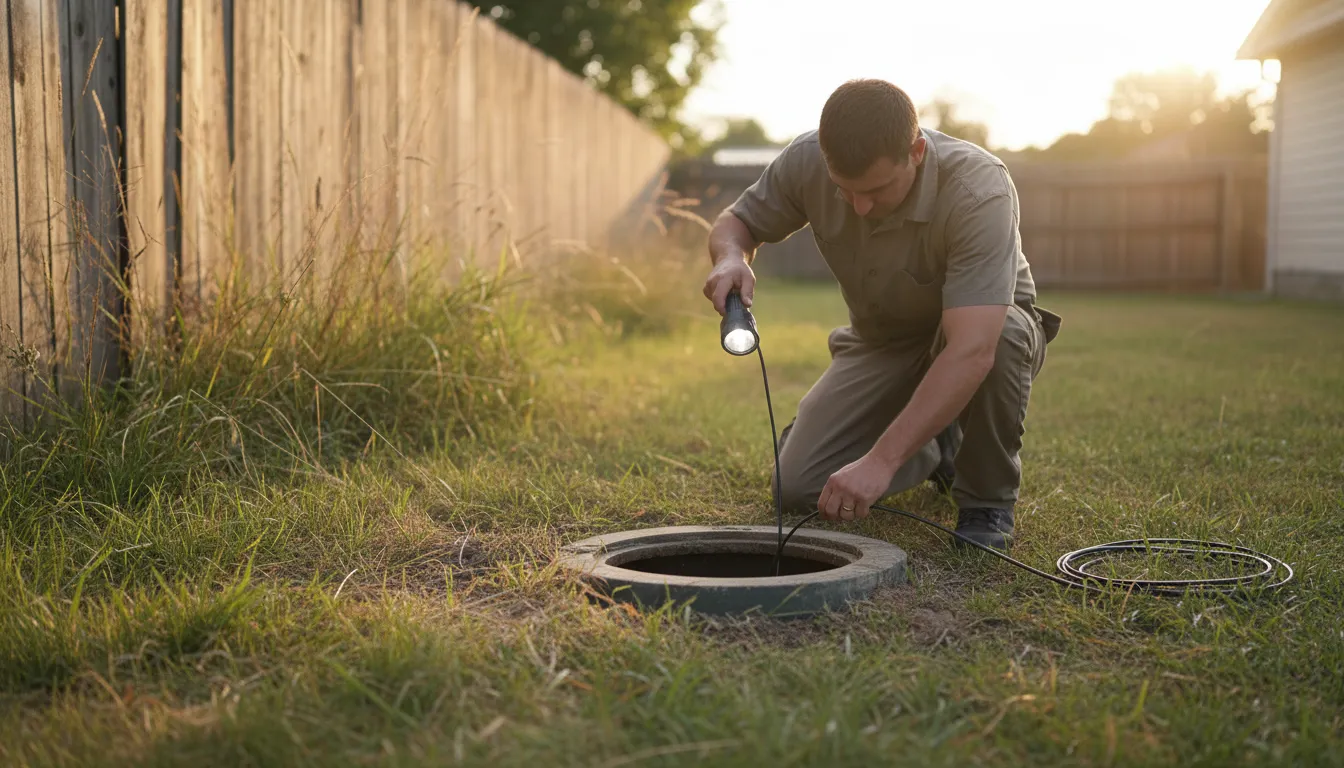
Find the Best Septic Tank Inspection Companies for Your Business
No obligation • Fast responses • Nationwide coverage

Why you can trust Septic Spot
Septic Spot is a leading United States resource for understanding and comparing septic services. Our editors review providers using consistent criteria and verify key business details. Listings and scores are independent, and companies cannot pay to influence our content.
Search providers near you
Top Septic Tank Inspection Companies in Cincinnati, Ohio Ranked
A septic tank inspection is a professional assessment of your on-site wastewater system's condition and functionality. For Cincinnati homeowners, these evaluations are crucial for protecting your property value, ensuring public health, and complying with local regulations. This guide explains what a septic system inspection involves, why it's necessary, and how you can connect with qualified local professionals to schedule your assessment.
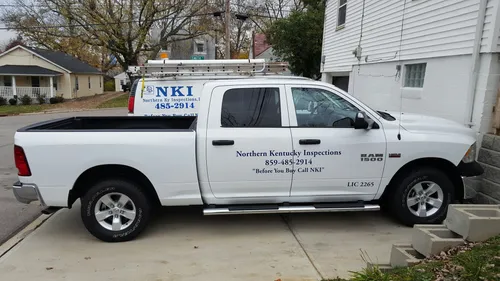
Northern Kentucky Inspections Inc
21 Spruce Dr, Florence, KY 41042
Northern Kentucky Inspections Inc is a certified inspection company based near Cincinnati, OH, specializing in septic tank inspections along with mold, radon, plumbing, and pest inspections. Serving Florence and surrounding areas, the company uses advanced tools and techniques to provide accurate testing and clear reports. With over 30 years of experience, Northern Kentucky Inspections Inc offers expertise in plumbing system scoping and pest control services, focusing on protecting homes and businesses through thorough inspections.
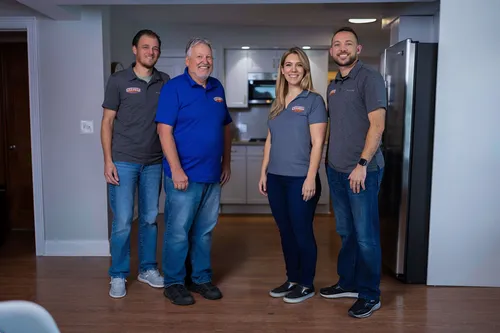
Master Home Inspection Services
1033 Old State Rte 74, Batavia, OH 45103
Master Home Inspection Services is a home and septic tank inspection company serving Cincinnati, OH, and Northern Kentucky. Established in 2018 by Brian Gibbs, who has over 12 years of experience and more than 5,000 inspections performed, the company offers a range of inspection services including home, radon, termite, mold, pool, septic, and sewer scope inspections. Their septic tank inspections focus on evaluating the function and condition of septic systems to help clients plan maintenance and ensure safe operation. Master Home Inspection Services is fully licensed and insured in Ohio and Kentucky.

Best Choice Home Inspections
3831 Middleton Ave, Cincinnati, OH 45220
Best Choice Home Inspections provides septic tank inspections along with comprehensive home inspection services in Cincinnati, OH. The company serves residential properties including single-family and multi-family homes, offering additional services such as termite inspections, radon testing, and waste line camera inspections. They use advanced tools like FLIR infrared cameras and drones to access hard-to-reach areas during inspections. Clients can also request coordination for structural engineer inspections, mold testing, and property surveys. The inspector encourages clients to be present during inspections to discuss any concerns directly.
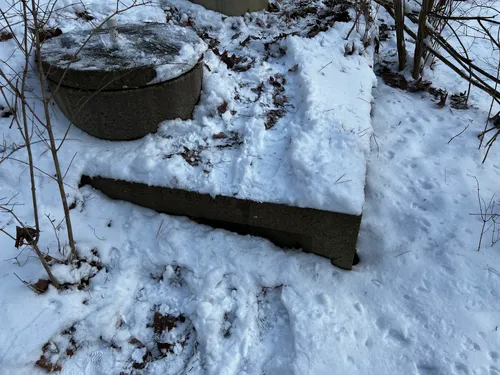
Tank Busters Sewer & Septic
1333 Ohio Pike, Amelia, OH 45102
Tank Busters Sewer & Septic is a septic tank pumping, inspection, and repair company serving Cincinnati, OH. They offer scheduled septic tank pumping, drain cleaning, sewer line repairs, and comprehensive septic system inspections to maintain and protect septic systems. Their services include thorough inspections and expert repairs to address blockages, leaks, or damage in sewer systems. Emergency assistance is available for urgent septic or sewer issues.
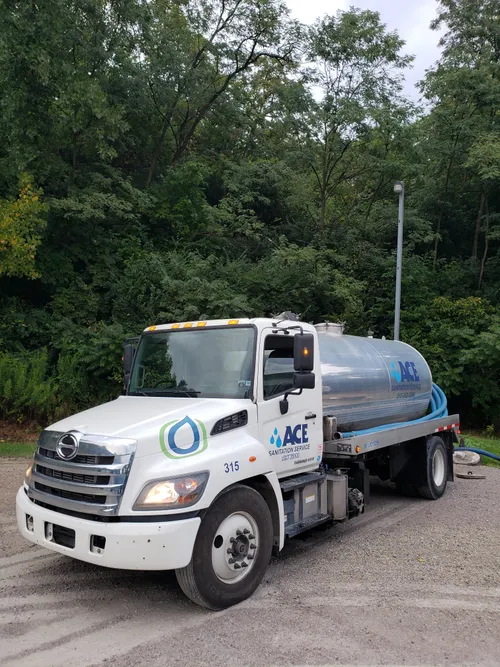
Ace Sanitation Service
4525 OH-128, Cleves, OH 45002
Ace Sanitation Service is a septic system company based in Cincinnati, OH, offering residential and commercial septic tank cleaning, inspection, and repair services. Their capabilities include septic tank motor repair, video camera line inspection, and high velocity jetting. The company also provides specialized services such as restaurant grease trap service and lift station maintenance. Ace Sanitation Service is a certified hauler and supplies chemicals and accessories for septic system care.
Why Septic System Inspections Are Essential in Cincinnati
In Cincinnati and Hamilton County, your septic system is regulated as a Household Sewage Treatment System (HSTS). These systems are not "set it and forget it." Regular inspections are a legal requirement and a critical part of responsible homeownership. A failing system can lead to sewage backups in your home, contamination of groundwater, and costly environmental hazards. For most conventional systems in the area, a professional evaluation is mandated every 58 months (just under five years) 1. Systems with mechanical components, like aeration units, require an annual inspection 1. Beyond compliance, a thorough septic tank check is almost universally required during a real estate transaction, as buyers and lenders need assurance the system is sound 2 3.
What Cincinnati Health Regulations Require
Hamilton County Public Health oversees septic system compliance under Ohio Administrative Code 3701-29. The core requirement is that every system must be on a regulated Operation & Maintenance (O&M) plan, which includes the mandated inspection schedule. The frequency depends on your system type:
- Non-Mechanical Systems: Inspection required every 58 months.
- Mechanical/Aeration Systems: Inspection required every year.
While the health department does not always mandate an inspection for property transfer, it is an extremely common contingency in sale agreements. Having a recent, passing inspection report can streamline the selling process and prevent last-minute negotiations or deal cancellations.
The Professional Inspection Process: A Step-by-Step Look
A comprehensive septic system evaluation is methodical. Here's what you can expect a qualified professional to do during a standard inspection in the Cincinnati area.
1. Record Review & Site Locating The inspector will start by reviewing any available "as-built" drawings or system records from the health department to understand the system's design and locate its components. They will then physically locate the tank and its access ports, which may involve probing the ground.
2. Tank Access and Level Assessment The inspector will open the tank's access lids. A key step is checking the liquid level to ensure it's at the proper height, indicating the drainfield is accepting effluent. They will also measure the thickness of the sludge (solids at the bottom) and scum (floating layer) to determine if pumping is needed 4.
3. Structural and Component Inspection The tank itself is examined for cracks, leaks, or signs of root intrusion that could compromise its integrity 5. The inlet and outlet baffles (or tees) are critically important; the inspector checks that they are intact and functional, as damaged baffles can allow solids to escape into the drainfield 6.
4. Drainfield Evaluation The inspector will assess the drainfield (or leach field) area for warning signs of failure. This includes looking for soggy, spongy soil, foul odors, or the surfacing of sewage-clear indicators that the system is overloaded or clogged 7 8.
5. Reporting and Recommendations Finally, you will receive a detailed report outlining the system's condition, any issues found, and recommended actions, such as immediate pumping or repairs. This report is your official record for health department compliance and real estate disclosures.
Find the perfect septic tank inspection companies for your needs
Get personalized recommendations and expert advice
Understanding Inspection and Maintenance Costs
The cost for a septic system inspection in Cincinnati is typically straightforward. A routine compliance inspection generally ranges from $100 to $250 9 10. If the inspection reveals that pumping is necessary-which is recommended every 3-5 years-that service adds to the cost. A standard septic tank pumping in the area typically costs between $290 and $560 9 10. More comprehensive evaluations for real estate or systems with suspected problems will be higher, depending on the system's complexity and the tests performed 11.
Proactive Maintenance Between Inspections
To keep your system healthy and avoid failures between mandatory inspections, follow these best practices:
- Pump Regularly: Have the tank pumped every 3-5 years, or as recommended by your inspector based on sludge/scum measurements 12.
- Protect the Drainfield: Never drive or park vehicles over the drainfield, and avoid planting trees or deep-rooted shrubs nearby.
- Manage Water: Use water efficiently and divert roof drains and surface water away from the system area to prevent saturation 13.
Choosing a Qualified Inspection Professional
When selecting a provider for your septic system evaluation, look for licensed, experienced professionals familiar with Hamilton County regulations. They should be able to explain the process clearly, provide a detailed written report, and have positive local references. A trustworthy inspector's goal is to give you an accurate picture of your system's health to ensure safety, compliance, and peace of mind.
Frequently asked questions
Sources
Footnotes
-
Sewage Treatment Systems - Hamilton County Public Health - https://hamiltoncountyhealth.org/services/water-quality/new-sewage-treatment-systems/ ↩ ↩2
-
Septic System Inspections | Washington County, OH - https://www.washingtongov.org/710/Septic-System-Inspections ↩
-
Household Sewage - Health - cincinnati-oh.gov - https://www.cincinnati-oh.gov/health/chd-programs/environmental-health/household-sewage/ ↩
-
Frequent Questions on Septic Systems | US EPA - https://www.epa.gov/septic/frequent-questions-septic-systems ↩
-
Septic Inspection Process: What Homeowners Should Know | LunsPro - https://www.lunspro.com/vlog/the-septic-system-inspection-process-what-homeowners-should-know ↩
-
What's Entailed in Septic Inspections - https://septiccleanings.com/blog/septic-inspections/ ↩
-
What to Expect from a Septic Inspection - https://www.wrenvironmental.com/blog/2023/may/what-to-expect-from-a-septic-inspection/ ↩
-
Preparing for Septic Tank Inspection: 7 Key Steps - https://septic911.com/preparing-for-septic-tank-inspection/ ↩
-
Exploring the Costs of Septic Tank Inspections: What to Expect - https://www.theflushfellas.com/exploring-the-costs-of-septic-tank-inspections-what-to-expect ↩ ↩2
-
How Much Does a Septic System Inspection Cost? [2025 Data] - https://www.homeadvisor.com/cost/plumbing/septic-inspection-cost/ ↩ ↩2
-
Understanding the Price of Septic Tank Inspections - https://www.theflushfellas.com/understanding-the-price-of-septic-tank-inspections ↩
-
Understanding Ohio's Septic System Regulations - https://checkmateohio.com/understanding-ohios-septic-system-regulations/ ↩
-
A GUIDE FOR ON-SITE SEWAGE DISPOSAL SYSTEMS (SEPTIC ... - https://dam.assets.ohio.gov/image/upload/epa.ohio.gov/Portals/35/documents/Sewage2000.pdf ↩