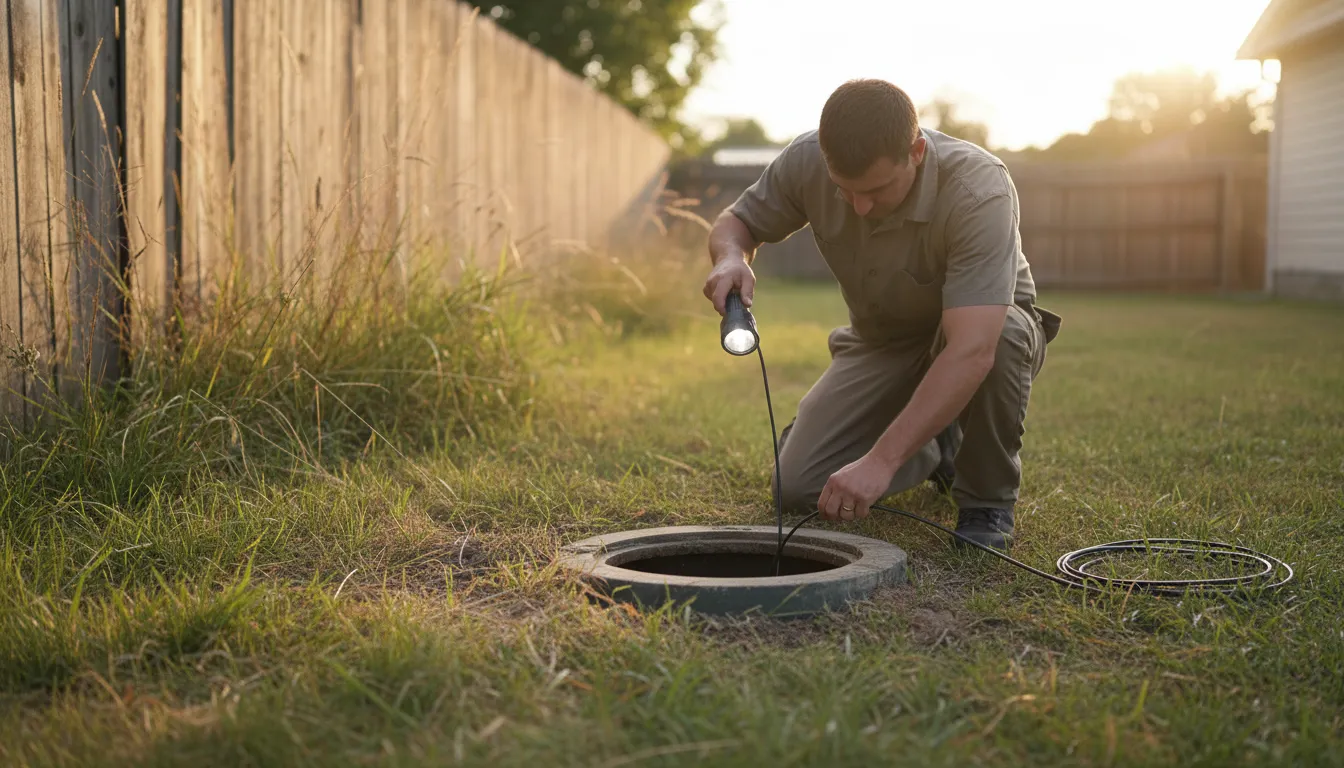
Find the Best Septic Tank Inspection Companies for Your Business
No obligation • Fast responses • Nationwide coverage

Why you can trust Septic Spot
Septic Spot is a leading United States resource for understanding and comparing septic services. Our editors review providers using consistent criteria and verify key business details. Listings and scores are independent, and companies cannot pay to influence our content.
Search providers near you
Top Septic Tank Inspection Companies in Franklin, Tennessee Ranked
A septic tank inspection is a professional assessment of your onsite wastewater system's condition and functionality. In Franklin, where many homes rely on these private systems, regular evaluations are crucial for protecting your property value, ensuring public health, and complying with local and state regulations. This guide explains the inspection process, local requirements, and how to find qualified professionals to maintain your system's health.

Ultra Home Inspections
1025 John Williams Rd, Franklin, TN 37067
Ultra Home Inspections is a home inspection company based near Nashville, TN, offering comprehensive residential inspections and environmental testing. Their services include septic tank inspections, radon gas measurement, termite inspections, thermal imaging scans, indoor air quality testing, and sewer scope inspections. With over 20 years of experience and more than 55,000 inspections completed, they serve a wide area across Middle Tennessee including Franklin, Brentwood, Murfreesboro, and surrounding communities. Ultra Home Inspections emphasizes clear communication, thorough reporting, and a culture of client care.
Michael Shaver Plumbing, Septic, and Dirt Works
29 Industrial Park Dr, Hendersonville, TN 37075
Michael Shaver Plumbing, Septic, and Dirt Works provides septic tank pumping and inspection services in Nashville, TN. Serving Northern Middle Tennessee, the company also offers plumbing, irrigation, and land-clearing solutions. Established in 1981, they bring over 40 years of experience to their work. Their services include visual inspections and septic maintenance, with a focus on personalized customer care.
Outright Septic
Nashville, TN
Outright Septic is a septic tank pumping and inspection company serving Nashville, TN. They provide services for residential, commercial, and municipal septic systems, including regular pumping, maintenance, and pre-closing inspections for real estate transactions. Outright Septic emphasizes clear communication and customer education to help clients understand and maintain their septic systems. Their service includes easy online booking and transparent pricing to simplify the process for customers.
Rooter-Man
303 E Old Hickory Blvd, Madison, TN 37115
Rooter-Man is a plumbing and septic service provider based in Nashville, TN. They offer a wide range of services including septic tank pumping, inspection, repair, and installation, as well as general plumbing repairs and maintenance. The company uses advanced technologies such as leak detection and sewer camera inspection to ensure effective solutions. Rooter-Man provides 24-hour emergency plumbing services, responding promptly to urgent issues. Their team is experienced in handling both routine and complex plumbing problems, including septic system care and pipe repairs.
Mid- Tenn Septic & Plumbing
Nashville, TN
Mid-Tenn Septic & Plumbing is a septic tank pumping, inspection, repair, and installation company serving Nashville, TN. They offer comprehensive plumbing and septic solutions, including drain cleaning, pipe replacements, and septic system maintenance. The team uses modern diagnostic tools to identify and resolve issues effectively, focusing on long-term results rather than temporary fixes. With decades of experience, they understand local conditions affecting septic systems and plumbing, helping to prevent costly problems through proactive care and regular maintenance.
Why Septic System Inspections Matter in Williamson County
Unlike homes connected to municipal sewer lines, properties with septic systems are solely responsible for treating and disposing of wastewater. A failing system can lead to sewage backups into your home, contamination of groundwater, and costly environmental hazards. In Franklin and the broader Williamson County area, the local Environmental Field Office and the Tennessee Department of Environment & Conservation (TDEC) enforce regulations to prevent these issues 1. Regular septic system evaluations are not just a good idea-they are often a legal requirement for real estate transactions, new construction, and system modifications.
When Is a Septic Inspection Required?
Understanding the triggers for a mandatory inspection can save you time and legal trouble. The primary situations include:
- Real Estate Transfers: This is one of the most common reasons. Sellers are typically required to provide an inspection letter from a licensed contractor or the local health department verifying the system's operational status before a property sale can be finalized 2.
- New System Installation: Any new construction requiring a septic system must begin with a soil evaluation (often called a percolation or "perc" test) and a construction permit from TDEC. The system will also be inspected before the tank and drain field are covered.
- System Alterations or Repairs: If you are expanding your home, adding a bathroom, or repairing a component of your existing system, an inspection and permit are usually required.
- Connecting to Public Sewer: If Franklin's public sewer becomes available to your property and you choose to connect, your old septic tank must be properly abandoned. This process requires an inspection and permit to ensure it is done safely.
The Professional Inspection Process: What to Expect
A thorough septic system assessment is a multi-step process conducted by a licensed professional. Here's a breakdown of what a standard evaluation entails 3 4:
- Record Review & Site History: The inspector will start by reviewing any available permits, "as-built" drawings, and maintenance records for your system. This helps locate components and understand the system's design.
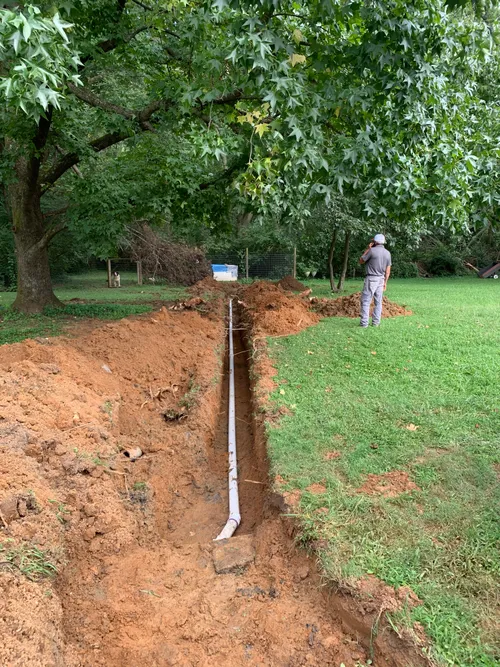
- Locating & Exposing Components: Using records and probing tools, the inspector will locate the septic tank, distribution box, and drain field. The tank's access lids (manholes) will need to be uncovered, which usually requires some digging.
- Tank Interior Assessment: This is the core of the inspection. The inspector will measure the levels of sludge (settled solids) and scum (floating fats and oils) to determine if pumping is needed. They will also check the tank's structural integrity for cracks, leaks, or corrosion, and inspect inlet and outlet baffles to ensure they are intact and functioning.
- Drain Field Evaluation: The inspector will examine the soil over the drain field (leach field) for signs of failure, such as standing water, soggy soil, or foul odors. They may also check the distribution box for even wastewater flow.
- Mechanical Component Check: If your system includes a pump, grinder, or alarm, these components will be tested for proper operation.
- Full System Report: After the evaluation, you should receive a detailed report outlining the system's condition, any deficiencies found, and recommended actions or repairs.
Find the perfect septic tank inspection companies for your needs
Get personalized recommendations and expert advice
Understanding Costs and Maintenance Schedules
Investing in routine care is far less expensive than emergency repairs or a full system replacement. Costs in the Franklin area can vary based on tank size, accessibility, and the scope of services.
- Standard Inspection: A visual inspection and assessment, without pumping, typically ranges from $300 to $600 5.
- Inspection with Pumping: Combining a full inspection with a tank pumping service is common and often provides the best value, with costs generally between $500 and $1,000 or more6.
- Permit Fees: For new systems or major repairs, TDEC permit fees start around $400 for a conventional system and can be $500 or more for alternative systems7.
To keep your system running smoothly and avoid premature failure, follow these maintenance guidelines 8 9:
- Pump Your Tank: Have the solids pumped out of your tank every 3 to 5 years, depending on household size and usage.
- Regular Inspections: Schedule a professional system evaluation every 2 years if your system includes a pump, or every 4 years for a gravity-fed system.
- Keep Detailed Records: Maintain a file of all inspection reports, pumping receipts, and repair permits. This is invaluable for future service and is essential during a home sale.
Finding a Qualified Inspector in Franklin
Not all septic service providers are authorized to conduct official inspections for permit or real estate purposes. In Tennessee, septic system contractors must hold a valid permit from the local Environmental Field Office. When searching for a provider, verify their TDEC licensing and ask if they are approved to conduct the specific type of inspection you need (e.g., real estate transfer inspection). Look for companies with strong local reputations, proper insurance, and those who provide comprehensive written reports.
The Consequences of a Failing System
Ignoring your septic system can lead to serious problems. A failed drain field can cause sewage to surface in your yard, creating a health hazard and unpleasant odors. Inside your home, you may experience slow drains, gurgling pipes, or sewage backups. Beyond the inconvenience and repair costs (which can reach tens of thousands of dollars), you may be subject to fines from Williamson County for creating a public nuisance or environmental violation 10. Proactive inspections are your first line of defense.
Frequently asked questions
Sources
Footnotes
-
Septic System Related Permits - TN.gov - https://www.tn.gov/environment/permit-permits/water-permits1/septic-systems-permits/ssp/permit-water-septic-system-related-permits.html ↩
-
Purchasing a Home With a Septic System - Kim Blanton - https://www.homesbykimblanton.com/blog/a-house-with-a-septic-tank.html ↩
-
Homeowner's Guide to Septic Systems - Lebanon, TN - https://www.lebanontn.org/DocumentCenter/View/273/Detailed-Septic-Information-PDF ↩
-
What to Expect During a Commercial Septic System Inspection - https://mackenservices.com/2024/08/what-to-expect-during-a-commercial-septic-system-inspection/ ↩
-
Septic System Inspections: A Step-by-Step How-To Guide - https://westcoastsanitationinc.com/septic-inspection-service/ ↩
-
Understanding and Inspecting Septic Systems - Flush Fellas - https://www.theflushfellas.com/understanding-and-inspecting-septic-systems ↩
-
Septic System Construction Permit - TN.gov - https://www.tn.gov/environment/permit-permits/water-permits1/septic-systems-permits/ssp/permit-water-septic-system-construction-permit.html ↩
-
Frequent Questions on Septic Systems | US EPA - https://www.epa.gov/septic/frequent-questions-septic-systems ↩
-
Onsite Wastewater Treatment Systems "Septic Systems" - TN.gov - https://www.tn.gov/health/cedep/environmental/healthy-homes/hh/onsite-wastewater-treatment-systems.html ↩
-
City of Franklin Codes Department - Williamson County Government - http://www.williamsoncounty-tn.gov/DocumentCenter/View/1650 ↩