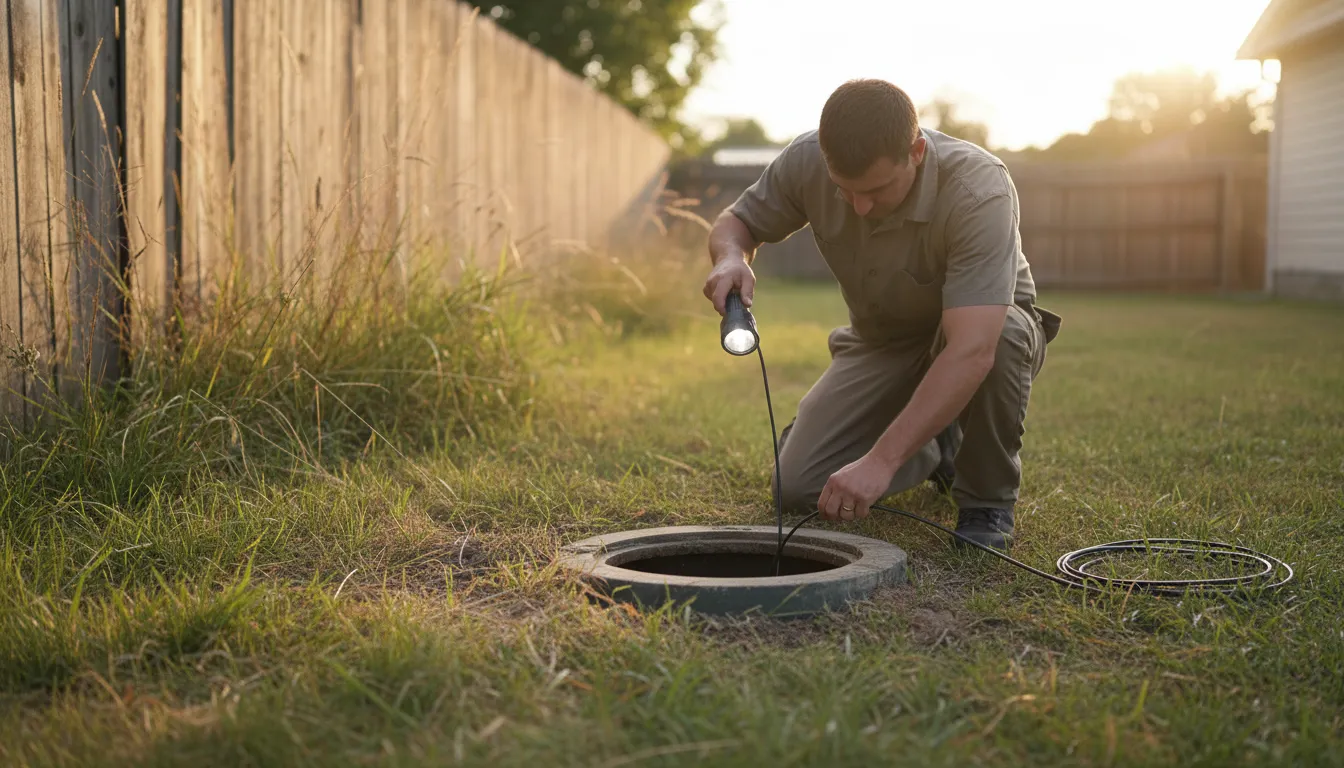
Find the Best Septic Tank Inspection Companies for Your Business
No obligation • Fast responses • Nationwide coverage

Why you can trust Septic Spot
Septic Spot is a leading United States resource for understanding and comparing septic services. Our editors review providers using consistent criteria and verify key business details. Listings and scores are independent, and companies cannot pay to influence our content.
Search providers near you
Top Septic Tank Inspection Companies in Spring Hill, Tennessee Ranked
A septic system inspection is a critical evaluation of your onsite wastewater treatment system's health and functionality. In Spring Hill, where many homes rely on these private systems, regular checks are essential for protecting your property value, ensuring environmental safety, and preventing costly failures. This guide explains what a septic inspection entails, why it's necessary, and how you can find qualified local professionals to assess your system.

Ultra Home Inspections
1025 John Williams Rd, Franklin, TN 37067
Ultra Home Inspections is a home inspection company based near Nashville, TN, offering comprehensive residential inspections and environmental testing. Their services include septic tank inspections, radon gas measurement, termite inspections, thermal imaging scans, indoor air quality testing, and sewer scope inspections. With over 20 years of experience and more than 55,000 inspections completed, they serve a wide area across Middle Tennessee including Franklin, Brentwood, Murfreesboro, and surrounding communities. Ultra Home Inspections emphasizes clear communication, thorough reporting, and a culture of client care.
Outright Septic
Nashville, TN
Outright Septic is a septic tank pumping and inspection company serving Nashville, TN. They provide services for residential, commercial, and municipal septic systems, including regular pumping, maintenance, and pre-closing inspections for real estate transactions. Outright Septic emphasizes clear communication and customer education to help clients understand and maintain their septic systems. Their service includes easy online booking and transparent pricing to simplify the process for customers.
Mid- Tenn Septic & Plumbing
Nashville, TN
Mid-Tenn Septic & Plumbing is a septic tank pumping, inspection, repair, and installation company serving Nashville, TN. They offer comprehensive plumbing and septic solutions, including drain cleaning, pipe replacements, and septic system maintenance. The team uses modern diagnostic tools to identify and resolve issues effectively, focusing on long-term results rather than temporary fixes. With decades of experience, they understand local conditions affecting septic systems and plumbing, helping to prevent costly problems through proactive care and regular maintenance.
Septic Masters LLC
166 Acton St B, Franklin, TN 37064
Septic Masters LLC is a family-owned business providing septic system services in Nashville, TN, including the nearby Brentwood and Franklin areas. They specialize in residential septic tank pumping, inspection, and repair, handling both conventional and low-pressurized pipe systems. Their team focuses on environmentally responsible solutions and offers thorough septic inspections and timely repairs to maintain system efficiency.
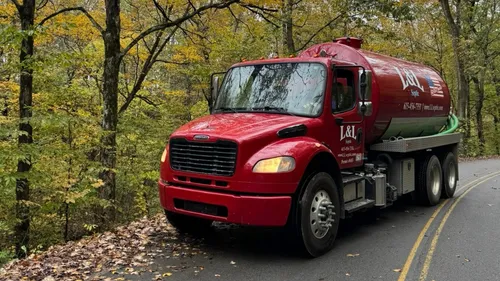
L&L Septic
2051 Carters Creek Pike, Franklin, TN 37064
L&L Septic is a family-owned septic service provider based in Nashville, TN, serving Franklin and the surrounding Williamson County area for over a decade. They offer a range of residential and commercial septic services including tank pumping, inspections, repairs, installations, and drain field replacements. The company is licensed and certified in Tennessee and Williamson County, ensuring professional and secure handling of septic systems. L&L Septic is known for upfront pricing and a commitment to customer satisfaction, with after-hours service available for emergencies.
Why Septic System Inspections Are Crucial in Spring Hill
For homeowners in Spring Hill not connected to municipal sewer lines, the septic system is a silent workhorse, treating all household wastewater. Unlike public utilities, the responsibility for maintenance and repair falls entirely on the property owner. A professional septic system evaluation is the best way to ensure this vital infrastructure is operating correctly. Regular inspections can identify minor issues before they escalate into major failures, such as sewage backing up into your home or contaminating groundwater. In Tennessee, systems are regulated by the Department of Environment and Conservation (TDEC) and local health departments, which often mandate inspections every 1 to 3 years for certain systems.
Beyond routine maintenance, a septic tank assessment is highly recommended-and sometimes required-during real estate transactions. For buyers, it provides peace of mind and can prevent inheriting a failing system that costs tens of thousands to replace. For sellers, a clean inspection report can make a property more attractive and streamline the sale process. Given that Spring Hill's growth means many homes have aging systems, proactive inspection is a smart investment.
What a Professional Inspection Involves
A comprehensive septic inspection in Spring Hill goes far beyond just looking at the tank. A qualified inspector follows a systematic process, often aligned with guidelines from organizations like the International Association of Certified Home Inspectors (InterNACHI) and state regulations. Here's what you can expect:
1. Locating and Accessing the System: The inspector will first locate the tank, distribution box, and drainfield (also called a leach field). This may involve reviewing property records or using probing tools. The tank covers are then carefully excavated and opened for internal viewing.
2. Evaluating Tank Conditions and Sludge Levels: This is the core of the septic tank check. Using a tool called a "sludge judge," the inspector measures the depth of the scum layer (floating solids) and the sludge layer (settled solids) at the bottom of the tank. Tennessee Department of Health guidelines suggest pumping is needed when the sludge depth exceeds one-third of the tank's liquid depth. They also inspect the tank's structural integrity for cracks or signs of leakage.
3. Inspecting Critical Components:
- Baffles: The inlet and outlet baffles are checked to ensure they are intact. Damaged baffles can allow solids to escape into the drainfield, causing premature clogging and failure.
- Distribution Box: If accessible, the inspector will verify that the distribution box is level and that wastewater is flowing evenly to all drainfield lines.
- Pumps and Alarms: For systems with pumps, these mechanical components are tested for proper operation.
4. Assessing the Drainfield: The inspector surveys the drainfield area for telltale signs of failure. Red flags include soggy ground, standing water, foul odors, or unusually lush grass growth-all indicators that the field is saturated and not properly absorbing treated effluent 1.
Tennessee and Local Spring Hill Regulations
Understanding local rules is key for Spring Hill homeowners. Septic systems must comply with Tennessee Department of Environment and Conservation (TDEC) and Williamson County Health Department guidelines.
- Permits: Installing a new system requires a permit from TDEC. For a conventional system, this is often called a "New Conventional or Large Diameter Graveless Pipe SSDS Permit," with fees around $400 for systems designed for up to 1,000 gallons per day (gpd) 2 3.
- Inspection Services: TDEC's Division of Ground Water Protection offers "Inspection Letters" for existing systems, which can be part of a compliance or property transfer process 4.
- Local Codes: Spring Hill city codes specify when a septic tank shall be used, typically in areas where public sewer is not available 5. Adhering to these codes during any repair or installation is mandatory.
Find the perfect septic tank inspection companies for your needs
Get personalized recommendations and expert advice
Costs and Recommended Frequency
Budgeting for septic maintenance is part of responsible homeownership in Spring Hill. Costs can vary based on tank size, system complexity, and property access.
- Routine Inspection: A standard visual and operational inspection typically costs between $200 and $500 6.
- Septic Tank Pumping: If the inspection reveals the tank is full, pumping is necessary. This service generally ranges from $300 to $600, depending on tank size (e.g., 1,000-gallon vs. 1,500-gallon) 7.
- Combined Service: It's common to schedule pumping and inspection together. A full maintenance visit, including pumping and a detailed inspection, often falls in the range of $500 to over $1,000 8 9 10.
How often should you schedule this? The U.S. Environmental Protection Agency and Tennessee guidelines recommend pumping your tank every 3 to 5 years for a typical household. However, systems with effluent pumps or garbage disposals, or those used by larger families, may require more frequent service, potentially every 2 years. An annual visual check of the drainfield for warning signs is also a good practice.
Maintaining Your System Between Inspections
A professional inspection gives you a snapshot of your system's health, but daily habits determine its long-term viability.
Do:
- Conserve water to avoid hydraulically overloading the system.
- Divert roof drains and surface water away from the drainfield.
- Keep detailed records of all inspections, pumpings, repairs, and the system's design.
- Plant only grass over and near the drainfield; deep roots can damage pipes.
Don't:
- Flush non-biodegradables like wipes, feminine hygiene products, or dental floss.
- Pour grease, chemicals, or paints down the drain.
- Drive or park vehicles, or build structures (like sheds or patios) on the drainfield area. The soil compaction can crush pipes and ruin the absorption field 11 12.
- Use septic tank additives as a substitute for pumping; their effectiveness is debated, and some can harm the system.
The Real Estate Transaction Inspection
If you are buying or selling a home in Spring Hill with a septic system, a specialized property transfer inspection is one of the most important steps. This inspection is often more rigorous than a routine check and is designed to uncover any issues that could affect the sale.
Who pays for it is typically negotiable. In many transactions, the buyer orders and pays for the inspection as part of their due diligence. In a competitive market, a seller might proactively have an inspection done to make their home more appealing. The inspection report will be a key document in negotiations, potentially leading to requests for repair, a price adjustment, or the establishment of an escrow fund to cover necessary work.
Frequently asked questions
Sources
Footnotes
-
Septic System Inspections - InterNACHI - https://www.nachi.org/inspecting-septic-systems.htm ↩
-
Septic System Construction Permit - TN.gov - https://www.tn.gov/environment/permit-permits/water-permits1/septic-systems-permits/ssp/permit-water-septic-system-construction-permit.html ↩
-
A Guide to Septic System Permits and Regulations - https://www.septicblue.com/a-guide-to-septic-system-permits-and-regulations ↩
-
Online Application for Septic Related Services - TN.gov - https://www.tn.gov/environment/permit-permits/water-permits1/septic-systems-permits/ssp/wr-sds-online-application-for-ground-water-protection-services.html ↩
-
§ 18-204 WHEN A SEPTIC TANK SHALL BE USED. - https://codelibrary.amlegal.com/codes/springhill/latest/springhill_tn/0-0-0-9017 ↩
-
Purchasing a Home With a Septic System - Kim Blanton - https://www.homesbykimblanton.com/blog/a-house-with-a-septic-tank.html ↩
-
How Often Should You Pump Your Septic Tank: 3 Factors Solved - https://www.frasiers.com/blog/sewage-tank-pump-frequency/ ↩
-
Understanding and Inspecting Septic Systems - Flush Fellas - https://www.theflushfellas.com/understanding-and-inspecting-septic-systems ↩
-
Frequent Questions on Septic Systems | US EPA - https://www.epa.gov/septic/frequent-questions-septic-systems ↩
-
Who Pays For Septic Inspection When Selling a House? - https://ibuyer.com/blog/who-pays-for-septic-inspection-when-selling-a-house/ ↩
-
Onsite Wastewater Treatment Systems "Septic Systems" - https://www.tn.gov/health/cedep/environmental/healthy-homes/hh/onsite-wastewater-treatment-systems.html ↩
-
Homeowner's Guide to Septic Systems - Lebanon, TN - https://www.lebanontn.org/DocumentCenter/View/273/Detailed-Septic-Information-PDF ↩