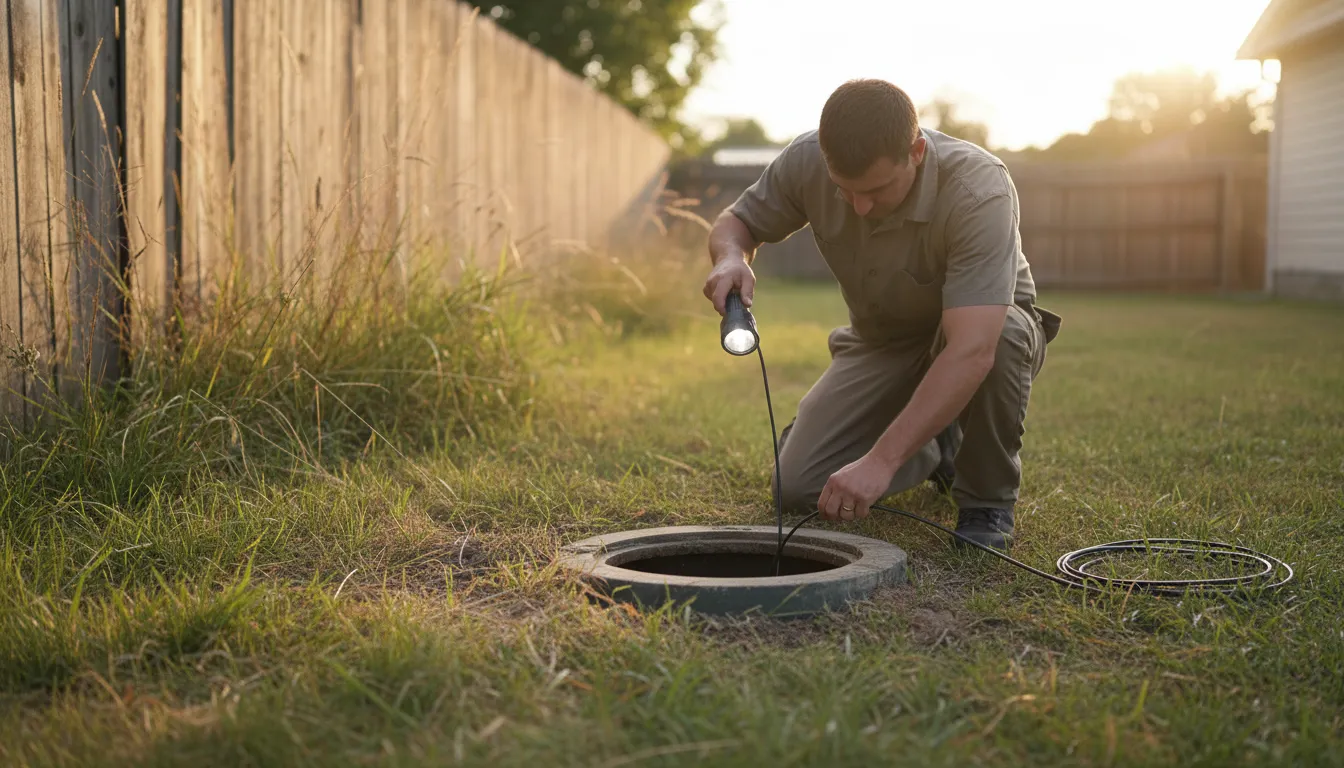
Find the Best Septic Tank Inspection Companies for Your Business
No obligation • Fast responses • Nationwide coverage

Why you can trust Septic Spot
Septic Spot is a leading United States resource for understanding and comparing septic services. Our editors review providers using consistent criteria and verify key business details. Listings and scores are independent, and companies cannot pay to influence our content.
Search providers near you
Top Septic Tank Inspection Companies in Everett, Washington Ranked
For homeowners in Everett, a properly functioning septic system is essential for protecting your property value, your family's health, and the local environment of Snohomish County. A septic system evaluation is a critical maintenance task that assesses the health of your tank, drainfield, and all related components. This guide explains what a septic inspection entails, why it's required, and how you can find qualified local professionals to perform this vital service for your home.
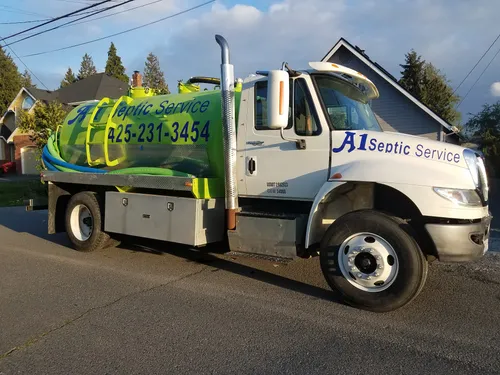
A1 Septic Service
10121 Evergreen Wy Suite 25-696, Everett, WA 98204
A1 Septic Service is a family-owned company based in Everett, WA, providing septic system pumping, inspection, and repair services. Serving Snohomish and King County, they cater to residential, commercial, and municipal customers with over 25 years of experience. Their capabilities include emergency septic pumping available 24/7 to address urgent needs promptly. Established in 1998, A1 Septic Service emphasizes thorough, licensed, and insured work with a commitment to customer satisfaction.
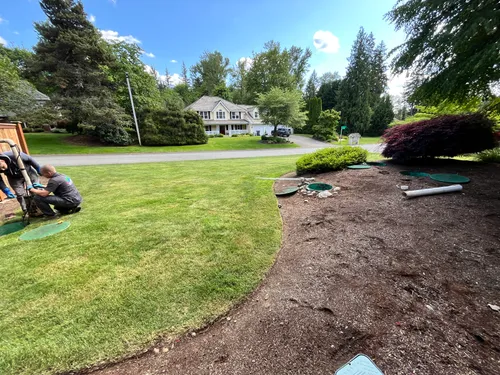
Fresh N Clean Septic
17226 NE Woodinville Duvall Rd, Woodinville, WA 98072
Fresh N Clean Septic provides septic tank pumping, inspection, and repair services in Seattle, WA. They serve the greater Snohomish and King Counties with eco-responsible septic solutions designed to protect both property and the environment. The company offers comprehensive septic system maintenance, including pumping, cleaning, and repairs, supported by licensed and experienced technicians. Fresh N Clean Septic also provides emergency availability to address urgent septic issues promptly.
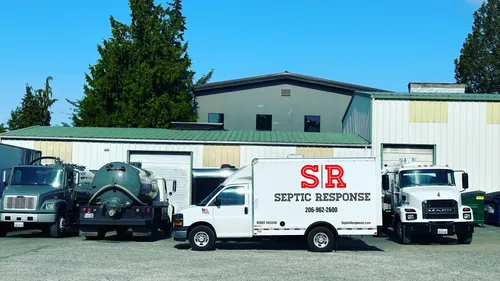
Septic Response
672 7th Ave, Kirkland, WA 98033
Septic Response is a septic tank service provider based in Seattle, WA, offering a wide range of services including septic tank pumping, inspection, repair, installation, and drain field replacement. They serve King County, Snohomish County, and Pierce County with expertise in maintaining both traditional and advanced septic systems. Their capabilities include inlet pipe cleaning using jetting technology and comprehensive septic system maintenance tailored to local soil and environmental conditions. The company emphasizes preventative maintenance and environmental compliance to extend system lifespan. Septic Response operates 24/7 to support urgent septic needs.
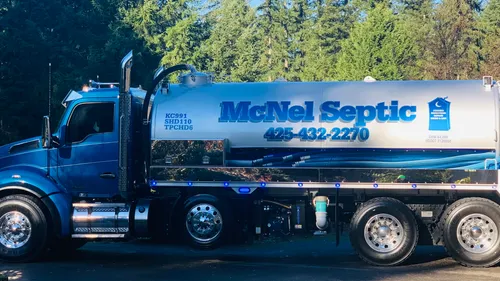
McNel Septic Service
Kent, WA
McNel Septic Service is a locally owned company based in Kent, WA, specializing in septic tank pumping, inspections, repairs, and maintenance for both residential and commercial clients. They serve a broad area including Maple Valley, Black Diamond, Palmer, Ravensdale, and King County. The company offers a range of services such as pumping, system inspections, decommissioning, and pump repairs using small and large capacity trucks with extra-long hoses. Their experienced technicians focus on thorough septic system care and customer support.
Inspection Boss
Everett, WA
Inspection Boss is a septic tank inspection company based in Everett, WA. They provide inspection services across the Greater Puget Sound area, including Seattle, Lynnwood, Mukilteo, and Bellevue. The company is fully licensed, insured, and certified, ensuring compliance with industry standards.
Understanding Septic System Inspections in Snohomish County
A septic tank inspection, often referred to as a system evaluation or assessment, is a detailed examination performed by a certified professional. In Everett and throughout Snohomish County, these evaluations are not just a good idea-they are a regulatory requirement. The Snohomish County Health Department mandates regular inspections to prevent system failures that can lead to groundwater contamination, costly repairs, and public health hazards 1.
The frequency of your required inspection depends on your system's design. For conventional gravity systems, an inspection is required at least once every three years. However, if you have a more complex alternative system, such as a Low-Pressure Dose (LPD), Aerobic Treatment Unit (ATU), or sand filter system, the law requires an annual inspection. For new systems, a check-up is recommended about six months after initial use, followed by the standard schedule 2.
What Does a Professional Inspection Involve?
A thorough septic system check-up is a multi-step process that goes far beyond just looking at the tank. A certified inspector will follow a systematic approach to evaluate every component.
Locating and Accessing the System: The process begins by locating the septic tank and drainfield, often using a county "as-built" drawing. If the tank lids are buried, they will need to be dug up for access.
Evaluating the Tank Interior: This is the core of the inspection. The professional will measure the levels of sludge (solid waste at the bottom) and scum (floating fats and grease) to determine if the tank needs to be pumped. They will also meticulously inspect the inlet and outlet baffles-critical components that prevent solids from escaping into the drainfield-for any damage or deterioration.
Inspecting System Components: For systems with electrical elements, the inspector will check pumps, alarms, control panels, and aerators (if present) to ensure they are functioning correctly.
Assessing the Drainfield: Perhaps the most important visual check is the drainfield evaluation. The inspector will walk the entire area, looking for telltale signs of failure such as surfacing sewage, overly lush and green vegetation, or soggy, wet spots in the yard. A healthy drainfield should show no evidence of effluent coming to the surface 3 4.
Reporting: A key final step is the submission of a formal inspection report to the Snohomish County Health Department via approved platforms like www.onlineseptics.com. It's crucial to confirm that your service provider handles this reporting, as a pumping service alone does not fulfill the legal inspection requirement.
Costs Associated with Septic Inspections and Related Services
Understanding the potential costs helps homeowners budget for this necessary maintenance. Inspection fees can vary based on the system's complexity and the provider.
A basic inspection for a standard gravity system typically ranges from $100 to $300. For more complex alternative systems with pumps and alarms, the inspection cost can be higher, sometimes reaching up to $1,000 due to the additional time and expertise required.
It's common for an inspection to reveal that pumping is needed. In the Everett area, the cost to pump a septic tank generally falls between $400 and $900, depending on the tank's size (e.g., 1,000-gallon vs. 1,500-gallon) and how accessible it is 5 6. If your tank lids are buried, expect an additional charge of $50 to $200 or more for locating and excavating them.
Find the perfect septic tank inspection companies for your needs
Get personalized recommendations and expert advice
The Importance of Hiring a Certified Professional
Washington State and Snohomish County have specific rules about who can perform official septic inspections. The work must be done by a certified septic professional, which includes licensed pumpers, designers, or installers 7. While homeowners can become certified to inspect their own systems through the health department, this is uncommon due to the required training and liability.
Hiring a certified expert ensures the inspection is done correctly and that the mandatory report is filed properly. These professionals have the tools and knowledge to identify subtle signs of trouble that an untrained eye would miss, potentially saving you from a much more expensive repair down the line 8.
What Inspections Can Reveal: From Maintenance to Major Repairs
A routine evaluation might simply confirm that your system is operating well and only needs a routine pumping. However, inspections are designed to catch problems early.
Minor Issues: An inspector might find a damaged baffle, a stuck float switch, or a minor leak at a tank seal. Addressing these small problems promptly usually costs between $200 and $800 and can prevent a cascade of larger issues 9.
Major Problems: The inspection could uncover serious drainfield failure, a collapsed tank, or extensive root intrusion. These are significant repairs that often involve excavation and system replacement, with costs ranging from $3,000 to over $7,000 10 11. Discovering this during a planned inspection is always better than discovering it via a sewage backup in your home.
Proactive Maintenance Tips for Everett Homeowners
Beyond scheduling regular inspections, there are simple steps you can take to extend the life of your septic system and avoid unnecessary problems.
- Keep Detailed Records: Maintain a file with all inspection reports, pumping receipts, repair invoices, and your system's as-built drawing. This is invaluable for troubleshooting and is essential if you sell your home.
- Protect Your Drainfield: Never drive or park cars, heavy equipment, or build structures like sheds or patios over your drainfield. The weight can compact the soil and crush the pipes, leading to immediate failure 12.
- Mind What Goes Down the Drain: Avoid flushing anything other than human waste and toilet paper. Never pour grease, chemicals, or medications down the drain, as they can kill the essential bacteria in your tank and contaminate groundwater 13.
- Conserve Water: Excessive water use can overload your system. Spread out laundry loads, fix leaky faucets promptly, and consider installing water-efficient fixtures 14.
Frequently asked questions
Sources
Footnotes
-
Maintaining Your Septic System - Snohomish County Health Department ↩
-
Do-It-Yourself Septic System Inspection Field Guide - Washington State Department of Health ↩
-
WA Septic System Rules Buyers Need to Know (2025-2026 ...) ↩
-
Septic Tank Pumping Cost: Guide & Pricing in 2025 - Splash Plumbing ↩
-
Summary of Septic System Inspection Requirements - Clallam County ↩
-
Hiring a Septic System Professional | Washington State Department ... ↩
-
Septic Tank Inspection Cost Guide | What to Expect & Save | Blog ↩
-
Septic System Cost Estimate: A Complete Breakdown - Land Perc ↩
-
Septic Tank Inspection Cost: What to Expect & What's Involved ↩
-
A Homeowner's Guide to Septic Systems - International Association of Certified Home Inspectors ↩