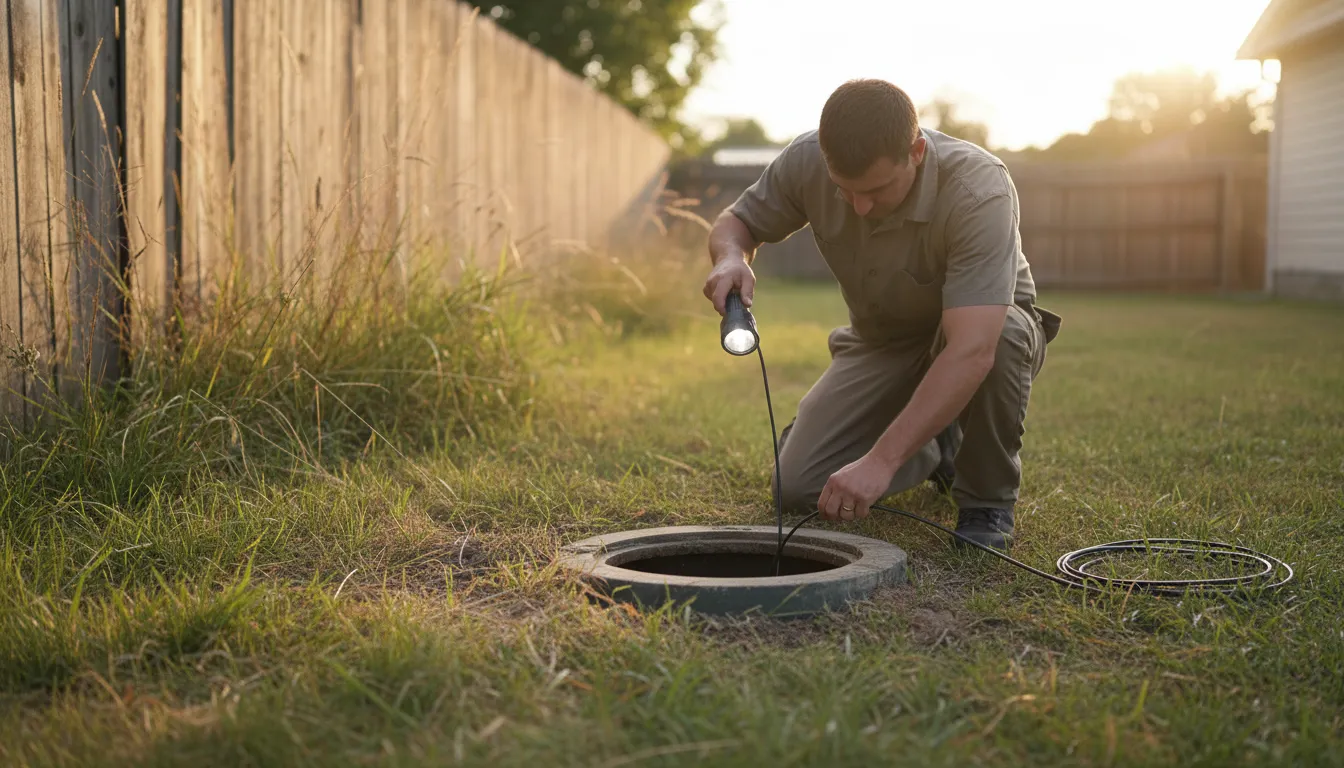
Find the Best Septic Tank Inspection Companies for Your Business
No obligation • Fast responses • Nationwide coverage

Why you can trust Septic Spot
Septic Spot is a leading United States resource for understanding and comparing septic services. Our editors review providers using consistent criteria and verify key business details. Listings and scores are independent, and companies cannot pay to influence our content.
Search providers near you
Top Septic Tank Inspection Companies in Redmond, Washington Ranked
A septic system inspection is a critical evaluation of your on-site wastewater treatment system, performed by a certified professional. This process is vital for protecting your property's value, ensuring environmental safety, and complying with local health regulations in King County. For Redmond homeowners, understanding when and why to schedule a system evaluation is the first step in responsible ownership. This guide will help you navigate the inspection requirements, process, and local resources to find qualified professionals for your needs.
Titan Inspection Services - Maple Valley
Kent, WA
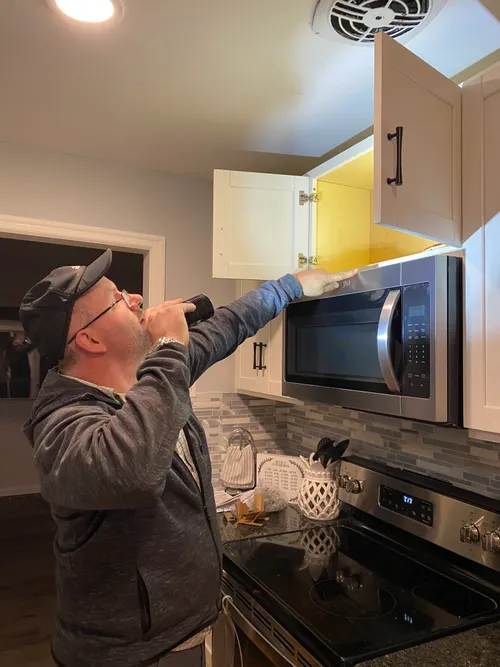
Titan Inspection Services - Maple Valley is a septic tank inspection company serving Kent, WA. They provide thorough home and septic inspections with detailed reports that include photos, videos, and maintenance recommendations. Their inspectors are knowledgeable and take time to explain findings clearly to clients. The company offers sewer scope inspections as part of their services. Titan Inspection Services is known for quick scheduling and fast report delivery, often within 24 hours. The team is experienced and committed to helping clients make informed decisions about their properties.
Puget Sound Septic
20222 SE 245th St, Maple Valley, WA 98038
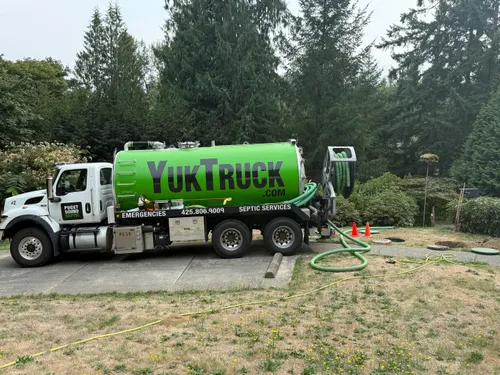
Puget Sound Septic is a septic tank pumping and inspection company serving Kent, WA. They offer septic tank cleaning using advanced technology and trained technicians to provide efficient pumping services. The company also provides video septic line inspections to help identify potential issues early. Puget Sound Septic is committed to maintaining the smooth operation of septic systems and offers services for both routine and emergency needs.
A1 Septic Service
10121 Evergreen Wy Suite 25-696, Everett, WA 98204
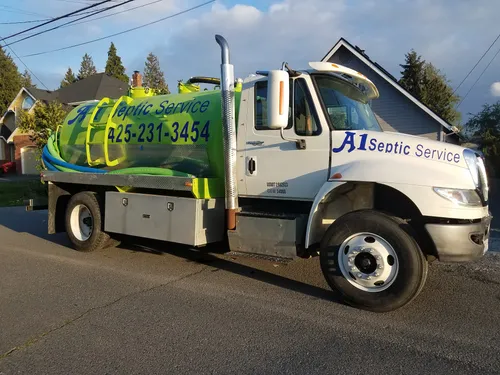
A1 Septic Service is a family-owned company based in Everett, WA, providing septic system pumping, inspection, and repair services. Serving Snohomish and King County, they cater to residential, commercial, and municipal customers with over 25 years of experience. Their capabilities include emergency septic pumping available 24/7 to address urgent needs promptly. Established in 1998, A1 Septic Service emphasizes thorough, licensed, and insured work with a commitment to customer satisfaction.
Rinehart Inspection Services
Seattle, WA
Rinehart Inspection Services is a family-owned septic tank inspection company based in Seattle, WA. They provide customized inspection and sewer scope services for residential, commercial, industrial, and multi-family properties. Their offerings include sewer scope inspections, environmental testing for mold, asbestos, and lead, as well as inspections tailored for buying, selling, renovating, or maintaining properties throughout Western Washington.

The Sterling Inspection Group, Inc.
Seattle, WA
The Sterling Inspection Group, Inc. provides a range of inspection services in Seattle, WA, including septic tank inspections. They offer residential and commercial inspections covering various home systems such as plumbing, roofing, HVAC, and specialty services like sewer scope and gas leak testing. Their capabilities include detailed sewer scope inspections, which help assess the condition of septic and sewer systems.
Why Septic System Evaluations Are Essential in Redmond
In Redmond, your septic system is a private wastewater treatment plant. Unlike being connected to the municipal sewer, you are solely responsible for its maintenance and performance. A professional septic system assessment is not just a good idea-it's often a legal requirement. Regular checks ensure that untreated sewage does not contaminate groundwater, which is a significant concern in the Puget Sound region. For you, the homeowner, it prevents catastrophic and expensive failures, safeguards your family's health, and is a non-negotiable step during most real estate transactions.
The consequences of a failing system are severe. They can include sewage backing up into your home, foul odors in your yard, and soggy, polluted patches over your drainfield. Remediation can cost tens of thousands of dollars. An inspection acts as a preventative health check, identifying minor issues before they become major disasters.
King County & Redmond Inspection Regulations
Regulatory oversight for septic systems in Redmond falls under the King County Department of Public Health - Environmental Health Services. The county mandates regular onsite sewage system (OSS) inspections based on your system's design and complexity. Adhering to this schedule is legally required.
- Conventional Gravity Systems: These are the most common simple systems and require a professional inspection at least once every three years.
- Pressure Distribution, Mound, or Sand Filter Systems: These more advanced systems must be inspected annually due to their mechanical components.
- Aerobic Treatment Units (ATUs) and Drip Irrigation Systems: These complex systems typically require inspection every six months, unless the manufacturer specifies otherwise.
- Property Transfer: An inspection is almost always required before selling a home with a septic system in King County. The inspection report must be submitted to the county, providing a clear record of the system's condition for the buyer 1 2.
Failing to complete these mandatory inspections can result in county enforcement actions and fines. Always verify that the professional you hire is certified by the state of Washington to perform these official evaluations and report the findings to King County 3.
What Does a Professional Inspection Involve?
A comprehensive septic tank check is a multi-step process that goes beyond just looking at the tank. A licensed inspector will evaluate the entire system from household pipes to drainfield. Here's what you can expect during a typical inspection in Redmond 4:
- System Location & Exposure: The inspector will locate and uncover the tank, distribution box, and access ports to the drainfield. This may involve some light digging if lids are buried.
- Tank Integrity & Scum/Sludge Levels: The inspector measures the layers of scum (floating materials) and sludge (settled solids) inside the tank. This determines if the tank needs to be pumped. If sludge and scum levels are too high, they can clog the outlet and cause system failure 5.
- Baffle & Outlet Inspection: The inlet and outlet baffles (or tees) inside the tank are checked for integrity. These components are crucial for preventing solids from flowing out into the drainfield. Damaged baffles are a common cause of drainfield clogging 6.
- Effluent Filter Check: Many modern tanks have an effluent filter on the outlet. The inspector will clean this filter and note its condition.
- Mechanical Component Testing (if applicable): For systems with pumps, siphons, or ATUs, the inspector will test all electrical components, alarms, float switches, and controls to ensure they are operating correctly 7 8.
- Drainfield Assessment: This is a critical component. The inspector will walk the drainfield area looking for signs of failure, such as surfacing sewage, overly lush vegetation, or soggy ground. They may also use a probe to check for saturated soil 9.
A thorough inspector will provide a detailed report outlining the system's condition, any necessary repairs, and whether pumping is immediately required. This report is your official record for the county and for your own maintenance planning.
Find the perfect septic tank inspection companies for your needs
Get personalized recommendations and expert advice
Understanding Costs for Inspection and Related Services
The cost of a septic system evaluation in Redmond varies based on the system's type, size, accessibility, and the specific company you hire. Here is a breakdown of typical price ranges based on local industry data 10 11:
- Standard Inspection (with reporting): $500 - $900. This fee covers the visual and mechanical assessment and the preparation of the official report submitted to King County.
- Septic Tank Pumping: $400 - $900. Pumping costs depend primarily on tank size (e.g., 1,000-gallon vs. 1,500-gallon). Pumping is often recommended if an inspection finds the tank is more than one-third full of sludge.
- Combined Inspection & Pumping Service: Many companies offer a bundled service. If pumping is needed, the total cost can easily exceed $1,000.
- Minor Repairs: Fixing baffles, replacing a damaged lid, or unclogging an outlet might cost between $200 and $800.
- Major System Repairs or Drainfield Replacement: Addressing serious issues can range from $3,000 for a repair to $7,000 or much more for a partial or complete drainfield replacement 12.
It's wise to get quotes from several certified providers. The lowest price may not include a comprehensive evaluation or county reporting, so ensure you understand exactly what the quoted service includes.
Maintaining Your System Between Inspections
Professional inspections are mandatory, but day-to-day maintenance is your responsibility. Good habits extend your system's life and prevent emergencies 13:
- Pump Regularly: Even with inspections, tanks need periodic pumping. The general rule is every 3-5 years, but this depends entirely on household size and usage. Your inspector will give you a recommended pumping schedule.
- Conserve Water: Spread out laundry loads, fix leaky faucets, and install water-efficient fixtures. Overloading the system with too much water at once can push solids into the drainfield.
- Mind What You Flush: Only human waste and toilet paper should go down the drain. Never flush wipes (even "flushable" ones), feminine hygiene products, dental floss, cooking grease, or chemicals.
- Protect the Drainfield: Never drive or park vehicles on the drainfield, and avoid planting trees or shrubs with deep roots nearby. Keep roof drains and sump pumps directed away from the area.
- Keep Records: Maintain a file of all inspection reports, pumping receipts, repair invoices, and the original system design (the "as-built"). This is invaluable for troubleshooting and is essential during a home sale.
Finding a Certified Inspector in Redmond
Your most important decision is choosing the right professional. Always select a septic system inspector who is currently certified by the Washington State Department of Health. You can verify a provider's credentials through state resources. Look for companies with strong local reputations, clear explanations of their inspection process, and transparent pricing. A reliable professional will be happy to discuss their certification, the specifics of what their inspection covers, and how they report to King County.
Frequently asked questions
Sources
Footnotes
-
On-site sewage/septic system inspections - King County, Washington - https://kingcounty.gov/en/dept/dph/health-safety/environmental-health/on-site-sewage-systems/maintaining-your-system/inspections ↩
-
Maintaining Your Septic System - https://www.snohd.org/682/Maintaining-Your-Septic-System ↩
-
Septic Systems | Washington State Department of Health - https://doh.wa.gov/community-and-environment/wastewater-management/septic-system ↩
-
Single Family and Townhomes | Redmond, WA - https://www.redmond.gov/1225/Single-Family-and-Townhomes ↩
-
Septic O&M Inspections Shelton WA | Prevent Repairs - https://aaasepticshelton.com/septic-services/septic-operations-maintenance-inspection/ ↩
-
Inspecting Your Septic System - Washington State University - https://wpcdn.web.wsu.edu/wp-extension/uploads/sites/2079/2014/02/septic-inspect.pdf ↩
-
Summary of Septic System Inspection Requirements - https://www.clallamcountywa.gov/485/Summary-of-Septic-System-Inspection-Requ ↩
-
Septic System Inspections: When and Why - https://yoderbrotherslawnandsnow.com/septic-system-inspections-when-and-why/ ↩
-
Septic Well Pre-Inspection for Magnolia Sellers - Avoid Delays - https://deborahstepanek.com/blog/septic-and-well-preinspections-for-magnolia-sellers ↩
-
Septic Tank Pumping Cost: Guide & Pricing in 2025 - Splash Plumbing - https://www.splashplumbing.com/how-much-does-it-cost-to-pump-septic-tank-understanding-pricing-and-factors-involved/ ↩
-
Septic Tank Inspection Cost Guide | What to Expect & Save | Blog - https://www.blueribbonseptic.com/blog/septic-tank-inspection-costs-are-you-paying-too-much ↩
-
WA Septic System Rules Buyers Need to Know (2025-2026 ... - https://www.lanifisherhomesblogs.com/blog/wa-septic-system-rules-buyers-need-to-know-20252026-guide ↩
-
Frequently Asked Questions - https://www.mikessanitation.com/faq/ ↩