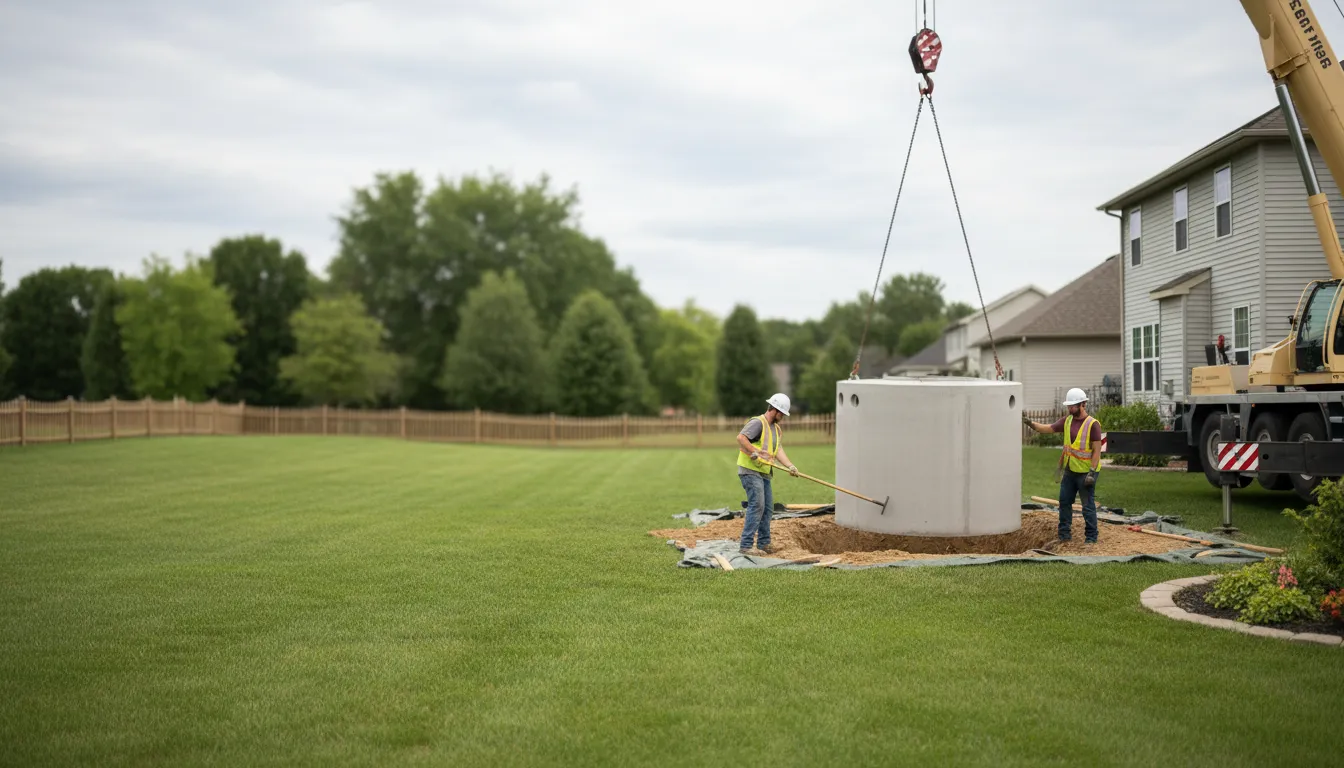
Find the Best Septic Tank Installation & Replacement Contractors for Your Business
No obligation • Fast responses • Nationwide coverage

Why you can trust Septic Spot
Septic Spot is a leading United States resource for understanding and comparing septic services. Our editors review providers using consistent criteria and verify key business details. Listings and scores are independent, and companies cannot pay to influence our content.
Search providers near you
Top Septic Tank Installation & Replacement Contractors in Corvallis, Oregon Ranked
Installing or replacing a septic system is a significant project that ensures the safe and effective treatment of wastewater for your property. In Corvallis, this process is governed by specific local and state regulations to protect public health and the environment. This guide explains the key steps, requirements, and considerations for septic system installation and replacement in the area, helping you understand what to expect and how to connect with qualified local professionals.
Understanding the Septic System Installation Process
The journey to a new septic system in Benton County follows a defined sequence of steps. You cannot simply hire an excavator to dig a hole; the process is designed to ensure the site is suitable and the system is built to last. The core stages are: Site Evaluation & Soil Testing, System Design & Permitting, Installation, and Final Inspection & Approval. Skipping or rushing any step can lead to permit denials, system failures, or costly corrections down the line. Understanding this workflow is the first step toward a successful project.
Step 1: Site Evaluation and Soil Testing
Before any plans are drawn, you must determine if your land can support a septic system. This begins with a professional site evaluation and soil analysis, often called a "perc test" (percolation test).
- Purpose: The goal is to assess the soil's ability to absorb and treat liquid effluent. The evaluator looks at soil type, depth to bedrock, and seasonal high water table levels.
- Procedure: A licensed engineer, geologist, or soil scientist will dig deep test pits (at least 8 feet deep is a common requirement) to examine soil layers and structure. They may also conduct percolation tests to measure how quickly water drains through the soil.
- Cost: Soil testing and evaluation in the Corvallis area typically ranges from $750 to $1,900, with specific percolation test holes costing between $150 and $1,000 each depending on whether they are dug manually or with an excavator 1 2 3. This is a critical investment, as the results dictate the type and size of system you can install.
Step 2: System Design and Permitting
With favorable soil test results in hand, the next phase is designing the system and securing the necessary permits from the county.
- Permit Agency: In Corvallis, all applications are handled by the Benton County Community Development Department at 4500 SW Research Way. A site evaluation must be approved before you can apply for the construction and installation permit.
- System Design: The system must be designed by a professional or conform to Oregon Department of Environmental Quality (DEQ) standard design guidelines based on your specific soil conditions and water table depth. The design will specify the tank size, drain field layout, and any special components needed.
- Permit Fees: County permit fees for a new septic system installation generally range from $150 to over $500, covering the application review and inspection process 4 5.
Find the perfect septic tank installation & replacement contractors for your needs
Get personalized recommendations and expert advice
Step 3: Professional Installation
Installing a septic system is heavy, precise work. Oregon law requires that all systems be installed either by the property owner (if they meet certain criteria) or, more commonly, by a DEQ-licensed installer 6. Hiring a licensed professional is strongly recommended, as they understand local codes, can properly execute the approved design, and will coordinate the required inspections.
The installation involves excavating for the septic tank and drain field, placing the tank, constructing the distribution lines and absorption area, and connecting all plumbing from the house. The complexity and duration of this work depend entirely on the system type and your site's characteristics.
Step 4: The Critical Pre-Cover Inspection
One of the most important milestones is the mandatory "pre-cover" inspection. Before the installer backfills the trenches and covers the tank and drain field with soil, they must notify the county.
- Inspection Trigger: The installer submits an "as-built" plan and a list of materials used to the Benton County inspector.
- The Inspection: A county official visits the site to verify that the installation matches the permitted design, that all components are correctly installed, and that materials meet standards.
- Approval: Only after this inspection is passed will the county issue a Certificate of Satisfactory Completion (CSC). This certificate is your official permission to begin using the new septic system 7 8.
Cost Considerations for Septic System Projects
The total cost of a septic system in Corvallis varies widely based on system type, site conditions, and tank size. It's essential to budget for the entire process, not just the physical installation.
- Standard Residential Systems: For a conventional gravity-fed system on a relatively straightforward site, total costs typically range between $5,000 and $15,000 or more 9. This range usually includes design, permits, soil testing, installation, and inspections.
- Complex or Challenging Sites: If your soil test requires an advanced treatment system-like a sand filter, mound, or aerobic treatment unit (ATU)-costs can increase significantly. Steep slopes, limited space, or high water tables also add to the complexity and price.
- Replacement vs. New Installation: Replacing a failed system often involves additional costs for diagnosing the failure, pumping out and disposing of the old tank, and potentially redesigning the drain field in a new location on your property.
Choosing the Right System Type for Your Property
The results of your soil test will determine which types of septic systems are allowed on your land. Common systems used in the Willamette Valley include:
- Conventional Gravity System: The most common and least expensive type, suitable for sites with deep, permeable soil and a low water table.
- Pressure-Dosed Drain Field: Uses a pump to distribute effluent evenly across the drain field, good for sloping sites or areas with less-than-ideal soil.
- Sand Filter or Mound System: These are "alternative" systems used when soil absorption is poor. They provide additional treatment before the effluent reaches the soil and are considerably more expensive to install.
Your DEQ-licensed installer or system designer will recommend the most appropriate and cost-effective system that meets Benton County and DEQ regulations for your specific property 10 11.
Maintaining Your New Septic System
Once your new system is installed and approved, proper maintenance is key to a long lifespan (often 25-40 years). This includes regular pumping of the tank (typically every 3-5 years), conserving water, avoiding flushing harmful chemicals, and protecting the drain field from compaction by vehicles or heavy structures. A well-maintained system protects your investment and the local environment.
Frequently asked questions
Sources
Footnotes
-
How Much Does a Perc Test Cost? [2025 Data] - HomeAdvisor - https://www.homeadvisor.com/cost/architects-and-engineers/perc-soil-test/ ↩
-
Procedures and Criteria for Installing a New Septic System - https://www.douglascountyor.gov/DocumentCenter/View/3059/Procedures-for-Installing-a-New-Septic-System-PDF ↩
-
How Much Does a Septic Soil Test Cost in 2026? - https://landperc.com/septic-soil-test-cost/ ↩
-
Understanding Septic Tank Permits and Regulations - https://westcoastsanitationinc.com/understanding-septic-tank-permits-and-regulations/ ↩
-
Septic Tank - Understanding Septic Tank Permits and Regulations - https://westcoastsanitationinc.com/understanding-septic-tank-permits-and-regulations/ ↩
-
Septic Systems - Community Development, Benton County, Oregon - https://cd.bentoncountyor.gov/septic-systems/ ↩
-
Procedures and Requirements for Installing a New Septic ... - https://evogov.s3.amazonaws.com/143/media/164430.pdf ↩
-
Procedures and Criteria for Installing a New Septic System - https://www.malheurco.org/environmental-health/procedures-and-criteria-for-installing-a-new-septic-system/ ↩
-
The Beginners Guide to Installing a Septic System in Central Oregon - https://www.blacksagedirtworks.com/blog/beginners-guide-installing-septic-system ↩
-
Oregon Septic System Requirements - Greenbar Excavation - https://greenbarexcavation.com/oregon-septic-system-requirements/ ↩
-
Procedures and Requirements for Installing a New Septic System - https://www.oregon.gov/deq/FilterDocs/newsysinstprocs.pdf ↩