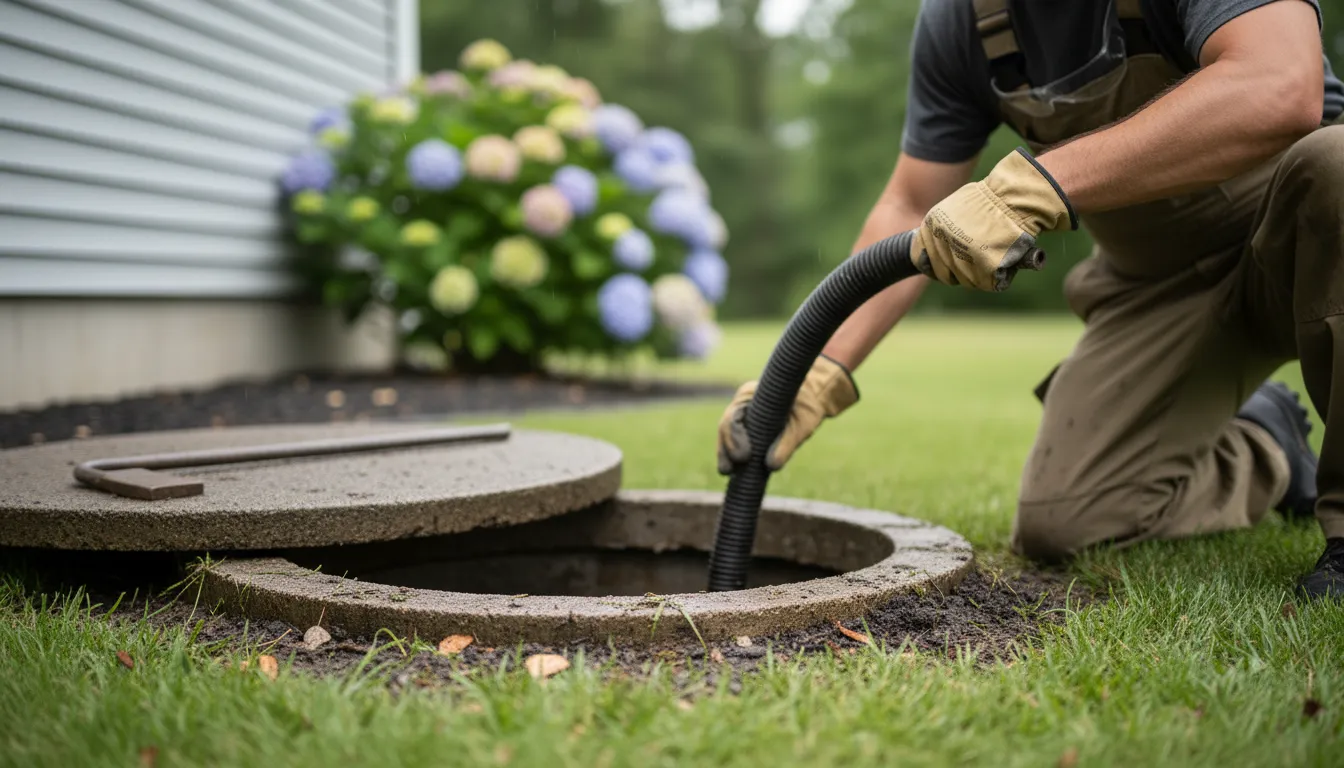
Find the Best Septic Tank Pumping Contractors for Your Business
No obligation • Fast responses • Nationwide coverage

Why you can trust Septic Spot
Septic Spot is a leading United States resource for understanding and comparing septic services. Our editors review providers using consistent criteria and verify key business details. Listings and scores are independent, and companies cannot pay to influence our content.
Search providers near you
Top Septic Tank Pumping Contractors in Akron, Ohio Ranked
Maintaining a healthy septic system is a crucial responsibility for homeowners in Akron. Septic tank pumping is the essential process of removing accumulated sludge and scum from your tank to prevent backups, system failure, and costly environmental damage. This guide provides the local information you need to understand the service, its importance, and how to connect with qualified professionals in the Akron area to ensure your system operates reliably for years to come.
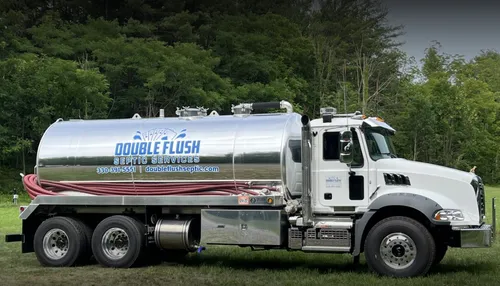
Double Flush Septic Services
2481 Remsen Rd, Medina, OH 44256
Double Flush Septic Services is a family-owned company based in Medina, OH, providing septic system installation, pumping, inspection, and repair services throughout Akron and the surrounding Northeast Ohio counties. They serve a broad area including Medina, Summit, Stark, Wayne, and Cuyahoga counties, offering expertise in maintaining and repairing septic tanks, drain fields, and aeration systems such as Norweco, Hydro-Action, and Marlow-Hunter. The company also provides emergency septic services and commercial grease trap cleaning, with capabilities like hydro jetting and drain snaking to address severe blockages. Double Flush Septic Services emphasizes local knowledge of Ohio's climate and soil conditions to support system longevity and functionality.
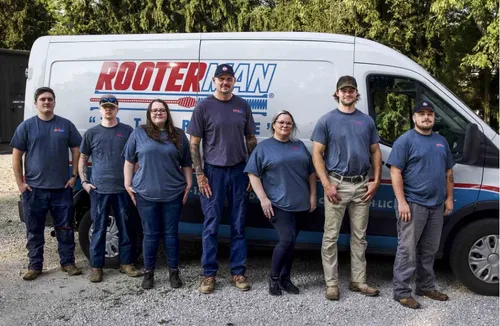
Rooter Man
195 Potomac Ave Unit B, Tallmadge, OH 44278
Rooter Man is a family-owned plumbing company serving Akron, OH, and surrounding areas including Summit, Stark, and Portage counties. They offer a wide range of services including septic tank pumping, inspection, repair, and installation, along with drain cleaning, sewer line repair, and water heater services. With over 50 years of experience, Rooter Man uses advanced tools such as hydro jetting and video pipe inspections to address plumbing and septic system issues efficiently. The company provides emergency service seven days a week to handle urgent plumbing needs.
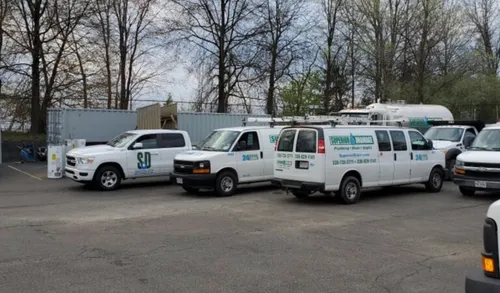
Superior Drainage
900 Killian Rd, Akron, OH 44312
Superior Drainage is a full-service plumbing company based in Akron, OH, offering residential, commercial, municipal, and septic system services. They provide septic tank pumping, repairs, and installation, along with hydro jetting and trench sewer line repair to maintain efficient wastewater management. Serving Northeast Ohio, including Summit, Portage, Stark, and Medina counties, Superior Drainage has been operating since 1996. Their team is experienced in handling a wide range of plumbing needs, from water heater installations to sewer line maintenance, with a focus on regulatory compliance and environmental safety.
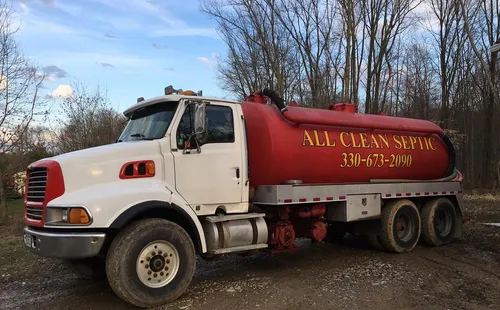
All Clean Septic
Akron, OH
All Clean Septic is a septic tank pumping company serving Akron, OH, and the surrounding Portage County area. They provide routine septic pumping and emergency septic backup services, focusing on thorough and precise work. The company emphasizes careful, reliable septic maintenance to prevent costly issues.
Lehman Drain & Septic
13014 Duquette Ave NE, Hartville, OH 44632
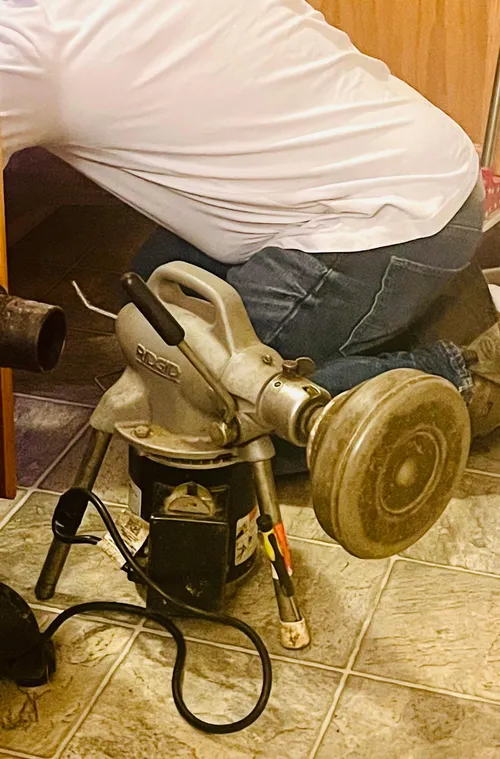
Lehman Drain & Septic is a family-owned company based near Akron, OH, providing septic system services including pumping, inspections, repairs, and installations. They serve the communities of Stark, Portage, and Summit counties, offering both scheduled and emergency services. The company is licensed, insured, and bonded, with capabilities such as camera inspections and septic pump repairs. Lehman Drain & Septic operates a 24-hour emergency service to address urgent septic and plumbing needs.
Why Regular Septic Pumping is Essential in Akron
A septic system is an on-site wastewater treatment plant for your home. Over time, solid waste settles as sludge at the bottom of the tank, while fats and oils float to the top as scum. The clear liquid in the middle, called effluent, flows out to the drain field. If the sludge and scum layers become too thick, they can clog the outlet, causing solids to wash into and ruin the drain field-a repair that can cost thousands of dollars. Regular septic system pumping removes these layers, protecting your property's value and preventing health hazards.
In Akron and throughout Summit County, local regulations aligned with Ohio Department of Health guidelines strongly emphasize this preventative maintenance. A failing system can contaminate groundwater, a risk that responsible maintenance directly mitigates.
How Often Should You Pump Your Septic Tank in Akron?
The standard recommendation is to schedule septic tank cleaning every 3 to 5 years 1 2. However, this is a general rule, and your specific schedule depends on several key factors:
- Household Size and Water Usage: More people generate more wastewater and solids. A common guideline is that a 1,000-gallon tank serving a family of four typically needs pumping every 2.5 to 4 years 3.
- Tank Size: The larger your tank's capacity, the longer it can go between pump-outs. A 1,500-gallon tank will have a longer interval than a 750-gallon tank for the same household.
- System Usage: The use of a garbage disposal significantly increases the amount of solids entering the tank, requiring more frequent pumping 4. High water usage from frequent laundry, long showers, or leaky fixtures also fills the tank faster.
The most reliable way to determine your need is through a professional inspection, which is recommended every 1-2 years. A technician can measure the sludge and scum layers to give you a precise recommendation.
What to Expect During a Professional Pumping Service
A standard septic pumping service involves more than just vacuuming out the tank. A reputable provider will follow a comprehensive process:
- Locating and Uncovering the Tank: Technicians will locate the tank access lids. In Ohio, the use of watertight risers to bring access to the ground surface is suggested for easier service.
- Inspecting the System: Before pumping, a visual inspection checks for signs of damage, leaks, or surface failures. This is a critical diagnostic step.
- Pumping the Tank: Using a large vacuum truck, all contents-sludge, scum, and effluent-are removed from the tank.
- Inspecting Key Components: The technician will inspect the condition of the inlet and outlet baffles or tees, which are vital for preventing pipe blockages and ensuring only liquid exits the tank. They will also clean the effluent filter if your system has one (these should be cleaned every 6-12 months).
- Final Check and Reporting: After pumping, the tank is checked again, lids are securely replaced, and the area is tidied. You should receive a service report detailing what was done and any observations or recommendations.
Find the perfect septic tank pumping contractors for your needs
Get personalized recommendations and expert advice
Understanding Costs for Septic Pumping in Akron
The cost for septic tank pumping in the Akron area varies based on a few primary factors. On average, homeowners can expect to pay between $200 and $500 for this essential service.
- Tank Size: This is the biggest cost driver. Pumping a standard 1,000-gallon tank typically ranges from $250 to $400, with some averages reported around $261 5 6 7. A larger 1,500-gallon tank may cost $300 to $500 or more 7.
- Accessibility: If the tank lids are buried deep and require significant digging to uncover, the job will take more labor and time, increasing the price. This highlights the benefit of having installed risers.
- Additional Services: Costs will be higher if the service includes a full inspection, cleaning an effluent filter, or minor repairs like replacing a baffle.
While price is a consideration, choosing a provider based on thoroughness, reputation, and proper licensing is more important for the long-term health of your system.
Beyond Pumping: Complete Septic System Maintenance
Pumping is the cornerstone of maintenance, but a complete care regimen involves other tasks:
- Annual Inspections: Even in years you don't pump, a quick inspection can catch small problems before they become big ones. Check for soggy ground or odors near the tank and drain field.
- Filter Maintenance: If your system has an effluent filter, it must be rinsed clean regularly (every 6-12 months) to prevent clogs 8 9.
- Water Conservation: Reducing unnecessary water flow gives your tank more time to separate solids and allows the drain field to properly absorb effluent. Fix leaky toilets and faucets promptly.
- Mindful Flushing: Only human waste and toilet paper should go down the drain. Avoid flushing wipes (even "flushable" ones), feminine hygiene products, cooking grease, chemicals, and medications.
Local Akron and Ohio Regulations
Homeowners in Akron must adhere to regulations set by the Summit County Public Health department and the Ohio Department of Health. These rules are designed to protect public health and the environment. Key points include 10 11 12:
- Systems must be maintained in good working order.
- Service must be performed by licensed sewage treatment system contractors.
- The state administrative code provides specifications for system components, including suggestions for access risers.
- Any repairs or alterations to the system typically require a permit from the local health department.
It is always wise to consult directly with Summit County Public Health for the most current local regulations and to obtain a list of approved septic service providers in your area.
Signs Your Akron Septic Tank Needs Immediate Attention
Don't wait for your scheduled pump-out if you notice these warning signs. They may indicate your tank is full or that a more serious system failure is occurring:
- Slow Drains: Sinks, showers, and toilets that drain very slowly, especially if gurgling sounds are present.
- Sewage Backups: Wastewater backing up into household drains.
- Bad Odors: Unpleasant sewage smells inside your home or around the tank/drain field area.
- Lush, Wet Lawn: Spongy ground or patches of grass that are unusually green and growing faster over the drain field, even in dry weather.
- Standing Water: Puddles of greywater or effluent on the ground surface near the system.
If you observe any of these signs, contact a septic professional immediately to assess the situation.
Frequently asked questions
Sources
Footnotes
-
Septic Tanks - Preventative Routine Maintenance - https://des.sc.gov/permits-regulations/septic-tanks/homeowner-resources/septic-tanks-preventative-routine-maintenance ↩
-
How Often to Pump a Septic Tank in Ohio - SepTek - https://www.septekservices.com/2025/05/08/how-often-should-you-pump-your-septic-tank-in-ohio/ ↩
-
How Often to Pump a Septic Tank - Clear River Environmental - https://clearriverenvironmental.com/how-often-to-pump-a-septic-tank/ ↩
-
HOW OFTEN SHOULD YOU BE PUMPING YOUR SEPTIC TANK? - https://www.sandiegocounty.gov/content/dam/sdc/dpw/WATERSHED_PROTECTION_PROGRAM/WatershedRebates/SRP/PDF/Chart-Septic-Large.pdf ↩
-
Optimizing Septic Tank Pumping Frequency for Households - https://www.unitedsewerservice.com/frequency-of-septic-tank-pumping-for-different-household-sizes/ ↩
-
How Much Does Septic Pumping in Ohio Cost? - https://www.austinsseptic.com/post/how-much-does-septic-plumbing-in-ohio-cost ↩
-
Ohio Septic Systems Costs & Prices - ProMatcher Cost Report - https://septic-systems.promatcher.com/cost/ohio.aspx ↩ ↩2
-
Septic System Maintenance | Ohioline - https://ohioline.osu.edu/factsheet/aex-740 ↩
-
Septic System Care and Maintenance - Ohioline - https://ohioline.osu.edu/factsheet/aex-740-0 ↩
-
STS Components, Systems and Maintenance - https://odh.ohio.gov/know-our-programs/sewage-treatment-systems/information-for-homeowners/sts-components-systems-and-maintenance ↩
-
Understanding Ohio's Septic System Regulations - https://checkmateohio.com/understanding-ohios-septic-system-regulations/ ↩
-
Rule 3701-29-12 - Ohio Administrative Code - https://codes.ohio.gov/ohio-administrative-code/rule-3701-29-12 ↩