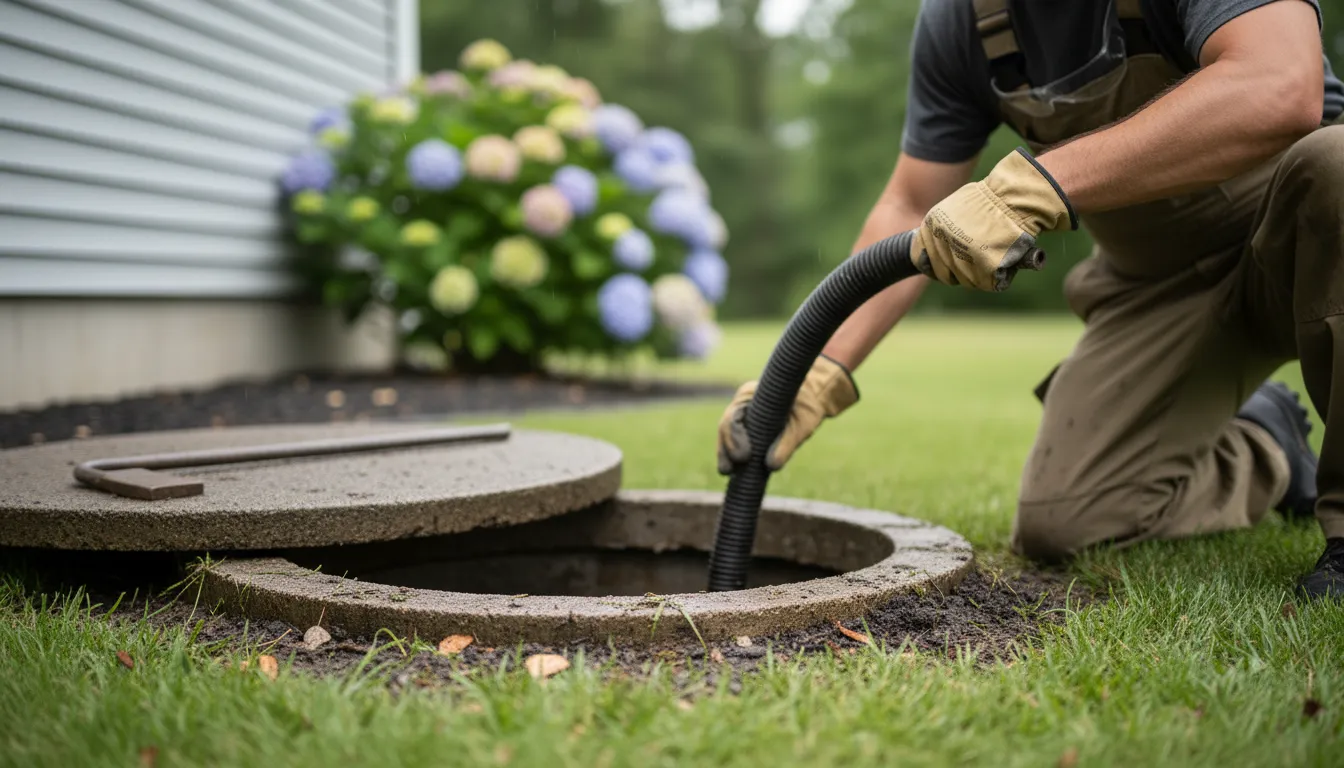
Find the Best Septic Tank Pumping Contractors for Your Business
No obligation • Fast responses • Nationwide coverage

Why you can trust Septic Spot
Septic Spot is a leading United States resource for understanding and comparing septic services. Our editors review providers using consistent criteria and verify key business details. Listings and scores are independent, and companies cannot pay to influence our content.
Search providers near you
Top Septic Tank Pumping Contractors in Cleveland, Ohio Ranked
Maintaining your septic system is a crucial responsibility for homeowners not connected to a municipal sewer line. Regular septic tank pumping is the most important maintenance task to prevent system failures, costly repairs, and environmental contamination. This guide provides essential information on septic system service, including local regulations, recommended pumping schedules, and maintenance tips to help Cleveland residents find qualified local professionals for this vital home care need.
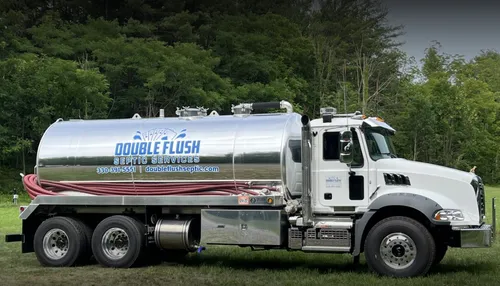
Double Flush Septic Services
2481 Remsen Rd, Medina, OH 44256
Double Flush Septic Services is a family-owned company based in Medina, OH, providing septic system installation, pumping, inspection, and repair services throughout Akron and the surrounding Northeast Ohio counties. They serve a broad area including Medina, Summit, Stark, Wayne, and Cuyahoga counties, offering expertise in maintaining and repairing septic tanks, drain fields, and aeration systems such as Norweco, Hydro-Action, and Marlow-Hunter. The company also provides emergency septic services and commercial grease trap cleaning, with capabilities like hydro jetting and drain snaking to address severe blockages. Double Flush Septic Services emphasizes local knowledge of Ohio's climate and soil conditions to support system longevity and functionality.
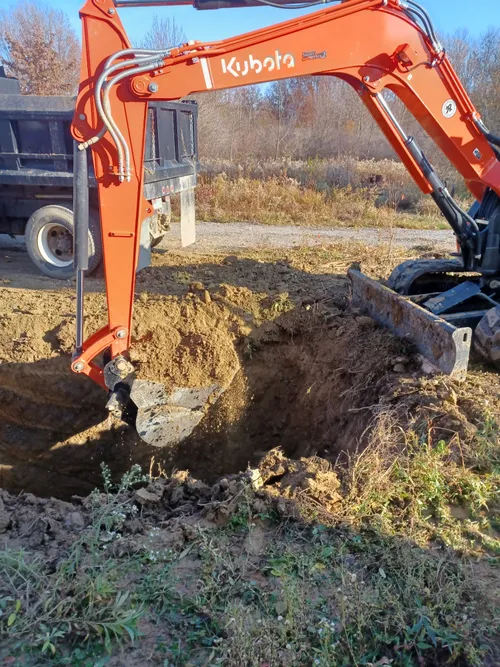
A & P Septic LLC
Cleveland, OH
A & P Septic LLC provides septic system installation, cleaning, repair, and inspection services in Cleveland, OH. They serve Northeast Ohio with a focus on preventative maintenance to help avoid costly repairs and maintain system health. Their capabilities include septic tank pumping, sewer line services, and designed mound installations. The company emphasizes regular septic system inspections and pumping every few years to ensure trouble-free performance.

A & P Septic LLC
Cleveland, OH
A & P Septic LLC provides septic system installation, cleaning, repair, and maintenance services in Cleveland, OH. They serve Northeast Ohio with septic tank pumping, inspections, sewer line work, and excavation. The company emphasizes preventative maintenance to help avoid costly repairs and system failures. Their team is experienced in handling septic and aeration systems, water lines, and designed mounds, offering comprehensive septic solutions.
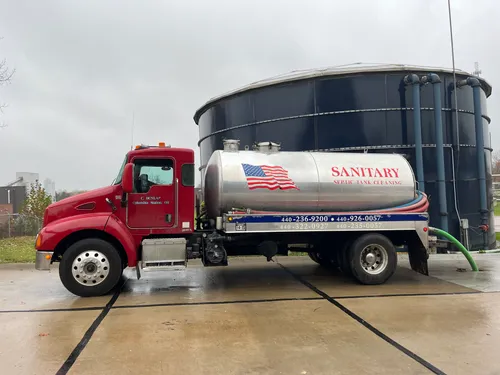
Sanitary Septic Tank Cleaning Inc
10915 Station Rd, Columbia Station, OH 44028
Sanitary Septic Tank Cleaning Inc is a family-owned septic tank pumping and installation company serving Cleveland, OH, and surrounding counties including Cuyahoga, Lorain, and Medina. They provide septic tank cleaning, maintenance programs, and installation of new septic systems. The company is licensed, bonded, and insured, offering specialized services such as cleaning bio-kinetic filters, sump pump sales and installation, and supplying aerator motors with warranties. They also provide enzyme treatments to help maintain septic system function and use new concrete and plastic covers to facilitate easier future cleanings without digging.
Geauga Septic Service LLC
Cleveland, OH
Geauga Septic Service LLC is a family-owned septic service provider based near Cleveland, OH, serving residential and commercial clients in Newbury and the surrounding counties including Cuyahoga, Geauga, Lake, and Portage. Established in 1960, the company offers a range of septic services such as pumping, sludge transport, system cleaning, inspections, repairs, and septic system replacements. They are licensed by the Board of Health in multiple counties and provide emergency septic services when needed.
Understanding Your Septic System and Why Pumping is Essential
A septic system is an on-site wastewater treatment structure, typically consisting of a tank and a drain field. Solids settle in the tank, forming sludge, while liquids flow out to the drain field. Over time, the sludge layer builds up. If not removed through regular septic tank cleaning, solids can overflow into the drain field, causing clogs, backups into your home, and system failure. Pumping removes this accumulated sludge and scum, keeping the entire system functioning properly and protecting your property and local groundwater.
Cleveland and Ohio Septic System Regulations
Ohio, including Cuyahoga County, has specific regulations for household sewage treatment systems. Notably, there are mandatory Operation & Maintenance (O&M) programs in place. These rules require all septic systems to be on a documented maintenance schedule.
- Standard Systems: Require a professional inspection every 3 years by a state-registered Service Provider.
- Aerobic or Mechanical Systems: Systems with pumps or aerators require an annual inspection due to their mechanical complexity.
- Property Transfer: A system inspection is often mandated by the local health district when selling a property, making a current maintenance record highly valuable 1.
These inspections help determine when pumping is needed, but they do not replace the pumping service itself. Working with a registered provider ensures your maintenance is documented and compliant.
How Often Should You Pump Your Septic Tank in Cleveland?
The general guideline for Northeast Ohio is to pump your septic tank every 3 to 5 years 2. However, the exact interval depends heavily on your household size and tank capacity. Relying on a fixed schedule without inspection can be risky. The following table provides a common framework, but a professional assessment of sludge levels is the only way to know for sure 3 4 5.
| Household Size & Tank Capacity | Recommended Pumping Interval |
|---|---|
| 1-2 People (750-1,000 gallon tank) | Every 3-8 years |
| 3-4 People (1,000 gallon tank) | Every 2-4 years |
| 5+ People (1,500+ gallon tank) | Every 1-3 years |
Key Factors Influencing Frequency:
- Household Size: More people generate more wastewater and solids.
- Tank Size: A larger tank can hold more solids for a longer period.
- Garbage Disposal Use: Using a garbage disposal significantly increases the solid waste entering the tank, requiring more frequent pumping.
- Water Usage: High water volume from long showers, frequent laundry loads, or leaking fixtures can push solids through the tank too quickly.
Find the perfect septic tank pumping contractors for your needs
Get personalized recommendations and expert advice
What to Expect: Costs and the Pumping Process
The average cost for septic tank pumping in the Cleveland area typically ranges from $275 to $611 per service 6 7. When averaged over the recommended 3-5 year cycle, annual maintenance costs are approximately $100 to $200 7. The price can vary based on tank size, accessibility, and how long it has been since the last pump.
A professional septic service will:
- Locate and uncover the tank's access lids.
- Inspect the tank's condition and inlet/outlet baffles.
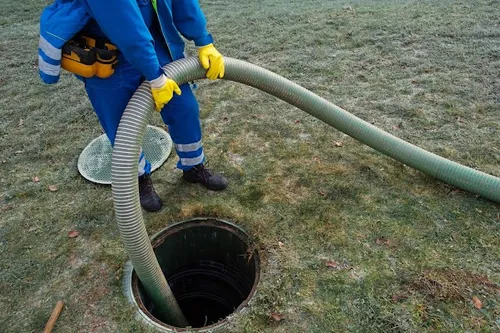
- Use a vacuum truck to pump out all solids and liquids from the tank.
- Properly dispose of the waste at a licensed treatment facility.
- Provide a report or documentation of the service, which is important for your maintenance records and compliance with O&M programs.
Proactive Maintenance Beyond Pumping
Pumping is the cornerstone of care, but other routine tasks extend your system's life.
- Clean Effluent Filters: If your tank has an effluent filter (installed on the outlet pipe), it should be cleaned every 6 to 12 months to prevent clogs 8.
- Conserve Water: Spread out laundry loads, fix leaks promptly, and install water-efficient fixtures to avoid hydraulically overloading the system.
- Mind What You Flush: Only human waste and toilet paper should go down the drain. Avoid flushing wipes (even "flushable" ones), feminine hygiene products, cooking grease, and chemicals.
- Avoid Additives: Do not use biological or chemical additives as a substitute for pumping. Experts advise that they are unnecessary and can sometimes harm the system's natural biological balance or contaminate the drain field 9 10.
- Protect the Drain Field: Never park vehicles or build structures over the drain field. Keep roof drains, sump pumps, and other surface water away from the area.
Finding Qualified Septic Service Providers in Cleveland
For septic tank pumping, inspection, or repair, always choose a qualified and registered professional. You can find lists of state-registered Service Providers and Installers through the Ohio Department of Health website or by contacting the Cuyahoga County Board of Health 11 12. When evaluating companies, ask for proof of registration, insurance, and references. A reputable provider will be knowledgeable about local codes, can explain the process clearly, and will provide documentation of the services performed.
Frequently asked questions
Sources
Footnotes
-
Understanding Ohio's Septic System Regulations - https://checkmateohio.com/understanding-ohios-septic-system-regulations/ ↩
-
How Often to Pump a Septic Tank in Ohio - SepTek - https://www.septekservices.com/2025/05/08/how-often-should-you-pump-your-septic-tank-in-ohio/ ↩
-
Maintaining Your Septic System - https://www.snohd.org/682/Maintaining-Your-Septic-System ↩
-
How Often to Pump a Septic Tank - Clear River Environmental - https://clearriverenvironmental.com/how-often-to-pump-a-septic-tank/ ↩
-
How Often Should You Pump Your Septic Tank? - https://tlsepticpumper.com/septic-system-education/how-often-pump-septic-tank/ ↩
-
STS Components, Systems and Maintenance - https://odh.ohio.gov/know-our-programs/sewage-treatment-systems/information-for-homeowners/sts-components-systems-and-maintenance ↩
-
Septic Tank Pumping Frequency: Crucial Maintenance Guide - https://septic911.com/septic-tank-pumping-frequency/ ↩ ↩2
-
Cuyahoga County Septic Services | Pumping, Cleaning, Repairs & O&M - Double Flush - https://septiccleanings.com/septic-pumping-cuyahoga-county/ ↩
-
Septic System Maintenance | Ohioline - https://ohioline.osu.edu/factsheet/aex-740 ↩
-
Septic System Care and Maintenance - Ohioline - https://ohioline.osu.edu/factsheet/aex-740-0 ↩
-
Information for Homeowners - https://odh.ohio.gov/know-our-programs/sewage-treatment-systems/INFORMATION-FOR-HOMEOWNERS ↩
-
Household Sewage Systems - Highland County Health Department - https://www.highlandcountyhealth.org/household-sewage-systems-1 ↩