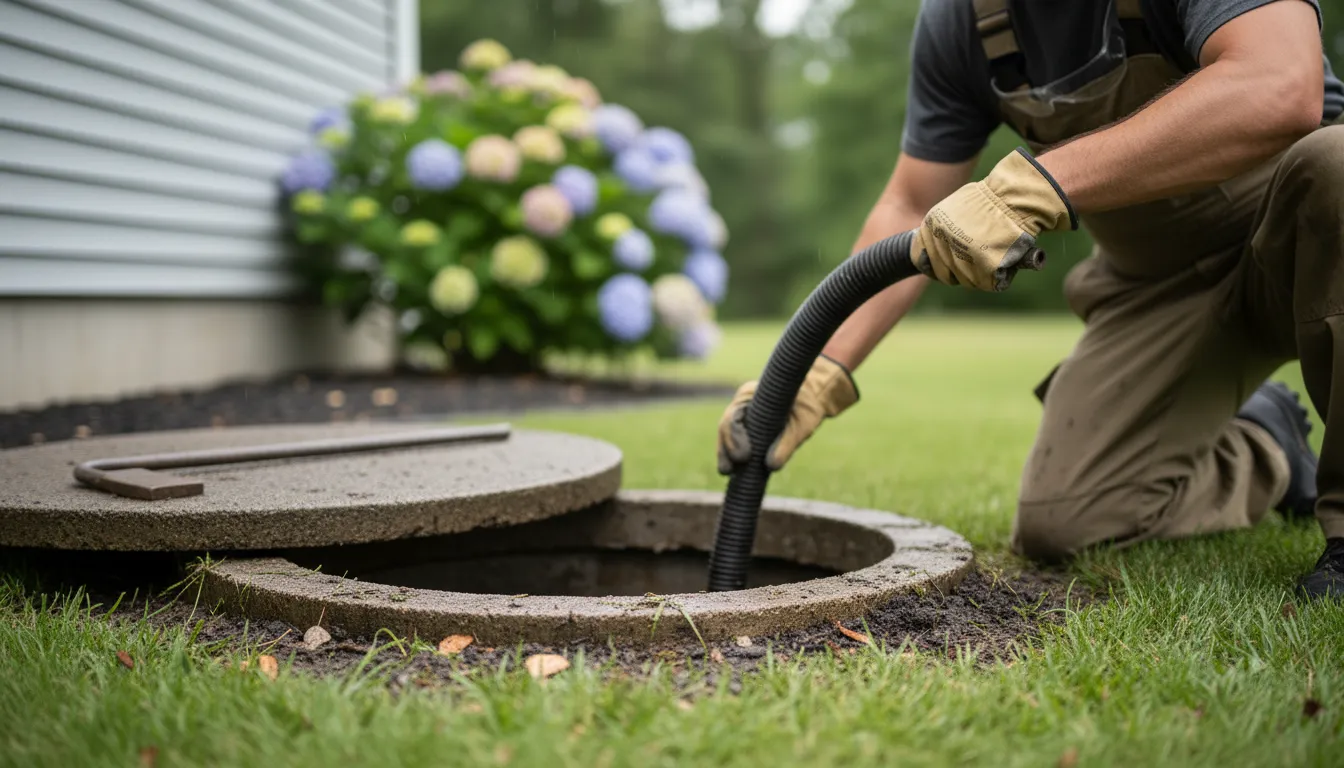
Find the Best Septic Tank Pumping Contractors for Your Business
No obligation • Fast responses • Nationwide coverage

Why you can trust Septic Spot
Septic Spot is a leading United States resource for understanding and comparing septic services. Our editors review providers using consistent criteria and verify key business details. Listings and scores are independent, and companies cannot pay to influence our content.
Search providers near you
Best Septic Tank Pumping Contractors in Washington Ranked
Maintaining your septic system is a critical responsibility for Washington homeowners. Regular septic tank pumping prevents system failure, protects your property value, and safeguards local waterways from contamination. This guide provides clear, state-specific information on schedules, costs, regulations, and maintenance to help you find qualified local professionals for this essential service.
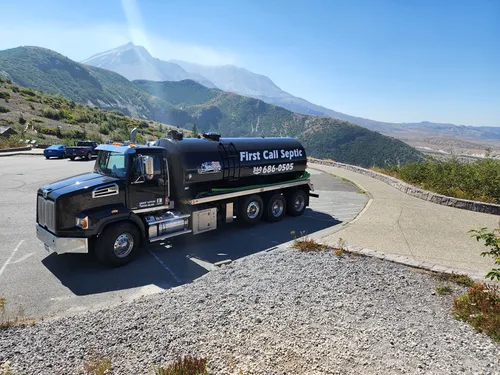
First Call Septic Service
7630 NE 219th St Suite A, Battle Ground, WA 98604
First Call Septic Service provides septic tank pumping, inspection, and cleaning services in Vancouver, WA. They serve multiple communities within Clark, Skamania, and Cowlitz counties, including Battle Ground, Camas, and Ridgefield. The company specializes in onsite sewage treatment and uses current tools and equipment to maintain septic systems effectively.
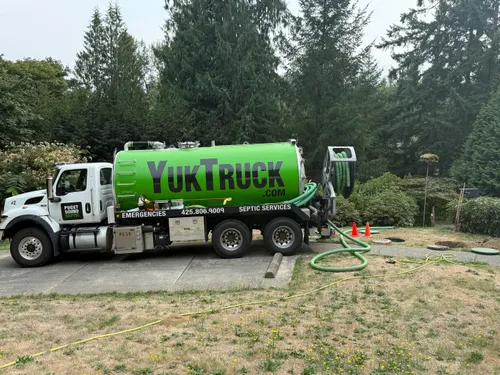
Puget Sound Septic
20222 SE 245th St, Maple Valley, WA 98038
Puget Sound Septic is a septic tank pumping and inspection company serving Kent, WA. They offer septic tank cleaning using advanced technology and trained technicians to provide efficient pumping services. The company also provides video septic line inspections to help identify potential issues early. Puget Sound Septic is committed to maintaining the smooth operation of septic systems and offers services for both routine and emergency needs.
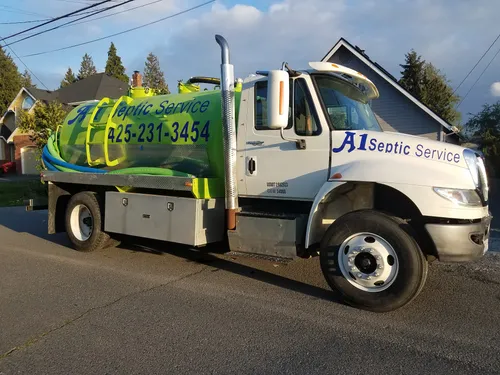
A1 Septic Service
10121 Evergreen Wy Suite 25-696, Everett, WA 98204
A1 Septic Service is a family-owned company based in Everett, WA, providing septic system pumping, inspection, and repair services. Serving Snohomish and King County, they cater to residential, commercial, and municipal customers with over 25 years of experience. Their capabilities include emergency septic pumping available 24/7 to address urgent needs promptly. Established in 1998, A1 Septic Service emphasizes thorough, licensed, and insured work with a commitment to customer satisfaction.
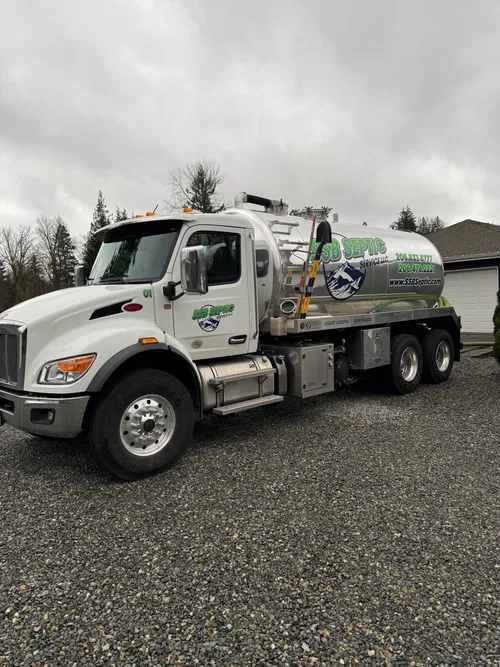
SSB Septic Services
Kent, WA
SSB Septic Services is a family-owned company serving Kent, WA, and the surrounding areas. They provide a range of septic services including tank pumping, system repair, and installation. With over a decade of experience, they focus on eco-friendly solutions and long-term customer satisfaction. The company offers 24/7 emergency response to handle urgent septic system issues promptly. Their expertise includes environmental compliance and sustainable septic system practices.
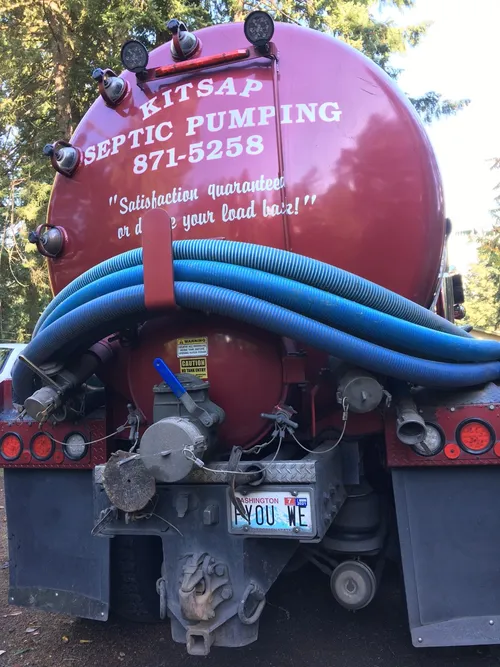
Kitsap Septic
Seattle, WA
Kitsap Septic is a family-owned septic service provider based in Port Orchard, serving Seattle, WA, and the surrounding Kitsap and Mason counties. With over 30 years of experience, they offer septic tank pumping, inspections, and repairs. The company is licensed and insured, known for their distinctive maroon septic trucks and a customer-friendly approach that includes direct communication with live representatives.
Understanding Your Septic System
A septic system is an on-site wastewater treatment plant for your home. When functioning correctly, it safely processes household water from toilets, showers, sinks, and appliances. The septic tank is the first key component, where solids settle and begin to decompose. The remaining liquid (effluent) flows out to a drain field for further filtration into the soil. Pumping removes the accumulated solids (sludge and scum) from the tank before they can overflow and clog the drain field, leading to a costly and unsanitary system failure.
How Often Should You Pump Your Tank in Washington?
The common rule of thumb is to pump your septic tank every 3 to 5 years1. However, this is a general guideline. The exact frequency for your Washington home depends on several factors, and many counties have specific inspection requirements that dictate when pumping is needed.
Official guidance from the Washington State Department of Health and county health departments emphasizes that pumping schedules should be personalized. Key determinants include:
- Household Size: More people generate more wastewater and solids.
- Small Household (1-2 people): May pump every 4-5 years.
- Average Household (3-5 people): Typically requires pumping every 3-4 years.
- Large Household (6+ people): Often needs pumping every 1-2 years.
- Tank Size: Older or smaller tanks fill with solids more quickly.
- Total Wastewater Generated: High water usage from frequent laundry, long showers, or house guests accelerates accumulation.
- Garbage Disposal Use: Using a garbage disposal significantly increases the volume of solids entering the tank, necessitating more frequent pumping2 3.
- System Type and Age: Alternative or older systems may have different maintenance needs.
The most reliable method is to have your tank inspected by a licensed professional. They can measure the sludge and scum layers and recommend pumping when solids reach 30% to 33% of the tank's capacity4.
Washington State and County Inspection Requirements
In Washington, homeowners are legally responsible for maintaining their septic systems and ensuring they are inspected on time. Many counties mandate periodic inspections by a licensed professional, and these inspections often reveal the need for pumping.
Inspection frequencies vary significantly by system type and location. For example, King County requirements are:
- Gravity Systems: Inspection every 3 years.
- Pressure Distribution, Mound, or Sand Filter Systems: Inspection annually.
- Alternative Technology Systems (ATUs, Drip Irrigation): Inspection every 6 months, unless the manufacturer specifies otherwise.
Other counties, like Clallam and Thurston, have similar tiered requirements based on system complexity5. After a professional inspection, homeowners are typically required to submit the report to their local county health department within 30 days, often through an online portal like OnlineRME. Always check with your local health department (e.g., Snohomish, Pierce, Spokane County) for the specific rules that apply to your property6 7.
Find the perfect septic tank pumping contractors for your needs
Get personalized recommendations and expert advice
What Does Septic Tank Pumping Cost in Washington?
The cost for routine septic tank pumping in Washington typically ranges from $650 to $1,0008. This price can vary based on:
- Tank Size and Accessibility: Larger tanks or those with difficult access (overgrown areas, long hose runs) cost more.
- Geographic Location: Prices may be higher in the San Juan Islands or remote areas.
- Condition of the Tank: If the tank lids are buried or the baffles need cleaning, additional fees may apply.
It's important to understand what a standard pumping service includes. A reputable provider will:
- Locate and uncover the tank access lids.
- Pump out all solids and liquids from the tank.
- Inspect the tank interior, inlet/outlet baffles, and tees for damage.
- Backflush the lines if necessary.
- Provide a record of service, including the volume pumped and any observations.
Be wary of quotes that seem unusually low, as they may not include a proper inspection or may lead to hidden fees.
The Homeowner's Role: Daily Maintenance and Monitoring
Professional pumping is essential, but day-to-day care is your responsibility. Proper maintenance extends your system's life and prevents emergencies 9.
What to Monitor:
- Slow Drains: Gurgling sounds or slow drainage in sinks and toilets can be an early sign of trouble.
- Sewage Odors: Unpleasant smells indoors or near the drain field indicate a problem.
- Surfacing Water: Wet, soggy, or brightly green grass over the drain field, especially when it hasn't rained, is a critical warning sign.
- Backups: Sewage backing up into household drains is a clear system failure.
Protect Your System:
- Mind What You Flush: Only human waste and toilet paper. Never flush wipes (even "flushable" ones), feminine hygiene products, diapers, dental floss, cigarette butts, or cat litter 10.
- Limit Garbage Disposal Use: Compost food scraps instead to drastically reduce solids.
- Conserve Water: Fix leaks, install efficient fixtures, and spread out laundry loads to avoid overwhelming the drain field.
- Protect the Drain Field: Never drive or park vehicles on it. Keep roof drains, sump pumps, and paved surfaces from draining onto it. Plant only grass over the drain field; tree and shrub roots can cause severe damage.
Consequences of Neglecting Septic Pumping
Failing to pump your tank regularly has serious repercussions:
- System Failure: Solids clog the drain field, causing sewage to surface in your yard or back up into your home. Repairing or replacing a drain field is extremely disruptive and expensive, often costing $5,000 to $15,000 or more.
- Health Hazards: Untreated sewage poses serious risks of exposure to harmful bacteria, viruses, and parasites.
- Environmental Damage: Contaminated wastewater can pollute groundwater, streams, and Puget Sound, harming shellfish beds and aquatic life.
- Legal and Financial Liability: You can be fined by your county for non-compliance with inspection and maintenance regulations. A failing system can also halt a real estate transaction, requiring costly repairs before a sale can close11.
Choosing a Service Provider in Washington
When it's time to pump your tank, selecting a qualified professional is crucial.
- Verify Licensing: Ensure the company is licensed by the Washington State Department of Labor & Industries and that their pump truck is permitted by the Washington State Department of Ecology.
- Check for Insurance: Ask for proof of liability insurance.
- Ask About Reporting: Confirm they will provide a detailed service report and can assist with submitting any required inspection documentation to your county.
- Get a Detailed Estimate: A written estimate should outline all costs, including pumping, inspection, and any potential extra fees.
- Seek Local Expertise: Providers familiar with your county's specific regulations and soil conditions can offer the best advice.
Frequently asked questions
Sources
Footnotes
-
Pumping | Island County, WA - https://www.islandcountywa.gov/676/Pumping ↩
-
Caring for Your Septic System | Washington State Department of Health - https://doh.wa.gov/community-and-environment/wastewater-management/septic-system/caring-your-system ↩
-
Washington Homeowners: How Often to Pump Your Septic Tank? - https://www.goebelseptic.com/how-often-should-you-pump-your-septic-tank/ ↩
-
On-site sewage/septic system inspections - King County, Washington - https://kingcounty.gov/en/dept/dph/health-safety/environmental-health/on-site-sewage-systems/maintaining-your-system/inspections ↩
-
Summary of Septic System Inspection Requirements | Clallam County, WA - https://www.clallamcountywa.gov/485/Summary-of-Septic-System-Inspection-Requ ↩
-
Washington's Septic Tank Pumping Guide: Clearing the Crud - https://www.nwsepticservices.com/clearing-the-crud-washingtons-guide-to-septic-tank-pumping/ ↩
-
Maintaining Your Septic System - Snohomish County Health Department - https://www.snohd.org/682/Maintaining-Your-Septic-System ↩
-
How Much Does It Cost to Pump a Septic Tank in Washington? - https://www.sterlingsepticandplumbing.com/blog/how-much-does-septic-tank-pumping-cost/ ↩
-
Homeowner Maintenance & Requirements - Thurston County - https://www.thurstoncountywa.gov/departments/public-health-and-social-services/environmental-health/septic-systems/homeowner-maintenance-requirements ↩
-
AAA Septic Guide for WA Property Owners to Avoid Emergency. - https://aaasepticshelton.com/blog-posts/septic-checklist-essential-guide-for-western-washington-property-owners/ ↩
-
The Essential Septic System Inspection Guide for Washington State Home Sellers - https://allsepticandsewer.com/septic-system-inspection-guide-washington-state-home-sellers/ ↩