Find the Best Septic Tank Pumping Contractors for Your Business
No obligation • Fast responses • Nationwide coverage

Why you can trust Septic Spot
Septic Spot is a leading United States resource for understanding and comparing septic services. Our editors review providers using consistent criteria and verify key business details. Listings and scores are independent, and companies cannot pay to influence our content.
Search providers near you
Top Septic Tank Pumping Contractors in Seattle, Washington Ranked
Maintaining a healthy septic system is a critical responsibility for homeowners in Seattle and King County. Regular septic tank pumping is the most essential service to prevent costly system failures, protect public health, and comply with state and local regulations. This guide provides the information you need to understand the process, schedule necessary maintenance, and connect with certified local professionals who can ensure your on-site sewage system functions properly for years to come.
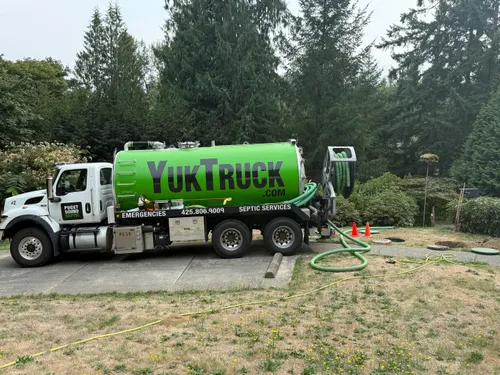
Puget Sound Septic
20222 SE 245th St, Maple Valley, WA 98038
Puget Sound Septic is a septic tank pumping and inspection company serving Kent, WA. They offer septic tank cleaning using advanced technology and trained technicians to provide efficient pumping services. The company also provides video septic line inspections to help identify potential issues early. Puget Sound Septic is committed to maintaining the smooth operation of septic systems and offers services for both routine and emergency needs.
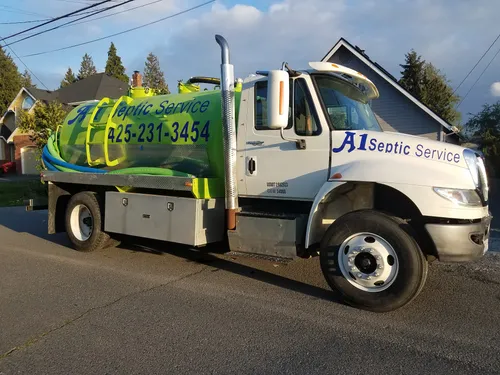
A1 Septic Service
10121 Evergreen Wy Suite 25-696, Everett, WA 98204
A1 Septic Service is a family-owned company based in Everett, WA, providing septic system pumping, inspection, and repair services. Serving Snohomish and King County, they cater to residential, commercial, and municipal customers with over 25 years of experience. Their capabilities include emergency septic pumping available 24/7 to address urgent needs promptly. Established in 1998, A1 Septic Service emphasizes thorough, licensed, and insured work with a commitment to customer satisfaction.
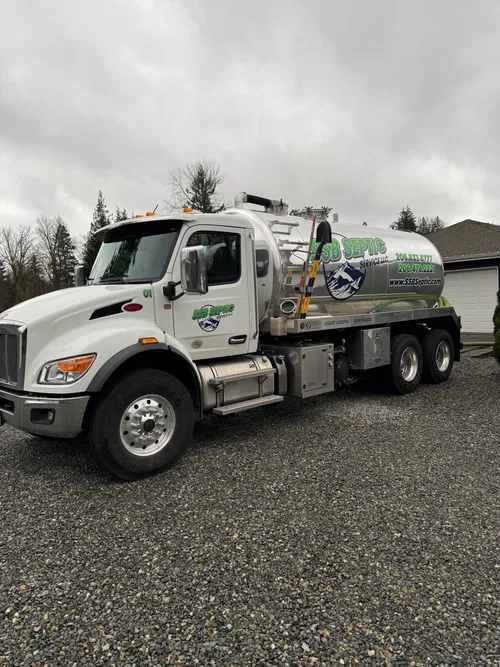
SSB Septic Services
Kent, WA
SSB Septic Services is a family-owned company serving Kent, WA, and the surrounding areas. They provide a range of septic services including tank pumping, system repair, and installation. With over a decade of experience, they focus on eco-friendly solutions and long-term customer satisfaction. The company offers 24/7 emergency response to handle urgent septic system issues promptly. Their expertise includes environmental compliance and sustainable septic system practices.
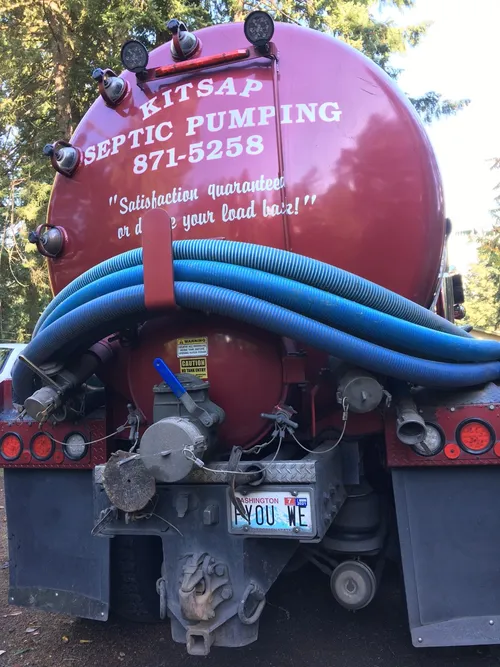
Kitsap Septic
Seattle, WA
Kitsap Septic is a family-owned septic service provider based in Port Orchard, serving Seattle, WA, and the surrounding Kitsap and Mason counties. With over 30 years of experience, they offer septic tank pumping, inspections, and repairs. The company is licensed and insured, known for their distinctive maroon septic trucks and a customer-friendly approach that includes direct communication with live representatives.
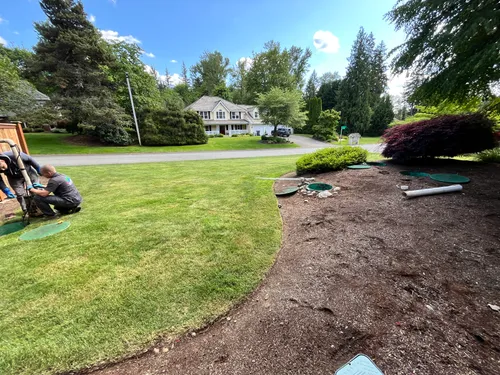
Fresh N Clean Septic
17226 NE Woodinville Duvall Rd, Woodinville, WA 98072
Fresh N Clean Septic provides septic tank pumping, inspection, and repair services in Seattle, WA. They serve the greater Snohomish and King Counties with eco-responsible septic solutions designed to protect both property and the environment. The company offers comprehensive septic system maintenance, including pumping, cleaning, and repairs, supported by licensed and experienced technicians. Fresh N Clean Septic also provides emergency availability to address urgent septic issues promptly.
Why Regular Septic Maintenance is Non-Negotiable
A septic system is a mini wastewater treatment plant on your property. When functioning correctly, it safely processes household waste. The tank itself holds solids (sludge and scum), allowing liquids to flow out to the drain field. Over time, these solids accumulate. If not removed through periodic pumping, they can clog the outlet baffles, overflow into the drain field, and cause a complete system backup-a messy, expensive, and environmentally hazardous situation. In the wet climate of the Pacific Northwest, a failing system can also contaminate groundwater, streams, and Puget Sound. Washington state law recognizes this risk and mandates regular inspections and maintenance to protect both private property and public resources.
How Often Should You Schedule Septic Pumping?
The standard recommendation for most conventional residential systems in Seattle is to have your septic tank pumped every 3 to 5 years. However, this is a general guideline. Several factors specific to your household can necessitate more frequent service.
- High Household Usage: If your home regularly has five or more occupants, the system experiences greater daily load, filling the tank with solids faster. In these cases, pumping every 1 to 3 years may be required.
- Smaller Tank Size: Older homes or properties with space constraints may have smaller-than-average tanks (e.g., 500-750 gallons). These fill up more quickly and often need pumping every 1 to 2 years.
- Garbage Disposal Use: Frequent use of a garbage disposal significantly increases the amount of solids entering the tank, accelerating sludge buildup.
- System Age and Condition: Older systems or those with a history of issues may require more vigilant maintenance.
The most accurate way to determine the need for pumping is through a professional inspection, which measures the levels of sludge and scum inside the tank. A key trigger for service is when the scum layer is within 3 inches of the outlet baffle or the sludge is within 12 inches of the outlet fitting 1.
Understanding Washington State and King County Regulations
Septic system maintenance in Seattle isn't just a suggestion-it's the law. Washington Administrative Code (WAC 246-272A-0270) requires regular inspections of on-site sewage systems by a certified operation and maintenance (O&M) specialist.
- Inspection Frequency: The required inspection interval is typically every 1 to 3 years, depending on the specific type and classification of your system 2 3.
- The Inspection Process: During a routine maintenance visit, a certified professional will locate and open your tank access ports, measure sludge and scum levels, inspect components like baffles and tees, and assess the overall system condition.
- Official Reporting: The technician will provide you with a formal inspection report. For many systems in King County, this report must also be submitted to the local health department to demonstrate compliance 4 5.
Scheduling a pumping service often includes this mandatory inspection, making it a convenient two-in-one task that fulfills your legal obligation and protects your investment.
What to Expect: The Septic Pumping Process
Knowing what happens during a service call can help you prepare. A standard septic pumping service involves several key steps:
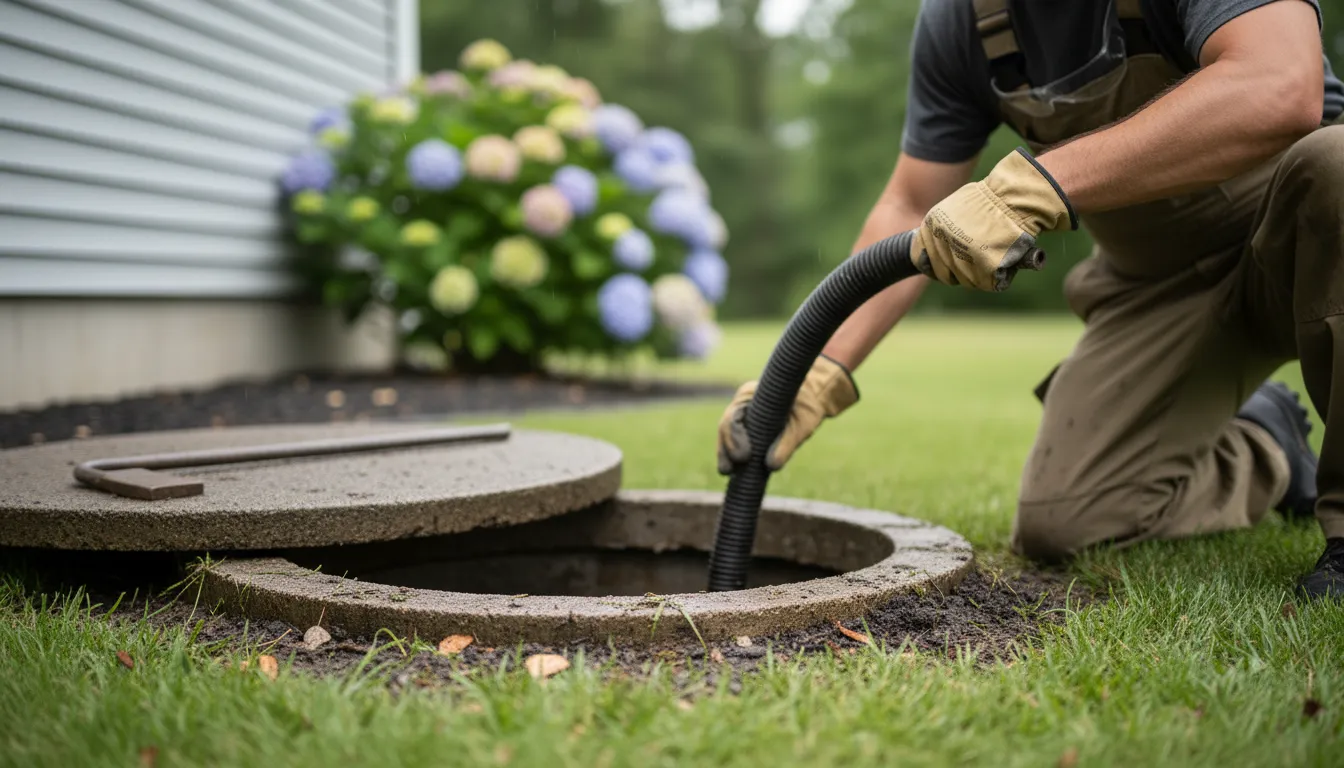
- Locating and Accessing the Tank: The technician will find your tank's access lids. If you have risers (vertical pipes that extend the access ports to ground level), this process is quick and easy. If not, they may need to dig to uncover the lids-a task that can add time and cost. Installing risers is a highly recommended upgrade for future convenience and savings 6.
- Initial Inspection: Before pumping, the technician will often perform a visual inspection, checking liquid levels and the condition of visible parts.
- Pumping: Using a large tank truck with a powerful vacuum hose, all solids and liquids are pumped out of the tank and transported to an approved treatment facility.
- System Evaluation: After the tank is empty, a more thorough inspection can be conducted to check for cracks, leaks, or damaged baffles. This is when precise sludge/scum measurements are often taken for the official report.
- Cleanup and Recommendations: The area is cleaned, lids are securely replaced, and the technician will discuss their findings with you, including any recommended repairs or the ideal interval for your next pumping.
Find the perfect septic tank pumping contractors for your needs
Get personalized recommendations and expert advice
Factors Influencing Septic Pumping Costs in Seattle
The cost for septic tank pumping in Seattle generally ranges from $290 to $700, with an average cost around $380 7 8. Several variables affect where your service falls within this range:
- Tank Size and Capacity: Larger tanks (1,500 gallons or more) cost more to pump than standard 1,000-gallon tanks.
- Accessibility: As mentioned, tanks without risers require excavation, which can add $100-$300 to the total bill.
- Condition and History: If your tank is significantly overdue for service (e.g., not pumped in 7+ years), the accumulated solids may have hardened, requiring more labor or specialized equipment, potentially adding $100-$200 to the cost 9.
- Additional Services: Costs will be higher if the service includes a full mandatory inspection with reporting, minor repairs (like replacing a baffle), or cleaning of effluent filters.
- Company and Scheduling: Prices can vary between providers. Emergency or weekend services typically command a premium over scheduled weekday appointments.
It's always wise to get detailed estimates from a few certified providers that clearly state what is included (e.g., inspection, report, cleanup).
Proactive Tips for a Healthy Septic System
Pumping is vital, but what you do between services matters greatly. Follow these "do's and don'ts" to extend your system's life and avoid problems 10:
DO:
- Conserve water to avoid hydraulically overloading the system.
- Divert roof drains and surface water away from the drain field.
- Keep accurate records of all pumping, inspections, and repairs.
- Plant only grass over and near your drain field; trees and shrubs can damage pipes with their roots.
- Use water-efficient fixtures and spread out laundry loads throughout the week.
DON'T:
- Flush anything besides human waste and toilet paper. Never flush wipes (even "flushable" ones), feminine hygiene products, dental floss, or cooking grease.
- Pour harsh chemicals like drain cleaners, paints, or solvents down the drain, as they can kill the essential bacteria in your tank.
- Drive or park vehicles on your drain field, as compaction can crush pipes.
- Use septic tank additives as a substitute for pumping; they are often unnecessary and can sometimes harm the system.
Recognizing Signs You Need Service Sooner
Don't wait for a disaster. Contact a professional if you notice:
- Slow drains or gurgling plumbing fixtures throughout the house.
- Unpleasant odors around the tank or drain field area.
- Sewage backing up into household drains.
- Unusually lush, green grass or soggy, spongy ground over the drain field, especially during dry weather.
- You simply cannot remember the last time the tank was pumped.
Frequently asked questions
Sources
Footnotes
-
About septic systems - King County, Washington - https://kingcounty.gov/en/dept/dph/health-safety/environmental-health/on-site-sewage-systems/maintaining-your-system/about ↩
-
Do-It-Yourself Septic System Inspection Field Guide - https://doh.wa.gov/sites/default/files/legacy/Documents/Pubs//337-122.pdf ↩
-
Maintaining Your Septic System - https://www.snohd.org/682/Maintaining-Your-Septic-System ↩
-
How Often Should You Pump Your Septic Tank in Seattle? - https://gogreenlatrine.com/how-often-pump-septic-tank/ ↩
-
Washington State Septic Law - https://septicnow.com/washington-state-septic-law/ ↩
-
Septic system do's and don'ts - King County, Washington - https://kingcounty.gov/en/dept/dph/health-safety/environmental-health/on-site-sewage-systems/maintaining-your-system/septic-system-dos-donts ↩
-
Septic Pumping Cost by State: 2024 Complete Price Guide - https://wastedoor.com/article/septic-pumping-cost-by-state ↩
-
Septic Pumping in Seattle, WA - Costs 03 / 2026 - Homeyou - https://www.homeyou.com/wa/septic-pumping-seattle-costs ↩
-
Septic Systems - Bothell WA - https://www.bothellwa.gov/578/Septic-Systems?PREVIEW=YES ↩
-
Caring for Your Septic System | Washington State Department of Health - https://doh.wa.gov/community-and-environment/wastewater-management/septic-system/caring-your-system ↩