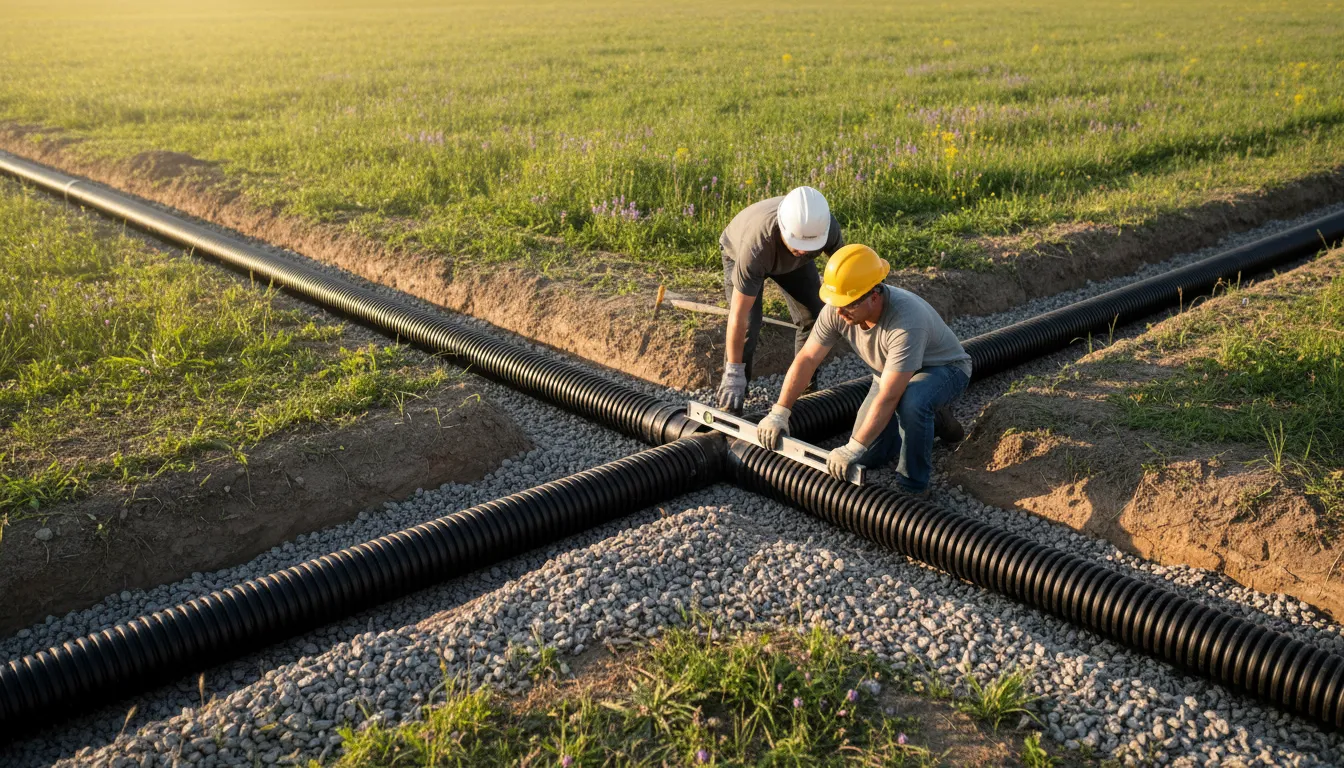
Find the Best Drain Field Repair Companies for Your Business
No obligation • Fast responses • Nationwide coverage

Why you can trust Septic Spot
Septic Spot is a leading United States resource for understanding and comparing septic services. Our editors review providers using consistent criteria and verify key business details. Listings and scores are independent, and companies cannot pay to influence our content.
Search providers near you
Top Drain Field Repair Companies in Apex, North Carolina Ranked
A failing septic drain field is a serious issue that can lead to soggy yards, foul odors, and environmental contamination. Drain field repair or replacement is a specialized process that restores your property's wastewater treatment system, ensuring it functions safely and complies with local health codes. This guide explains the critical steps, regulations, and costs involved in addressing drain field issues in Apex, helping you understand the process and connect with qualified local professionals.

Quality Service Today Plumbing & Septic
5412 US-70 suit A, Durham, NC 27705
Quality Service Today Plumbing & Septic provides a wide range of plumbing and septic services in Durham, NC. They specialize in septic tank pumping, septic system repair, and drain field repair or replacement, along with general plumbing, water heaters, well pumps, and water filtration. The company serves residential clients across Central North Carolina, including Durham and nearby communities. They are equipped to handle unique plumbing setups and offer 24/7 emergency plumbing services. Their team focuses on practical, effective solutions tailored to each home's specific needs.
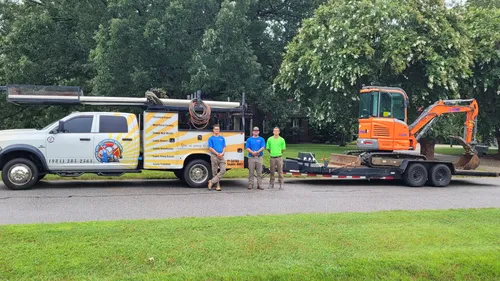
Environmental Systems & Services of NC LLC
Raleigh, NC
Environmental Systems & Services of NC LLC provides comprehensive septic and plumbing services in Raleigh, NC, and throughout Eastern and Central North Carolina. With over 30 years of experience, they handle septic tank pumping, inspections, repairs, and installations, as well as plumbing repairs, sewer line services, and drain field maintenance. Their team uses advanced equipment like cameras and hydro-jetting tools to diagnose and resolve issues efficiently. They offer customized maintenance plans to help extend the lifespan of septic and plumbing systems, ensuring compliance with local regulations and protecting water quality.
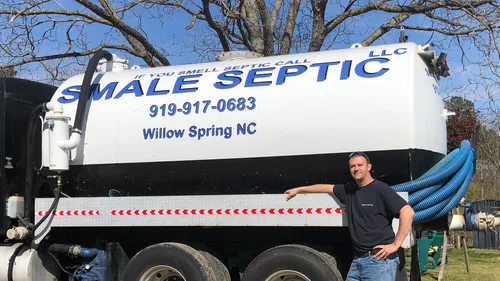
Smale Septic, LLC
Raleigh, NC
Smale Septic, LLC is a locally owned septic service company based near Raleigh, NC, serving Johnston and Wake counties. The business offers septic tank pumping, system repairs, drain field maintenance, and pump replacements. Their capabilities include locating and excavating septic tanks, water jetting drain field lines, and installing septic tank filter tees. The owner operates the business personally and provides direct customer service.
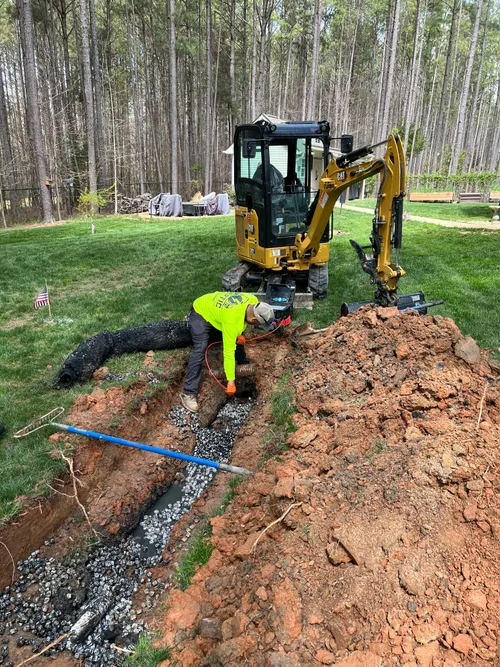
Septic Innovations
5209 Winfree Ln, Wake Forest, NC 27587
Septic Innovations is a septic system company based in Raleigh, NC, offering a range of services including septic tank pumping, inspection, repair, and installation. They handle all system components such as tanks, pumps, control panels, distribution boxes, and drain fields. The company is certified as NC Grade IV installers and VA Master Alternative installers, capable of installing any type of septic system in North Carolina and Virginia. Septic Innovations also provides point-of-sale septic inspections to evaluate system compliance and condition. They assist with permitting when required for installation or repair work.
Warner Septic
Raleigh, NC
Warner Septic is a septic tank pumping and repair company based in Raleigh, NC. They provide services including septic tank pumping, system maintenance, drain field repair, and septic pump repair or replacement. Warner Septic helps prevent system blockages and backups that can cause health hazards and environmental damage. Their services include emergency response and excavation work to maintain and restore septic system functionality.
Understanding Your Septic Drain Field
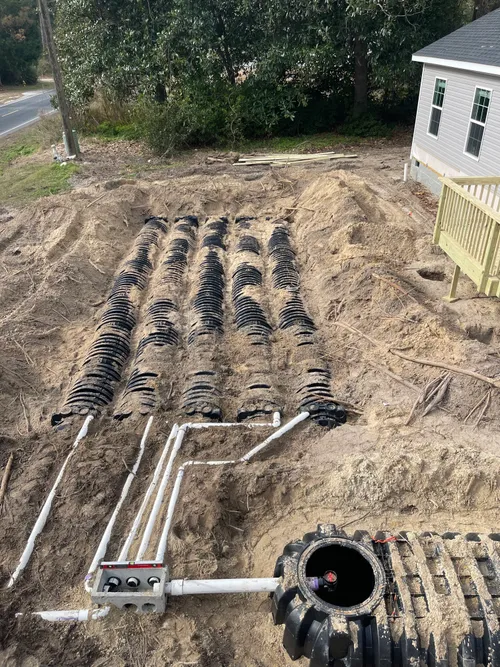
Often called a leach field or absorption field, the drain field is the final and most crucial stage of a septic system. After solids settle in the tank, the liquid effluent flows into a network of perforated pipes buried in trenches filled with gravel. This effluent slowly percolates into the soil, where natural processes provide final treatment. When this area fails, wastewater cannot be properly absorbed, leading to system backup and potential health hazards.
In Apex and throughout Wake County, the soil composition heavily influences drain field design and longevity. The area commonly has clay soils, which have a low infiltration rate 1. This means the soil absorbs water slowly, often requiring a larger drain field area for a conventional system to function properly. A high water table or seasonally saturated soil can further complicate repairs and may necessitate advanced pre-treatment systems.
Signs You Need Drain Field Repair
Recognizing early warning signs can prevent a complete system failure and more costly repairs. Be alert for these indicators:
- Soggy Ground or Standing Water: Persistent wet spots, lush green grass, or pooling water over the drain field area, especially when it hasn't rained.
- Sewage Odors: Unpleasant smells emanating from the yard, particularly near the drain field or tank.
- Slow Drains and Backups: Gurgling pipes, slow-draining sinks and toilets, or sewage backing up into household drains.
- Contaminated Well Water: If you have a private well, test it regularly. Nitrate or bacterial contamination can indicate a failing septic system.
Common causes of drain field failure in our region include root intrusion from trees and shrubs planted too close to the lines, hydraulic overloading from excessive water use or downspouts draining onto the field, and soil clogging due to a lack of regular septic tank pumping 2 3.
The Regulatory Process in Wake County
All septic system work in Apex requires oversight from Wake County Environmental Health. You cannot legally begin any repair or replacement without the proper permits. The process is designed to protect public health and groundwater, adhering to North Carolina General Statute Chapter 130A.
- Initial Site Inspection: A county environmental health specialist will visit your property to diagnose the cause of failure and evaluate site conditions.
- Soil Evaluation and Site Suitability: If a designated "repair area" was not identified on your original site plan, a state-certified soil evaluator may need to assess the soil to determine the best location and type for a new system.
- Permit Application: Your licensed septic contractor will submit a repair or construction permit application based on the county's findings. This includes detailed plans for the new or repaired system.
- Construction Authorization (C.A.): Once the permit is approved, the county issues a Construction Authorization, giving your contractor the green light to begin installation 4.
- Final Inspection: After installation but before the trenches are backfilled, the county inspector conducts a final review to ensure the work meets all code requirements 5.
It is a legal requirement that all installation and repair work be performed by a state-certified septic contractor 6 7.
Find the perfect drain field repair companies for your needs
Get personalized recommendations and expert advice
Repair vs. Complete Replacement
The scope of work depends on the extent of the failure. A professional assessment is essential to determine the right path.
- Minor Repairs: Issues like a damaged junction box or a single clogged pipe may be resolved with targeted repairs, potentially costing a few hundred to a couple thousand dollars.
- Partial Drain Field Replacement: If only a section of the leach field has failed, and a suitable repair area is available, contractors may replace a portion of the lines. Costs for this scope typically range from $5,000 to $8,000.
- Full System Replacement: A complete failure or unsuitable site conditions often require a whole new drain field, and sometimes a new tank. This is the most extensive and expensive option, generally ranging from $8,000 to over $12,000, depending on system type, soil, and landscaping needs 8.
Cost Factors for Apex Homeowners
The final price for your drain field project is influenced by several local factors:
- System Type & Size: A conventional trench system for a three-bedroom home is standard, but challenging sites may require more expensive alternatives like low-pressure dose (LPD) or aerobic treatment units (ATUs).
- Soil Conditions: Clay soils require more extensive excavation and larger fields. High water tables may mandate engineered systems, increasing cost significantly 9 10.
- Permitting and Design Fees: These include county permit fees and potential costs for soil evaluation and system design.
- Excavation and Labor: The difficulty of access, depth of trenches, and amount of rock encountered impact labor costs.
- Restoration: After installation, you'll need to budget for regrading, reseeding, or replanting the disturbed area.
Maintaining Your New or Repaired Drain Field
Protect your investment with proper care. Pump your septic tank every 3-5 years to prevent solids from clogging the new field 11 12. Conserve water and spread out laundry loads to avoid hydraulically overloading the system. Never drive or park heavy vehicles on the drain field area, and keep all trees and deep-rooted shrubs well away from the absorption lines. Ensure roof downspouts and yard drainage are directed away from the septic system area.
Frequently asked questions
Sources
Disclaimer: This information is based on regional North Carolina regulations; always contact Wake County Environmental Health for the most current requirements.
Footnotes
-
Septic Drain Field Design and Maintenance - SERA-17 - https://sera17.wordpress.ncsu.edu/septic-drain-field-design-and-maintenance/ ↩
-
Understanding and Protecting Your Septic System - https://ehs.dph.ncdhhs.gov/oswp/docs/Understanding-protecting-septic-systems-FACTSHEET.pdf ↩
-
Septic Drain Field Design and Maintenance - https://seaboundseptic.com/septic-drain-field-design-and-maintenance/ ↩
-
Navigating the Septic System Permit and Installation Process in North - https://carolinaearthwerx.com/blogs/news/navigating-the-septic-system-permit-and-installation-process-in-north-carolina ↩
-
Frequently Asked Questions - CivicPlus.CMS.FAQ - https://www.orangecountync.gov/faq.aspx?TID=42 ↩
-
Septic system owner's guide - North Carolina Digital Collections - https://digital.ncdcr.gov/Documents/Detail/septic-system-owners-guide/3693915 ↩
-
Septic System Owner's Guide | NC State Extension Publications - https://content.ces.ncsu.edu/septic-system-owners-guide ↩
-
Cost to Replace Septic Tank and Drain Field [2026 Data] | Angi - https://www.angi.com/articles/how-much-new-drain-fields-foot.htm ↩
-
Navigating Septic Tank Installation in Eastern NC: A County ... - https://www.coastalsepticsolutions.com/blog/navigating-septic-tank-installation-in-eastern-nc-a-county-by-county-guide ↩
-
Septic System Design & Permitting in North Carolina - https://www.fullcircleenv.com/services/septic-system-design-permitting/ ↩
-
Septic Systems and Their Maintenance | NC State Extension Publications - https://content.ces.ncsu.edu/septic-systems-and-their-maintenance ↩
-
NC Homeowners: Caring for Your Septic System - https://www.dph.ncdhhs.gov/programs/environmental-health/site-water-protection-branch/site-wastewater-program/nc-homeowners-caring-your-septic-system ↩