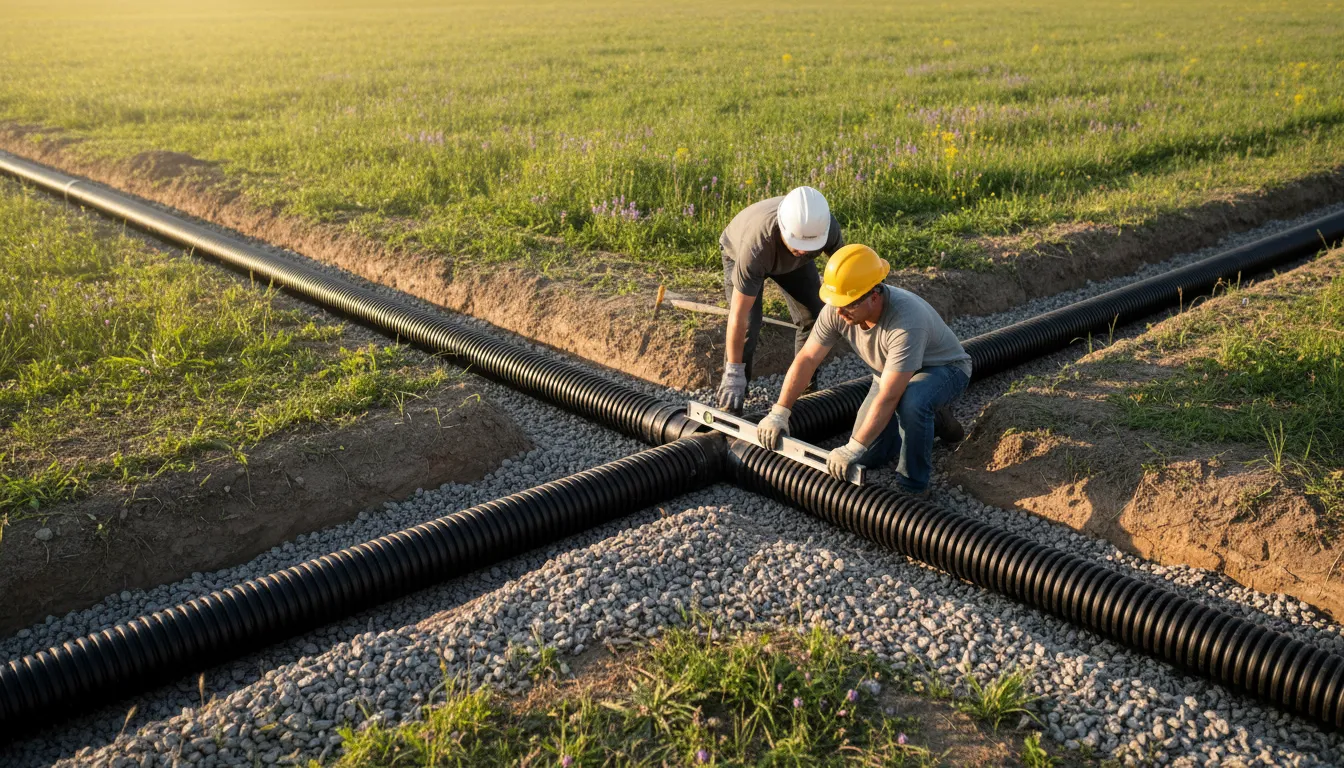
Find the Best Drain Field Repair Companies for Your Business
No obligation • Fast responses • Nationwide coverage

Why you can trust Septic Spot
Septic Spot is a leading United States resource for understanding and comparing septic services. Our editors review providers using consistent criteria and verify key business details. Listings and scores are independent, and companies cannot pay to influence our content.
Search providers near you
Top Drain Field Repair Companies in Durham, North Carolina Ranked
A failing drain field is a serious issue for any home with a septic system, leading to sewage backups, soggy yards, and environmental hazards. In Durham, North Carolina, repairing or replacing this critical component is a regulated process designed to protect public health and groundwater. This guide explains the local rules, common procedures, and key considerations for addressing drain field problems, helping you understand your options and connect with qualified professionals for your property.

Quality Service Today Plumbing & Septic
5412 US-70 suit A, Durham, NC 27705
Quality Service Today Plumbing & Septic provides a wide range of plumbing and septic services in Durham, NC. They specialize in septic tank pumping, septic system repair, and drain field repair or replacement, along with general plumbing, water heaters, well pumps, and water filtration. The company serves residential clients across Central North Carolina, including Durham and nearby communities. They are equipped to handle unique plumbing setups and offer 24/7 emergency plumbing services. Their team focuses on practical, effective solutions tailored to each home's specific needs.

Quality Service Today Plumbing & Septic
831 S 8th St, Mebane, NC 27302
Quality Service Today Plumbing & Septic provides plumbing and septic services in Greensboro, NC, and the surrounding Central North Carolina area. They handle a variety of home plumbing needs, including septic tank pumping, septic system repairs, and drain field replacements. The company is experienced in working with unique home plumbing setups, such as private wells and complex drainage systems, tailoring solutions to each property's specific requirements. They also offer general plumbing repairs, water heater installation, drain clearing, well pump services, and water filtration. Quality Service Today serves multiple communities including Durham, Cary, and Mebane, and provides 24/7 emergency plumbing support.
Smale Septic, LLC
Raleigh, NC
Smale Septic, LLC is a locally owned septic service company based near Raleigh, NC, serving Johnston and Wake counties. The business offers septic tank pumping, system repairs, drain field maintenance, and pump replacements. Their capabilities include locating and excavating septic tanks, water jetting drain field lines, and installing septic tank filter tees. The owner operates the business personally and provides direct customer service.
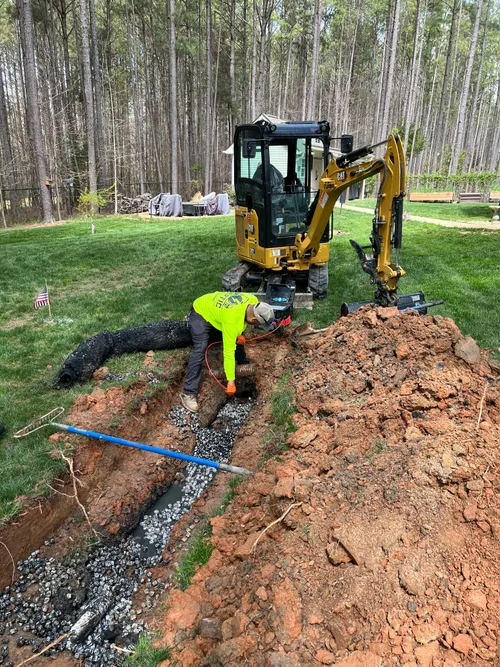
Septic Innovations
5209 Winfree Ln, Wake Forest, NC 27587
Septic Innovations is a septic system company based in Raleigh, NC, offering a range of services including septic tank pumping, inspection, repair, and installation. They handle all system components such as tanks, pumps, control panels, distribution boxes, and drain fields. The company is certified as NC Grade IV installers and VA Master Alternative installers, capable of installing any type of septic system in North Carolina and Virginia. Septic Innovations also provides point-of-sale septic inspections to evaluate system compliance and condition. They assist with permitting when required for installation or repair work.
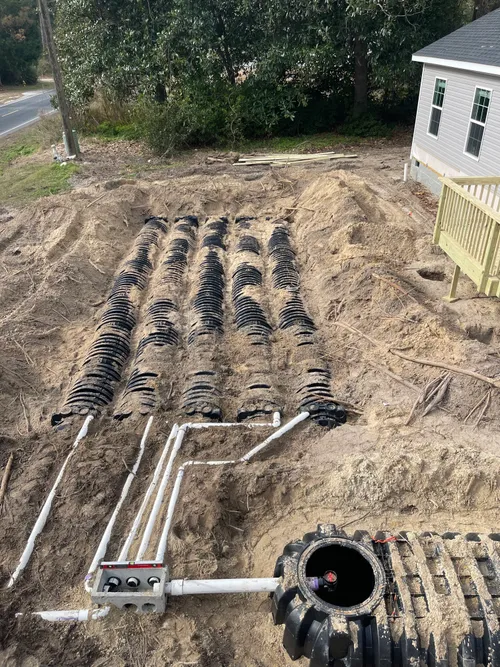
Warner Septic
Raleigh, NC
Warner Septic is a septic tank pumping and repair company based in Raleigh, NC. They provide services including septic tank pumping, system maintenance, drain field repair, and septic pump repair or replacement. Warner Septic helps prevent system blockages and backups that can cause health hazards and environmental damage. Their services include emergency response and excavation work to maintain and restore septic system functionality.
Understanding Your Septic System's Drain Field
The drain field, also known as a leach field or absorption field, is the final and most crucial stage of onsite wastewater treatment. After solids settle in the septic tank, liquid effluent flows into a network of perforated pipes buried in trenches. This effluent slowly percolates through the soil, where natural processes remove harmful bacteria, viruses, and nutrients before the water reaches groundwater. When this area fails, untreated sewage can surface, creating health risks and property damage.
In Durham County, these systems are governed by state and local health regulations to prevent such failures. The North Carolina Administrative Code (15A NCAC 18A.1900) and the Durham County Department of Public Health set strict standards for any repair or replacement work 1. A key point for homeowners is that a repair permit is required for any alteration to system components, and failing systems must be addressed within a mandated timeframe 2 3.
The Regulatory Landscape: Permits and Protections
Before any shovel hits the ground, you must navigate the local permitting process. This ensures the work meets environmental and public health standards.
- Improvement Permit: The first step is often obtaining an Improvement Permit from the local health department. This permit, which can be valid for five years with a site plan or indefinitely with a recorded plat, authorizes the proposed construction or repair 4.
- On-Site Contractor Requirement: Licensed septic contractors must coordinate with Environmental Health Specialists (EHS) for an on-site meeting before beginning work on the system 5.
- The Repair Area: If your septic system was permitted after the early 1980s, your property likely has a designated repair or replacement area. This area, separate from the original drain field, is reserved for future use and must be protected from construction, excavation, or driving to keep the soil suitable.
- Septic-to-Sewer Alternative: For some properties, especially those in the Southeast City of Durham/Northeast Creek watershed, connecting to municipal sewer may be a viable and often preferred alternative to a costly drain field replacement. The city offers a cost-share program for eligible homeowners, which can be a more permanent solution 6 7.
Why Drain Fields Fail and How to Diagnose the Problem
Drain field failure in Durham can stem from several causes:
- Age and Clogging: Over decades, a biomat (a layer of organic material) can form around the pipes, eventually slowing percolation to a halt.
- Physical Damage: Driving or parking heavy vehicles over the field compacts the soil. Building structures like sheds or patios over it restricts airflow.
- Improper Maintenance: Neglecting to pump the septic tank allows solids to wash out and clog the drain field lines. Pouring grease, chemicals, or flushing non-biodegradable items can also damage the system.
- Design Limitations: The original system may have been installed in soil that was marginally suitable or has changed over time.
Diagnosis begins with a professional inspection. A thorough evaluation includes 8 9 10:
- Locating Components: Using permits or electronic locating equipment to find the tank, distribution box, and drain field lines.
- Inspecting the Tank: Checking for cracks, leaks, and ensuring baffles are intact. The sludge and scum levels are measured; if sludge occupies more than one-third of the tank depth, pumping is needed.
- Checking the Distribution Box: Verifying it is level and distributing effluent evenly to all drain lines.
- Evaluating the Drain Field: Looking for tell-tale signs of failure like surfacing sewage, persistently soggy soil, or unusually lush grass over the field area.
- Soil Evaluation: For a replacement, a licensed soil scientist will conduct soil borings in the repair area to confirm its suitability for a new system 11.
Find the perfect drain field repair companies for your needs
Get personalized recommendations and expert advice
Soil Suitability and System Design in the Durham Area
The success of any drain field hinges on the soil's ability to treat wastewater. Durham's varied topography means soil conditions can change dramatically even within a single property.
- Suitable Soils: Ideal soils for conventional drain fields are typically uniform in texture and color-brown, yellow, or red-and are deep and permeable.
- Problematic Conditions: Many areas have limitations that require alternative system designs:
- High Clay Content: Clay soils have very small pores, causing slow percolation and quick clogging.
- Shallow Depth to Rock: If there is less than 24 to 48 inches of suitable soil above bedrock, a standard field cannot be installed 12.
- High Water Table: Soils with gray mottling (splotches of gray or blue) indicate seasonal saturation, which can cause effluent to surface 13.
- Required Setbacks: Regulations mandate minimum distances (setbacks) from the drain field to wells, streams, property lines, and buildings to protect water sources 14.
If the original drain field has failed, the health department may not permit an identical replacement in the same location. The repair system often requires a more sophisticated-and typically more expensive-technology, such as a low-pressure pipe (LPP) system, sand filter, or aerobic treatment unit (ATU) 15.
The Repair and Replacement Process
Once a failure is confirmed and a design is approved, the repair process follows these general steps:
- Permit Acquisition: Secure all necessary permits from the Durham County Department of Public Health based on the approved system design.
- Site Preparation: The contractor will clear and protect the repair area. The old drain field may be taken out of service.
- Installation: New trenches are excavated, distribution pipes are laid, and the system is built according to the engineered plan. This may include installing new tanks, pumps, or advanced treatment components.
- Final Inspection: An Environmental Health Specialist conducts a final inspection before the system is covered.
- Restoration: The area is backfilled and landscaped, usually with grass to prevent erosion and promote evaporation 16.
Cost Considerations for Durham Homeowners
Costs for drain field work vary widely based on system type, soil conditions, and property layout. Some fee benchmarks include 17 18:
- Permit Fees: A repair/upgrade permit is approximately $250, while a new septic system permit (for systems under 480 gallons per day) is around $500. Site visit or revision fees can be about $175.
- Professional Inspection: A comprehensive septic system inspection, often required for real estate transactions, can cost several hundred dollars.
- System Work: Minor repairs may cost a few thousand dollars. A full conventional drain field replacement often starts in the $5,000-$10,000 range. For properties requiring an advanced alternative system due to poor soil, costs can easily exceed $10,000 to $20,000.
Protecting Your New or Repaired Drain Field
Proper care extends the life of your investment. Key maintenance tips include 19 20 21:
- Keep it Clear: Never drive, park, or build over the drain field or its designated repair area.
- Mind Your Water Use: Spread out laundry loads and fix leaking fixtures to avoid hydraulically overloading the system.
- Watch What You Flush: Only human waste and toilet paper should go down the drain. Avoid grease, chemicals, wipes, and feminine hygiene products.
- Landscape Carefully: Maintain grass cover over the field. Do not plant trees or shrubs with deep root systems nearby, as roots can clog and damage pipes.
- Pump Regularly: Have your septic tank pumped every 3-5 years by a licensed professional to prevent solids from escaping into the drain field.
Frequently asked questions
Sources
Footnotes
-
North Carolina Onsite Wastewater Rules - Environmental Health - https://ehs.dph.ncdhhs.gov/oswp/docs/rules/1900-Rules-08-2017.pdf ↩
-
NC Septic Regulations Explained: The 2024 Rule Changes - https://septicandwell.com/articles/nc-septic-regulations ↩
-
Durham Septic Drain Field Repair - https://www.brantleyseptic.com/durham-septic-drain-field-repair/ ↩
-
Improvement Permit - Durham, NC - https://www.durhamnc.gov/DocumentCenter/View/51262/B2300020_Attachment-1_Perc-Test ↩
-
Septic System Owner's Guide - NC State Extension Publications - https://content.ces.ncsu.edu/septic-system-owners-guide ↩
-
Northeast Creek Residential Septic to Sewer Cost-Share Project - https://www.durhamnc.gov/DocumentCenter/View/44046/Septic-To-Sewer-Project-FAQ?bidId= ↩
-
Septic to Sewer Project | Durham, NC - https://www.durhamnc.gov/4592/Septic-to-Sewer-Project ↩
-
Septic System Owner's Guide - NC State Extension Publications - https://content.ces.ncsu.edu/septic-system-owners-guide ↩
-
Septic Tank Inspection in Durham, NC - Septic Blue of Raleigh - https://www.septicblueraleigh.com/septic-tank-inspection-durham-nc-p-102.html ↩
-
How to Inspect a Private Septic System - https://www.youtube.com/watch?v=URhIPaX-csA&t=20 ↩
-
Investigate Before You Invest - NC State Extension Publications - https://content.ces.ncsu.edu/investigate-before-you-invest ↩
-
Septic Drain Field Design and Maintenance - https://seaboundseptic.com/septic-drain-field-design-and-maintenance/ ↩
-
Septic Systems and Their Maintenance - https://content.ces.ncsu.edu/septic-systems-and-their-maintenance ↩
-
Septic Systems and Their Maintenance - https://content.ces.ncsu.edu/septic-systems-and-their-maintenance ↩
-
-People living in areas not served by municipal sewer facilities must make provisions for household and human waste. - https://maconnc.org/images/environmental-health/Septic-Brochure.pdf ↩
-
Untitled - https://nationalland.com/listing-document/157486/683f213bb0cda.pdf ↩
-
Buying a Home in Durham with a Well & Septic - https://www.thewaterspecialist.com/durham-well-septic-water-testing/ ↩
-
Environmental Health Fee Schedule - Johnston County Government - https://www.johnstonnc.gov/envhealth/feepage.cfm ↩
-
Septic Systems and Their Maintenance - https://content.ces.ncsu.edu/septic-systems-and-their-maintenance ↩
-
Understanding and Protecting Your Septic System - https://ehs.dph.ncdhhs.gov/oswp/docs/Understanding-protecting-septic-systems-FACTSHEET.pdf ↩
-
Septic System Owner's Guide - https://seaboundseptic.com/septic-system-owners-guide/ ↩