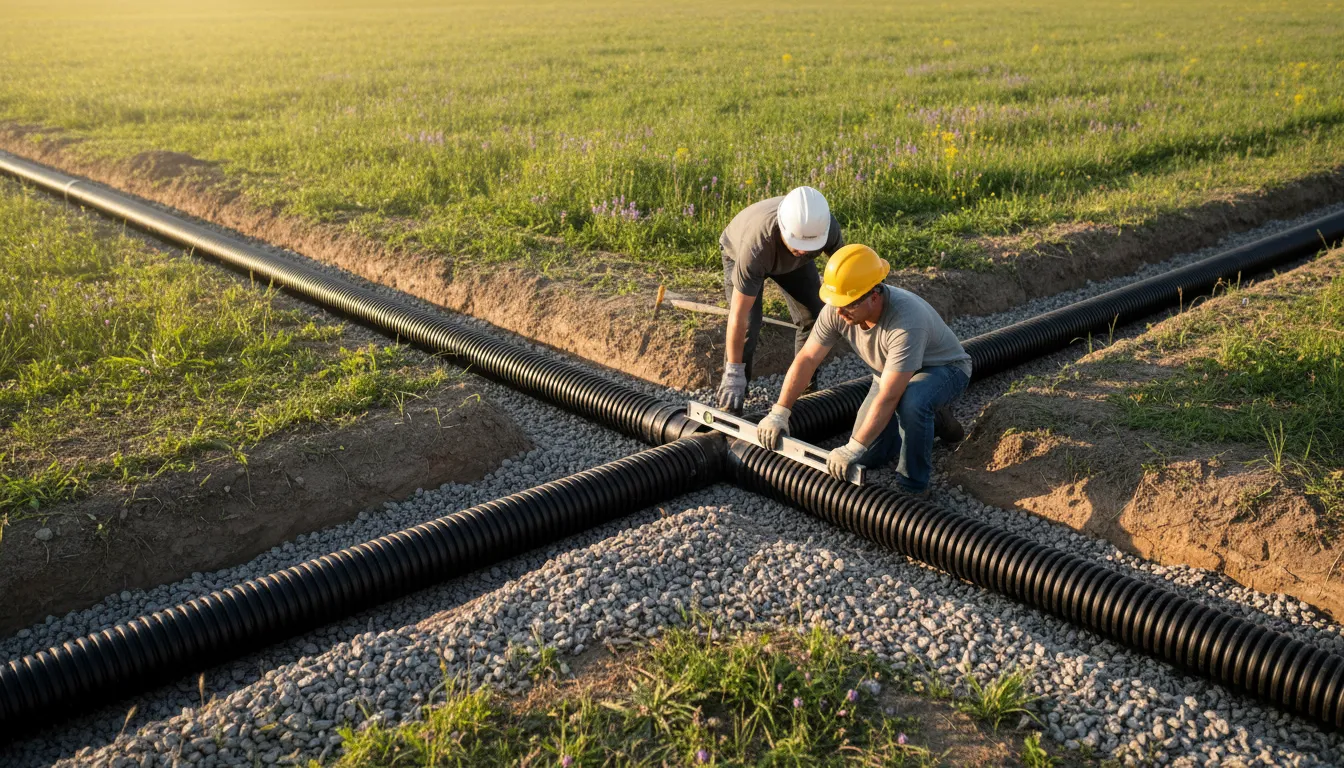
Find the Best Drain Field Repair Companies for Your Business
No obligation • Fast responses • Nationwide coverage

Why you can trust Septic Spot
Septic Spot is a leading United States resource for understanding and comparing septic services. Our editors review providers using consistent criteria and verify key business details. Listings and scores are independent, and companies cannot pay to influence our content.
Search providers near you
Top Drain Field Repair Companies in Wilmington, North Carolina Ranked
A failing drain field is a serious issue for any Wilmington homeowner with a septic system. This critical component, also known as a leach field or absorption field, is responsible for the final treatment and dispersal of wastewater into the soil. When it malfunctions, it can lead to sewage backups, soggy yards, and environmental contamination. Navigating the repair or replacement process requires understanding local coastal conditions and strict state and county regulations. This guide will help you understand the signs of failure, the regulatory steps involved, and how to connect with qualified local professionals to restore your system's function.
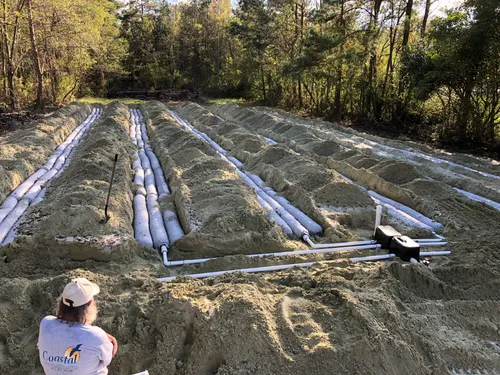
Understanding Drain Field Failure in Coastal Wilmington
The unique environmental conditions of the Cape Fear region make septic systems, particularly the drain field, susceptible to specific types of failure. Wilmington's high water table, sandy soils, and frequent heavy rains create a challenging landscape for conventional wastewater treatment.
High Water Table: Shallow groundwater is a common issue in New Hanover County. When the water table rises, it can "drown" a drain field, preventing effluent from properly percolating through the soil. This saturation halts the treatment process and can cause wastewater to surface. Inspectors often look for gray soil colors or mottling in the drain field area, which indicate a perched seasonal water table during wet periods.
Soil Composition: While sandy soils are permeable and allow for good drainage, they have limited ability to filter and treat pathogens. State regulations require specific vertical separation distances between the bottom of the drain field trenches and the seasonal high water table to ensure adequate treatment. In many coastal lots, achieving this separation can be difficult without engineered solutions.
Common Signs of Failure:
- Sewage odors in the yard, especially after rain.
- Soggy, spongy, or persistently wet soil over the drain field area.
- Unusually lush, green grass growing over the field.
- Slow drains or sewage backups in the home.
- Surfacing gray or black effluent.
If you notice any of these signs, it's crucial to act quickly. Continuing to use a failing system is a public health risk and violates North Carolina law.
The Regulatory Landscape: Permits and New 2024 Rules
All septic system repair and replacement work in Wilmington and New Hanover County is managed under the authority of New Hanover County Environmental Health Services and the North Carolina Department of Health and Human Services (NCDHHS). State rules (15A NCAC 18A.1900 and 18E) provide the framework, which local counties enforce. 1
The Mandatory Repair Permit: Before any repair or replacement activity begins, a property owner must obtain a repair permit from New Hanover County Environmental Health. It is illegal for a contractor to begin work without this permit. The process starts with submitting a repair request, typically through the county's COAST portal or directly to the Environmental Health office. 2
Critical New Rules (Effective January 1, 2024): A significant regulatory change now impacts many repair projects. For systems installed before 2024, repairs to the soil treatment area (the drain field) may now require an engineer to design an advanced pretreatment system for the new repair area. This rule aims to enhance water quality protection but can substantially increase the complexity and cost of a project. It is essential to consult with the county to determine if your specific repair triggers this requirement.
The "Repair Area": If your property has a previously designated "repair area" shown on an old site plan, state law strictly protects it. You cannot build structures like decks, sheds, or pools, or park heavy vehicles over this area. It must remain undisturbed as a reserve space for future system expansion or replacement. 3 4
The Step-by-Step Process for Repair or Replacement
Navigating a drain field project involves a series of defined steps with both the county and a licensed contractor.
- Initial County Investigation: Contact New Hanover County Environmental Health to report a suspected failure. A county inspector will visit to evaluate the malfunction. They will determine if it's a minor issue (like a broken pipe or distribution box) or a major failure requiring a full drain field replacement. 5
- System Evaluation & Soil Analysis: For major failures, a more thorough evaluation is needed. This often involves a soil scientist or engineer performing percolation tests and deep hole observations to assess current soil conditions and water table depth. This analysis determines what type of replacement system the site can support.
- Permit Application & Design: Based on the evaluation, a detailed plot plan for the new or repaired system components is created. This plan, which must comply with all current rules, is submitted with the repair permit application. The county reviews and, if approved, issues the repair permit. 6
- Contractor Selection: You must hire a state-licensed On-Site Wastewater Contractor to perform the work. It is advisable to get multiple bids and ensure the contractor is familiar with New Hanover County's specific requirements and coastal challenges.
Find the perfect drain field repair companies for your needs
Get personalized recommendations and expert advice
- Installation & Final Inspection: The licensed contractor executes the work according to the permitted plan. Once installation is complete, the contractor must notify the county for a final inspection. If the work passes inspection, the county will issue an Operational Permit, allowing you to use the system again. 7 8
Solutions for Wilmington's Challenging Sites
Not every lot can accommodate a standard trench-style leach field. Fortunately, several engineered alternatives are approved for use in North Carolina and are commonly deployed in Wilmington.
- Raised Bed (Mound) Systems: These are often the solution for sites with high water tables or shallow suitable soil. A sand mound is constructed above the natural grade, providing the necessary separation from groundwater. Wastewater is pumped up into the mound for treatment. 9
- Low-Pressure Dose (LPD) Systems: These systems use a network of small-diameter pipes and dosing chambers to distribute effluent evenly and intermittently across the drain field. This allows the soil to "rest" between doses, improving treatment and extending the field's life, which is beneficial in marginal soils. 10
- Advanced Treatment Systems (ATS): Also called aerobic treatment units (ATUs), these systems introduce oxygen into the wastewater treatment process before it reaches the drain field. This significantly reduces the nutrient and pathogen load, allowing for a smaller drain field or enabling installation on sites that would otherwise fail. The new 2024 rules may make these systems mandatory for certain repairs.
- Drip Irrigation Systems: Similar to LPD but using flexible drip tubing, these systems allow for very even distribution over a larger, sometimes landscaped, area. They are suitable for irregularly shaped lots or areas with gentle slopes.
Understanding the Costs Involved
The cost for drain field work in Wilmington varies dramatically based on the scope. A minor component repair is a fraction of the cost of a full replacement with an engineered system. 11
- Minor Repairs: Fixing a damaged distribution box (D-box), replacing a section of clogged pipe, or clearing a baffle may cost between $500 and $2,000.
- Full Conventional Drain Field Replacement: If soil conditions allow for a standard trench system replacement, homeowners can expect costs ranging from $5,000 to $15,000 or more, depending on the size of the home and field. 12 13
- Engineered/Advanced System Replacement: For sites requiring a raised bed, low-pressure dose, or advanced treatment system, costs can easily exceed $20,000. The new 2024 regulations requiring advanced pretreatment for some repairs will push many projects into this higher cost bracket. 14 15
- Permit and Design Fees: These are paid to New Hanover County and to any required design professionals (engineers, soil scientists). Fees vary based on the project's complexity.
Disclaimer: Cost estimates are for general planning. It is essential to contact New Hanover County Environmental Health for specific, up-to-date permitting costs and regulations and to obtain detailed quotes from licensed contractors.
Maintenance: Protecting Your Investment
After a repair or replacement, proper maintenance is key to longevity. This includes regular septic tank pumping (every 3-5 years), conserving water to avoid hydronic overload, and avoiding pouring harsh chemicals or non-biodegradable materials down the drain. Most importantly, protect the drain field area from compaction by vehicles and from the roots of trees and large shrubs. 16
Frequently asked questions
Sources
Footnotes
-
North Carolina Onsite Wastewater Rules - Environmental Health - https://ehs.dph.ncdhhs.gov/oswp/docs/rules/1900-Rules-08-2017.pdf ↩
-
FAQ: Septic System Permits - https://mseptic.com/blog/2019/7/22/faq-septic-system-permits ↩
-
Understanding and Protecting Your Septic System - https://ehs.dph.ncdhhs.gov/oswp/docs/Understanding-protecting-septic-systems-FACTSHEET.pdf ↩
-
Septic System Owner's Guide - Transylvania Public Health - https://transylvaniahealth.org/wp-content/uploads/2015/10/septic-system-owners-guide.pdf ↩
-
Repairing a Septic System | Onslow County, NC - https://www.onslowcountync.gov/715/Repairing-a-Septic-System ↩
-
NC General Statutes - Chapter 130A Article 11 - https://www.ncleg.gov/EnactedLegislation/Statutes/PDF/ByArticle/Chapter_130A/Article_11.pdf ↩
-
Navigating Septic Tank Installation in Eastern NC: A County-by- ... - https://www.coastalsepticsolutions.com/blog/navigating-septic-tank-installation-in-eastern-nc-a-county-by-county-guide ↩
-
Repairing a Septic System | Onslow County, NC - https://www.onslowcountync.gov/715/Repairing-a-Septic-System ↩
-
Septic System Repair & Replacement in Wilmington, NC - https://www.hplandworx.com/service-area/wilmington-nc ↩
-
Septic Drain Field Design and Maintenance - https://seaboundseptic.com/septic-drain-field-design-and-maintenance/ ↩
-
Septic Drain Field Repair - https://www.benjaminfranklinplumbing.com/league-city/blog/2025/april/can-a-septic-drain-field-be-repaired-key-considerations-and-solutions/ ↩
-
Navigating Septic Tank Installation in Eastern NC: A County ... - https://www.coastalsepticsolutions.com/blog/navigating-septic-tank-installation-in-eastern-nc-a-county-by-county-guide ↩
-
How Much Does a Leach or Drain Field Replacement Cost? (2026) - https://homeguide.com/costs/drain-leach-field-replacement-cost ↩
-
New Septic Rules Effective January 1, 2024 - Ilona Matteson - https://ilonamatteson.com/new-septic-rules-effective-january-1-2024/ ↩
-
Cost of Septic Maintenance | Annual Expenses Explained | Blog - https://www.blueribbonseptic.com/blog/cost-of-septic-maintenance ↩
-
Septic System Owner's Guide - NC State Extension Publications - https://content.ces.ncsu.edu/septic-system-owners-guide ↩