Find the Best Drain Field Repair Companies for Your Business
No obligation • Fast responses • Nationwide coverage

Why you can trust Septic Spot
Septic Spot is a leading United States resource for understanding and comparing septic services. Our editors review providers using consistent criteria and verify key business details. Listings and scores are independent, and companies cannot pay to influence our content.
Search providers near you
Top Drain Field Repair Companies in Concord, North Carolina Ranked
A failing drain field is a serious issue for any North Carolina homeowner with a septic system. This critical component, also known as a leach field or absorption field, is responsible for safely filtering and dispersing treated wastewater into the soil. When it malfunctions, it can lead to sewage backups, soggy yards, and environmental contamination. Understanding the repair and replacement process, including North Carolina's specific regulations and costs, is essential for protecting your property, health, and investment. This guide provides the practical information you need to navigate drain field solutions and connect with qualified local professionals.

Lentz Wastewater Management - Mooresville
Charlotte, NC
Lentz Wastewater Management - Mooresville offers septic system repair, installation, and maintenance services in Charlotte, NC. They handle septic tank replacements, drain field repairs, and septic pump services, including installation of risers and sanitary tees to extend system life. The company also provides Terralift technology to address saturated drain fields without excavation. With over twenty years of experience, Lentz Wastewater Management installs various septic systems, including conventional and alternative types, and offers warranties on parts and workmanship.
Affordable Septic Services of North Carolina
Charlotte, NC
Affordable Septic Services of North Carolina provides comprehensive septic system care in Charlotte, NC, and Mecklenburg County. They offer a full range of services including septic tank pumping, cleaning, inspection, repair, and drain field replacement for both residential and commercial properties. Their team is equipped to handle routine maintenance as well as emergency septic pumping, using professional equipment and proven techniques to ensure reliable system performance. With over ten years of experience, they focus on accurate diagnostics and long-term solutions to protect property investments.
Full Service Septic
430 Cooper Rd, Salisbury, NC 28147
Full Service Septic is a septic tank pumping, inspection, repair, and installation company serving Charlotte, NC. They provide services for both residential and commercial septic systems, including drain field repair and septic pump replacement. The company offers expertise in maintaining and installing septic systems that meet current codes, helping customers manage their septic needs effectively. Their team includes specialized technicians for drain field issues and focuses on preventative maintenance to address problems early and avoid costly repairs.
Redline Site Services
Charlotte, NC
Redline Site Services provides septic system solutions in Charlotte, NC, serving homeowners and builders in Union County and nearby areas. The company offers septic tank pumping, inspections, repairs, and complete installations, handling everything from permits to final inspections. They specialize in diagnosing and fixing issues such as cracked pipes, worn-out drain fields, and sluggish systems to maintain efficient septic performance.
NC Septic & Pump Specialist, LLC
Charlotte, NC
NC Septic & Pump Specialist, LLC is a licensed septic service provider based in Charlotte, NC, offering a full range of septic system solutions. Their services include septic tank pumping, inspections, repairs, installations, and drain field repairs. The company employs Level 4 licensed installers and experienced technicians who handle everything from routine maintenance to complex system installations and repairs. With over eight years of industry experience, they serve Charlotte and surrounding areas, including Kannapolis and Concord. Their expertise includes thorough septic inspections and advanced septic system installations, ensuring compliance with local standards.
Understanding Your Drain Field and Signs of Failure
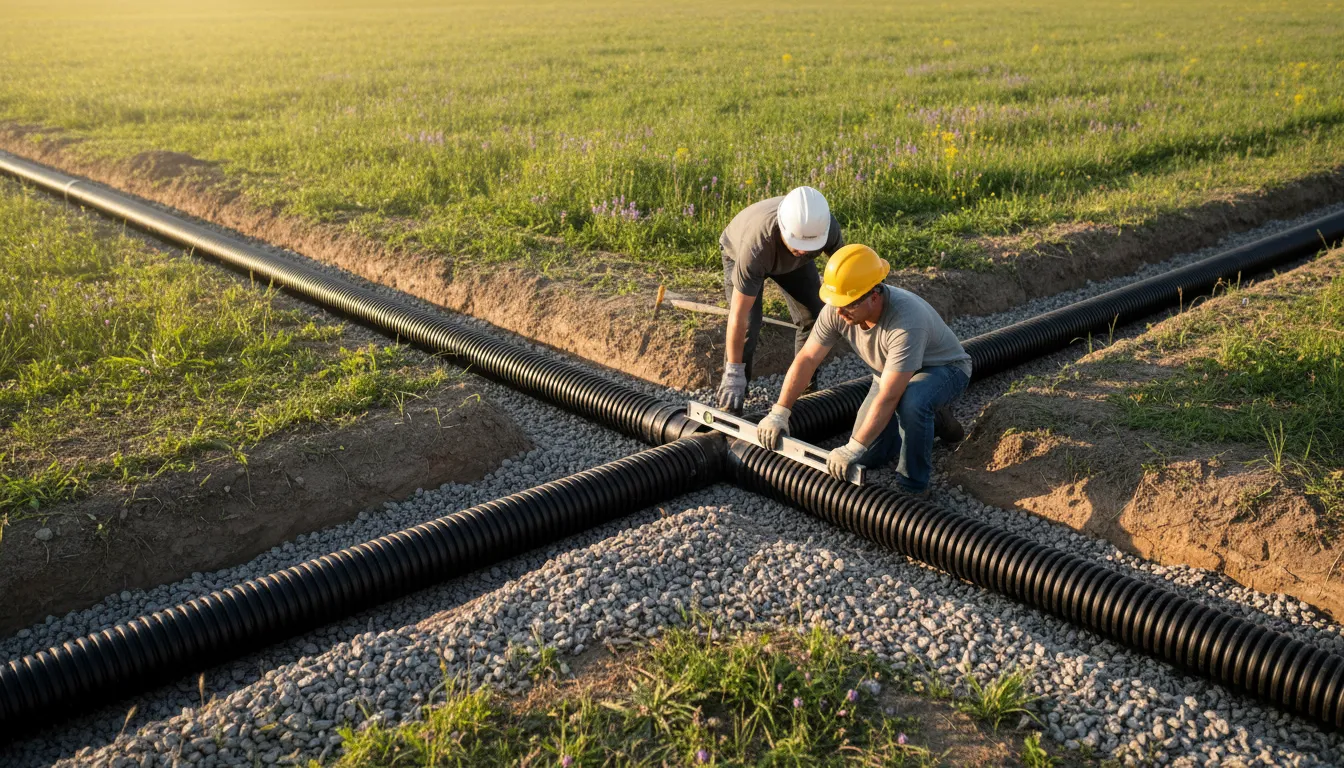
The drain field is the final stage of your onsite wastewater system. After solids settle in the septic tank, the liquid effluent flows through pipes into a network of perforated tubes buried in trenches filled with gravel or other aggregate. This effluent slowly percolates into the soil, where natural processes provide final treatment.
Recognizing early warning signs can prevent a complete system failure and more expensive repairs. Key indicators include:
- Sewage Odors or Surfacing Wastewater: Foul smells in your yard or visible, soggy patches of effluent are clear signs of a saturated or clogged drain field 1.
- Slow Drains and Backups: If toilets, showers, and sinks drain slowly or back up, especially after wet weather, the drain field may not be accepting water.
- Unusually Green or Lush Grass: While a small sign, a strip of grass over the drain field that is much greener and grows faster than the rest of the lawn can indicate a nutrient overload from surfacing effluent.
- Standing Water: Puddles or mushy ground over the drain field area when it hasn't rained is a major red flag.
The North Carolina Regulatory Process for Repairs
In North Carolina, nearly all work on a septic system, especially drain field repair or replacement, is regulated by local County Environmental Health Departments. You cannot simply hire a contractor to dig up and fix the field-official permits and inspections are required by law.
Step 1: Initial Evaluation and Permit Application
When problems arise, your first call should be to a state-certified septic system installer or inspector, or directly to your local health department. They will perform a site evaluation to diagnose the issue. This evaluation assesses soil conditions, the seasonal high water table, and, crucially, whether you have a suitable, unused repair area on your property reserved for a future drain field 2 3. Obtaining a repair permit is mandatory for any alteration to the existing system 2.
Step 2: Professional Installation
All repair and replacement work must be completed by a North Carolina certified installer 4 5. They will prepare the site according to the approved permit and install the new or repaired components, which may involve:
- Spot Repairs: Replacing a small section of failed piping.
- Field Extension: Adding new trenches to the existing field.
- Complete Replacement: Installing a brand-new drain field in the designated repair area, which may require a different, more advanced technology based on current soil and site conditions.
Step 3: Final Inspection and Approval
Once installation is complete but before the trenches are covered, the local health department inspector must visit the site to conduct a final inspection 6. Only after they approve the work can the system be backfilled and put into use. This step ensures the repair meets all state and local health codes.
Cost Factors for Drain Field Work in NC
The total cost for drain field repair or replacement in North Carolina varies widely based on system size, soil type, technology, and local fees. It's a significant investment, so understanding the cost components is key.
- Permit Fees: Local health departments charge for permit applications and inspections. In North Carolina, these fees typically range from $200 to $800, with some counties charging separate fees for site evaluation, permit issuance, and inspections 7 8.
- Installation Labor and Materials: This is the largest variable cost. A simple spot repair may cost a few thousand dollars, while a full drain field replacement for a standard home can range from $5,000 to $15,000 or more. Systems for challenging sites (e.g., poor soil, high water table) that require advanced treatment technologies (ATUs) or alternative designs (like low-pressure pipe systems) will be at the higher end of this range or exceed it.
- Engineering and Design: For complex properties or systems requiring engineering, design fees can add $1,500 to $2,500 or more to the total project cost.
- Septic Tank Considerations: If your tank is also old or damaged, it may need to be replaced concurrently, adding $1,500 to $5,000 to the project 9.
Find the perfect drain field repair companies for your needs
Get personalized recommendations and expert advice
Maintenance: The Best Defense Against Costly Repairs
Proactive maintenance is the most effective and affordable strategy to extend the life of your drain field. The North Carolina Division of Public Health and extension services emphasize several critical practices 10 11:
- Regular Tank Pumping: Have your septic tank pumped every 3 to 5 years by a licensed professional. This prevents solids from escaping the tank and clogging the drain field pipes and soil.
- Conserve Water: Spread out water use throughout the day and week. Fix leaky faucets and toilets immediately. Consider installing water-efficient fixtures to reduce the hydraulic load on your field.
- Mind What You Flush: Only human waste and toilet paper should go down the drain. Never flush grease, oils, coffee grounds, diapers, wipes (even "flushable" ones), or harsh chemicals.
- Protect the Drain Field Area: Never drive or park vehicles, build structures, or plant trees over the drain field. The weight can crush pipes and compact soil, while tree roots can infiltrate and block them. Maintain a grass cover to prevent erosion.
Choosing the Right Professional for the Job
Given the technical and regulatory complexity, selecting the right contractor is paramount. Look for a professional who is:
- North Carolina Certified: Ensure they hold current certification as an installer and/or inspector from the state.
- Experienced with Local Regulations: They should be familiar with the specific requirements of your county's health department.
- Transparent in Communication: They should clearly explain the problem, proposed solution, provide a detailed written estimate, and guide you through the permit process.
- Properly Insured: Verify they carry liability and workers' compensation insurance.
Always get multiple quotes and check references from past clients in your area.
Frequently asked questions
Sources
Footnotes
-
Septic System Owner's Guide - Forsyth County, North Carolina - https://forsyth.cc/publichealth/assets/documents/septic_guide.pdf ↩
-
FAQ: Septic System Permits - https://mseptic.com/blog/2019/7/22/faq-septic-system-permits ↩ ↩2
-
North Carolina Onsite Wastewater Rules - Environmental Health - https://ehs.dph.ncdhhs.gov/oswp/docs/rules/1900-Rules-08-2017.pdf ↩
-
Installer & Inspector Classes | North Carolina Septic Tank Association - https://ncsta.net/installer-inspector-classes/ ↩
-
Septic Maintenance and Repairs - https://www.wake.gov/departments-government/onsite-water-protection/septic-systems/septic-maintenance-and-repairs ↩
-
On-Site Wastewater & Septic Systems | Pitt County, NC - https://www.pittcountync.gov/378/On-Site-Wastewater-Septic-Systems ↩
-
NC Septic Permit Process: Step-by-Step Guide for Homeowners - https://septicandwell.com/articles/nc-septic-permit-process ↩
-
Environmental Health Fee Schedule - Johnston County Government - https://www.johnstonnc.gov/envhealth/feepage.cfm ↩
-
How Much Does a Septic System & Septic Tank Cost - NexGen Septics - https://www.nexgenseptics.com/septic-system-cost/ ↩
-
NC Homeowners: Caring for Your Septic System | Division of Public Health - https://www.dph.ncdhhs.gov/programs/environmental-health/site-water-protection-branch/site-wastewater-program/nc-homeowners-caring-your-septic-system ↩
-
Septic System Owner's Guide - NC State Extension Publications - https://content.ces.ncsu.edu/septic-system-owners-guide ↩