Find the Best Drain Field Repair Companies for Your Business
No obligation • Fast responses • Nationwide coverage

Why you can trust Septic Spot
Septic Spot is a leading United States resource for understanding and comparing septic services. Our editors review providers using consistent criteria and verify key business details. Listings and scores are independent, and companies cannot pay to influence our content.
Search providers near you
Top Drain Field Repair Companies in High Point, North Carolina Ranked
A failing drain field is a serious issue that can lead to sewage backups, soggy lawns, and environmental contamination. Drain field repair and replacement involves diagnosing and fixing the underground network of pipes that treat and disperse wastewater from your septic tank. This guide explains the local process, regulations, and costs for homeowners in High Point, NC, helping you understand your options and connect with qualified professionals to restore your system's function.
Local Septic & Environmental Services LLC
Winston Salem, NC
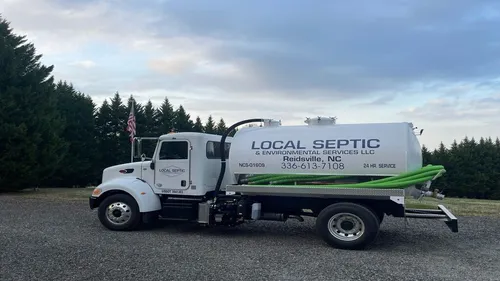
Local Septic & Environmental Services LLC is a family-owned septic company serving Winston Salem, NC, and surrounding counties. They provide a full range of septic services including tank pumping, inspections, repairs, new system installations, and drain field replacements. The company uses advanced inspection tools and modern excavation equipment to diagnose and address septic issues accurately. With decades of experience, Local Septic offers emergency services to handle urgent septic problems beyond regular business hours.
Chris Mendenhall Excavation & Septic LLC
5703 Midway School Rd, Thomasville, NC 27360
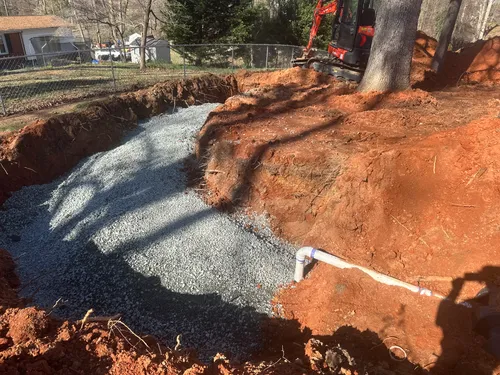
Chris Mendenhall Excavation & Septic LLC provides septic system inspection, repair, installation, and drain field services in Winston Salem, NC. The company handles septic pump repair and replacement along with excavation work related to septic systems. Known for installing pump tanks and leach fields, they have experience resolving long-standing septic issues. Customers appreciate their ability to diagnose repairs accurately, often saving the need for full replacements. Chris Mendenhall Excavation & Septic LLC is recognized for completing projects efficiently and maintaining site conditions.
Newcomb Septic Services
5723 Country Club Rd M, Winston-Salem, NC 27104
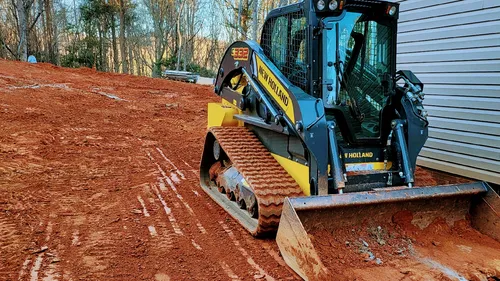
Newcomb Septic Services is a locally owned company providing comprehensive septic system and excavation services in Winston-Salem, NC. Their offerings include septic pump installation and repair, septic system installation, septic tank repair, line jetting, and drain field repair and installation. They also provide grading, erosion control, storm drain installation, backfill, footing, and foundation services. The team brings decades of combined experience and focuses on quality workmanship and safety. They handle emergency septic repairs to prevent backups and protect properties.
McMahan Septic Tank Inc
Winston Salem, NC
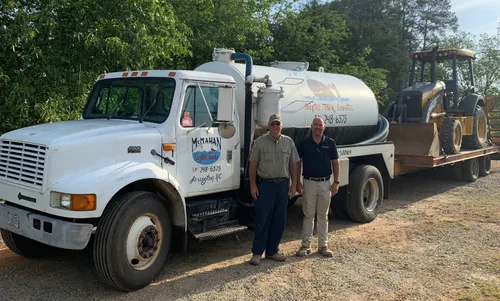
McMahan Septic Tank Inc is a family-owned business serving Winston Salem, NC, and the Piedmont Triad area since 1967. They provide a wide range of septic services including pumping, inspections, installations, repairs, and maintenance for residential and commercial systems. The company also offers sewer line cleaning, repairs, and replacements using advanced diagnostic tools to identify and resolve issues efficiently. With over six decades of experience, McMahan Septic Tank Inc is equipped to handle routine maintenance as well as complex septic and sewer system repairs.
Greensboro Septic Pros
7B Corporate Center Ct, Greensboro, NC 27408
Greensboro Septic Pros is a septic service company based in Winston Salem, NC, offering septic tank pumping, inspections, repairs, and new system installations. They serve Greensboro and surrounding areas, providing thorough septic system care including locating tanks, inspecting sludge and scum levels, and ensuring proper waste disposal. The company also handles septic system repairs such as sealing leaks and replacing damaged components, as well as customized septic system installations that comply with local regulations. Their licensed technicians are equipped to manage permits, excavation, and final inspections. Greensboro Septic Pros provides 24/7 emergency response to address urgent septic needs.
Understanding Your Septic System's Drain Field
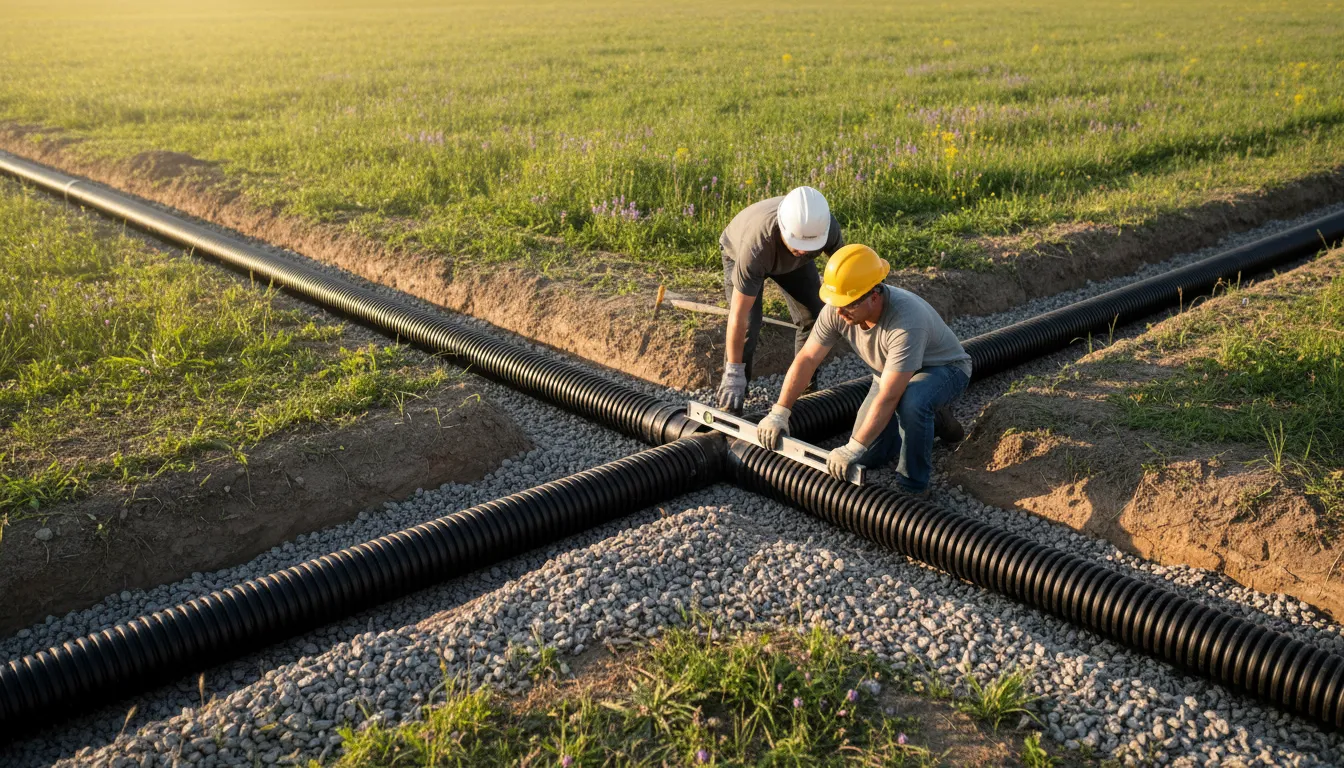
Often called a leach field or absorption field, the drain field is the final and most critical stage of a conventional septic system. After solids settle in the septic tank, the liquid effluent flows into a series of perforated pipes buried in trenches filled with gravel. This effluent slowly seeps into the surrounding soil, where natural processes provide final treatment. When this area fails, wastewater can no longer be absorbed, leading to system backup. Recognizing early signs-like slow drains, sewage odors, or unusually lush, wet patches in your yard-is key to addressing problems before they become an emergency.
Why Drain Fields Fail in High Point
Several factors common to the Piedmont region of North Carolina can contribute to drain field failure. The most frequent cause is a lack of regular septic tank pumping, which allows solids to overflow into and clog the drain field pipes. Physical damage from driving or parking vehicles over the field, building structures like sheds or decks on it, or planting trees with invasive roots can crush pipes or disrupt soil structure. Additionally, the native soil conditions in Guilford County play a major role. Heavy clay soils, which are common, have slow percolation rates, meaning they absorb water poorly. A high seasonal water table can also saturate the soil, leaving no capacity to accept more effluent from the system.
The Regulatory Landscape: Guilford County and North Carolina Rules
All septic system work in High Point is governed by state regulations (15A NCAC 18A.1900) enforced locally by the Guilford County Department of Health and Human Services, Division of Public Health. A core rule is that property owners are legally responsible for maintaining their systems and fixing malfunctions 1. You cannot simply hire a contractor to dig up and replace a drain field. Any repair or replacement requires a permit from the county health department before any work begins. The type of permit-typically a Construction Authorization (C.A.) or an Improvement Permit (I.P.)-depends on the scope of the proposed work 2.
A crucial advantage for many High Point homeowners is the "repair area." For systems permitted since the early 1980s, the original site plan usually designated a specific, protected area on the property reserved solely for future system repairs or replacement. This area must be kept clear of structures, pavement, and deep-rooted plants. Using this pre-approved space can significantly streamline the permitting process for a new leach field.
The Step-by-Step Process for Repair or Replacement
Navigating a drain field project involves a series of defined steps with the county health department.
- Initial Application and Site Plan: The process starts by submitting a septic repair application to the Guilford County Health Department. This must include a detailed site plan of your property showing the location of the existing home, tank, failing field, well, property lines, and the designated repair area if one exists 3.
- County Site Evaluation: A public health environmentalist will visit your property to assess the reported failure and evaluate the proposed repair area. They confirm the issue and inspect the site's suitability 4.
- Soil Assessment and Testing: This is a critical phase. A licensed soil scientist or county specialist will conduct soil boring tests, typically digging or drilling holes up to 48 inches deep in the proposed repair area. They analyze the soil morphology, depth to restrictive layers (like hardpan or rock), and seasonal wetness to determine the soil's ability to absorb and treat wastewater.
- Site Suitability Classification: Based on the soil evaluation, the site will be classified as:
- Suitable (S): Meets all criteria for a conventional trench system.
- Provisionally Suitable (PS): May require a modified or alternative system (e.g., a low-pressure pipe or sand filter system).
- Unsuitable (U): Cannot support a standard drain field, often requiring advanced treatment technology.
- Permit Issuance and Setbacks: If approved, the health department will issue a permit specifying the exact type and design of the system that can be installed. The permit will also enforce mandatory setbacks, ensuring the new drain field is a safe distance from wells, property lines, streams, and buildings.
- Contractor Selection and Installation: Only with permit in hand can you hire a licensed septic contractor to perform the excavation and installation according to the approved design. The county will perform a final inspection once the work is complete.
Find the perfect drain field repair companies for your needs
Get personalized recommendations and expert advice
Cost Considerations for Drain Field Work
The cost for drain field repair or a full system replacement in High Point varies widely based on the soil, system type, and extent of work needed. It's important to get multiple detailed quotes from licensed contractors.
- Complete System Replacement: For a full septic tank and drain field replacement, homeowners can expect costs ranging from $5,000 to $12,000 or more. The higher end includes complex sites needing alternative systems.
- Drain Field/Leach Field Replacement: If only the absorption field needs to be replaced and the tank is sound, costs typically range from $1,000 to $4,000 5.
- Septic Tank Replacement: Replacing just the tank costs between $1,500 and $5,000 6.
- Minor Component Repairs: Fixing or replacing inlet/outlet baffles in the tank is a smaller repair, generally costing $300 to $600 7.
These are regional estimates; always request a written, itemized quote. The price should include county permit fees, soil testing, excavation, materials, labor, and final inspection.
Protecting Your New or Existing Drain Field
Proper maintenance is the best way to avoid another costly failure. Never drive, park, or build any structure (decks, sheds, patios) over your drain field or its designated repair area. Avoid planting trees or shrubs nearby, as roots can infiltrate and clog pipes. Divect downspouts and surface runoff away from the field to prevent saturation. Most importantly, adhere to a regular septic tank pumping schedule every 3-5 years, as recommended by the county, to prevent solids from escaping into and destroying your new leach field 8 9.
Exploring Alternative System Options
If your soil is classified as Provisionally Suitable (PS) or Unsuitable (U) for a conventional trench system, all is not lost. North Carolina regulations allow for various alternative onsite wastewater systems. These may include:
- Low-Pressure Pipe (LPP) Systems: Which dose the drain field more evenly.
- Sand Filter Systems: Which provide advanced treatment before effluent reaches the soil.
- Aerobic Treatment Units (ATUs): Which use oxygen to break down waste more thoroughly. While these systems have higher upfront installation costs and may require more maintenance, they enable effective wastewater treatment on challenging lots where a standard system would fail 10 11.
Frequently asked questions
Sources
Footnotes
-
Septic Systems - NC Dept. of Environmental Quality - https://www.deq.nc.gov/water-resources/planning-section/nonpoint/hrlscmtg2023jul27septic/download?attachment ↩
-
NCREC Bulletins - Septic Permits - A Refresher - https://bulletins.ncrec.gov/septic-permits-a-refresher/ ↩
-
Navigating the Septic System Permit and Installation Process ... - https://carolinaearthwerx.com/blogs/news/navigating-the-septic-system-permit-and-installation-process-in-north-carolina ↩
-
Septic Systems and Their Maintenance | NC State Extension Publications - https://content.ces.ncsu.edu/septic-systems-and-their-maintenance ↩
-
Cost to Replace Septic Tank and Drain Field [2026 Data] | Angi - https://www.angi.com/articles/how-much-new-drain-fields-foot.htm ↩
-
How Much Does It Cost to Replace a Septic System? - https://alphaenvironmental.net/blog/how-much-cost-replace-septic-system/ ↩
-
How Much Does a Septic System & Septic Tank Cost - NexGen Septics - https://www.nexgenseptics.com/septic-system-cost/ ↩
-
Septic System Owner's Guide - NC State Extension Publications - https://content.ces.ncsu.edu/septic-system-owners-guide ↩
-
Understanding and Protecting Your Septic System - https://ehs.dph.ncdhhs.gov/oswp/docs/Understanding-protecting-septic-systems-FACTSHEET.pdf ↩
-
North Carolina Onsite Wastewater Rules - Environmental Health - https://ehs.dph.ncdhhs.gov/oswp/docs/rules/1900-Rules-08-2017.pdf ↩
-
SewageTreatmentandDisposal-15A-NCAC-18A-1900.pdf - https://ehs.dph.ncdhhs.gov/oswp/docs/rules/SewageTreatmentandDisposal-15A-NCAC-18A-1900.pdf ↩