Find the Best Drain Field Repair Companies for Your Business
No obligation • Fast responses • Nationwide coverage

Why you can trust Septic Spot
Septic Spot is a leading United States resource for understanding and comparing septic services. Our editors review providers using consistent criteria and verify key business details. Listings and scores are independent, and companies cannot pay to influence our content.
Search providers near you
Top Drain Field Repair Companies in Mount Vernon, New York Ranked
A failing drain field is a serious issue for any homeowner with a septic system, leading to soggy yards, foul odors, and potential environmental contamination. Drain field repair or replacement is a critical process that restores your property's wastewater treatment function, protecting your home's value and public health. This guide will help you understand the local requirements, process, and costs for leach field work in Mount Vernon, so you can confidently navigate finding qualified professionals.

Understanding Your Septic System and Drain Field
Your septic system is a self-contained wastewater treatment plant for your property. It consists of a tank, where solids settle and begin to decompose, and a drain field (also called a leach field or absorption field). The drain field is a network of perforated pipes buried in trenches filled with gravel. It's here that the pre-treated liquid effluent from the tank is slowly released into the soil for final filtration and purification.
When this soil absorption area fails, it's often due to a buildup of biomat (a clogging layer), physical damage to pipes, or soil saturation from high groundwater. In Mount Vernon, with its proximity to sensitive waterways in Westchester County, a malfunctioning system is not just a private nuisance but a regulatory concern that requires immediate and proper correction 1.
The First Signs of Drain Field Failure
Recognizing early warning signs can prevent a full system collapse and more expensive repairs. Be alert for:
- Soggy Ground or Surfacing Effluent: Puddles or consistently wet, spongy soil over the drain field area, especially when it hasn't rained.
- Sewage Odors: Unpleasant smells emanating from your yard or even inside your home.
- Slow Drains and Backups: Gurgling pipes, slow-draining sinks and toilets, or sewage backups.
- Unusually Green Grass: Patches of grass over the drain field that are much lusher and grow faster than the rest of the lawn.
- Failed Dye Tests or Inspections: During a real estate transaction or routine maintenance check, a professional may identify that effluent is not being properly absorbed 2.
If you notice any of these signs, the next step is a professional evaluation to confirm the issue and its cause.
The Mandatory First Step: Westchester County Department of Health Approval
Crucially, you cannot simply hire a contractor to dig up and fix your leach field in Mount Vernon. All work on Onsite Wastewater Treatment Systems (OWTS) is strictly regulated by the Westchester County Department of Health (WCDOH).
Before any shovel hits the ground, a licensed septic contractor must submit a repair application to the WCDOH on your behalf. This application requires your authorization and must include design plans for the proposed repair or new absorption area. The Department reviews these plans to ensure they comply with New York State's Appendix 75-A standards and local regulations. Even in an emergency situation that requires rapid action to protect health, you must obtain at least verbal approval from the Department before proceeding.
The Site Evaluation and Design Process
A new or replacement drain field isn't installed in the same old spot. The design is based on a thorough site evaluation conducted by your licensed professional. This evaluation determines the most suitable location and type of system for your property. Key factors include:
- Soil Permeability (Perc Test): A percolation test measures how quickly water drains through your soil. This rate dictates the size of the drain field needed.
- Depth to Groundwater: Deep test pits are dug to establish the seasonal high groundwater table. The bottom of the drain field trenches must have a mandated separation distance from this level to prevent contamination 3.
- Setback Requirements: New York State and Westchester County enforce strict distances that a drain field must be placed from property lines, wells, buildings, and-most importantly-streams, lakes, and other water bodies. These setbacks are especially stringent within 250 feet of sensitive waterways 4 5.
- Soil Type and Drainage: The field must be located in soil with appropriate texture and structure to ensure treated effluent filters properly and flows away from structures.
Only after this evaluation can an engineer or licensed designer create the approved plan that your contractor will follow.
Find the perfect drain field repair companies for your needs
Get personalized recommendations and expert advice
The Repair and Replacement Procedure
Once permits are secured, the contractor will begin the physical work. The process typically involves:
- System Pump-Out: The existing septic tank is fully pumped by a licensed hauler.
- Excavation: The area for the new leach field is carefully excavated, avoiding existing utilities and trees.
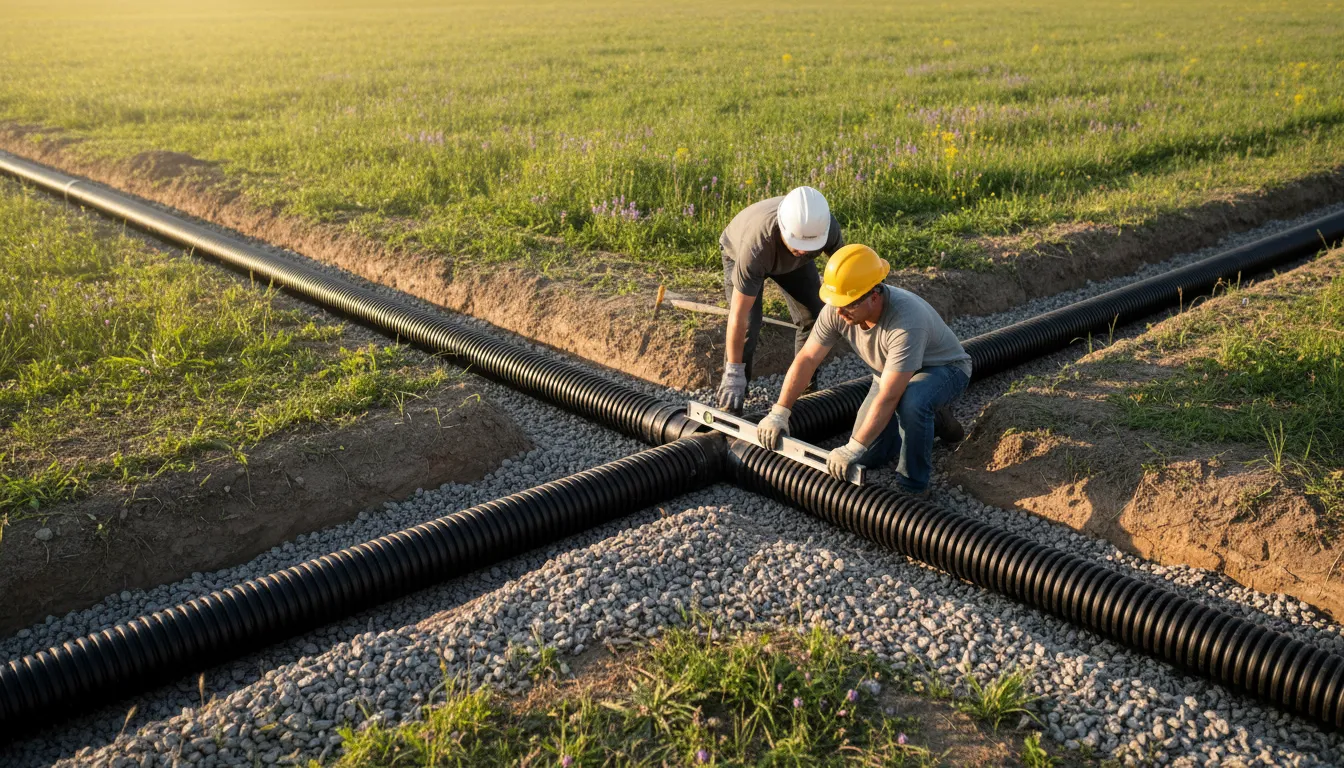
- Trenching & Gravel Bed: Trenches are dug to the precise depth and slope specified in the approved plan. They are lined with a specific grade of clean gravel or stone.
- Pipe Installation: Perforated distribution pipes are laid in the trenches and connected to a distribution box from the septic tank.
- Covering: A layer of geotextile fabric is often placed over the gravel to prevent soil intrusion, followed by backfilling with native soil.
- Restoration: The site is graded and seeded to blend with your landscape.
In some cases of minor failure, a less invasive repair like cleaning clogged pipes or adding additional trenches might be possible. However, if the soil itself is saturated or the biomat is irreversibly clogged, a full replacement in a new location is usually required 6.
Understanding the Costs Involved
Drain field work is a significant investment. Costs in Mount Vernon are influenced by the size of the system needed, soil conditions, local labor rates, and the complexity of obtaining permits. Based on regional data:
- A small-scale replacement or repair may start around $5,000.
- The average cost for a full septic tank and drain field replacement typically falls between $5,000 and $12,000 7.
- These figures generally include design, permitting, excavation, materials, installation, and site restoration. Always get detailed, written estimates from multiple licensed contractors.
Remember, routine maintenance is far less expensive than emergency replacement. The New York State Department of Health recommends having your system inspected every 3-5 years and pumped as needed 8. The WCDOH notes that some local planning efforts may even offer incentives for routine maintenance inspections 9.
Choosing a Licensed Professional in Mount Vernon
Your choice of contractor is critical. Always verify that any professional you consider:
- Holds a valid license for septic system installation and repair in New York State and Westchester County.
- Has extensive experience with the local health department's permitting process.
- Can provide references from recent jobs in the area.
- Offers detailed, written contracts that outline scope of work, timeline, and total cost.
- Carries adequate insurance, including liability and workers' compensation.
A qualified professional will handle the complex paperwork with the WCDOH and ensure your new leaching bed is built to last and in full compliance with all regulations, giving you peace of mind for years to come.
Frequently asked questions
Sources
Footnotes
-
Septic Systems - New York State Department of Health - https://www.health.ny.gov/environmental/water/drinking/septic_systems.htm ↩
-
Real Estate & Septic System Inspection, What You Don't Know Will Hurt $ - https://groundstone.ca/2018/09/real-estate-and-septic-system-inspection/ ↩
-
Septic Design Elora: Permits, Costs, Rules, and Expert Tips - https://www.elmid.ca/septic-design-elora-guide/ ↩
-
NY State Septic Repair and Replacement Program Outline | - https://truesdalelake.com/2021/04/ny-state-septic-repair-and-replacement-program-outline/ ↩
-
How To Install A Septic System Correctly - https://smartsepticpros.com/blog/how-to-install-a-septic-system/ ↩
-
Rules and Regulations for Design construct residential ... - https://health.westchestercountyny.gov/images/stories/realty/Forms/rulesregsdesignconstructresidentialowtswells22.pdf ↩
-
Cost to Replace Septic Tank and Drain Field [2026 Data] | Angi - https://www.angi.com/articles/how-much-new-drain-fields-foot.htm ↩
-
Septic System Operation and Maintenance - https://www.health.ny.gov/publications/3208/ ↩
-
Septic Systems - Westchester County Planning - https://planning.westchestercountyny.gov/septic-systems ↩