Find the Best Drain Field Repair Companies for Your Business
No obligation • Fast responses • Nationwide coverage

Why you can trust Septic Spot
Septic Spot is a leading United States resource for understanding and comparing septic services. Our editors review providers using consistent criteria and verify key business details. Listings and scores are independent, and companies cannot pay to influence our content.
Search providers near you
Top Drain Field Repair Companies in Arlington, Texas Ranked
A failing drain field, also known as a leach field or absorption field, is a serious issue for any Arlington homeowner with a septic system. This critical component is responsible for safely filtering and dispersing treated wastewater into the soil. When it fails, it can lead to sewage backups, environmental contamination, and costly property damage. Understanding the local regulations, repair processes, and costs is essential for maintaining a safe and functional on-site sewage facility (OSSF). This guide provides the key information you need to navigate drain field issues, connect with qualified local professionals, and ensure your system meets all Texas Commission on Environmental Quality (TCEQ) and City of Arlington requirements.
Understanding Your Arlington Drain Field
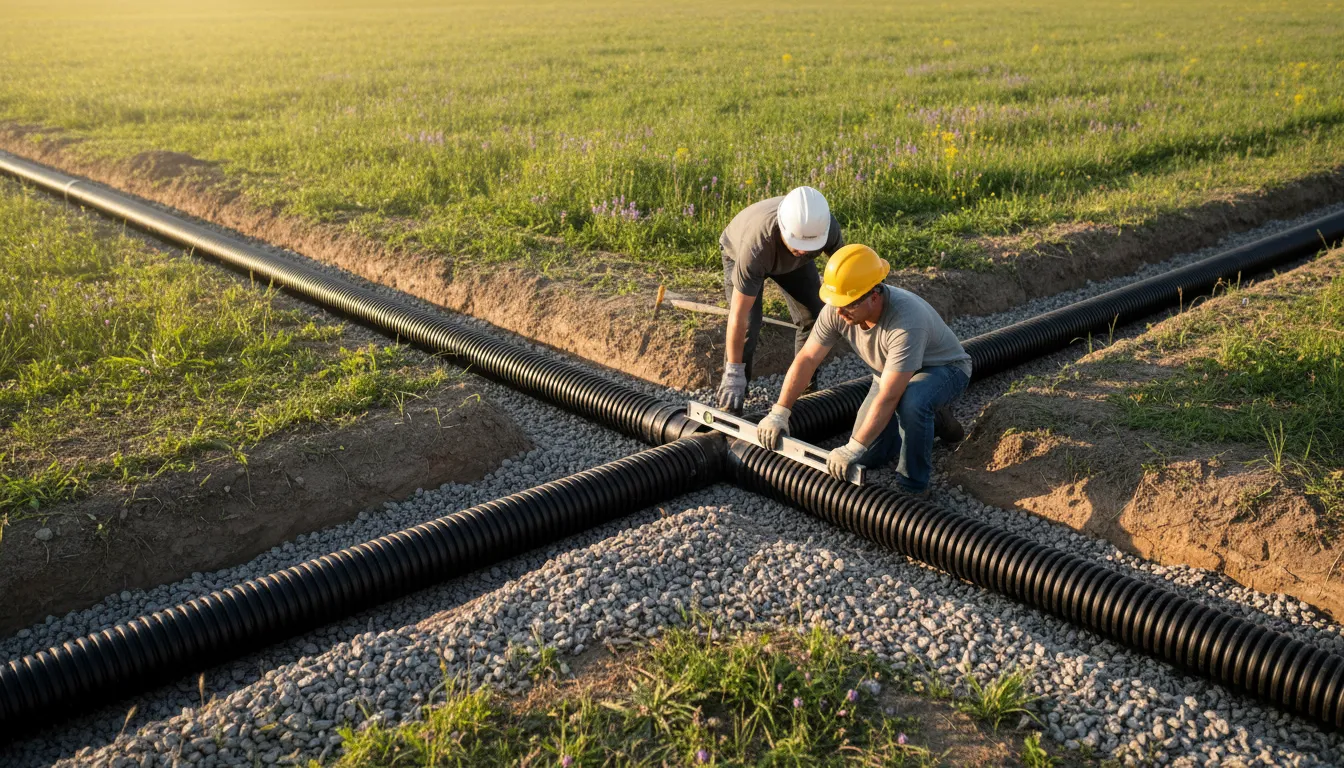
The drain field is the final stage of your septic system. After solids settle in the tank, liquid effluent flows into a network of perforated pipes buried in trenches filled with gravel. This effluent slowly seeps into the soil, where natural processes provide final treatment. A properly functioning leach field is vital for protecting groundwater and public health.
In Arlington, all septic systems, including their drain fields, are regulated by the Texas Commission on Environmental Quality (TCEQ) and permitted through the City of Arlington's Health Services department. These regulations dictate everything from design and installation to repair and replacement, ensuring systems are built to handle North Texas soils and prevent contamination.
Signs of a Failing Leach Field
Recognizing early warning signs can help you address problems before they become catastrophic and more expensive to fix. Common indicators of a failing absorption field include:
- Soggy Ground or Surfacing Effluent: Persistent wet, mushy, or bright green grassy areas over the drain field, especially when it hasn't rained.
- Slow Drains and Sewage Backups: Toilets, showers, and sinks that drain very slowly or back up into the home.
- Foul Odors: Strong sewage smells in your yard or near the drain field area.
- High Nitrate Levels in Well Water: If you have a private well, testing may reveal contamination from a failing system.
If you notice any of these signs, it's crucial to contact a licensed septic professional for an evaluation immediately.
The Arlington Permit and Regulatory Process
Any repair, replacement, or modification to your septic system in Arlington requires a permit. You cannot legally begin work without approval from the City of Arlington's Health Services. The process is in place to ensure the work protects public health and meets state standards.
- Site and Soil Evaluation: The first mandatory step is a professional site evaluation. A licensed installer or site evaluator will perform soil borings or dig test pits to determine soil permeability, depth to groundwater, and overall suitability for a drain field. This evaluation dictates the approved system type and design 1.
- Permit Application: Your licensed installer will submit an "Application for On-Site Sewage Facility Permit" along with the site evaluation report and detailed design plans to the city for approval 2 3.
- Key Regulations to Know:
- Setbacks: Drain fields must be at least 50 feet from your home's foundation and 100 feet from any water well 4.
- System Upgrades: If an older, failing system cannot be repaired, it will likely need to be redesigned and replaced with a system that meets current TCEQ standards. This may mean upgrading from a conventional system to an aerobic treatment unit (ATU) if soil conditions require it.
Find the perfect drain field repair companies for your needs
Get personalized recommendations and expert advice
Repair vs. Full Replacement: Costs and Considerations
The course of action depends on the extent of the failure, soil conditions, and local regulations.
Drain Field Repair: If the problem is localized-such as a clogged pipe or a small saturated area-a repair might be possible. This could involve techniques like jetting the lines or replacing a section of the field. The average cost for drain field repair in the region is around $7,000.
Full Drain Field Replacement: A complete failure often requires a full leach field replacement. This involves designing and installing a entirely new absorption area. Costs vary dramatically based on soil, system type, and property layout:
- Conventional System Installation: $6,000 to $12,000+
- Aerobic System Installation: $12,000 to over $20,000+ 7
Additional Cost Factors:
- Soil Test: $350 to $750.
- Permit Fees: Vary by the City of Arlington.
- Aerobic System Maintenance: If you require an aerobic system, state law mandates a maintenance contract with a licensed provider, typically costing $400 to $800 per year 8.
The Installation and Inspection Process
Once a permit is secured, the licensed installer will proceed with construction. For a new drain field, this involves:
- Excavation: Digging trenches to the specified depth (typically 18 inches to 3 feet deep) and spacing (12 to 24 inches apart) 9.
- Installation: Laying gravel, perforated distribution pipes, and covering with more gravel and soil.
- Final Inspection: Before the trenches are backfilled, the installer must request a final inspection from the city. An inspector will verify the installation matches the approved plans, checking pipe placement, materials, and grading. This inspection should occur within 5 working days of the request 10 11.
Maintaining Your System to Prevent Failure
The best way to avoid a costly drain field replacement is through proactive maintenance.
- Regular Pumping: Have your septic tank pumped by a professional every 3 to 5 years. This prevents solids from flowing into and clogging the drain field 12.
- Water Conservation: Spread out laundry loads and fix leaky fixtures to avoid hydraulically overloading the system.
- Mind What You Flush: Never flush chemicals, grease, diapers, wipes (even "flushable" ones), or other non-biodegradable items.
- Protect the Area: Never drive or park vehicles over the drain field, and avoid planting trees with deep roots nearby.
Frequently asked questions
Sources
Footnotes
-
Texas Septic Tank Rules - https://dillonseptic.com/texas-septic-tank-rules/ ↩
-
On-Site Sewage Systems | City of Arlington, TX - https://www.arlingtontx.gov/Business/Health-Services/Health-Services/On-Site-Sewage-Systems ↩
-
The following information is required to process your Tarrant County ... - https://www.tarrantcountytx.gov/content/dam/main/public-health/PH-EH/docs/OSSF_Procedure_Sheet.pdf ↩
-
Basics for Septic Systems - https://www.tceq.texas.gov/assistance/water/fyiossfs.html ↩
-
Texas Septic System Regulations - https://dillonseptic.com/texas-septic-system-regulations/ ↩
-
Maintenance of On-Site Sewage Facilities (Septic Systems) - https://www.tceq.texas.gov/permitting/ossf/ossfmaintenance.html ↩
-
Cost to Replace Septic Tank and Drain Field [2026 Data] | Angi - https://www.angi.com/articles/how-much-new-drain-fields-foot.htm ↩
-
Texas Septic Systems & OSSF Requirements | 2026 Guide - https://texaslandbrokerage.com/resources/texas-septic-systems-ossf-requirements-guide/ ↩
-
Are There Regulations or Guidelines for Septic Tank Drain ... - https://weebeewasteservices.com/are-there-regulations-or-guidelines-for-septic-tank-drain-field-maintenance-in-texas/ ↩
-
PLANNING, CONSTRUCTION, AND - Tarrant County - https://www.tarrantcountytx.gov/content/dam/main/transportation/ossf/OSSF_Rules_and_Regulations.pdf ↩
-
Advice for an Owner of an On-Site Sewage Facility (Septic System) - https://www.tceq.texas.gov/permitting/ossf/ossfadvice.html ↩
-
How to Determine You Have a Septic Drain Field Problem In Arlington - https://septicnow.com/how-to-determine-you-have-a-septic-drain-field-problem-in-arlington/ ↩