
Find the Best Drain Field Repair Companies for Your Business
No obligation • Fast responses • Nationwide coverage

Why you can trust Septic Spot
Septic Spot is a leading United States resource for understanding and comparing septic services. Our editors review providers using consistent criteria and verify key business details. Listings and scores are independent, and companies cannot pay to influence our content.
Search providers near you
Top Drain Field Repair Companies in San Antonio, Texas Ranked
A failing drain field is a serious issue for any property with a septic system. This critical component, also known as a leach field or absorption field, is responsible for safely dispersing and filtering treated wastewater into the soil. When it malfunctions, it can lead to soggy yards, foul odors, and environmental contamination. Understanding the local regulations, processes, and costs for drain field work in San Antonio is essential for a successful project. This guide provides the information you need to navigate the repair or replacement of your septic system's drain field, connect with qualified professionals, and ensure your system meets all Bexar County and Texas requirements.
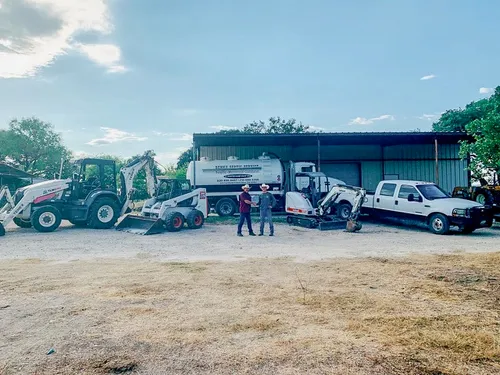
Benke Septic Systems, Inc
San Antonio, TX
Benke Septic Systems, Inc is a family-owned septic service provider based in San Antonio, TX, with over 75 years of experience. They offer a full range of septic system services including installation, inspection, pumping, maintenance, and repair. Their expertise covers various septic system types and components such as tanks, drain fields, pumps, and filters, ensuring comprehensive wastewater management solutions for residential properties. The company emphasizes honesty and integrity in its work and backs installations with manufacturer warranties.
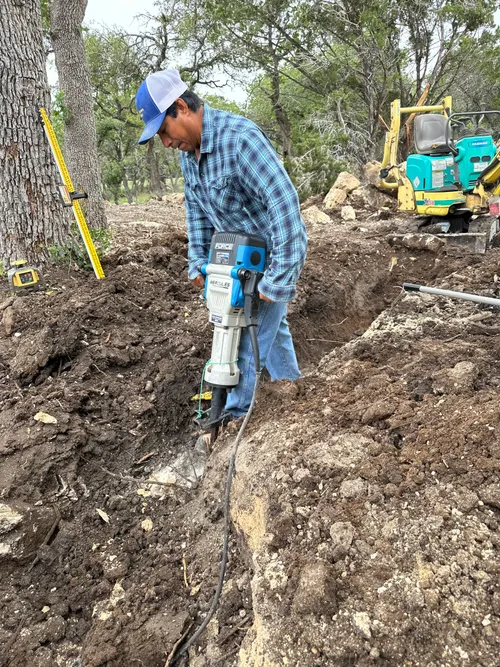
David Winters Septics
Cranes Mill Rd, Canyon Lake, TX 78133
David Winters Septics is a family-owned company providing septic system installation and repair services in San Antonio, TX. They serve both residential and commercial properties, offering services such as septic tank installation, septic repairs, field replacements, and septic design and permitting. The company emphasizes its experience and customer satisfaction in the septic industry.
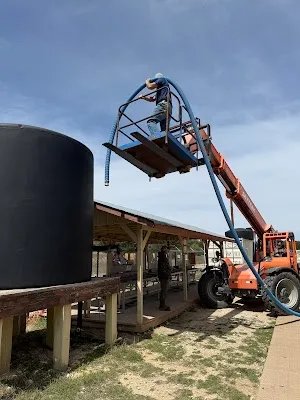
HomeField Hill Country
136 Cactus Pear, Boerne, TX 78006
HomeField Hill Country provides comprehensive septic services in San Antonio, TX, and the surrounding Hill Country area. They handle everything from septic tank pumping, inspections, and repairs to new system installations and drain field replacements. Their team offers expert system design and real estate septic inspections to meet both residential and commercial needs. HomeField is known for proactive maintenance plans that help prevent future problems and ensure compliance with local regulations. They emphasize clear communication and thorough service, with a focus on keeping septic systems running smoothly over time.

Eco Septic Tank Pumping San Antonio
San Antonio, TX
Eco Septic Tank Pumping San Antonio provides septic tank pumping, inspection, repair, and installation services in San Antonio, TX. They offer routine septic system cleaning, emergency septic sewer cleaning, biological treatments, and comprehensive maintenance including drain field repair and pump replacement. Their technicians follow a detailed process to ensure safe and thorough septic tank pumping, with proper waste disposal in compliance with environmental regulations. The company serves San Antonio and nearby areas including Leon Valley, Alamo Heights, Windcrest, Losoya, and Hollywood Park.
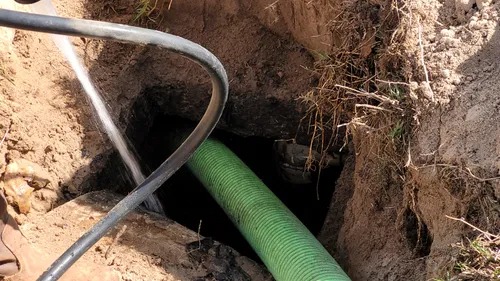
Big Bexar Septic
14395 Kilowatt Rd, San Antonio, TX 78223
Big Bexar Septic is a septic service provider based in San Antonio, TX, offering residential and commercial septic tank pumping, cleaning, inspection, repair, and installation. They specialize in drain field repair and work with various septic system types including conventional, aerobic, and low pressure dosing systems. Their services include maintenance agreements to help prevent system failures and extend the life of septic systems designed for South Texas conditions.
Understanding Your Septic System's Drain Field
The drain field is the final stage of a conventional septic system. After solids settle in the tank, the liquid effluent flows into a network of perforated pipes buried in trenches filled with gravel. This effluent slowly seeps into the soil, where natural processes provide the final treatment. Over time, a biomat-a layer of organic material-can form around the trenches, eventually slowing drainage to the point of failure. Common signs include standing water or lush green grass over the field, slow-draining household fixtures, and sewage odors.
In San Antonio and the surrounding Hill Country, soil conditions heavily influence system design and longevity. Many areas have heavy clay soils or shallow bedrock, which have very slow absorption rates. These conditions can accelerate drain field failure and often require specialized system types beyond a conventional gravity-fed field.
Local Regulations and Permit Requirements
All work on an On-Site Sewage Facility (OSSF)-which includes your septic tank and drain field-is regulated by the Texas Commission on Environmental Quality (TCEQ) and administered locally by Bexar County Public Works.
When is a Permit Required? A permit is mandatory for the construction, alteration, extension, or repair of an OSSF 1. This broadly means that any significant drain field repair or full replacement will require a county permit. The key exception is for minor repairs that do not involve replacing the septic tank or altering the drain field itself; however, even these minor repairs must be reported to the Bexar County Authorized Agent within 72 hours of completion.
The 10-Acre Rule Exemption There is a potential exemption from permitting if your property meets strict criteria: it must be 10 acres or larger, serve a single-family residence, have all system components at least 100 feet from any property line, and not create a nuisance or pollution 2 3. Most homeowners in the San Antonio area will not qualify for this exemption.
The Step-by-Step Process for Drain Field Work
Replacing or repairing a drain field is a multi-stage process involving several licensed professionals.
-
Initial Site Evaluation: A licensed site evaluator must visit your property to conduct a thorough soil analysis. This involves digging test pits to determine soil type, depth to bedrock, and seasonal water table levels, and performing percolation tests to measure the soil's absorption rate 4. This evaluation dictates what type of system can be installed.
-
System Design: Based on the site evaluation, a system must be designed by a Texas Registered Sanitarian or a Professional Engineer (PE) 5. For properties with challenging soil or slope, this design may call for an aerobic treatment system (ATS), a drip irrigation field, or a constructed mound system instead of a traditional gravity drain field.
-
Permit Application: The licensed designer or installer submits the design, the site evaluation report, and the permit application to Bexar County Public Works for review and approval.
-
Installation & Inspections: A licensed installer must perform the construction. Critical stages, such as the excavation and placement of the drain field lines, will be inspected by a county official before the trenches are backfilled. The entire installation must match the permitted design exactly.
-
Final Approval: After a successful final inspection, the county grants an Authorization to Operate for your new or repaired system 6.
System Types for San Antonio's Terrain
Given the local geology, a standard gravity drain field is not always feasible. Common alternatives include:
- Aerobic Treatment Systems (ATS): These systems use oxygen to break down waste more efficiently, producing a higher-quality effluent that can be used for subsurface drip irrigation or spray distribution. They are often required on smaller lots or in poor soils 7.
- Drip Irrigation Systems: These systems use small-diameter tubing to distribute pre-treated effluent over a larger, shallower area, which is beneficial in areas with shallow soil or rock.
- Mound Systems: An elevated drain field constructed with sand and gravel is used when soil depth is insufficient. They are a common sight in the Hill Country.
Your site evaluator and designer will determine the most appropriate and cost-effective type for your specific property.
Find the perfect drain field repair companies for your needs
Get personalized recommendations and expert advice
Cost Considerations for Repair and Replacement
Costs can vary widely based on system type, soil conditions, property size, and the extent of the failure. It's important to budget for the entire process, not just the physical installation.
- Soil Test / Site Evaluation: $350 - $750
- Permit Fees: Typically $400 - $800
- Drain Field Repair/Replacement: $3,000 - $7,000 (for the field portion only)
- Full Conventional System Installation: $6,000 - $12,000+ 8
- Full Aerobic System Installation: $12,000 - $20,000+ 9 10
These figures are estimates. The most accurate way to understand your cost is to obtain quotes from licensed installers based on a completed site evaluation.
Maintenance is Key to Longevity
Once your new or repaired system is operational, proper maintenance is non-negotiable, especially in Texas.
- Aerobic Systems: State law requires a maintenance contract for aerobic systems. A licensed maintenance provider must inspect the system at least every four months, and reports must be filed with the county 11 12.
- All Systems: The septic tank should be pumped regularly (every 2-3 years, on average) to prevent solids from flowing into and clogging the drain field 13. Inspecting and cleaning the tank's effluent filter (if equipped) at each pumping is also crucial.
Proactive maintenance is far less expensive than emergency drain field replacement and protects your property value and the local environment.
Choosing a Licensed Professional
Given the regulatory complexity, always verify licenses. You need a licensed site evaluator for the initial test, a Registered Sanitarian or PE for design, and a licensed installer for construction. Bexar County maintains lists of these professionals. Ensure any provider you contact is familiar with the specific requirements of San Antonio and Bexar County, including the nuances of the Hill Country's challenging soils.
Frequently asked questions
Sources
Footnotes
-
Getting a Permit for an OSSF - Such as a Septic System - https://www.tceq.texas.gov/permitting/ossf/ossfpermits.html ↩
-
Advice for an Owner of an On-Site Sewage Facility (Septic ... - https://www.tceq.texas.gov/permitting/ossf/ossfadvice.html ↩
-
Septic System FAQs - https://newtools.cira.state.tx.us/upload/page/7913/docs/Health/Water%20Quality/Water%20Quality%20FAQs%20%282%29.pdf ↩
-
Texas Septic System Regulations - https://dillonseptic.com/texas-septic-system-regulations/ ↩
-
On-Site Sewage Facilities | Bexar County, TX - Official Website - https://www.bexar.org/3218/On-Site-Sewage-Facilities ↩
-
Basics for Septic Systems - https://www.tceq.texas.gov/assistance/water/fyiossfs.html ↩
-
What You Should Know About Septic Systems When Building a ... - https://riverhillsbuilder.com/septic-systems-hill-country/ ↩
-
Texas Septic Systems & OSSF Requirements | 2026 Guide - https://texaslandbrokerage.com/resources/texas-septic-systems-ossf-requirements-guide/ ↩
-
How Much Does a Septic System Cost? - https://septic-service-texas.com/how-much-does-a-septic-system-cost/ ↩
-
Aerobic Septic System Cost in Texas (Updated 2026) - https://dillonseptic.com/aerobic-septic-system-cost-in-texas/ ↩
-
Texas Septic Tank Rules - https://dillonseptic.com/texas-septic-tank-rules/ ↩
-
Maintenance of On-Site Sewage Facilities (Septic Systems) - https://www.tceq.texas.gov/permitting/ossf/ossfmaintenance.html ↩
-
Septic System - Texas Water Resources Institute - https://twri.tamu.edu/wp-content/uploads/2024/04/em-126-septic-system-maintenance-inspection-pocket-guide.pdf ↩