Find the Best Drain Field Repair Companies for Your Business
No obligation • Fast responses • Nationwide coverage

Why you can trust Septic Spot
Septic Spot is a leading United States resource for understanding and comparing septic services. Our editors review providers using consistent criteria and verify key business details. Listings and scores are independent, and companies cannot pay to influence our content.
Search providers near you
Top Drain Field Repair Companies in Fort Worth, Texas Ranked
A failing drain field is a serious issue for any home with a septic system, leading to soggy yards, foul odors, and potential health hazards. Drain field repair or replacement is a significant project that involves navigating local regulations, soil science, and professional installation. This guide explains the process, costs, and key considerations for homeowners in Fort Worth, helping you understand what's involved in restoring your on-site sewage facility (OSSF) to proper working order.
HomeField Parker County
617 Pine St, Aledo, TX 76008
HomeField Parker County is a septic service provider based in Fort Worth, TX, offering comprehensive septic system solutions for both residential and commercial clients. Their services include septic tank pumping, inspections, repairs, installations, drain field replacement, and system design. They also provide real estate septic inspections and maintenance plans to help customers stay compliant with local regulations. HomeField Parker County serves Parker, Johnson, and Hood counties, bringing local expertise to every job. Their team is equipped to handle emergency septic repairs and routine maintenance, ensuring systems operate efficiently and meet current standards.

H&S Septic Services
Fort Worth, TX
H&S Septic Services is a family-owned business offering comprehensive septic system solutions in Fort Worth, TX, and nearby Parker and Hood counties. With over 50 years of combined experience, they provide services including septic tank pumping, inspection, repair, installation, drain field repair, grease trap maintenance, and specialized car wash tank pumping. Their licensed and insured team manages everything from site evaluation to emergency repairs, backed by a one-year labor warranty on installations and repairs. They also provide water drainage solutions to protect septic systems from damage caused by excess moisture. Emergency services are available to address urgent septic issues promptly.
Understanding Your Septic System's Drain Field
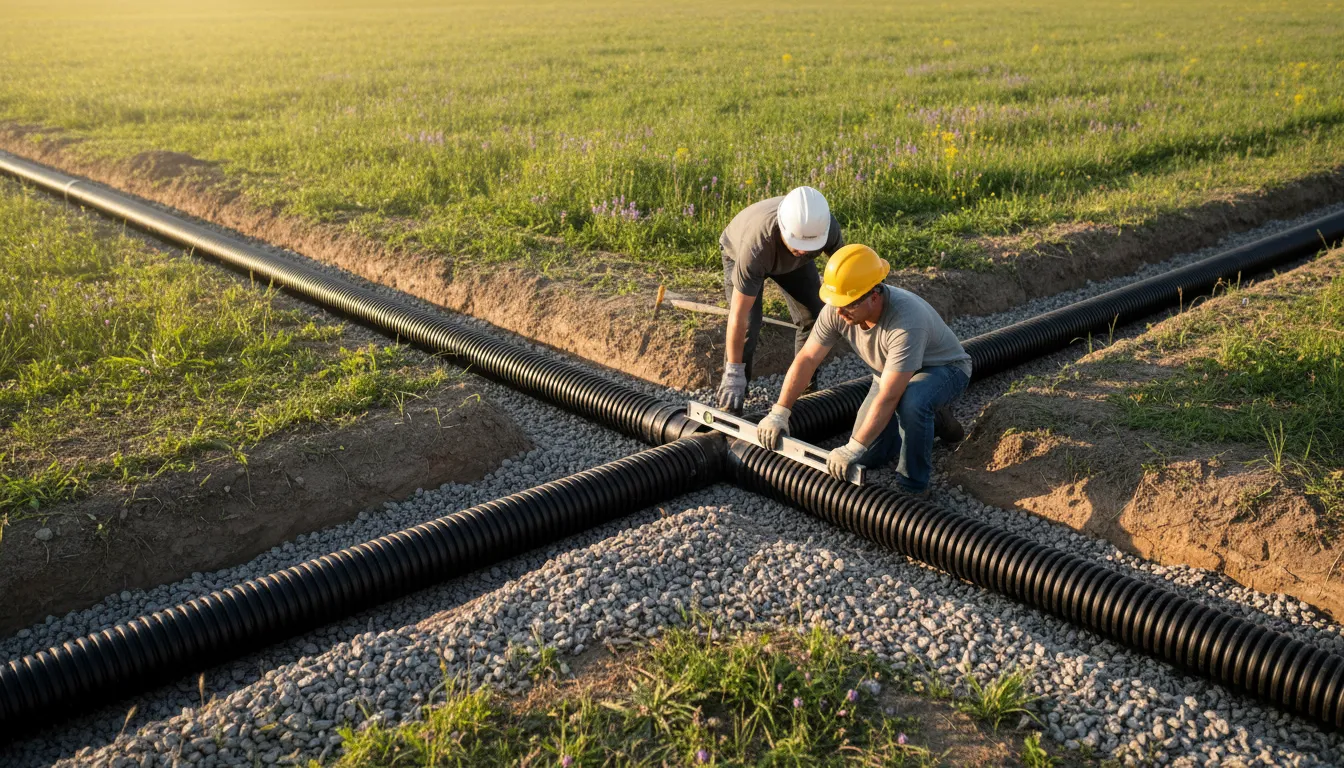
The drain field, also known as a leach field or absorption field, is the final and most critical stage of a septic system. After solids settle in the tank, liquid effluent flows into a network of perforated pipes buried in trenches. This effluent slowly percolates through the soil, where natural processes filter and treat it before it rejoins the groundwater. When this area fails, it means the soil can no longer absorb liquid, causing backups and surfacing wastewater.
In Fort Worth, these systems are regulated as On-Site Sewage Facilities (OSSFs) and must comply with state and local codes. Failure often stems from soil compaction, hydraulic overloading, biomat clogging, or root intrusion. Addressing these issues promptly is crucial for environmental protection and public health.
Fort Worth Regulations and Permit Requirements
Any repair, alteration, or replacement of a drain field in Fort Worth requires a permit from the city's Environmental Services Department 1. The process ensures the work meets current standards under Texas Administrative Code, Chapter 285 1. Notably, if a repair is so urgent that the tank is fixed without removal to abate an immediate health risk, it may be classified as an emergency repair. However, the homeowner must report this work to the city within 72 hours.
There is a specific exemption: if your property is 10 acres or larger, the system is not creating a nuisance, and it meets strict setback requirements from property lines and water sources, it might be exempt from permitting. Even in this case, the system must still be designed to meet state standards 2. For the vast majority of homeowners, engaging with the permit process is a mandatory first step.
The Critical Role of Soil Evaluation
Before any new leach field design can be approved, a licensed site evaluator or professional engineer must conduct a formal soil analysis. This involves digging at least two test pits or borings to determine soil texture, structure, percolation rate, and seasonal high groundwater level. The results dictate everything about your system replacement:
- Soil Type: Clay-heavy soils common in parts of North Texas have very slow permeability, often requiring an aerobic treatment system (ATS) with spray distribution instead of a conventional gravel trench system 3.
- System Design: The size, layout, and depth of the absorption field are calculated based on soil data and household wastewater flow estimates.
- Setbacks: State and local rules mandate minimum distances the drain field must be from your home, property lines, wells, and creeks. These setbacks are strictly enforced during the permit review 4.
The Step-by-Step Replacement Process
Replacing a failed absorption field is a multi-stage project that involves several professionals.
- Site Assessment & Soil Test: A licensed site evaluator visits your property to perform the required soil analysis and evaluate the site's topography 5.
- System Design & Permit Submission: Using the soil report, a system designer (often the installer or an engineer) creates a plan that complies with TCEQ rules. This design, along with the permit application, is submitted to the City of Fort Worth Environmental Services Department for review and approval 6.
- Construction & Installation: Once permitted, a TCEQ-licensed installer excavates the old field (if necessary) and constructs the new one. This includes installing distribution pipes, gravel, and geotextile fabric according to the approved plans.
- Construction Inspection: A critical step-the city inspector must visit the site to examine the installation before the trenches are backfilled and covered 7.
- Final Approval: After covering, a final inspection may be required to ensure the site is properly restored and the system is operational. The city then issues a final approval for the work.
Find the perfect drain field repair companies for your needs
Get personalized recommendations and expert advice
Cost Factors for Drain Field Work in Fort Worth
The cost to repair or replace a septic drain field in Fort Worth varies widely based on system type, soil conditions, and property accessibility. Key cost components include:
- Site/Soil Evaluation: The mandatory soil analysis typically costs between $350 and $750.
- Conventional System Repair/Replacement: For a standard gravel trench system, homeowners can expect costs ranging from $6,000 to $12,000 or more.
- Aerobic System Replacement: If poor soil conditions require an aerobic treatment unit with spray irrigation, the price increases significantly, often between $12,000 and $20,000+8.
- Ongoing Maintenance: Aerobic systems have electrical components and spray heads that require regular servicing. Annual maintenance contracts for these systems typically run between $200 and $800 9.
These figures are estimates; obtaining multiple quotes from licensed installers is essential.
Homeowner Responsibilities and System Care
As a septic system owner in Texas, you are legally responsible for its proper operation and maintenance. This extends beyond the drain field to the entire OSSF. Key responsibilities include:
- Regular Pumping: Having the septic tank pumped by a licensed professional every 3 to 5 years (or as needed) to prevent solids from flowing into and clogging the drain field 10.
- Water Conservation: Spreading out water use and fixing leaks to avoid hydraulically overloading the soil absorption area.
- Proper Waste Disposal: Never flushing chemicals, grease, diapers, wipes, or other non-biodegradable items that can poison the system's biology or cause physical clogs 11.
- Protecting the Area: Never driving or parking over the drain field, and planting only grass over it to prevent root damage.
Proactive maintenance is the most effective and economical way to extend the life of your new leach field.
Choosing Between Repair and Full Replacement
Sometimes, a drain field issue can be resolved with a less invasive repair. Techniques like shock treatment with specialized bacteria, mechanical cleaning of pipes (jetting), or adding a new expansion area to the existing field can be solutions. A qualified professional can diagnose whether the failure is partial or complete. However, Fort Worth regulations often require that any repair bringing the system out of compliance must upgrade it to current standards, which frequently leads to a full redesign and replacement 12.
Frequently asked questions
Sources
Footnotes
-
30 TAC Chapter 285.pdf - https://newtools.cira.state.tx.us/upload/page/0983/docs/LandDevAndEmerg/30%20TAC%20Chapter%20285.pdf ↩ ↩2
-
Advice for an Owner of an On-Site Sewage Facility (Septic System) - https://www.tceq.texas.gov/permitting/ossf/ossfadvice.html ↩
-
Choosing a Septic System (On-Site Sewage Facility System) - https://www.tceq.texas.gov/permitting/ossf/ossfsystems.html ↩
-
PLANNING, CONSTRUCTION, AND - Tarrant County - https://www.tarrantcountytx.gov/content/dam/main/transportation/ossf/OSSF_Rules_and_Regulations.pdf ↩
-
SEPTIC SYSTEM LAWS IN TEXAS - https://www.terseptic.com/posts/septic-systems-its-the-law ↩
-
Getting a Permit for an OSSF - Such as a Septic System - https://www.tceq.texas.gov/permitting/ossf/ossfpermits.html ↩
-
What to Expect During a Septic System Replacement - Townes Septic Service - https://www.townesseptic.com/blog/what-to-expect-during-a-septic-system-replacement ↩
-
Texas Septic Systems & OSSF Requirements | 2026 Guide - https://texaslandbrokerage.com/resources/texas-septic-systems-ossf-requirements-guide/ ↩
-
Texas Septic System Regulations - https://dillonseptic.com/texas-septic-system-regulations/ ↩
-
Basics for Septic Systems - https://www.tceq.texas.gov/assistance/water/fyiossfs.html ↩
-
Septic Tank Laws in Texas - https://dillonseptic.com/septic-tank-laws-in-texas/ ↩
-
On-Site Sewage Facility (OSSF) - the City of Fort Worth - https://www.fortworthtexas.gov/departments/environmental-services/consumer-health/ossf ↩