Find the Best Drain Field Repair Companies for Your Business
No obligation • Fast responses • Nationwide coverage

Why you can trust Septic Spot
Septic Spot is a leading United States resource for understanding and comparing septic services. Our editors review providers using consistent criteria and verify key business details. Listings and scores are independent, and companies cannot pay to influence our content.
Search providers near you
Top Drain Field Repair Companies in Austin, Texas Ranked
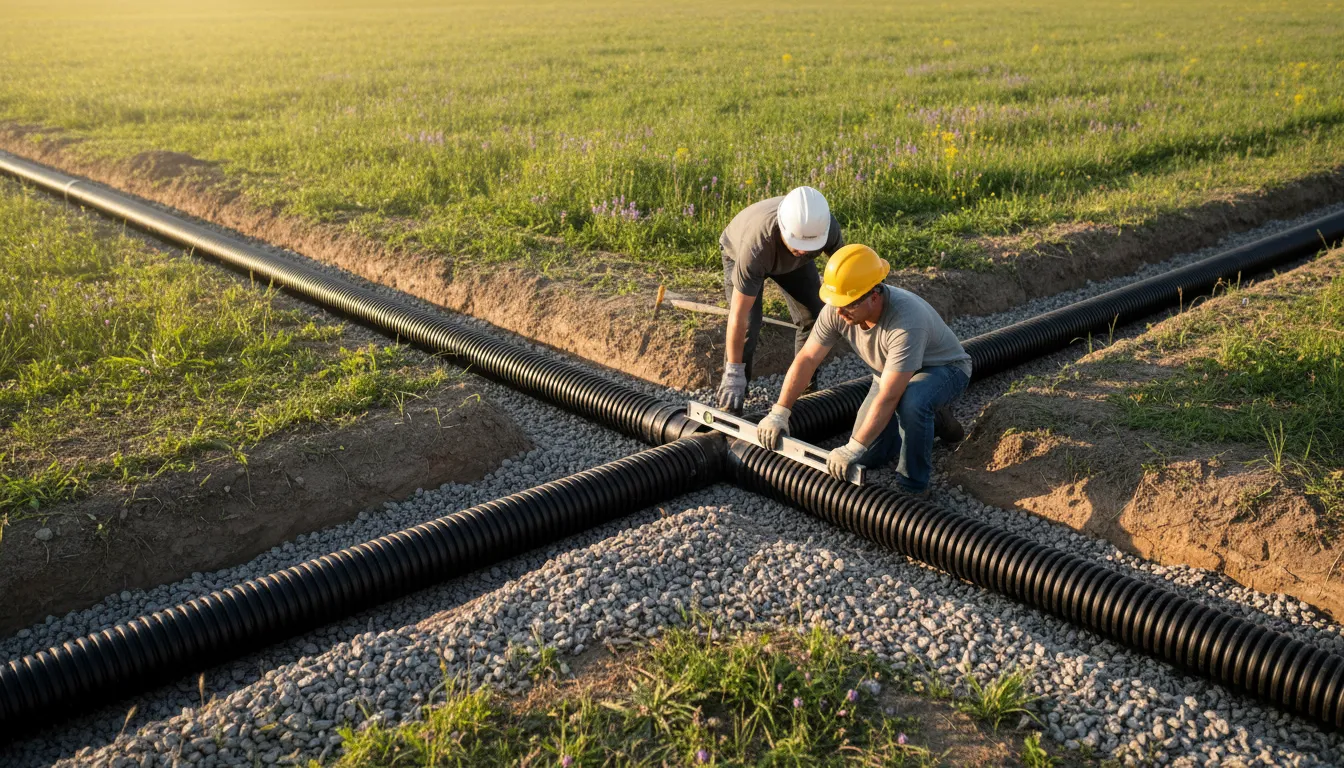
A failing septic drain field is a serious issue that can lead to sewage backups, soggy yards, and environmental contamination. In Austin, repairing or replacing this critical component of your onsite sewage facility (OSSF) is a regulated process that requires specific permits and professional expertise. This guide explains the local requirements, common repair methods, and costs, helping you understand the steps to take when your leach field shows signs of failure.
HomeField Williamson County
40203 Industrial Park Cir, Georgetown, TX 78626
HomeField Williamson County provides comprehensive septic system services in Austin, TX, covering residential and commercial needs. Their offerings include septic tank pumping, inspections, repairs, installations, drain field replacements, and system design. The company emphasizes local expertise and proactive maintenance plans to help prevent future problems. They serve Williamson County with a team familiar with local regulations and conditions, ensuring septic systems meet current requirements. HomeField also offers various maintenance plans tailored to different levels of coverage and support.

Hines Septic Of San Marcos
Austin, TX
Hines Septic Of San Marcos is a family-owned septic service provider operating in Austin, TX, as well as San Marcos and San Antonio. They offer septic tank pumping, inspection, installation, repair, and drain field repair or replacement. The company is fully licensed and insured, ensuring all work meets code requirements. They provide a one-year labor warranty on new septic tank and drain field installations. Hines Septic also offers 24/7 emergency septic services to support urgent needs in the area.
Godinez Septics Inc
5407 Phillips Cir, Austin, TX 78734
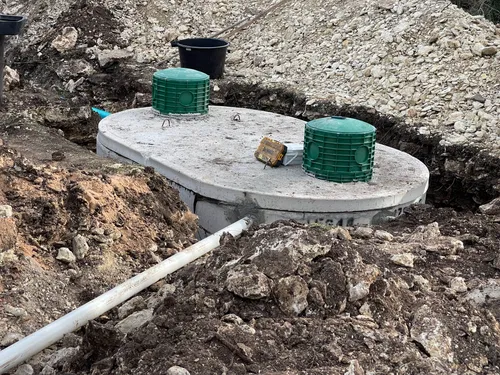
Godinez Septics Inc is a family-owned septic system company serving Austin, TX, and the surrounding Lake Travis area. They provide a range of services including septic tank pumping, inspection, repair, installation, and drain field replacement. The company is licensed by TCEQ for septic system maintenance and installation, offering specialized services such as aerobic system maintenance contracts and hydro-jetting to clear sewer lines. With over 40 years of experience in the septic and excavation business, Godinez Septics is led by Orlando Godinez, a longtime local resident and licensed installer.
Hines Septic Of Austin Tx
Austin, TX
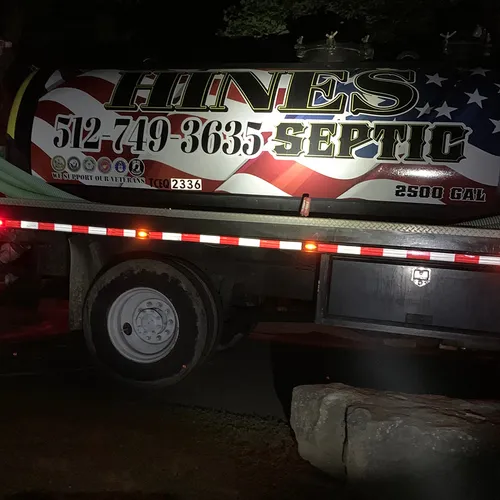
Hines Septic Of Austin Tx is a family-owned septic service provider based in Austin, TX. They offer septic tank pumping, installation, inspection, and repair services, including drain field repair and replacement. The company is fully licensed and insured, ensuring all work is performed to code. They provide 24/7 emergency septic services and back their installations with a one-year labor warranty.

Eco Septic Tank Pumping Austin
Austin, TX
Eco Septic Tank Pumping Austin provides septic tank pumping, inspection, repair, and installation services in Austin, TX. They handle routine septic system cleaning, emergency septic sewer cleaning, and biological treatments to maintain system health. The company also offers septic system repairs and drain field replacement, ensuring compliance with local regulations. Their technicians follow a detailed pumping process and dispose of waste properly at licensed facilities. Eco Septic Tank Pumping Austin serves multiple areas around Austin and emphasizes regular maintenance to prevent system failures.
Understanding Your Septic Drain Field
Often called a leach field or absorption field, the drain field is the final stage of wastewater treatment in a conventional septic system. After solids settle in the tank, liquid effluent flows into a network of perforated pipes buried in trenches filled with gravel. This effluent slowly percolates through the soil, where natural processes filter and purify it before it rejoins the groundwater. When this area fails, it means the soil can no longer absorb the liquid, causing the problems mentioned above. In Austin's varied terrain, from rocky hill country to clay-heavy soils, understanding your specific site conditions is the first step toward a solution.
Austin and Travis County Regulations You Must Know
All work on an On-Site Sewage Facility (OSSF) in Austin is governed by state rules (TCEQ 30 TAC Chapter 285) and enforced locally by the City of Austin or Travis County. Knowing these regulations is non-negotiable before starting any project.
- Permit Required: A permit is mandatory to construct, alter, repair, or extend any OSSF, including drain field work 1. The only exception is for emergency repairs, which can begin without a permit but must be reported to the Austin Water permitting authority within 72 hours of starting the work 1.
- Professional Licensing: All installation and major repair work must be performed by a licensed OSSF installer. Homeowners may perform work on their primary residence, but they assume full liability and must still adhere to all codes and permit requirements 2.
- Critical Setbacks: Drain fields must maintain a minimum separation distance from water sources. This includes at least 100 feet from water wells and between 50 to 75 feet from lakes, streams, and other water features 3. If a failing system is on a lot that can no longer meet current setback rules, a "comparable replacement" or a more advanced treatment system may be the only option.
The Repair and Replacement Process: Step-by-Step
Addressing a drain field issue is a multi-stage process involving evaluation, design, permitting, and construction.
1. Professional Site Evaluation and Soil Testing
Before any plans are drawn, a licensed site evaluator must assess your property. This crucial step involves soil testing ($350-$750) to determine the soil's absorption capacity (permeability), which is classified from high to low 4. The evaluator will also locate the existing system, identify the cause of failure (e.g., clogging, compaction, hydraulic overload), and note all necessary setbacks. This report forms the basis of the repair or replacement design.
2. System Design and Permit Application
Using the site evaluation, a licensed installer or engineer will design a solution. In Austin, common approved systems include conventional gravel trenches and drip irrigation fields. In environmentally sensitive areas, enhanced treatment is required. The design, along with the application, is submitted to Austin Water for permit review 5.
3. Inspections During and After Installation
The installation is closely monitored. You or your installer must provide 24-48 hour notice to Austin Water before construction begins for an initial inspection 6. Throughout the installation, expect between two to ten follow-up inspections by local officials to ensure compliance with the approved plan. A final inspection is required to validate the system and grant final approval 6.
Find the perfect drain field repair companies for your needs
Get personalized recommendations and expert advice
Repair vs. Replacement: Methods and Costs
The best course of action depends on the extent of the damage. A professional assessment is essential to determine which path is right for you.
Limited Repairs
If the problem is isolated-such as a crushed pipe, a faulty distribution box, or a failed pump-a targeted repair may be possible. These costs vary widely based on the scope but are generally less than a full replacement 7.
Full Drain Field Replacement
When the entire soil absorption area has failed, a new leach field is necessary. Costs are significant and depend on the system type:
- Conventional System (Gravel Trenches): The most common replacement, typically ranging from $6,000 to $12,000 or more.
- Aerobic Treatment Unit (ATU) with Spray Field: Often required on smaller lots or in environmentally sensitive zones, these advanced systems treat wastewater to a higher standard. Installation costs range from $12,000 to $20,000+8 9. Note that aerobic systems require an ongoing maintenance contract, costing approximately $200-$800 annually 9.
Special Requirements for Sensitive Zones
Austin has strict rules for properties near critical water resources. If your property is within 75 feet of Lake Austin, the Edwards Aquifer Recharge Zone, or the Barton Springs segment, any new or replaced system must include enhanced nitrogen-reducing treatment technology 10 11. This is a key factor in both design and cost.
Maintaining Your New or Repaired System
Protecting your investment is key. Routine maintenance, including septic tank pumping every 3-5 years, is the best way to prevent premature drain field failure by preventing solids from clogging the lines 12. For those with aerobic systems, adhering to the mandatory maintenance contract is a legal requirement. Keep detailed records of all inspections, pumping, and repairs.
Financial Assistance
The cost of replacement can be a burden. It's worth investigating if you qualify for assistance. Some areas in Texas have specialized EPA or local government grants available for homeowners repairing failing systems, particularly those near protected watersheds 13.
Frequently asked questions
Sources
Footnotes
-
SEPTIC SYSTEM LAWS IN TEXAS - https://www.terseptic.com/posts/septic-systems-its-the-law ↩ ↩2
-
Getting a Permit for an OSSF - Such as a Septic System - https://www.tceq.texas.gov/permitting/ossf/ossfpermits.html ↩
-
Are There Regulations or Guidelines for Septic Tank Drain ... - https://weebeewasteservices.com/are-there-regulations-or-guidelines-for-septic-tank-drain-field-maintenance-in-texas/ ↩
-
Septic Tank Laws in Texas - https://dillonseptic.com/septic-tank-laws-in-texas/ ↩
-
On-Site Sewage Facilities | AustinTexas.gov - https://www.austintexas.gov/department/site-sewage-facilities ↩
-
Pearland Septic Systems Guide | New Texas Homeowners - https://accurateplumbingtx.com/pearland-septic-systems-new-homeowner-guide/ ↩ ↩2
-
Texas Septic System Regulations - https://dillonseptic.com/texas-septic-system-regulations/ ↩
-
Texas Septic Systems & OSSF Requirements | 2026 Guide - https://texaslandbrokerage.com/resources/texas-septic-systems-ossf-requirements-guide/ ↩
-
Environmental Inspections - AustinTexas.gov - https://www.austintexas.gov/page/environmental-inspections ↩ ↩2
-
On-Site Sewage Facilities | Austin Water - AustinTexas.gov - https://www.austintexas.gov/water/site-sewage-facilities ↩
-
Basics for Septic Systems - https://www.tceq.texas.gov/assistance/water/fyiossfs.html ↩
-
Septic Tank Laws in Texas - https://dillonseptic.com/septic-tank-laws-in-texas/ ↩
-
Septic systems explained - Texas Water Resources Institute - https://twri.tamu.edu/blog/septic-systems-explained/ ↩