Find the Best Drain Field Repair Companies for Your Business
No obligation • Fast responses • Nationwide coverage

Why you can trust Septic Spot
Septic Spot is a leading United States resource for understanding and comparing septic services. Our editors review providers using consistent criteria and verify key business details. Listings and scores are independent, and companies cannot pay to influence our content.
Search providers near you
Top Drain Field Repair Companies in Houston, Texas Ranked
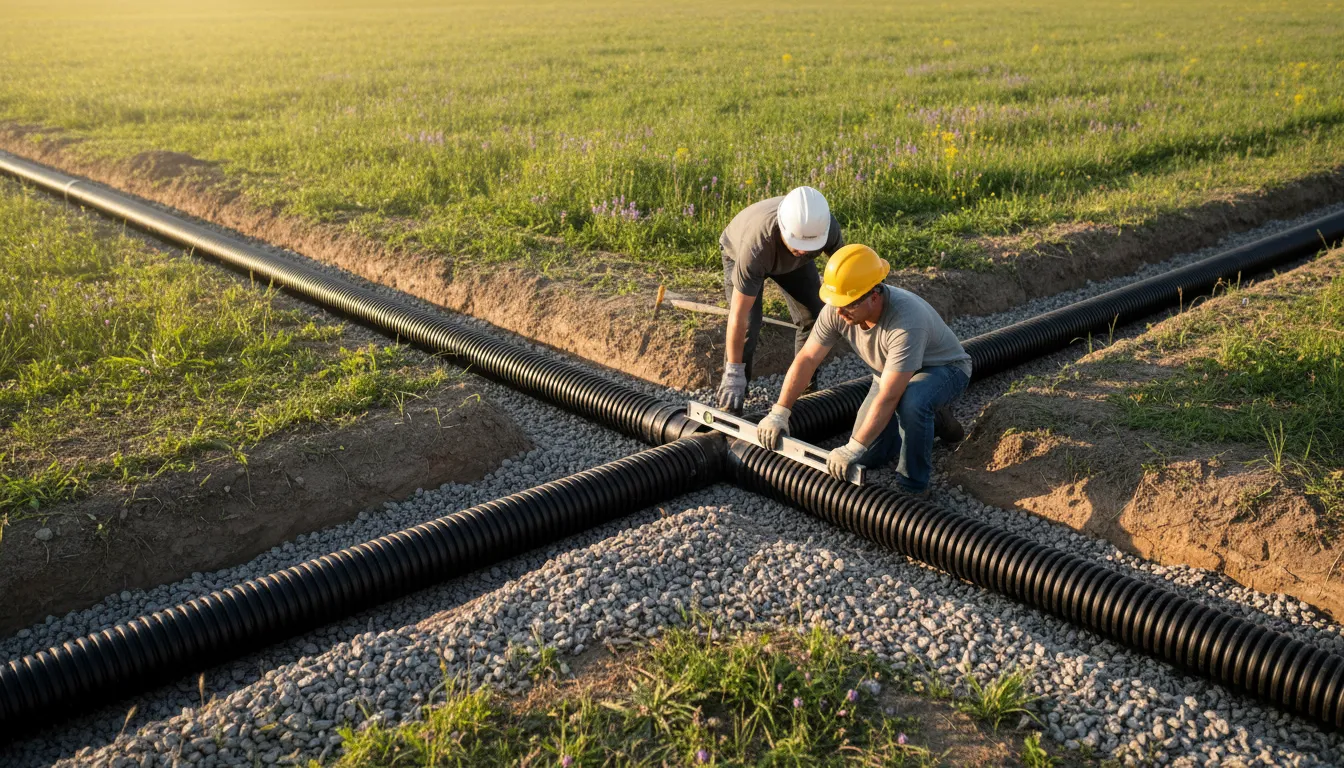
A failing drain field is a serious issue for any home with a septic system, leading to soggy yards, foul odors, and potential health hazards. Drain field repair and replacement involves diagnosing and fixing the underground network of pipes and soil that treats and disperses wastewater from your home. In Houston's unique soil conditions, this work is highly regulated and requires specialized expertise. This guide helps you understand the process, local requirements, and how to connect with qualified professionals to restore your system's function.
Septic Pro Services
17355 Reiss Trail, New Caney, TX 77357
Septic Pro Services offers comprehensive septic system solutions in Houston, TX, including inspections, pumping, installations, repairs, and maintenance for residential and commercial properties. The family-run company combines nearly two decades of construction and plumbing experience with state licensing and compliance expertise to ensure systems meet Texas Commission on Environmental Quality standards. Their capabilities include high-pressure hydro jetting to clear clogs and restore flow. Septic Pro Services provides emergency septic services available 24/7 for urgent pumping and repairs, emphasizing hands-on leadership and customer-focused care.
Brown Aerobic Septic Specialists
17618 South Dr, Cypress, TX 77433
Brown Aerobic Septic Specialists is a licensed septic and excavation company serving Houston, TX, and surrounding counties. They provide a wide range of services including aerobic and conventional septic system installation, repair, pumping, inspections, and drain field replacement. Their team also offers excavation services such as grading, land clearing, trenching, and pond construction. With a focus on local soil and weather conditions, they ensure systems meet code and perform reliably. The company is led by a second-generation septic professional and has experience servicing over 1,000 systems.
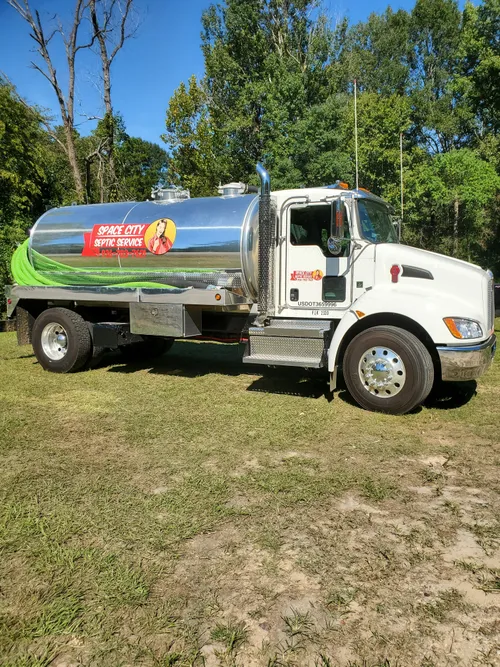
Space City Septic Service
484 US-69, Woodville, TX 75979
Space City Septic Service provides a range of septic solutions including pumping, inspections, repairs, and leach field maintenance in Houston, TX. Serving both residential and commercial customers, they use advanced technology such as high-tech camera inspections to diagnose and address septic system issues accurately. Established in 1990, the company brings over 30 years of experience to their work, specializing in septic tank repairs and maintenance to ensure long-term system reliability.

Go Green Septic & Sewer Solutions
600 W Clayton St, Dayton, TX 77535
Go Green Septic & Sewer Solutions is a full-service septic company based in Houston, TX, offering a wide range of septic system services including installation, maintenance, repairs, and inspections. They provide expert design and engineering for both aerobic and conventional septic systems, along with specialized services such as grease trap cleaning, drain and sewer line clearing, and camera video inspections. With 45 years of experience, the company manufactures high-quality aerobic septic systems and offers tailored maintenance contracts to keep systems running efficiently. Their service area includes Houston and surrounding communities, supported by multiple office locations.

Brumfield Sanitation
Pasadena, TX
Brumfield Sanitation is a septic system service provider based in Pasadena, TX, offering comprehensive septic tank pumping, inspection, repair, and drain field services. Serving the local community, they specialize in maintaining and repairing septic systems to prevent costly issues such as tank overflows and field line leaks. With 20 years of experience, Brumfield Sanitation uses advanced equipment and microbiological treatments to ensure optimal system performance. They also provide routine monthly inspections and maintenance programs designed to keep septic systems functioning effectively year-round.
Understanding Your Drain Field's Role
Often called a leach field or absorption field, the drain field is the final and most critical stage of a septic system. After solids settle in the tank, the liquid effluent flows into a series of perforated pipes buried in trenches filled with gravel. This effluent slowly percolates through the soil, where natural processes remove harmful bacteria, viruses, and nutrients before the water rejoins the groundwater 1. When this area becomes saturated or clogged, the system fails, and wastewater can surface in your yard or back up into your home.
Why Houston Presents Unique Challenges
Houston's environmental and regulatory landscape makes drain field work particularly complex. The primary challenge is the region's soil composition.
- High-Clay Content Soil: Much of the Houston area has dense, clay-heavy soil with very low permeability 2. This means water drains extremely slowly. A conventional trench-style leach field designed for sandy soil will quickly become waterlogged and fail in these conditions.
- Specialized Design Requirements: Due to the clay soil, many properties require an engineered system. Aerobic treatment units (ATUs) are a common solution, as they pre-treat effluent to a higher standard before it reaches the drain field, making it suitable for slow-absorbing soils. Other advanced designs may also be specified by a licensed site evaluator.
- Strict Setback Regulations: Texas and local regulations mandate minimum distances, or setbacks, between drain fields and other features. For example, a drain field must typically be at least 100 feet from a water well and 50 feet from a building foundation 3 4. Finding a suitable replacement area on an existing lot can be a significant hurdle.
The Regulatory Process: Permits Are Mandatory
In Texas, an On-Site Sewage Facility (OSSF), which includes your septic tank and drain field, is regulated by the Texas Commission on Environmental Quality (TCEQ) and local authorities. Any repair, alteration, or full replacement of a drain field requires a permit 5.
- Site Evaluation and Design: The process begins with a licensed site evaluator (LSE) assessing your property. They will conduct soil tests, determine groundwater depth, and evaluate the slope to design a system that complies with TCEQ rules, specifically Chapter 285 6 7. This design is submitted for permit approval.
- Obtaining the Permit: In Harris County, permits are issued by the Harris County Permitting Services. You or your contractor must submit the LSE's design to obtain an "Authorization to Construct" (ATC) before any work begins.
- The Exception for Emergencies: If a sudden failure poses an immediate health risk, emergency repairs can be started without a prior permit. However, the local permitting authority must be notified within 72 hours of starting the work 8.
- Licensed Installation: All repair and replacement work must be performed by a TCEQ-licensed installer, unless the homeowner is doing the work on their own single-family residence 9.
- Final Inspection: Once installed, the licensed installer must request a final inspection from the county. The system cannot be covered or put into use until it passes this inspection and receives approval10 11.
Diagnosing a Failing Drain Field
Before jumping to replacement, a professional inspection is crucial to confirm the problem and its extent. A thorough evaluation includes 12:
- Locating System Components: Finding the tank lids and the layout of the drain field.
- Checking Tank Levels: Measuring the sludge and scum layers in the septic tank to rule out simple overfullness as the cause.
- Inspecting the Tank and Pipes: Looking for cracks, corrosion, or blockages in the tank, pump (if present), and connecting pipes.
- Evaluating the Drain Field Area: Probing the soil for saturation, checking for unusually lush or green grass over the field, and noting any sewage odors or surfacing effluent.
Find the perfect drain field repair companies for your needs
Get personalized recommendations and expert advice
Repair vs. Replacement: Understanding Your Options
The solution depends on the failure's cause and severity.
- Minor Repairs: Costs for repairs can start in the range of $1,000 to $5,000 13. This might involve cleaning a clogged distribution box, replacing a section of crushed pipe, or addressing minor soil compaction. These repairs still require a permit.
- Partial Drain Field Replacement: If only a portion of the field has failed, it may be possible to add new trenches to supplement the old ones, assuming the property has adequate space meeting all setbacks.
- Complete System Replacement: This is necessary when the entire soil absorption area is exhausted or the original design is fundamentally flawed for the soil type. This is a major project involving new engineering, permitting, and excavation.
Cost Considerations for Houston Homeowners
Drain field work is a significant investment. Prices vary widely based on system type, property conditions, and soil requirements.
- Site Evaluation/Soil Test: Typically costs between $350 and $750 14.
- Conventional Drain Field Replacement: For systems suitable for the property, costs often range from $6,000 to $12,000 or more.
- Aerobic System Replacement: Due to the mechanical components and more intensive treatment, installing an aerobic system typically ranges from $12,000 to $20,000+.
- Ongoing Costs: Don't forget permit fees, which vary by jurisdiction. Also, aerobic systems are required by law to have a maintenance contract with a licensed professional, adding approximately $400 to $800 in annual fees 15 16.
Maintaining Your New or Repaired Drain Field
Protecting your investment is key. Proper maintenance can extend the life of your drain field for decades.
- Regular Pumping: Even with a new drain field, the septic tank must be pumped every 3-5 years to prevent solids from washing out and clogging the new field 17 18.
- Water Conservation: Spread out laundry and dishwasher use. Fix leaks promptly. Excessive water flow is a leading cause of drain field failure.
- Divert Surface Water: Ensure roof gutters, patios, and driveways are designed to direct rainwater away from the drain field area. Saturation from external water is a major problem.
- Mind What You Flush: Only human waste and toilet paper should go down the drain. Avoid chemicals, grease, wipes, and other non-biodegradables.
Frequently asked questions
Sources
Footnotes
-
Septic systems explained - Texas Water Resources Institute - https://twri.tamu.edu/blog/septic-systems-explained/ ↩
-
Texas Septic System Regulations - https://dillonseptic.com/texas-septic-system-regulations/ ↩
-
Septic Tank Laws in Texas - https://dillonseptic.com/septic-tank-laws-in-texas/ ↩
-
Are There Regulations or Guidelines for Septic Tank Drain ... - https://weebeewasteservices.com/are-there-regulations-or-guidelines-for-septic-tank-drain-field-maintenance-in-texas/ ↩
-
Getting a Permit for an OSSF - Such as a Septic System - https://www.tceq.texas.gov/permitting/ossf/ossfpermits.html ↩
-
Texas Commission on Environmental Quality - https://www.tceq.texas.gov/downloads/rules/current/21030285_pro.pdf/@@download/file/21030285_pro.pdf ↩
-
Types of Septic Systems Suitable for Texas - Weaver Excavating - https://weaverexcavating.net/types-of-septic-systems-suitable-for-texas/ ↩
-
SEPTIC SYSTEM LAWS IN TEXAS - https://www.terseptic.com/posts/septic-systems-its-the-law ↩
-
OSSF FREQUENTLY ASKED QUESTIONS - https://netmwd.com/documents/1216/OSSF_FREQUENTLY_ASKED_QUESTIONS_pdf.pdf ↩
-
Residential Construction & On-site Sewage System (Septic) - https://oce.harriscountytx.gov/Services/Permits/Permits-A-to-Z/Residential-Construction-On-site-Sewage-System-Septic ↩
-
Choosing a Septic System (On-Site Sewage Facility System) - https://www.tceq.texas.gov/permitting/ossf/ossfsystems.html ↩
-
What to Expect from a Septic Inspection - https://www.wrenvironmental.com/blog/2023/may/what-to-expect-from-a-septic-inspection/ ↩
-
Drain Field Replacement near Harris County, Texas | Full Homeowner Guide - https://brownaerobic.com/drain-field-replacement-near-harris-county-texas ↩
-
Septic System Installation Checklist - https://www.mecindustries.com/morse-engineering-and-construction-industries/septic-system-installation-checklist ↩
-
Texas Septic Systems & OSSF Requirements | 2026 Guide - https://texaslandbrokerage.com/resources/texas-septic-systems-ossf-requirements-guide/ ↩
-
Basics for Septic Systems - https://www.tceq.texas.gov/assistance/water/fyiossfs.html ↩
-
Septic System - Texas Water Resources Institute - https://twri.tamu.edu/wp-content/uploads/2024/04/em-126-septic-system-maintenance-inspection-pocket-guide.pdf ↩
-
How a Septic System Works | Williamson County, TX - https://www.wilcotx.gov/651/How-a-Septic-System-Works ↩