Find the Best Drain Field Repair Companies for Your Business
No obligation • Fast responses • Nationwide coverage

Why you can trust Septic Spot
Septic Spot is a leading United States resource for understanding and comparing septic services. Our editors review providers using consistent criteria and verify key business details. Listings and scores are independent, and companies cannot pay to influence our content.
Search providers near you
Top Drain Field Repair Companies in Baytown, Texas Ranked
A failing drain field is a serious issue for any home with a septic system, leading to soggy yards, foul odors, and potential environmental contamination. In Baytown, with its unique soil and water table challenges, addressing drain field problems promptly and correctly is crucial. This guide explains what drain field repair and replacement entails, why local regulations are so important, and how you can find qualified professionals to assess and fix your system.

Understanding Your Septic System's Drain Field
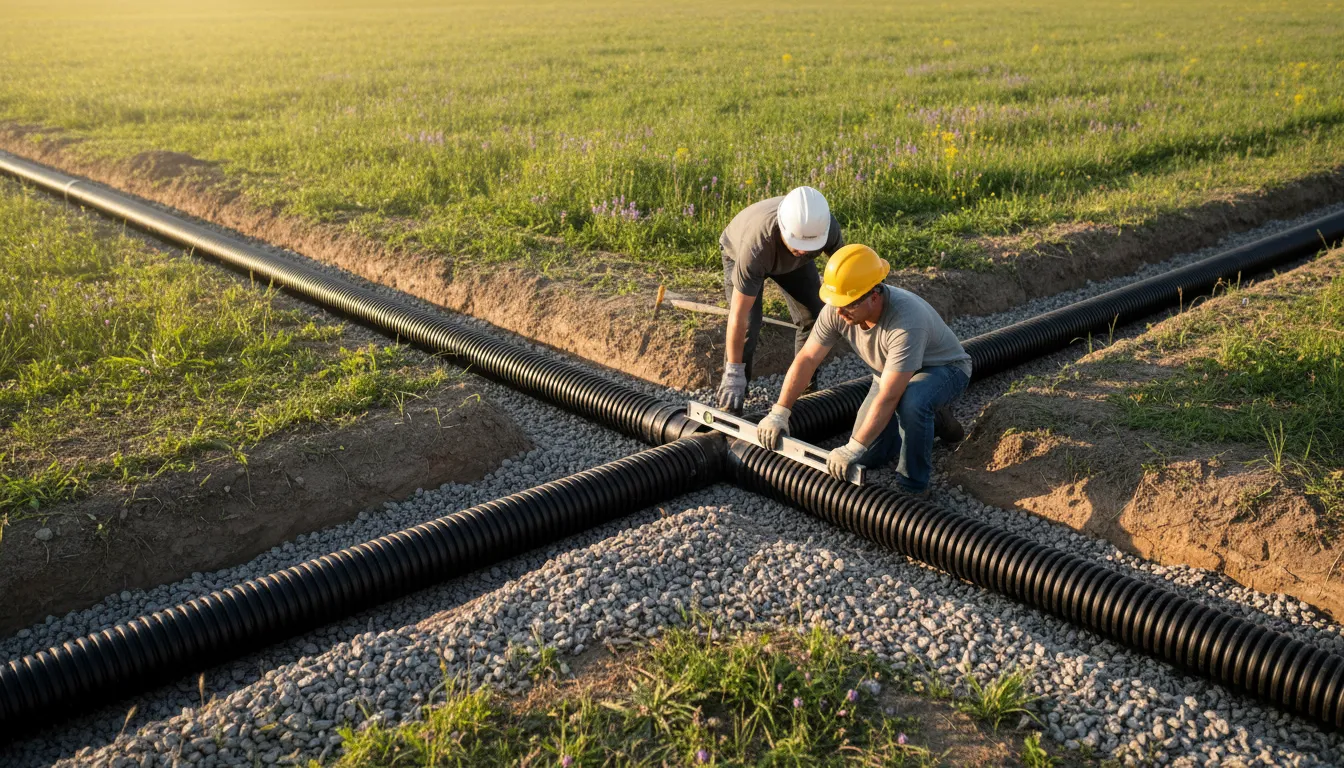
The drain field, also known as a leach field or absorption field, is the final and most critical stage of your onsite sewage facility (OSSF). After solids settle in the septic tank, liquid effluent flows out into a network of perforated pipes buried in trenches. This effluent slowly percolates through the soil, where natural processes filter and treat it before it rejoins the groundwater. When this area fails, your entire septic system stops working.
In Baytown, common signs of drain field failure include:
- Sewage odors in the yard or home.
- Spongy, soggy, or standing water over the drain field area, even in dry weather.
- Slow-draining toilets and sinks.
- Unusually green, lush grass over the drain field.
- Backups into the home.
Why Baytown Presents Unique Challenges
Two primary environmental factors make septic system maintenance and drain field work particularly demanding in the Baytown area: soil composition and the water table.
Clay-Heavy Soil: Much of the soil in and around Baytown has a high clay content. Clay particles are very fine and tightly packed, which severely slows the rate at which water can drain through it (a low percolation rate). A conventional septic system relies on soil with good drainage to absorb and treat effluent. Poor drainage often rules out standard drain fields, requiring advanced treatment methods such as aerobic systems with spray irrigation or engineered mound systems to meet modern standards.
High Water Table: Baytown's proximity to bodies of water and its coastal plain location often results in a high groundwater table. Texas regulations mandate a minimum two-foot vertical separation between the bottom of the drain field trenches and the high water table or any restrictive soil layer. If the groundwater is too close to the surface, a conventional system cannot be installed, again necessitating an alternative system design that treats the effluent to a higher standard before dispersal.
The Regulatory Landscape: Permits and Professionals
All septic system work in Texas is governed by the Texas Commission on Environmental Quality (TCEQ) under Chapter 285 rules. Enforcement is handled locally by the county health department (Harris or Chambers County, depending on your location) or the City of Baytown Health Department 1.
Permit Requirements: A permit is mandatory for any repair that involves changing the drain field, installing a new tank, or making significant alterations to your OSSF 2. A critical rule to understand is that any modification to the disposal area typically requires the entire system to be brought up to current TCEQ standards 3 4. This means a simple repair can sometimes trigger the need for a full system upgrade. There is an exception for emergency repairs that don't involve excavation or replacement of components; these must be reported to the local authority within 72 hours of starting work.
Working with Licensed Professionals: All septic system installation, repair, and major maintenance must be performed by a TCEQ-licensed installer. Homeowners may perform work on their own single-family residence, but they are still responsible for obtaining permits and ensuring the work meets all code requirements 5 6. Given the complexity, most homeowners hire a licensed professional. Furthermore, if you have or are installing an aerobic treatment system (common in Baytown), state law requires an ongoing maintenance contract with a licensed technician, with inspections typically required every four months.
Find the perfect drain field repair companies for your needs
Get personalized recommendations and expert advice
The Diagnostic Process: Inspection and Evaluation
Before any repair strategy is chosen, a thorough professional inspection is essential to determine if the drain field can be rejuvenated or must be completely replaced. This process typically involves:
- Locating and Exposing: The technician will locate the septic tank and drain field lines, often using probes or electronic equipment, and may excavate to expose the tank lid for inspection 7.
- Checking Tank Effluent Level: Inspectors will check the liquid level in the septic tank. A level that is higher than the outlet pipe indicates a backup, strongly pointing to a drain field absorption problem.
- Soil and Site Evaluation: A licensed site evaluator may perform a soil analysis to determine texture, percolation rate, and the depth to groundwater. This is crucial for designing any replacement system 8.
- Load Test (or Stress Test): Water is run through the household plumbing to simulate a normal load and see if the existing drain field can absorb the effluent 9.
- Physical Inspection for Damage: The inspector will look for broken pipes, root intrusion from nearby trees, or crushed lines 10.
Repair vs. Replacement: Options and Costs
The solution depends on the inspection findings. Costs can vary widely based on system type, soil conditions, and the extent of the problem.
Drain Field Repair/Rejuvenation ($1,000 - $5,000): If the problem is isolated, repairs may be possible. This can include:
- Replacing Lateral Lines: Excavating to replace clogged or broken sections of the perforated pipe in the drain field.
- Soil Fracturing: Using specialized equipment to create cracks in the compacted soil around the trenches to restore drainage.
- Jetting or Cleaning: High-pressure water jetting to clear minor blockages in the lines (often a temporary fix).
Conventional Drain Field Replacement ($5,000 - $10,000): If the entire field is saturated and clogged (a condition called "biomat" failure), a full replacement in a new location on your property is often necessary 11. This requires a new soil evaluation, permit, and installation.
Aerobic System Replacement ($9,500 - $15,000+): Due to Baytown's soil and water conditions, a conventional system may not be viable. Replacing a failed system with an aerobic treatment unit (ATU) is common. These systems use oxygen to break down waste more efficiently, producing a highly treated effluent that can be sprayed over a lawn via sprinklers, often requiring less drainage area 12 13.
Additional Costs: Remember to factor in permit and design fees, which typically range from $400 to $900 and are often not included in an installer's initial quote 14.
Property Considerations and Setbacks
When planning for repair or replacement, you must account for legal setbacks that dictate where a drain field can be placed:
- At least 100 feet from any water well.
- At least 50 feet from any building foundation, property line, or swimming pool.
- Away from driveways, patios, and utility lines 15.
Landscaping Advice: To protect your new or repaired drain field, avoid planting large trees or shrubs nearby. Their roots can seek out moisture and infiltrate and destroy the pipes 16 17. Grass is the ideal ground cover.
Steps to Take if You Suspect a Problem
- Call a Licensed Installer: Contact a TCEQ-licensed septic system installer or repair company for a professional evaluation. They can diagnose the issue and guide you on next steps.
- Address Emergencies Immediately: If you have sewage backing up into your home or surfacing in your yard, call a septic pumper immediately to empty the tank. This is a temporary measure but prevents a health hazard. Be aware that allowing raw sewage to discharge into a ditch or storm drain is illegal and can result in fines of $500 to $1,000 18 19.
- Coordinate the Site Evaluation: Your installer will arrange for a licensed site evaluator to conduct the necessary soil analysis and prepare the design for the permitting authority.
- Secure the Permit: Your installer will usually handle the permit application with the local county (Harris or Chambers) or City of Baytown Health Department. Do not proceed with excavation until the permit is approved.
- Plan for Maintenance: If you receive an aerobic system, remember to sign a maintenance contract with a licensed provider as required by law 20.
Frequently asked questions
Sources
Footnotes
-
Texas Septic System Regulations - https://dillonseptic.com/texas-septic-system-regulations/ ↩
-
Getting a Permit for an OSSF - Such as a Septic System - https://www.tceq.texas.gov/permitting/ossf/ossfpermits.html ↩
-
SEPTIC SYSTEM LAWS IN TEXAS - https://www.terseptic.com/posts/septic-systems-its-the-law ↩
-
Frequently Asked Questions about Septic Systems - https://septicsolutionstexas.com/FAQ.htm ↩
-
Advice for an Owner of an On-Site Sewage Facility (Septic ... - https://www.tceq.texas.gov/permitting/ossf/ossfadvice.html ↩
-
Advice for an Owner of an On-Site Sewage Facility (Septic System) - https://www.tceq.texas.gov/permitting/ossf/ossfadvice.html ↩
-
Preparing for Septic Tank Inspection: 7 Key Steps - https://septic911.com/preparing-for-septic-tank-inspection/ ↩
-
Texas Septic System Regulations - https://dillonseptic.com/texas-septic-system-regulations/ ↩
-
Septic Inspection Process: What Homeowners Should Know ... - https://www.lunspro.com/vlog/the-septic-system-inspection-process-what-homeowners-should-know ↩
-
Drain Field Inspection - Keep Your Septic System Healthy - https://www.vevor.com/diy-ideas/drain-field-inspection/ ↩
-
How much does a leach or drain field replacement cost? - https://homeguide.com/costs/drain-leach-field-replacement-cost ↩
-
Cost of a Septic System in Texas - https://dillonseptic.com/cost-of-a-septic-system-in-texas/ ↩
-
Average Cost to Install Septic System in Texas - https://dillonseptic.com/average-cost-to-install-septic-system-in-texas/ ↩
-
Septic Drain Field Replacement Cost - https://dillonseptic.com/septic-drain-field-replacement-cost/ ↩
-
Basics for Septic Systems - https://www.tceq.texas.gov/assistance/water/fyiossfs.html ↩
-
Are There Regulations or Guidelines for Septic Tank Drain ... - https://weebeewasteservices.com/are-there-regulations-or-guidelines-for-septic-tank-drain-field-maintenance-in-texas/ ↩
-
Conventional septic tank/drain field - https://www.h-gac.com/getmedia/eb908b2e-61a1-4180-9b8e-8652ded0ceec/OSSF-Treatment-Systems_Conventional-Septic-Tank-Drain-Field.pdf ↩
-
Basics for Septic Systems - https://www.tceq.texas.gov/assistance/water/fyiossfs.html ↩
-
Ordinance No. 4,026 - IIS Windows Server - https://weblink.baytown.org/WebLink/DocView.aspx?id=60175&dbid=0&repo=BAYTOWN ↩
-
Baytown Septic Systems - https://setxseptic.com/baytown-septic-systems/ ↩