Find the Best Drain Field Repair Companies for Your Business
No obligation • Fast responses • Nationwide coverage

Why you can trust Septic Spot
Septic Spot is a leading United States resource for understanding and comparing septic services. Our editors review providers using consistent criteria and verify key business details. Listings and scores are independent, and companies cannot pay to influence our content.
Search providers near you
Top Drain Field Repair Companies in Cedar Park, Texas Ranked
A failing drain field, also known as a leach field or soil absorption area, is a serious issue for any home with a septic system. It's the final and most critical stage of wastewater treatment, where effluent is dispersed into the soil for final purification. When this component fails, it can lead to soggy yards, foul odors, and sewage backups. For Cedar Park homeowners, navigating drain field repair or replacement involves understanding local soil challenges and strict regulatory requirements. This guide explains the process, costs, and key regulations to help you find qualified local professionals for your system restoration.
HomeField Williamson County
40203 Industrial Park Cir, Georgetown, TX 78626
HomeField Williamson County provides comprehensive septic system services in Austin, TX, covering residential and commercial needs. Their offerings include septic tank pumping, inspections, repairs, installations, drain field replacements, and system design. The company emphasizes local expertise and proactive maintenance plans to help prevent future problems. They serve Williamson County with a team familiar with local regulations and conditions, ensuring septic systems meet current requirements. HomeField also offers various maintenance plans tailored to different levels of coverage and support.
Godinez Septics Inc
5407 Phillips Cir, Austin, TX 78734
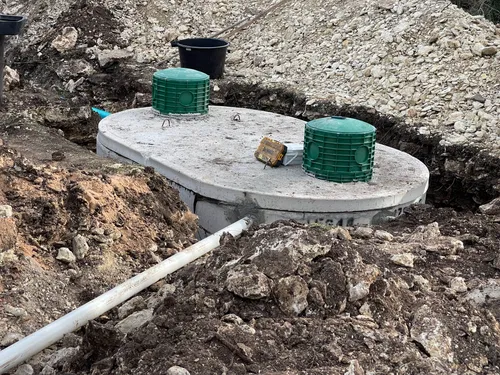
Godinez Septics Inc is a family-owned septic system company serving Austin, TX, and the surrounding Lake Travis area. They provide a range of services including septic tank pumping, inspection, repair, installation, and drain field replacement. The company is licensed by TCEQ for septic system maintenance and installation, offering specialized services such as aerobic system maintenance contracts and hydro-jetting to clear sewer lines. With over 40 years of experience in the septic and excavation business, Godinez Septics is led by Orlando Godinez, a longtime local resident and licensed installer.
Hines Septic Of Austin Tx
Austin, TX
Hines Septic Of Austin Tx is a family-owned septic service provider based in Austin, TX. They offer septic tank pumping, installation, inspection, and repair services, including drain field repair and replacement. The company is fully licensed and insured, ensuring all work is performed to code. They provide 24/7 emergency septic services and back their installations with a one-year labor warranty.

Eco Septic Tank Pumping Austin
Austin, TX
Eco Septic Tank Pumping Austin provides septic tank pumping, inspection, repair, and installation services in Austin, TX. They handle routine septic system cleaning, emergency septic sewer cleaning, and biological treatments to maintain system health. The company also offers septic system repairs and drain field replacement, ensuring compliance with local regulations. Their technicians follow a detailed pumping process and dispose of waste properly at licensed facilities. Eco Septic Tank Pumping Austin serves multiple areas around Austin and emphasizes regular maintenance to prevent system failures.
Sunset Construction & Excavation
Austin, TX
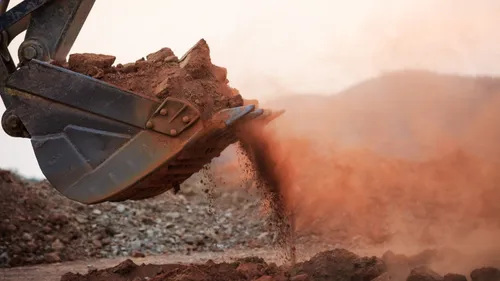
Sunset Construction & Excavation is a septic system service provider based in Austin, TX. They offer septic system installations, repairs, and design services for both residential and commercial clients. Their work includes excavation and landscaping related to septic systems, serving Austin and surrounding areas such as Travis County, Leander, and Bee Cave. The company has over a decade of experience and is licensed by the Texas Commission on Environmental Quality. They also provide hydro-mulching to restore properties after septic work is completed.
Understanding Drain Field Failure in Cedar Park
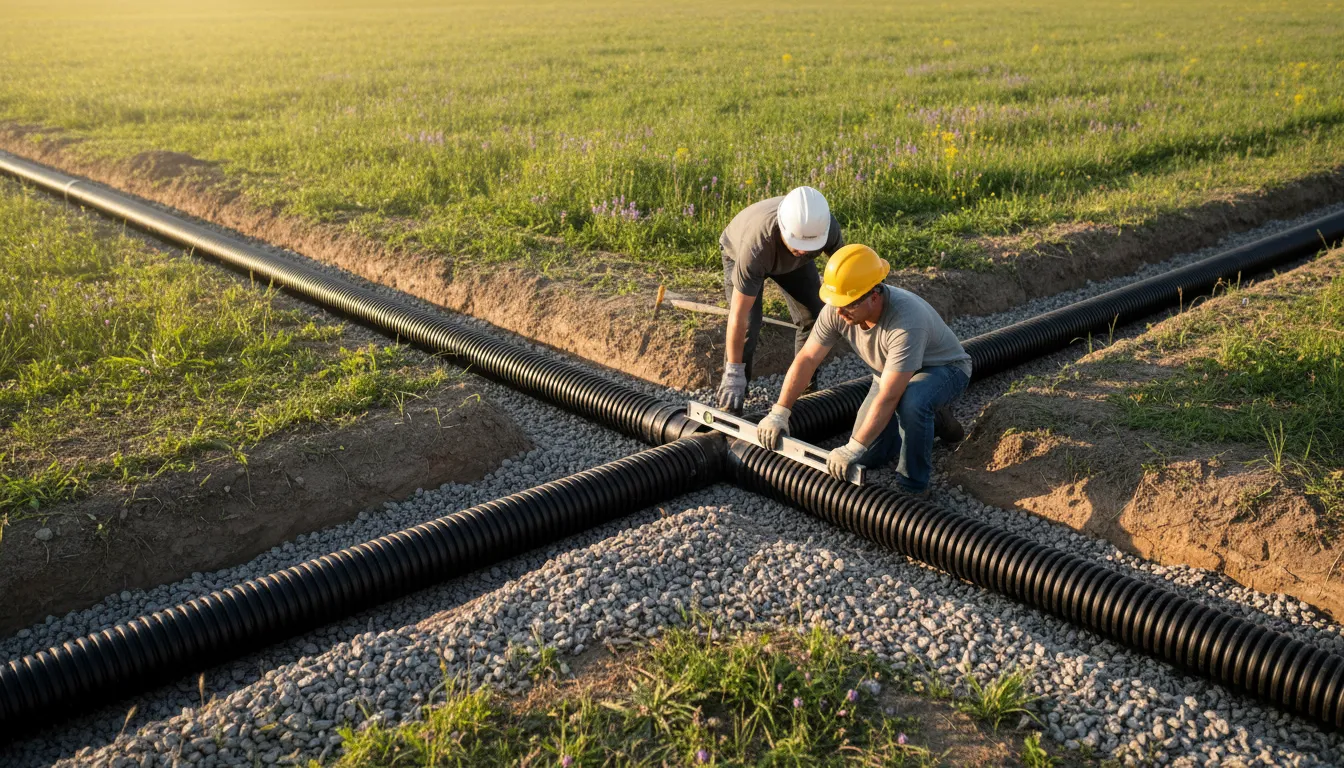
The drain field is a network of perforated pipes buried in gravel-filled trenches. After solids settle in the septic tank, liquid effluent flows into this area, where it slowly percolates into the soil. Natural bacteria in the soil then treat the wastewater before it rejoins the groundwater. Failure occurs when the soil can no longer absorb the liquid. Common signs include:
- Persistently soggy or spongy ground over the drain field area, even in dry weather.
- Sewage odors emanating from the yard.
- Slow drains or gurgling plumbing fixtures inside the home.
- Unusually green, lush grass over the drain field.
- Standing water or sewage surfacing in the yard.
In Cedar Park, the primary culprit for premature failure is often the native soil. Much of the area has clay-heavy or shallow soil, which drains very slowly. This poor permeability can cause effluent to pool and the system to back up. Other causes include physical damage from vehicle traffic or root intrusion, hydraulic overloading from excessive water use, and a lack of routine maintenance leading to sludge clogging the soil.
Local Regulations and Permit Requirements
Any significant work on your septic system's disposal area is regulated. In Williamson County, which includes Cedar Park, the County Engineer's office is the local permitting authority for On-Site Sewage Facilities (OSSFs).
Key Regulations to Know:
- Permit Mandatory: A permit is required for any repair that involves replacing a drain field or altering a tank 1 2. Emergency, immediate repairs (like replacing a broken lid) do not require a prior permit but must be reported to the county within 72 hours.
- Who Can Perform Work: Work must be done by a state-licensed installer or, for a single-family residence, by the homeowner themselves.
- System Setbacks: New or replacement drain fields must be sited at least 100 feet from water wells and 50 feet from buildings 3 4.
- Aerobic System Rules: If your home uses an aerobic treatment unit (common in poor-draining soils), you are required by the Texas Commission on Environmental Quality (TCEQ) to maintain a valid maintenance contract with a licensed provider. This contract must be renewed with the county at least every two years 5.
The Site Evaluation: The First Critical Step
Before any design or repair can be planned, a licensed site evaluator must conduct a formal site evaluation. This is not optional; it's a regulatory requirement to determine the appropriate system type for your property 6. The evaluator will analyze:
- Soil Permeability: A percolation ("perc") test determines how quickly water moves through your soil. Slow-draining clay will fail a standard test.
- Groundwater Depth: The seasonal high water table must be measured to ensure a safe separation distance.
- Slope and Topography: The landscape must be suitable for gravity flow or may require a pumped system.
- Available Area: Enough suitable space must exist for the drain field and required setbacks.
This evaluation, which typically costs between $350 and $750, dictates whether a conventional gravity system is possible or if an alternative system is necessary.
Repair vs. Complete Replacement
A professional assessment will determine the best path forward. Sometimes, a repair is feasible.
Possible Repair Options:
- Jet Cleaning: High-pressure water jetting can temporarily clear minor blockages in drain field pipes.
- Trench Rejuvenation: For older systems, techniques like fracturing the soil around the trenches can restore some absorption capacity.
However, in Cedar Park's tough soils, repairs are often a temporary fix. Complete drain field replacement is frequently the only long-term solution, especially if the system is over 15 years old and the soil is permanently clogged, a condition known as "biomat" failure 7.
The Replacement Process:
- Site Evaluation & Design: A licensed professional uses the site evaluation data to design a new system that meets TCEQ standards (30 TAC 285) 8.
- Permitting: The design is submitted to the Williamson County Engineer's office for a construction permit.
- Excavation: The old drain field is abandoned (often filled in) and new trenches are dug in a virgin area of your property.
- Installation: Gravel and new perforated pipe are laid according to the approved design.
- Inspections: The county requires an initial inspection of the trenches and pipes before they are covered, and a final inspection once the installation is complete 9 10.
- Restoration: The area is backfilled and landscaped.
Find the perfect drain field repair companies for your needs
Get personalized recommendations and expert advice
System Types for Cedar Park Soils
Due to the prevalent soil conditions, traditional gravity-fed drain fields are often not viable. Licensed installers will typically propose one of these alternative systems:
- Aerobic Treatment Unit (ATU) with Spray Irrigation: This is a common solution. An ATU adds oxygen to the treatment process, breaking down effluent more thoroughly. The highly treated effluent is then sprayed over a designated area of the lawn. These systems require electricity and the mandatory maintenance contract 11.
- Mound System: An elevated sand mound is constructed above the native soil. Effluent is pumped into the mound, where it filters through the sand before reaching the natural clay.
- Drip Irrigation System: Treated effluent is slowly dispersed via a network of small drip tubes over a large, shallow area. This requires a pump and filtration system.
Understanding the Costs Involved
Drain field work is a significant investment. Costs in Cedar Park are influenced by soil conditions, system type, and property size.
- Site Evaluation/Soil Test: $350 - $750
- Conventional Drain Field Replacement: $6,000 - $12,000+ (if soil conditions allow)
- Aerobic System Replacement (including new drain field): $12,000 - $20,000+
- Annual Maintenance Contract (for aerobic systems): $400 - $800 12
These figures are estimates; obtaining multiple quotes from licensed providers is essential.
Choosing a Provider in Cedar Park
When your drain field is failing, you need a reliable, licensed professional. Look for a provider with:
- TCEQ License: Verify their installer license is current with the Texas Commission on Environmental Quality.
- Local Experience: Familiarity with Williamson County permit officials and the specific soil challenges in Cedar Park is invaluable.
- Comprehensive Service: They should handle the entire process: evaluation, design, permitting, installation, and county inspections.
- Clear Communication: They should explain your options, the regulatory requirements, and provide a detailed, written estimate.
Always ask for references from recent, similar projects in the area.
Frequently asked questions
Sources
Footnotes
-
How a Septic System Works | Williamson County, TX - https://www.wilcotx.gov/651/How-a-Septic-System-Works ↩
-
Getting a Permit for an OSSF - Such as a Septic System - https://www.tceq.texas.gov/permitting/ossf/ossfpermits.html ↩
-
Texas Septic System Regulations - https://dillonseptic.com/texas-septic-system-regulations/ ↩
-
Are There Regulations or Guidelines for Septic Tank Drain ... - https://weebeewasteservices.com/are-there-regulations-or-guidelines-for-septic-tank-drain-field-maintenance-in-texas/ ↩
-
OSSF FREQUENTLY ASKED QUESTIONS - https://netmwd.com/documents/1216/OSSF_FREQUENTLY_ASKED_QUESTIONS_pdf.pdf ↩
-
Basics for Septic Systems - https://www.tceq.texas.gov/assistance/water/fyiossfs.html ↩
-
HOW TO REPLACE A SEPTIC DRAIN FIELD // How a Septic ... - https://www.youtube.com/watch?v=v97dAum7zQc&t=8 ↩
-
30 Tex. Admin. Code § 285.32 - Criteria for Sewage Treatment ... - https://www.law.cornell.edu/regulations/texas/30-Tex-Admin-Code-SS-285-32 ↩
-
How a Septic System Works | Williamson County, TX - https://www.wilcotx.gov/651/How-a-Septic-System-Works ↩
-
Texas Septic Tank Rules - https://dillonseptic.com/texas-septic-tank-rules/ ↩
-
Advice for an Owner of an On-Site Sewage Facility (Septic ... - https://www.tceq.texas.gov/permitting/ossf/ossfadvice.html ↩
-
Texas Septic Systems & OSSF Requirements | 2026 Guide - https://texaslandbrokerage.com/resources/texas-septic-systems-ossf-requirements-guide/ ↩