Find the Best Drain Field Repair Companies for Your Business
No obligation • Fast responses • Nationwide coverage

Why you can trust Septic Spot
Septic Spot is a leading United States resource for understanding and comparing septic services. Our editors review providers using consistent criteria and verify key business details. Listings and scores are independent, and companies cannot pay to influence our content.
Search providers near you
Top Drain Field Repair Companies in Conroe, Texas Ranked
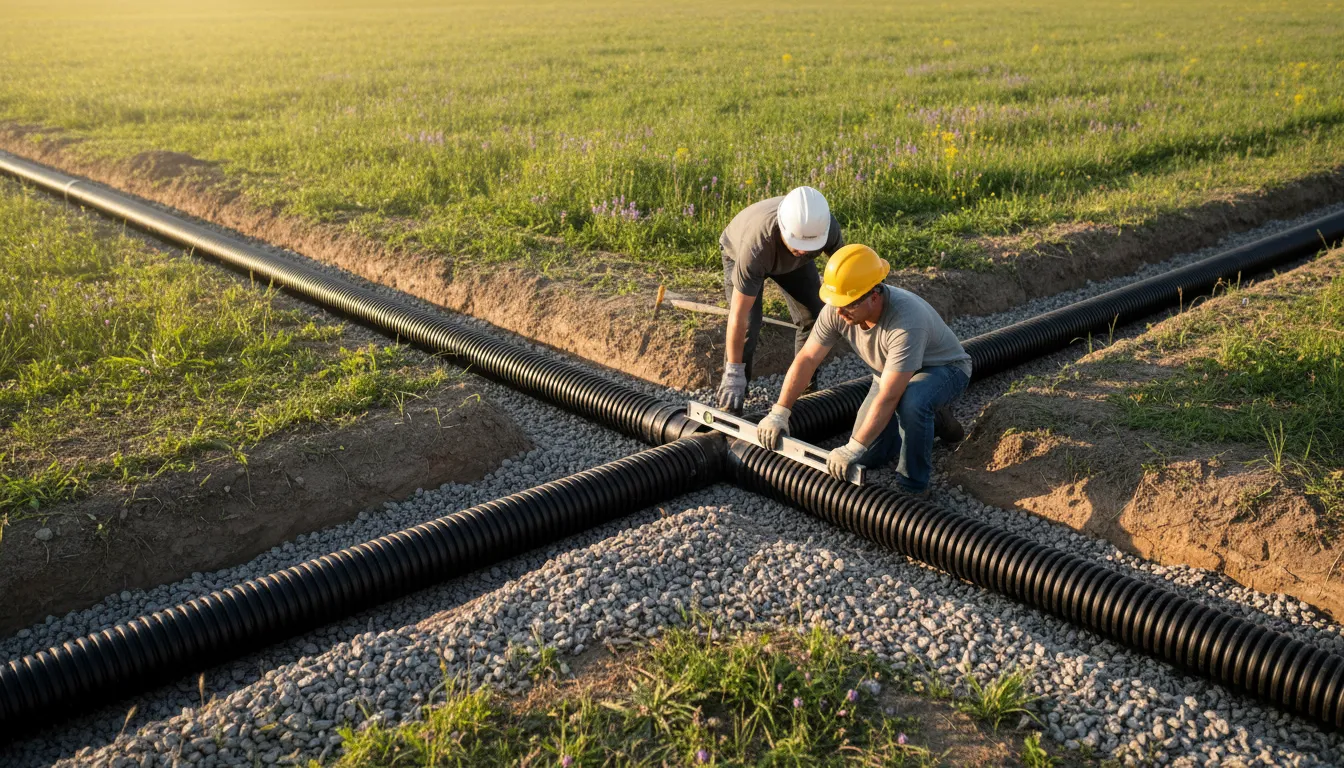
A failing drain field is a serious issue for any home with a septic system, leading to soggy yards, foul odors, and potential health hazards. Drain field repair and replacement involves restoring or completely rebuilding the underground network of perforated pipes and soil that treats and disperses wastewater from your home. Understanding the local regulations, soil conditions, and process is crucial for a successful and compliant project. This guide provides the essential information for Conroe homeowners to navigate the process of finding qualified professionals for their leach field or absorption field needs.
Septic Pro Services
17355 Reiss Trail, New Caney, TX 77357
Septic Pro Services offers comprehensive septic system solutions in Houston, TX, including inspections, pumping, installations, repairs, and maintenance for residential and commercial properties. The family-run company combines nearly two decades of construction and plumbing experience with state licensing and compliance expertise to ensure systems meet Texas Commission on Environmental Quality standards. Their capabilities include high-pressure hydro jetting to clear clogs and restore flow. Septic Pro Services provides emergency septic services available 24/7 for urgent pumping and repairs, emphasizing hands-on leadership and customer-focused care.
Brown Aerobic Septic Specialists
17618 South Dr, Cypress, TX 77433
Brown Aerobic Septic Specialists is a licensed septic and excavation company serving Houston, TX, and surrounding counties. They provide a wide range of services including aerobic and conventional septic system installation, repair, pumping, inspections, and drain field replacement. Their team also offers excavation services such as grading, land clearing, trenching, and pond construction. With a focus on local soil and weather conditions, they ensure systems meet code and perform reliably. The company is led by a second-generation septic professional and has experience servicing over 1,000 systems.
Understanding Your Drain Field in Montgomery County
The drain field, also known as a leach field or soil absorption area, is the final and most critical stage of your on-site sewage facility (OSSF). After solids settle in the septic tank, liquid effluent flows into a distribution box and out through a series of perforated pipes buried in trenches. This effluent slowly percolates through the soil, where natural processes provide final treatment before it rejoins the groundwater.
In Conroe and Montgomery County, the heavy clay soils common to the area present a unique challenge for conventional drain fields1. Clay has very small pores, which severely slows the rate of water absorption (percolation). This means standard gravel-and-pipe trench systems often fail to work properly here. Consequently, many properties require specially engineered systems, such as aerobic treatment units (ATUs) or enhanced-absorption drain fields that use imported, more permeable soil1.
Local Regulations and Permit Requirements
All significant work on a septic system in Conroe requires permits and must adhere to Texas Commission on Environmental Quality (TCEQ) rules. The permitting authority for most of Montgomery County is the Montgomery County Environmental Health Department. However, if your property is in the Lake Conroe watershed, you may fall under the jurisdiction of the San Jacinto River Authority (SJRA) 2. It's essential to confirm your local authority before beginning any project.
A permit is required for most repairs, upgrades, or full replacements of a drain field3 4. The permit process ensures the work is designed and installed to protect public health and the local environment, particularly important near Lake Conroe. There is typically a permit fee, often around $300. In a genuine emergency, such as a surfacing sewage leak, repairs can be started without a permit but must be reported to the permitting authority within 72 hours4.
Who Can Perform the Work?
Texas law generally requires that installation and major repair work be performed by a licensed installer or a licensed site evaluator5. There is a limited exemption for homeowners: you may install a system on your own property if it is for a single-family residence on a tract of land that is 10 acres or larger6. Even in this case, the design and permitting process must still be followed.
The Drain Field Project Process: Step-by-Step
A successful drain field repair or replacement follows a structured path from evaluation to final approval.
1. Initial Site Evaluation and Soil Testing
This is the non-negotiable first step. A licensed site evaluator must visit your property to conduct a thorough assessment. This includes:
- Soil Analysis: Determining soil texture, structure, and percolation rate.
- Groundwater Depth: Checking the seasonal high water table level.
- Site Survey: Evaluating the slope, drainage, and overall layout of the property. This evaluation determines the system type your property can support and its optimal location. Costs for this professional assessment typically range from $350 to $750.
2. System Design and Permit Application
Using the data from the site evaluation, a Registered Sanitarian or Professional Engineer designs the new or repaired system. For Conroe's challenging soils, this design will often specify an aerobic system or an engineered drain field with imported soil. The complete design plans are then submitted with the permit application to the county or SJRA for review and approval.
3. Installation and Inspections
Once the permit is issued, the licensed installer can begin work. Key installation standards in Montgomery County include7 8:
- Setbacks: Drain fields must be at least 100 feet from any private water well and 50 feet from property lines, foundations, and water bodies.
- Trench Specifications: Trenches are typically 18 to 36 inches deep, with 12 to 24 inches of soil separating individual trenches. A county or SJRA inspector will visit the site to examine the excavation, pipe layout, and slope before the trenches are backfilled9 10.
4. Final Approval
After a final inspection confirms the installation matches the approved design, the permitting authority will issue a "Notice of Approval"11. This documentation is important for your property records and for any future real estate transactions.
Find the perfect drain field repair companies for your needs
Get personalized recommendations and expert advice
Cost Considerations for Drain Field Work
The cost for drain field work in Conroe varies widely based on the system type, soil conditions, and extent of the problem.
- Minor Repairs: Addressing a single clogged line or a small section may cost between $1,000 and $3,000.
- Full Conventional Replacement: Replacing an entire conventional (gravel) drain field system typically ranges from $6,000 to over $12,000.
- Aerobic System or Engineered Field Replacement: Due to the common need for advanced systems in local clay soils, full replacement costs often start around $12,000 and can reach $20,000 or more12.
These figures generally do not include the cost of the initial site evaluation and permit fees. It's wise to obtain detailed, written estimates from several licensed professionals.
Maintaining Your New or Repaired Drain Field
Protecting your investment is key. Proper maintenance can extend the life of your drain field for decades.
- Regular Pumping: Have your septic tank pumped every 3 to 5 years by a licensed pumper to prevent solids from escaping into and clogging the drain field13.
- Water Conservation: Spread out high-water-use activities. Avoid doing multiple loads of laundry back-to-back, and fix any leaking faucets or toilets promptly.
- Mind What You Flush: Only human waste and toilet paper should go down the drains. Avoid grease, chemicals, disinfectants, bleach, and non-biodegradable items14 15.
- Protect the Area: Never drive or park vehicles over the drain field. Do not plant trees or deep-rooted shrubs near it, as roots can infiltrate and damage the pipes16.
Signs You May Need Drain Field Service
How do you know if your absorption field is failing? Watch for these warning signs:
- Sewage odors in the yard or house.
- Unusually lush, green grass or soggy, spongy soil over the drain field area.
- Slow-draining sinks, tubs, or toilets, especially after rainy weather.
- Sewage backing up into the home. If you notice any of these issues, contact a licensed septic professional for an evaluation immediately to prevent further damage and environmental contamination.
Frequently asked questions
Sources
Footnotes
-
Choosing a Septic System (On-Site Sewage Facility System) - https://www.tceq.texas.gov/permitting/ossf/ossfsystems.html ↩ ↩2
-
Licensing and Permitting - https://www.sjra.net/lakeconroe/licensing-permitting/ ↩
-
Permitting My On Site Septic Facility - https://www.sjra.net/lakeconroe/licensing-permitting/permitting-my-on-site-septic-facility/ ↩
-
OSSF FREQUENTLY ASKED QUESTIONS - https://netmwd.com/documents/1216/OSSF_FREQUENTLY_ASKED_QUESTIONS_pdf.pdf ↩ ↩2
-
Septic Tank Laws in Texas - https://dillonseptic.com/septic-tank-laws-in-texas/ ↩
-
SEPTIC SYSTEM LAWS IN TEXAS - https://www.terseptic.com/posts/septic-systems-its-the-law ↩
-
Are There Regulations or Guidelines for Septic Tank Drain Field ... - https://weebeewasteservices.com/are-there-regulations-or-guidelines-for-septic-tank-drain-field-maintenance-in-texas/ ↩
-
Septic Installation San Antonio: Your 2025 Guide - https://www.vdwws.com/blog/septic-tank-installation-san-antonio-guide ↩
-
Texas Septic Tank Rules - https://dillonseptic.com/texas-septic-tank-rules/ ↩
-
Septic Site Assessment for Successful Septic Installation - https://smartsepticpros.com/blog/septic-site-assessment/ ↩
-
Texas Septic System Regulations - https://dillonseptic.com/texas-septic-system-regulations/ ↩
-
Texas Septic Systems & OSSF Requirements | 2026 Guide - https://texaslandbrokerage.com/resources/texas-septic-systems-ossf-requirements-guide/ ↩
-
Tips and Information for your septic system - N-Tex Construction - https://www.n-tex.com/tips.htm ↩
-
Basics for Septic Systems - https://www.tceq.texas.gov/assistance/water/fyiossfs.html ↩
-
The Official Texas On-Site Wastewater Association Publication - https://txowa.org/wp-content/uploads/2015/12/TOWA_Newsletter_080613.pdf ↩
-
Septic System - Texas Water Resources Institute - https://twri.tamu.edu/wp-content/uploads/2024/04/em-126-septic-system-maintenance-inspection-pocket-guide.pdf ↩