Find the Best Drain Field Repair Companies for Your Business
No obligation • Fast responses • Nationwide coverage

Why you can trust Septic Spot
Septic Spot is a leading United States resource for understanding and comparing septic services. Our editors review providers using consistent criteria and verify key business details. Listings and scores are independent, and companies cannot pay to influence our content.
Search providers near you
Top Drain Field Repair Companies in Frisco, Texas Ranked
A failing drain field, also known as a leach field or absorption field, is one of the most serious issues a homeowner with a septic system can face. This critical component is responsible for the final treatment and dispersal of wastewater into the soil. When it malfunctions, it can lead to sewage backups, soggy yards, and environmental contamination. In Frisco, Texas, all septic system work-including drain field repair and replacement-is governed by specific state and local regulations to protect public health and groundwater. This guide explains the process, regulations, and key considerations for addressing drain field problems in Frisco, helping you navigate finding qualified local professionals for this essential work.

Understanding Your Drain Field's Role
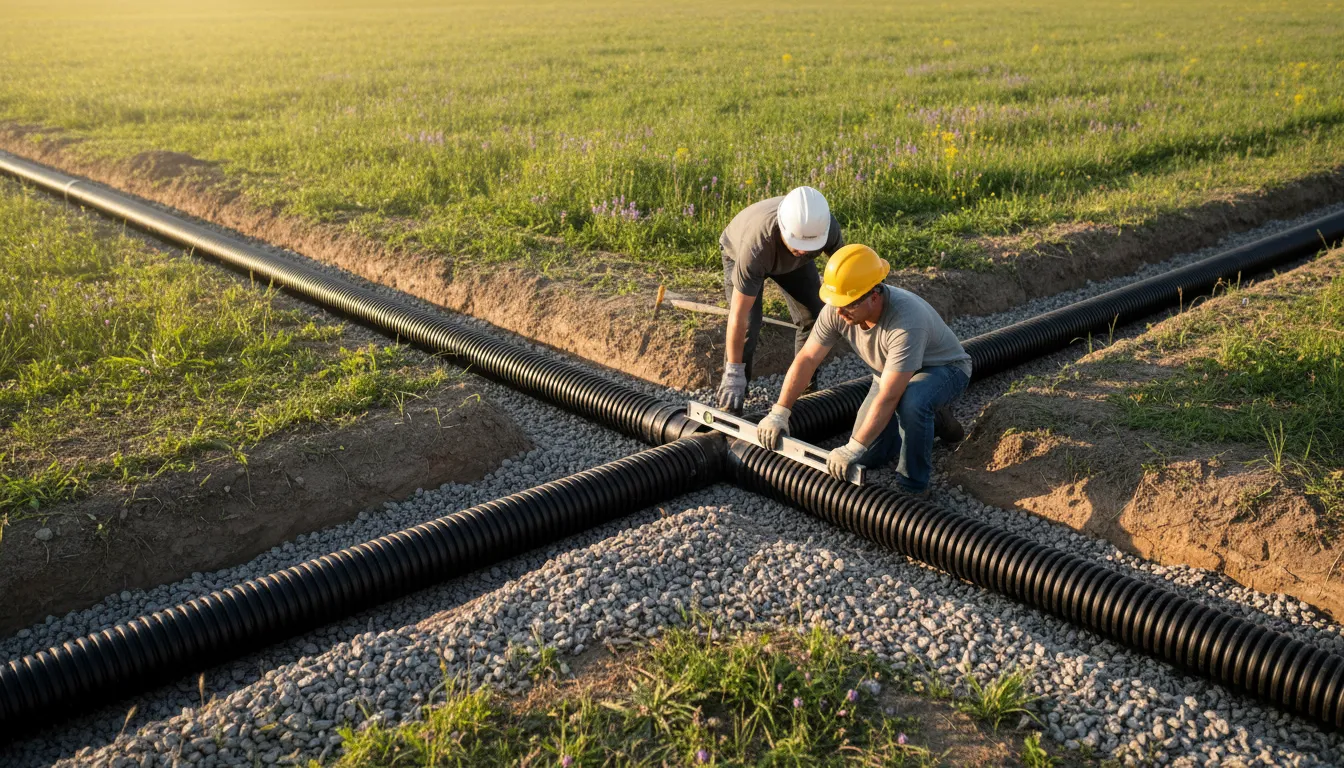
The drain field is the unsung hero of your On-Site Sewage Facility (OSSF), which is the official term for septic systems in Texas. After solids settle in the septic tank, the liquid effluent flows out to the drain field. Here, it percolates through a series of perforated pipes buried in trenches filled with gravel. The soil beneath acts as a natural filter, removing harmful bacteria, viruses, and nutrients before the water rejoins the groundwater table. A properly functioning leach field is vital for preventing pollution and nuisance conditions.
Common signs of drain field failure include:
- Sewage odors in the yard or home.
- Soggy, spongy, or standing water over the drain field area, especially when it hasn't rained.
- Slow-draining toilets and fixtures throughout the house.
- Unusually lush, green grass growing over the drain field while the rest of the lawn is dry.
Texas and Frisco Regulations for Septic System Work
In Texas, the Texas Commission on Environmental Quality (TCEQ) sets the statewide rules for OSSFs, which are often enforced by local authorized agents. For residents in Frisco and Collin County, understanding these regulations is the first step before any repair or replacement project begins.
Permit Requirements: A permit is mandatory for constructing, altering, repairing, or extending an OSSF, which includes most drain field work. 1 2 3 The only common exception is for "emergency repairs" that do not require removing the tank, though these must be reported to the permitting authority within 72 hours of starting. There is also an exception for a single-family residence on a tract of land 10 acres or larger, provided the system causes no nuisance, doesn't pollute groundwater, and all parts are at least 100 feet from property lines. 4 5 For the vast majority of Frisco homeowners, a permit will be required.
Licensing: All professional septic system work in Texas must be performed by a state-licensed installer. 6 7 Homeowners are permitted to install or repair systems on their own primary residence, but this is a complex undertaking that requires understanding all codes and passing inspections. Work on rental properties always requires a licensed professional. 8
Critical Setback Distances: When designing a new or replacement absorption field, strict minimum distances from key features must be maintained. These include: 9 10 11
- 100 feet from a private water well.
- 50 feet from the home's foundation.
- 10 feet from property lines and other structures.
- 25 feet from water supply lines.
The Essential Site Evaluation
Before any system design or repair plan can be approved, a professional site evaluation by a licensed evaluator or engineer is required. This evaluation determines if the soil on your property can properly treat wastewater and dictates what type of system you can install.
Key factors assessed during a site evaluation in Texas include:
- Soil Texture and Percolation Rate: Texas soils vary widely. The heavy clay soils common in many areas drain very slowly and may not be suitable for a conventional gravity-fed drain field. In these cases, an advanced aerobic treatment system (ATU) or other alternative design may be necessary. 12 13 14
- Soil Depth: Conventional systems generally require at least 48 inches of suitable soil above any restrictive layer like bedrock or high groundwater. 15 If usable soil is shallow (12-24 inches), modified or alternative systems are required. 16
- Site Features: The evaluator will assess the slope, natural drainage patterns, and proximity to features like fractured rock or waterways to ensure the system won't cause contamination. 17
This evaluation often includes a soil percolation (perc) test, which can cost between $600 and $2,000. 18
Repair vs. Replacement: Assessing the Problem
Not all drain field issues require a full replacement. A licensed professional can diagnose the root cause.
- Repairs: Sometimes, the problem is localized. A single clogged or crushed pipe, tree root intrusion, or a malfunctioning distribution box might be repaired without redoing the entire field. These are often considered "alterations" and still require a permit.
- Replacement: If the soil has become permanently clogged (a condition called biomat saturation), if the original system is undersized, or if the entire field has failed, a full replacement is necessary. This involves designing and installing a completely new leach field in a different location or using an advanced technology to rejuvenate the existing area.
Find the perfect drain field repair companies for your needs
Get personalized recommendations and expert advice
The Inspection Process
Inspections are mandated at key stages to ensure compliance and long-term functionality. 19 20
- Design Inspection: Confirms the proposed repair or replacement system design meets all TCEQ and local regulations before a permit is issued.
- Installation/Final Inspection: Conducted by the local permitting authority before the new drain field is backfilled. This verifies the installation matches the approved plan, uses proper materials, and is constructed correctly.
- Routine Maintenance Inspections: To prevent catastrophic failure, professional inspections are recommended every 3 years for conventional systems. Aerobic treatment systems require more frequent checks-typically every four months by a licensed maintenance provider. 21 22 A full inspection will assess the tank's sludge and scum levels (which should be pumped if they exceed one-third of the tank's depth) and check the condition of baffles and pipes. 23
Cost Considerations for Drain Field Work in Frisco
The total cost for drain field repair or replacement varies significantly based on the size of your home, the complexity of the system needed, and the soil conditions encountered. A simple repair of a distribution line will cost far less than a full replacement with an advanced aerobic system.
Additional costs to factor into your budget include: 24
- Soil Percolation Test: $600 - $2,000
- Standard Septic Inspection: $150 - $450
- Tank Pumping: $300 - $700 (often necessary during repair/replacement work)
- Landscape/Sod Restoration: $1 - $2 per square foot to restore your yard after excavation.
Choosing the Right System for Your Property
Based on the site evaluation, your licensed installer will recommend a system type.
- Conventional Gravity System: The most common and least expensive option, but requires deep, permeable soil with a suitable slope.
- Pressure-Dosed Drain Field: Uses a pump to distribute effluent evenly across the field, improving efficiency and allowing use on slightly sloped or variable sites.
- Aerobic Treatment Unit (ATU): Often required in Frisco's clay soils. An ATU adds oxygen to the treatment process inside a multi-chambered tank, producing a highly treated effluent that can be used in spray irrigation or shallower drain fields.
- Alternative Systems: For sites with high groundwater, shallow soil, or poor drainage, options like sand filters, mound systems, or drip irrigation may be proposed.
Maintaining Your New or Repaired Drain Field
Protect your investment with proper care:
- Direct Water Away: Ensure roof drains, sump pumps, and surface runoff are directed away from the drain field area.
- Mind What You Flush: Only human waste and toilet paper should go down the drain. Avoid chemicals, grease, wipes, and excessive use of garbage disposals.
- Control Traffic: Never drive or park vehicles, or build structures like sheds or patios, over the drain field.
- Landscape Carefully: Plant only grass or shallow-rooted plants over the field. Trees and shrubs should be kept far away to prevent root damage.
Frequently asked questions
Sources
Footnotes
-
Getting a Permit for an OSSF - Such as a Septic System - https://www.tceq.texas.gov/permitting/ossf/ossfpermits.html ↩
-
Texas Septic System Regulations - https://dillonseptic.com/texas-septic-system-regulations/ ↩
-
What laws in Texas apply to septic systems? - Water School - https://brazos.org/about-us/education/water-school/articleid/349/what-laws-in-texas-apply-to-septic-systems ↩
-
Getting a Permit for an OSSF - Such as a Septic System - https://www.tceq.texas.gov/permitting/ossf/ossfpermits.html ↩
-
Advice for an Owner of an On-Site Sewage Facility (Septic System) - https://www.tceq.texas.gov/permitting/ossf/ossfadvice.html ↩
-
SEPTIC SYSTEM LAWS IN TEXAS - https://www.terseptic.com/posts/septic-systems-its-the-law ↩
-
Texas Septic Tank Rules - https://dillonseptic.com/texas-septic-tank-rules/ ↩
-
Septic System FAQs - https://newtools.cira.state.tx.us/upload/page/7913/docs/Health/Water%20Quality/Water%20Quality%20FAQs%20%282%29.pdf ↩
-
Basics for Septic Systems - https://www.tceq.texas.gov/assistance/water/fyiossfs.html ↩
-
chapter 366. on-site sewage disposal systems - Texas Statutes - https://statutes.capitol.texas.gov/GetStatute.aspx?Code=HS&Value=366 ↩
-
Septic Permits - Environmental Control - Jefferson County TX - https://jeffersoncountytx.gov/env_cntrl/septicpermits.htm ↩
-
Basics for Septic Systems - https://www.tceq.texas.gov/assistance/water/fyiossfs.html ↩
-
Texas Septic System Regulations - https://dillonseptic.com/texas-septic-system-regulations/ ↩
-
Understanding and maintaining your septic system - https://ossf.tamu.edu/files/2023/01/L-5491-9.08-Understanding-and-maintaining-your-septic-system.pdf ↩
-
Choosing a Septic System (On-Site Sewage Facility System) - https://www.tceq.texas.gov/permitting/ossf/ossfsystems.html ↩
-
Septic Systems: Site Evaluation and Testing - Soil Depth - https://mseptic.com/understanding-onsite-wastewater/2019/7/19/septic-systems-site-evaluation-and-testing-soil-depth ↩
-
Septic Tank Laws in Texas - https://dillonseptic.com/septic-tank-laws-in-texas/ ↩
-
How Much Does a Leach or Drain Field Replacement Cost? (2026) - https://homeguide.com/costs/drain-leach-field-replacement-cost ↩
-
Texas Septic Tank Rules - https://dillonseptic.com/texas-septic-tank-rules/ ↩
-
Are There Regulations or Guidelines for Septic Tank Drain ... - https://weebeewasteservices.com/are-there-regulations-or-guidelines-for-septic-tank-drain-field-maintenance-in-texas/ ↩
-
Maintenance of On-Site Sewage Facilities (Septic Systems) - https://www.tceq.texas.gov/permitting/ossf/ossfmaintenance.html ↩
-
Does Texas Require Septic Inspection - TexInspec - https://texinspec.com/does-texas-require-septic-inspection/ ↩
-
What is Included in Septic Inspection? - TexInspec - https://texinspec.com/what-is-included-in-septic-inspection/ ↩
-
Average Cost to Install Septic System in Texas - https://dillonseptic.com/average-cost-to-install-septic-system-in-texas/ ↩