Find the Best Drain Field Repair Companies for Your Business
No obligation • Fast responses • Nationwide coverage

Why you can trust Septic Spot
Septic Spot is a leading United States resource for understanding and comparing septic services. Our editors review providers using consistent criteria and verify key business details. Listings and scores are independent, and companies cannot pay to influence our content.
Search providers near you
Top Drain Field Repair Companies in Galveston, Texas Ranked
A failing drain field, also known as a leach field or absorption field, is a serious issue for any property with a septic system. This critical component is responsible for safely dispersing and filtering treated wastewater into the soil. When it fails, it can lead to soggy yards, foul odors, sewage backups, and environmental contamination. For homeowners in Galveston, navigating drain field issues involves understanding unique local soil conditions, strict regulatory requirements, and the specialized repair or replacement process. This guide provides the essential information you need to identify problems, understand your options, and connect with qualified local professionals who can restore your system to proper function.

Understanding Your Drain Field and Signs of Failure
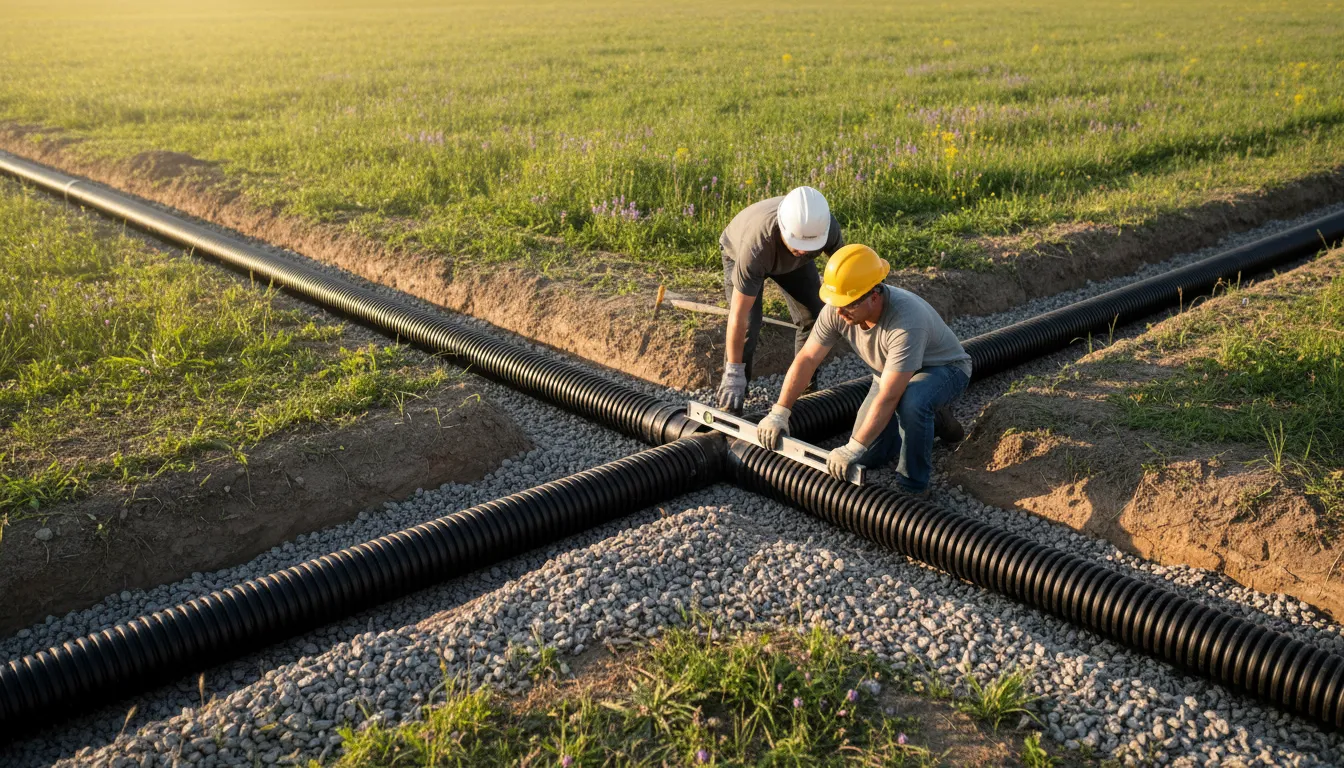
The drain field is the final stage of your onsite sewage facility (OSSF). After solids settle in the septic tank, the liquid effluent flows through pipes into a network of perforated lines buried in trenches filled with gravel or other aggregate. This effluent slowly seeps into the soil, where natural processes provide final treatment. In Galveston, common signs that your leach field or soil absorption area is failing include:
- Persistently soggy or spongy ground over the drain field area, even during dry weather.
- Sewage odors emanating from the yard, especially near the distribution box or field lines.
- Slow drains and gurgling plumbing fixtures throughout the home.
- Sewage backing up into household drains or surfacing in the yard (a serious health hazard).
- Unusually lush, green grass growing over the field, indicating a nutrient overload from effluent.
If you notice any of these symptoms, it's crucial to act quickly. A failing system is a public health nuisance and can violate state and county codes.
Galveston's Unique Challenges: Soil and Water Tables
Successful drain field function depends heavily on soil permeability, or how quickly water can move through it. This is where Galveston property owners face specific hurdles. Much of the local soil is heavy clay, which has a very slow absorption rate. Furthermore, the coastal area is known for its high groundwater tables.
Texas regulations mandate a minimum 2-foot vertical separation between the bottom of the drain field trenches and any restrictive soil layer or the seasonally saturated groundwater level. In many parts of Galveston, achieving this separation with a conventional gravel trench system is impossible due to the shallow water table or dense clay. Consequently, advanced treatment systems, particularly aerobic treatment units (ATUs) with spray distribution fields, are very common and often required for new installations and replacements 1. These systems treat wastewater to a higher standard, allowing for surface dispersal via sprinklers in areas where soil absorption is inadequate.
The Legal and Regulatory Framework
All work on a septic system in Texas, including drain field repair or replacement, is governed by state rules (Texas Administrative Code, Chapter 285) and enforced by local authorities 2. In Galveston County, the Galveston County Health District (GCHD) is the permitting and oversight body for all OSSF work.
Key regulations you must know:
- Permit Required: A permit from the GCHD is mandatory for any construction, alteration, repair, or extension of a septic system. This absolutely includes fixing or replacing a drain field.
- Licensed Professionals: With very limited exceptions, all system installations and repairs must be performed by a licensed installer or a professional engineer. Homeowners may only perform work on their own primary residence if they meet specific criteria and obtain the proper permits 3 4.
- Emergency Repairs: If you have a sudden failure that constitutes a public health emergency, you may begin necessary repairs immediately. However, you are required to report the emergency and the repairs made to the GCHD within 72 hours 5.
- Setbacks: Drain fields must be located a minimum distance from property features. A critical rule is maintaining at least 100 feet from any water well 6 7.
Find the perfect drain field repair companies for your needs
Get personalized recommendations and expert advice
The Step-by-Step Process for Repair or Replacement
Addressing a failed absorption field is a multi-step process that involves professional assessment, design, and permitting.
-
Professional Assessment & Site Evaluation: The first step is to hire a licensed professional to diagnose the problem. They will often perform a pre-permit site evaluation, which includes a deep soil analysis (soil morphology) to determine the soil's absorption capacity, texture, and depth to groundwater 8 9. This evaluation is the foundation for all subsequent steps and is required for a permit.
-
System Design & Permit Application: Based on the site evaluation, a system will be designed. For many Galveston homes, this will likely be an aerobic treatment system. Your licensed installer or engineer will prepare the construction plans and submit the permit application to the GCHD for approval 10.
-
Construction & Installation: Once the permit is issued, the construction phase begins. This involves excavating the old, failed field (if necessary) and installing the new distribution lines, aggregate, and related components. For aerobic systems, this includes the treatment unit, pump tank, and spray heads.
-
Final Inspection: After installation but before covering the system, a final inspection must be scheduled with the GCHD. The inspector will verify that the installation matches the permitted plans, that all components are correctly installed, and that the system is ready for operation 11. Only after passing this inspection can the system be covered and put into use.
Understanding the Costs Involved
The cost to repair or replace a drain field in Galveston varies widely based on the system type, the extent of the failure, and site accessibility. The challenging local conditions often lead to higher costs compared to areas with more favorable soils.
- Site Evaluation & Soil Analysis: Typically ranges from $350 to $750.
- Conventional System Repair/Replacement: For partial repairs or replacement of a traditional gravel trench system where conditions allow, costs can range from $6,000 to $12,000.
- Aerobic System Replacement: Given the common need for advanced systems in Galveston, a full replacement with an aerobic treatment unit (ATU) and spray field often falls between $12,000 and over $20,000.
- Ongoing Maintenance: It's important to budget for the future. Aerobic treatment units require annual maintenance contracts, which generally cost between $400 and $800 per year to ensure the mechanical components, alarms, and spray heads function correctly 12.
Disclaimer: The provided cost ranges are estimates based on available data. Always obtain detailed quotes from licensed local professionals for your specific situation.
Maintaining Your New or Repaired System
Protecting your investment in a new or repaired leach field is essential. Proper maintenance extends its lifespan and prevents premature failure.
- Practice Water Conservation: Spread out laundry loads, fix leaky faucets, and install water-efficient fixtures to avoid hydraulically overloading the field.
- Divert Surface Water: Ensure roof gutters, yard drains, and pavement runoff are directed away from the drain field area.
- Protect the Area: Never drive or park vehicles, build structures, or plant trees with deep roots over the drain field.
- Mind What You Flush: Only human waste and toilet paper should go down the drains. Avoid chemicals, grease, wipes, and other non-biodegradable items.
- Schedule Regular Pumping: Have your septic tank pumped every 3-5 years (or as recommended) to prevent solids from washing out into the field.
- Adhere to Maintenance Contracts: If you have an aerobic system, faithfully keep up with the required annual maintenance visits.
Frequently asked questions
Sources
Footnotes
-
Conventional septic tank/drain field - Houston-Galveston Area Council - https://www.h-gac.com/getmedia/eb908b2e-61a1-4180-9b8e-8652ded0ceec/OSSF-Treatment-Systems_Conventional-Septic-Tank-Drain-Field.pdf ↩
-
30 TAC Chapter 285.pdf - https://newtools.cira.state.tx.us/upload/page/0983/docs/LandDevAndEmerg/30%20TAC%20Chapter%20285.pdf ↩
-
Basics for Septic Systems - https://www.tceq.texas.gov/assistance/water/fyiossfs.html ↩
-
SEPTIC SYSTEM LAWS IN TEXAS - https://www.terseptic.com/posts/septic-systems-its-the-law ↩
-
On-Site Sewage Facilities | Galveston County Health District - https://www.gchd.org/about-us/environmental-health-services/consumer-health-services/on-site-sewage-facilities ↩
-
Are There Regulations or Guidelines for Septic Tank Drain ... - https://weebeewasteservices.com/are-there-regulations-or-guidelines-for-septic-tank-drain-field-maintenance-in-texas/ ↩
-
Septic Tank Laws in Texas - https://dillonseptic.com/septic-tank-laws-in-texas/ ↩
-
Texas Septic System Regulations - https://dillonseptic.com/texas-septic-system-regulations/ ↩
-
Texas Septic Tank Rules - https://dillonseptic.com/texas-septic-tank-rules/ ↩
-
Getting a Permit for an OSSF - Such as a Septic System - https://www.tceq.texas.gov/permitting/ossf/ossfpermits.html ↩
-
Texas OSSF Inspection Requirements: Complete Guide for 2025 - https://www.fieldbaseos.com/blog/texas-ossf-inspection-requirements.html ↩
-
Texas Septic Systems & OSSF Requirements | 2026 Guide - https://texaslandbrokerage.com/resources/texas-septic-systems-ossf-requirements-guide/ ↩