Find the Best Drain Field Repair Companies for Your Business
No obligation • Fast responses • Nationwide coverage

Why you can trust Septic Spot
Septic Spot is a leading United States resource for understanding and comparing septic services. Our editors review providers using consistent criteria and verify key business details. Listings and scores are independent, and companies cannot pay to influence our content.
Search providers near you
Top Drain Field Repair Companies in Garland, Texas Ranked
A failing drain field is a serious issue for any home with a septic system, leading to soggy yards, foul odors, and potential environmental contamination. Drain field repair or replacement is a significant project that requires navigating local regulations, understanding your property's unique soil conditions, and hiring qualified professionals. This guide provides essential information for Garland homeowners to understand the process, costs, and key considerations for restoring their septic system's critical absorption area.

Understanding Your Drain Field's Role
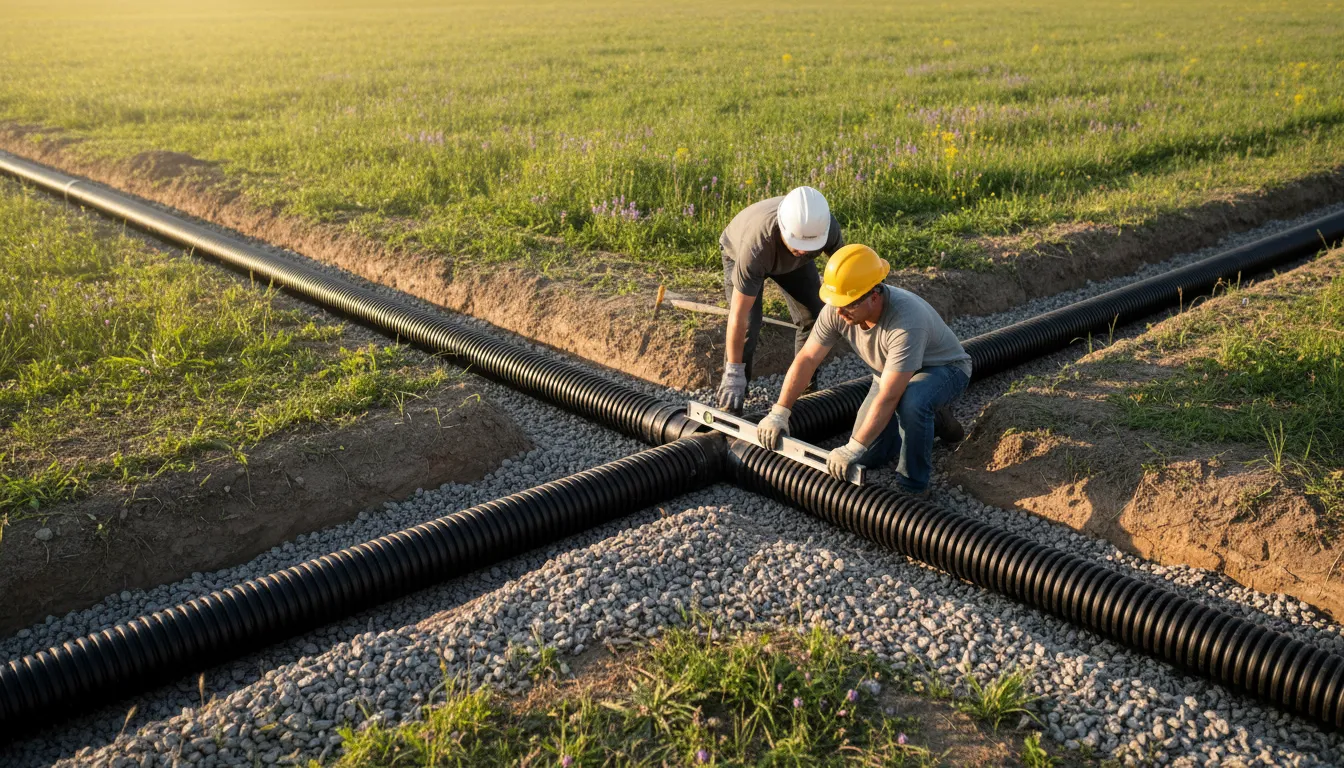
Often called a leach field or absorption field, the drain field is the final and most crucial stage of your septic system. After solids settle in the tank, the clarified liquid effluent flows into a network of perforated pipes buried in trenches filled with gravel. This effluent slowly percolates down through the soil, where natural biological processes provide the final treatment before it rejoins the groundwater. When this area fails, the entire system's function is compromised.
Signs You Need Drain Field Repair or Replacement
Recognizing early warning signs can prevent a complete system failure and more extensive damage. Be alert for these indicators:
- Soggy Ground or Standing Water: Persistent wet spots, lush green grass, or pooling water over the drain field area, especially when it hasn't rained.
- Sewage Odors: Unpleasant smells emanating from your yard or even inside your home.
- Slow Drains and Backups: Gurgling pipes, toilets that drain slowly, or sewage backing up into household drains.
- Contaminated Well Water: If you have a private well, test it regularly. Bacterial contamination can indicate a failing septic system nearby.
If you notice any of these signs, it's crucial to contact a licensed professional immediately for an evaluation.
Garland and Texas Regulatory Requirements
All work on an On-Site Sewage Facility (OSSF), which includes drain fields, is strictly regulated by the Texas Commission on Environmental Quality (TCEQ) and local authorities. Understanding these rules is the first step.
- Permit Mandatory: You must obtain a permit from your local authorized agent (often the city or county health department) before any construction, repair, or alteration begins. Starting work without a permit can result in fines and orders to remove unapproved work.
- Licensed Professionals Only: With very few exceptions, all septic system work must be performed by a licensed installer (Class II or higher for certain systems). Homeowners may perform work on their own primary residence but are still subject to all permitting and inspection requirements.
- Required Inspections: The process involves multiple inspections. An initial site evaluation is needed for the permit. During construction, inspections occur before the system is covered. For aerobic systems, ongoing maintenance inspections every four months are legally required 1.
Site-Specific Challenges in Garland
The success of a drain field hinges on your property's specific conditions. Garland's soil and landscape present common challenges that influence system design.
- Clay-Heavy Soils: Much of the soil in the North Texas area has a high clay content. Clay absorbs water very slowly, which can lead to ponding and system failure in a conventional drain field. This often necessitates engineered solutions like aerobic treatment units (ATUs) or specialized drain field designs.
- Site Constraints: Smaller urban lots, steep slopes, or a high seasonal groundwater table can limit where a traditional drain field can be placed. In these cases, alternative systems like shallow, low-pressure dosing (LPD) or drip irrigation fields may be the only viable options.
- Mandatory Setbacks: Regulations enforce minimum distances (setbacks) from property lines, water wells, buildings, and surface water. Your new or repaired system must comply with these setbacks, which can further complicate design on tight lots.
The Step-by-Step Process for Repair or Replacement
Navigating a drain field project involves a clear sequence of events. Here's what you can expect:
- Site Evaluation: A licensed site evaluator assesses your property's soil type, percolation rate, slope, and groundwater depth. This report is the foundation for all subsequent steps.
- System Design & Permit Application: Based on the evaluation, a professional designer or engineer creates a system plan that meets TCEQ standards for your site's conditions. This plan is submitted with the permit application to your local authority 2.
- Construction/Repair Work: Once the permit is issued, a licensed installer executes the plan. This may involve excavating and replacing the entire drain field, repairing a section, or installing a completely new type of system.
- Final Inspection and Approval: After construction but before the system is covered with soil, a local inspector must verify it was built according to the permitted plans. Only after passing this inspection can the system be buried and put into use 3 4.
Find the perfect drain field repair companies for your needs
Get personalized recommendations and expert advice
Cost Breakdown for Drain Field Projects in Garland
Costs can vary widely based on system type, soil conditions, and property accessibility. The figures below are general estimates to help you budget.
- Site Evaluation & Design: The essential first step typically costs between $500 and $3,000, depending on the complexity of the site and the need for engineering.
- Drain Field Repair/Replacement: For a standard drain field replacement, homeowners can expect an average cost of around $7,000 5. Simple repairs to a portion of the field will be less.
- Full System Replacement (Including Tank): If the entire septic system needs upgrading-for example, replacing a conventional system with an aerobic treatment unit (ATU) and new drain field-costs often range from $6,000 to $15,000 6. For properties with severe constraints, costs can exceed $20,000 7.
- Ongoing Maintenance: Aerobic systems, which are common in Garland due to soil conditions, require a maintenance contract. A licensed maintenance provider must inspect the system every 4-6 months, with annual costs for these contracts and any necessary repairs 8.
Choosing the Right System for Your Property
Given the local challenges, your repair or replacement will likely involve one of these common systems:
- Conventional Drain Field: Still an option if soil percolation tests are favorable and there is adequate space with proper setbacks.
- Aerobic Treatment System (ATS): An excellent solution for poor soils. These systems inject oxygen into the treatment tank, breaking down waste more efficiently and producing a higher-quality effluent that can be dispersed in challenging soils 9 10.
- Low-Pressure Dosing (LPD) System: Uses a pump to distribute effluent evenly across the drain field in controlled doses, allowing the soil to rest between doses. Ideal for shallow soils or sites with slight slopes.
- Drip Irrigation Dispersal: Treats effluent to a high standard and disperses it via shallow drip tubing across a larger area, often used where space is limited but soil conditions are suitable.
Maintaining Your New or Repaired Drain Field
Protect your investment with proper care. Avoid driving or parking vehicles over the drain field, planting trees with deep roots nearby, and diverting rainwater runoff onto the area. Practice water conservation inside your home to prevent hydraulic overload. Most importantly, adhere to all required maintenance inspections, especially for aerobic systems, to ensure long-term functionality and compliance 11.
Frequently asked questions
Sources
Footnotes
-
SEPTIC SYSTEM LAWS IN TEXAS - https://www.terseptic.com/posts/septic-systems-its-the-law ↩
-
Texas Septic Tank Rules - https://dillonseptic.com/texas-septic-tank-rules/ ↩
-
Basics for Septic Systems - https://www.tceq.texas.gov/assistance/water/fyiossfs.html ↩
-
Advice for an Owner of an On-Site Sewage Facility (Septic System) - https://www.tceq.texas.gov/permitting/ossf/ossfadvice.html ↩
-
Septic Drain Field Replacement Cost - https://dillonseptic.com/septic-drain-field-replacement-cost/ ↩
-
Cost of a Septic System in Texas - https://dillonseptic.com/cost-of-a-septic-system-in-texas/ ↩
-
Cost to Replace Septic Tank and Drain Field [2026 Data] | Angi - https://www.angi.com/articles/how-much-new-drain-fields-foot.htm ↩
-
Maintenance of On-Site Sewage Facilities (Septic Systems) - https://www.tceq.texas.gov/permitting/ossf/ossfmaintenance.html ↩
-
Texas Septic System Regulations - https://dillonseptic.com/texas-septic-system-regulations/ ↩
-
Texas Septic Systems & OSSF Requirements | 2026 Guide - https://texaslandbrokerage.com/resources/texas-septic-systems-ossf-requirements-guide/ ↩
-
Are There Regulations or Guidelines for Septic Tank Drain ... - https://weebeewasteservices.com/are-there-regulations-or-guidelines-for-septic-tank-drain-field-maintenance-in-texas/ ↩