Find the Best Drain Field Repair Companies for Your Business
No obligation • Fast responses • Nationwide coverage

Why you can trust Septic Spot
Septic Spot is a leading United States resource for understanding and comparing septic services. Our editors review providers using consistent criteria and verify key business details. Listings and scores are independent, and companies cannot pay to influence our content.
Search providers near you
Top Drain Field Repair Companies in Georgetown, Texas Ranked
A failing drain field is a serious issue for any home with a septic system, leading to unpleasant odors, soggy yards, and potential environmental contamination. In Georgetown, addressing problems with your leach field or absorption area is not just a repair-it's a regulated process critical to protecting the unique Hill Country environment. This guide provides the essential information you need to understand the local requirements, costs, and steps for restoring your septic system's vital drainage component.
HomeField Williamson County
40203 Industrial Park Cir, Georgetown, TX 78626
HomeField Williamson County provides comprehensive septic system services in Austin, TX, covering residential and commercial needs. Their offerings include septic tank pumping, inspections, repairs, installations, drain field replacements, and system design. The company emphasizes local expertise and proactive maintenance plans to help prevent future problems. They serve Williamson County with a team familiar with local regulations and conditions, ensuring septic systems meet current requirements. HomeField also offers various maintenance plans tailored to different levels of coverage and support.
Godinez Septics Inc
5407 Phillips Cir, Austin, TX 78734
Godinez Septics Inc is a family-owned septic system company serving Austin, TX, and the surrounding Lake Travis area. They provide a range of services including septic tank pumping, inspection, repair, installation, and drain field replacement. The company is licensed by TCEQ for septic system maintenance and installation, offering specialized services such as aerobic system maintenance contracts and hydro-jetting to clear sewer lines. With over 40 years of experience in the septic and excavation business, Godinez Septics is led by Orlando Godinez, a longtime local resident and licensed installer.
Hines Septic Of Austin Tx
Austin, TX
Hines Septic Of Austin Tx is a family-owned septic service provider based in Austin, TX. They offer septic tank pumping, installation, inspection, and repair services, including drain field repair and replacement. The company is fully licensed and insured, ensuring all work is performed to code. They provide 24/7 emergency septic services and back their installations with a one-year labor warranty.

Eco Septic Tank Pumping Austin
Austin, TX
Eco Septic Tank Pumping Austin provides septic tank pumping, inspection, repair, and installation services in Austin, TX. They handle routine septic system cleaning, emergency septic sewer cleaning, and biological treatments to maintain system health. The company also offers septic system repairs and drain field replacement, ensuring compliance with local regulations. Their technicians follow a detailed pumping process and dispose of waste properly at licensed facilities. Eco Septic Tank Pumping Austin serves multiple areas around Austin and emphasizes regular maintenance to prevent system failures.
Sunset Construction & Excavation
Austin, TX
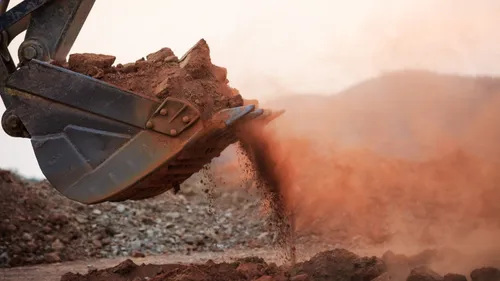
Sunset Construction & Excavation is a septic system service provider based in Austin, TX. They offer septic system installations, repairs, and design services for both residential and commercial clients. Their work includes excavation and landscaping related to septic systems, serving Austin and surrounding areas such as Travis County, Leander, and Bee Cave. The company has over a decade of experience and is licensed by the Texas Commission on Environmental Quality. They also provide hydro-mulching to restore properties after septic work is completed.
Understanding Drain Fields in the Texas Hill Country
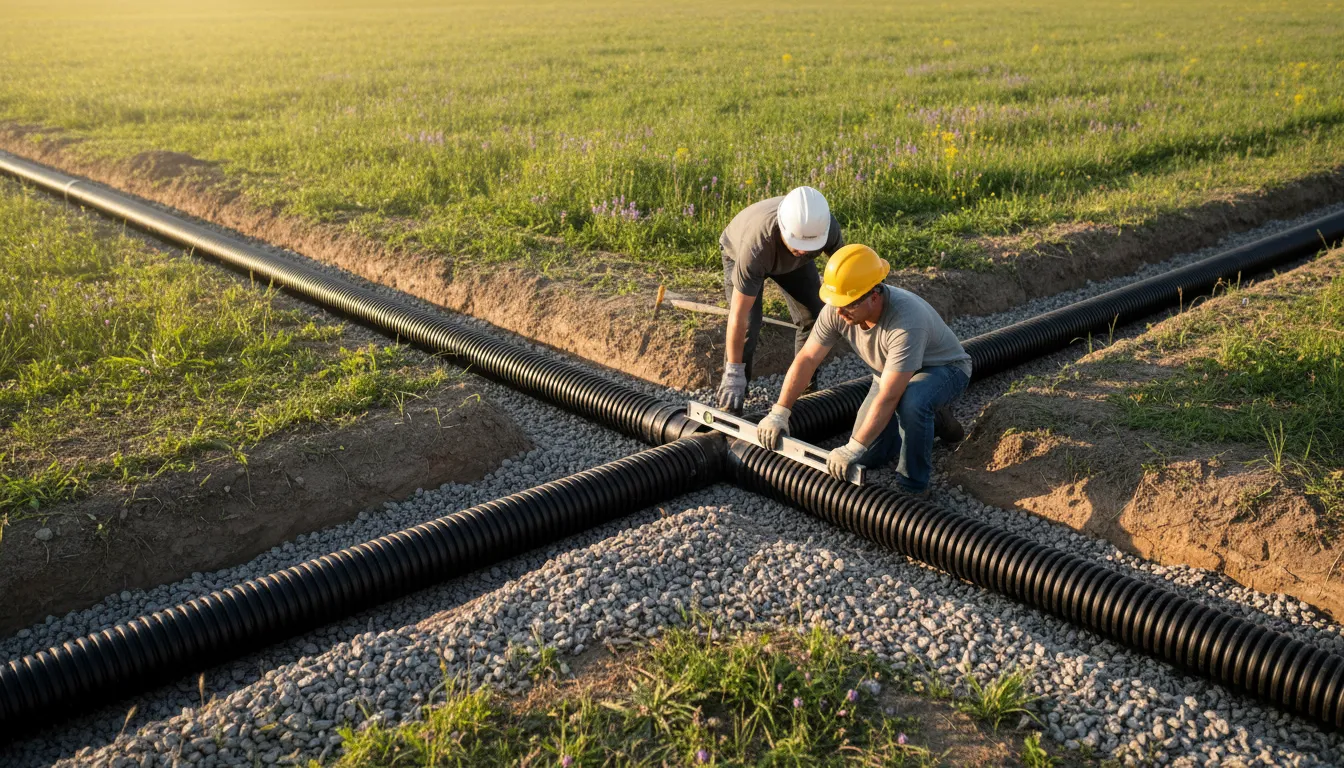
A drain field, also known as a leach field or soil absorption field, is the final and most crucial stage of a septic system. After solids settle in the tank, liquid effluent flows into a network of perforated pipes buried in trenches filled with gravel. This effluent slowly percolates through the soil, where natural processes filter and treat it before it re-enters the groundwater.
In Georgetown and surrounding Williamson County, this process is challenged by the local geology. The area is characterized by thin topsoil and shallow limestone bedrock, which can severely limit the soil's ability to absorb and treat wastewater. Furthermore, parts of the county lie within the sensitive recharge zones of the Edwards and Trinity aquifers, making proper system function and repair a matter of public water supply protection 1. This challenging terrain often necessitates specialized system designs, such as aerobic treatment units (ATUs) or drip irrigation fields, rather than conventional gravel trenches.
Signs You Need Drain Field Service
Recognizing early warning signs can prevent a complete system failure and more costly repairs. Contact a licensed professional if you notice:
- Sewage Odors or Surfacing Effluent: Wet, soggy patches or standing water over the drain field area, especially with a foul smell, are primary indicators of failure.
- Slow Drains and Backups: Gurgling pipes, toilets that drain slowly, or backups in the lowest household drains can signal that the drain field is saturated and not accepting liquid.
- Unusually Green Grass: While some growth is normal, conspicuously lush and green grass specifically over the leach field lines suggests excess nutrient-rich wastewater.
- Failed Dye or Load Tests: During a real estate inspection or routine maintenance, a professional may perform tests that confirm the soil is no longer absorbing effluent.
The Georgetown & Williamson County Regulatory Process
Nearly all drain field repairs and replacements in Georgetown require a permit from either the Williamson County Engineers Office or the Texas Commission on Environmental Quality (TCEQ) before any work begins. The process is designed to ensure repairs meet state and local health and environmental standards.
- System Assessment: A licensed septic professional conducts a thorough inspection to diagnose the cause and extent of drain field failure.
- Site Evaluation & Design: This is a critical step in the Hill Country. A licensed site evaluator must test the soil depth, texture, and percolation rate. The design must account for strict setbacks from property lines, wells, and buildings, and specify the appropriate system type for the site conditions 2. This design phase can take 3 to 8 weeks.
- Permit Submission: The professional installer submits the detailed design and application for a permit to the local authority (County or TCEQ) for approval.
- Installation/Repair: Once permitted, the work begins. For a full replacement, this involves excavating the old field and installing new trenches, chambers, or advanced system components.
- Final Inspection: The local authority conducts a final inspection to ensure the installation matches the permitted design before the system is covered 3.
Note: Emergency repairs to abate an immediate health hazard are allowed but must be reported to the permitting authority within 72 hours 4. Furthermore, if you have an aerobic treatment system (ATU), state law requires it to be under a valid maintenance contract with regular inspection reports filed with the county 5 6.
Repair vs. Replacement: Options and Costs
The solution for your drain field depends on the nature and severity of the failure.
Drain Field Repair ($1,000 - $5,000): Some issues can be resolved without a full replacement. Techniques include:
- Jet Cleaning: High-pressure water jets clear clogged pipes of biomat and roots.
- Terra-Lift or Aeration: Fracturing compacted soil around the trenches to restore permeability.
- Partial Replacement: Excavating and replacing only the most damaged sections of the leach field 7.
Complete Drain Field Replacement ($5,000 - $20,000+): This is necessary when the soil is completely exhausted or the system is outdated. Costs vary widely based on:
- System Type: A conventional system is generally less expensive than an aerobic or drip irrigation system, which may be mandated on difficult sites 8.
- Size: Based on home occupancy and soil conditions.
- Site Accessibility: Rocky terrain or steep slopes increase excavation difficulty and cost.
- Full System Replacement: If the tank also fails, combining tank and drain field replacement can range from $14,000 to $25,000 or more for a complete aerobic system on a challenging lot 9 10.
A professional inspection, which typically costs between $175 and $400, is the essential first step to determine the right course of action and obtain an accurate estimate 11.
Find the perfect drain field repair companies for your needs
Get personalized recommendations and expert advice
Choosing a Licensed Professional in Georgetown
Due to the technical and regulatory complexity, selecting the right contractor is paramount. Look for a provider who is:
- Licensed by the TCEQ: This is non-negotiable for designing and installing septic systems in Texas.
- Experienced with Local Geology: They should have a proven track record with Hill Country soils, limestone, and aquifer regulations.
- Knowledgeable on Local Permits: They should handle the entire permit application process with Williamson County or the TCEQ.
- Transparent in Communication: They should provide a detailed, written proposal outlining the diagnosis, recommended solution, design plan, timeline, and complete cost breakdown.
The rapid growth in Williamson County places increased importance on properly functioning septic systems 12. A reputable professional will guide you through the process, ensuring your new leach field is designed for long-term reliability and environmental compliance.
Maintenance for a Healthy Drain Field
Protecting your investment after a repair or replacement is key. Follow these guidelines:
- Practice Water Conservation: Spread out laundry loads, fix leaks, and use water-efficient fixtures to avoid hydraulically overloading the field.
- Divert Water: Ensure roof gutters, yard drainage, and sump pumps discharge away from the drain field area.
- Avoid Compaction: Never drive or park vehicles, or build structures like sheds or patios, over the drain field.
- Mind What You Flush: Only human waste and toilet paper should go down the drain. Avoid chemicals, grease, wipes, and medications.
- Pump the Tank Regularly: Removing solids from the septic tank (typically every 3-5 years) prevents them from washing out and clogging the drain field.
Frequently asked questions
Sources
Footnotes
-
Septic Tank Laws in Texas - https://dillonseptic.com/septic-tank-laws-in-texas/ ↩
-
Texas Septic System Regulations - https://dillonseptic.com/texas-septic-system-regulations/ ↩
-
Pearland Septic Systems Guide | New Texas Homeowners - https://accurateplumbingtx.com/pearland-septic-systems-new-homeowner-guide/ ↩
-
How a Septic System Works | Williamson County, TX - https://www.wilcotx.gov/651/How-a-Septic-System-Works ↩
-
Texas Septic Systems & OSSF Requirements | 2026 Guide - https://texaslandbrokerage.com/resources/texas-septic-systems-ossf-requirements-guide/ ↩
-
SEPTIC SYSTEM LAWS IN TEXAS - https://www.terseptic.com/posts/septic-systems-its-the-law ↩
-
Drain Field Repair | A & M Septic | North Texas Area - https://www.amseptic.com/drain-field-repair ↩
-
Septic Drain Field Replacement Cost - https://dillonseptic.com/septic-drain-field-replacement-cost/ ↩
-
What You Should Know About Septic Systems When Building ... - https://riverhillsbuilder.com/septic-systems-hill-country/ ↩
-
Septic System Repair Costs in Texas | 1 Source - https://tx1source.com/blog/septic-system-repair-costs-texas/ ↩
-
Septic Tank Pumping Cost in Texas (2026) - https://callseptic.com/costs/texas ↩
-
Septic Tank Plans: A Complete Homeowner's Guide - https://landperc.com/septic-tank-plans-guide/ ↩