Find the Best Drain Field Repair Companies for Your Business
No obligation • Fast responses • Nationwide coverage

Why you can trust Septic Spot
Septic Spot is a leading United States resource for understanding and comparing septic services. Our editors review providers using consistent criteria and verify key business details. Listings and scores are independent, and companies cannot pay to influence our content.
Search providers near you
Top Drain Field Repair Companies in Haltom City, Texas Ranked
A failing drain field, also known as a leach field or soil absorption system, is a serious issue for any home with a septic system. This critical component is responsible for safely dispersing and filtering treated wastewater into the soil. When it fails, you may notice soggy ground, sewage odors, or slow-draining fixtures. In Haltom City, repairing or replacing a drain field is a regulated process that requires permits, professional expertise, and adherence to strict state and county codes. This guide explains the local requirements, processes, and considerations to help you navigate finding qualified professionals for this essential work.
HomeField Parker County
617 Pine St, Aledo, TX 76008
HomeField Parker County is a septic service provider based in Fort Worth, TX, offering comprehensive septic system solutions for both residential and commercial clients. Their services include septic tank pumping, inspections, repairs, installations, drain field replacement, and system design. They also provide real estate septic inspections and maintenance plans to help customers stay compliant with local regulations. HomeField Parker County serves Parker, Johnson, and Hood counties, bringing local expertise to every job. Their team is equipped to handle emergency septic repairs and routine maintenance, ensuring systems operate efficiently and meet current standards.

H&S Septic Services
Fort Worth, TX
H&S Septic Services is a family-owned business offering comprehensive septic system solutions in Fort Worth, TX, and nearby Parker and Hood counties. With over 50 years of combined experience, they provide services including septic tank pumping, inspection, repair, installation, drain field repair, grease trap maintenance, and specialized car wash tank pumping. Their licensed and insured team manages everything from site evaluation to emergency repairs, backed by a one-year labor warranty on installations and repairs. They also provide water drainage solutions to protect septic systems from damage caused by excess moisture. Emergency services are available to address urgent septic issues promptly.
Understanding Drain Field Systems and Common Failures
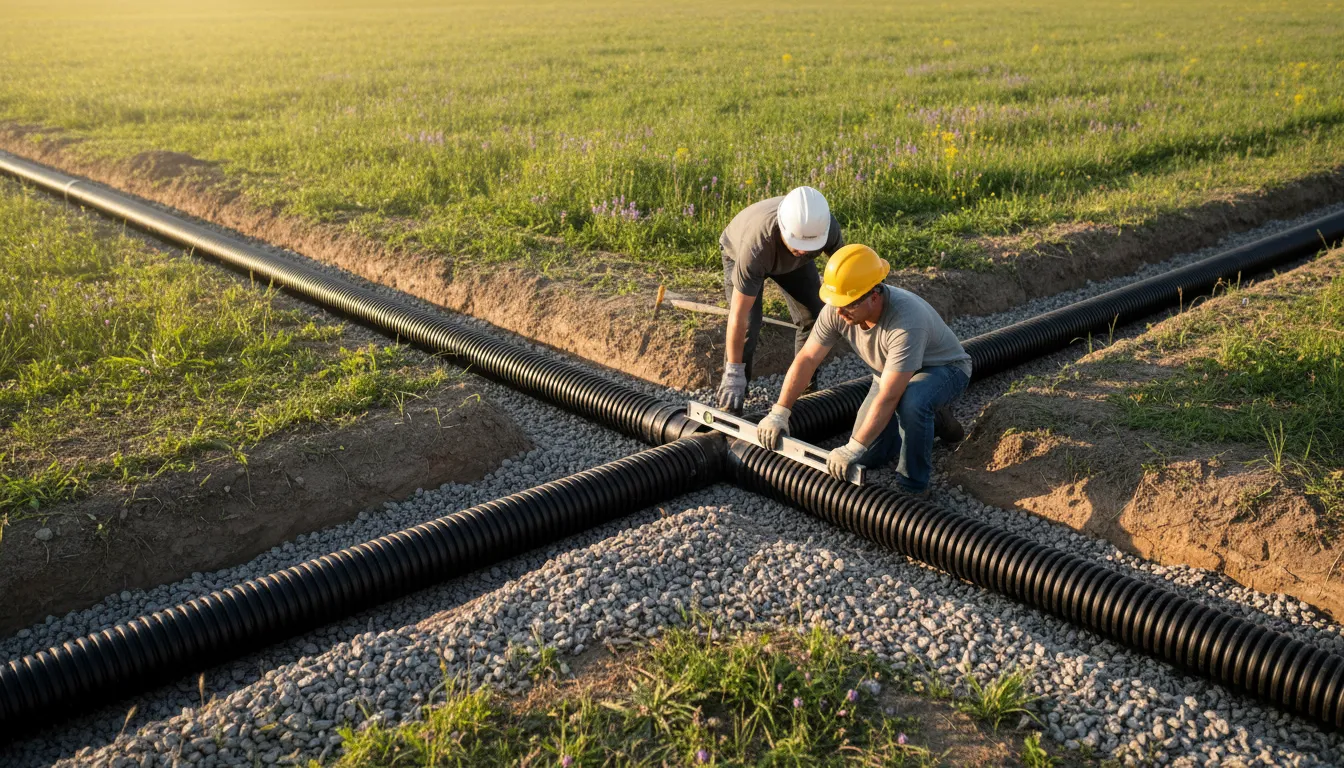
The drain field is the final stage of your On-Site Sewage Facility (OSSF). After solids settle in the septic tank, the liquid effluent flows into a network of perforated pipes buried in trenches filled with gravel or proprietary chambers. This effluent then percolates through the soil, where natural processes provide final treatment. Common reasons for drain field failure in the Haltom City area include:
- Soil Clogging (Biomat Formation): Over time, a layer of organic material can form around the trenches, severely reducing the soil's ability to absorb water.
- Physical Damage: Crushing from vehicle traffic, root intrusion from trees and shrubs, or settling can collapse pipes and trenches.
- Hydraulic Overload: Consistently exceeding the system's design capacity by using too much water can saturate the soil.
- System Age and Deterioration: Older systems may simply wear out.
- Soil Composition: The clay-heavy soils common in North Texas have naturally low permeability, which can accelerate failure if the system isn't designed or maintained properly.
Haltom City and Tarrant County Regulations You Must Know
All work on a septic system's disposal area in Haltom City is managed under the authority of Tarrant County Public Health's Environmental Health section and must comply with Texas Commission on Environmental Quality (TCEQ) regulations (30 TAC 285).
A crucial rule to understand is that any repair, alteration, extension, or replacement of an OSSF, including the drain field, requires a permit 1. The only exception is a minor repair not involving the tank or drain field. Furthermore, initiating work on a disposal area often triggers a requirement to bring the entire system up to current TCEQ standards. This means you cannot simply patch an old system; it may need to be upgraded or completely redesigned to meet modern codes.
Key Regulatory Requirements:
- Permitting Authority: Tarrant County Public Health/Environmental Health.
- Professional Licensing: Work must typically be performed by a licensed OSSF installer 2 3. Homeowners may apply for an exemption to install their own system but face stringent approval processes and inspection requirements.
- Site Evaluation: A licensed Site Evaluator or Professional Engineer (PE) must conduct a formal evaluation to determine soil type, permeability, groundwater depth, and slope. This evaluation dictates the system's design.
- Critical Setbacks: Drain fields must be at least 100 feet from water wells and 50 feet from building foundations 4 5. Other setbacks apply to property lines, water lines, and easements.
- Soil and Site Suitability: The evaluation will check for a minimum of 2 feet of vertical separation between the trench bottom and the groundwater table 6. Slopes greater than 30% are generally considered unsuitable for conventional systems 7.
The Step-by-Step Process for Repair or Replacement
Navigating a drain field project involves a series of defined steps to ensure compliance and proper function.
1. Diagnosis and Site Evaluation
The first step is confirming the drain field is the problem. A professional will inspect the tank, check for hydraulic issues, and often perform a "percolation" or soil texture analysis. A full licensed site evaluation is required for any permit application to design the new or repaired system 8 9.
2. System Design and Permit Application
Based on the site evaluation, a system design is created. For clay soils in Haltom City, a conventional system might not be viable, and an aerobic treatment system (ATS) with a spray field may be required 10. Plans are submitted to Tarrant County Environmental Health along with the permit application and fee.
3. The Installation and Inspection Phases
Once the permit is issued, construction can begin. The county conducts mandatory inspections at critical stages 11:
- Initial/Pre-construction Inspection: Verifies site layout and soil conditions.
- Construction Inspection (Before Backfilling): The most critical inspection. The inspector verifies trench dimensions (typically 18-36 inches deep), pipe placement, gravel or chamber media, and overall construction quality 12.
- Final Inspection: Confirms the entire system, including tanks, pumps, and controls, is operational and installed correctly. Inspections must be requested with at least 24 hours' notice and should be performed within five working days 13.
4. Final Approval and Operation
After passing the final inspection, an Operating Permit is issued. The installer should provide you with a copy of the "As-Built" diagram and all maintenance manuals, especially for aerobic systems.
Find the perfect drain field repair companies for your needs
Get personalized recommendations and expert advice
Repair vs. Replacement: Understanding Your Options
Not all failing drain fields require a full, costly replacement. A professional assessment will determine the best path forward.
- Drain Field Repair/Rejuvenation ($1,000 - $5,000): Options may include terracing a sloping field, adding additional laterals to expand the absorption area, or using specialized jetting or fracturing techniques to restore soil permeability. These are considered "repairs" and still require a permit.
- Drain Field Replacement ($3,000 - $15,000): This involves constructing a completely new set of trenches in a new location on your property. It is necessary when the existing field is irreparably clogged or damaged, or when site conditions have changed.
- Full System Replacement ($6,000 - $20,000+): If the tank is also failing or the entire system must be brought to current code, a full replacement is needed. Installing a new aerobic system to replace a failed conventional system is common in our area and falls at the higher end of this cost range.
Cost Factors for Haltom City Homeowners
Costs can vary widely based on system type, soil conditions, and property layout. Below is a breakdown of typical fees and estimates:
- Permit Application Fee: Approximately $100 - $260, depending on the project scope (new system vs. repair).
- Site Evaluation & Design: $350 - $750.
- Re-inspection Fee: $75 (if an inspection fails and must be re-done).
- Drain Field Repair/Rejuvenation: $1,000 - $5,000 14.
- Drain Field Replacement: $3,000 - $15,000 15.
- Full Conventional System Replacement: $6,000 - $12,000+.
- Aerobic System Installation: $12,000 - $20,000+ 16.
Note on Emergency Repairs: If a component like a tank can be repaired without removal in an emergency (e.g., to stop immediate sewage release), a permit is not required upfront. However, you must report the repair to the permitting authority within 72 hours 17 18.
Choosing a Qualified Professional
Given the regulatory complexity, choosing the right contractor is paramount. Look for:
- TCEQ License: Verify they hold a current OSSF Installer License. You can check this through the TCEQ.
- Local Experience: Familiarity with Tarrant County inspectors and Haltom City's specific soil challenges (like clay) is invaluable.
- Insurance and References: Request proof of liability insurance and ask for references from recent, similar projects.
- Detailed Proposals and Contracts: A reputable professional will provide a clear contract outlining scope, system design, costs, permit responsibility, and warranty information.
Maintaining Your New or Repaired Drain Field
Protect your investment with proper care:
- Practice Water Conservation: Spread out laundry loads and fix leaks to avoid hydraulic overload.
- Mind What You Flush: Only human waste and toilet paper should go down the drain. Avoid chemicals, grease, and food waste.
- Keep Vehicles and Structures Off: Never park or build over any part of the drain field.
- Landscape Carefully: Plant only grass over the field. Keep trees and shrubs with deep roots far away.
- Pump the Tank Regularly: Even with a new drain field, the septic tank must be pumped every 3-5 years to prevent solids from escaping and clogging the new field.
Frequently asked questions
Sources
Footnotes
-
Advice for an Owner of an On-Site Sewage Facility (Septic System) - TCEQ ↩
-
Advice for an Owner of an On-Site Sewage Facility (Septic ... - TCEQ ↩
-
Conventional septic tank/drain field - Texas A&M University ↩
-
Are There Regulations or Guidelines for Septic Tank Drain ... - We Be Waste Services ↩
-
30 Tex. Admin. Code § 285.33 - Criteria for Effluent Disposal Systems ↩
-
Getting a Permit for an OSSF - Such as a Septic System - TCEQ ↩
-
Choosing a Septic System (On-Site Sewage Facility System) - TCEQ ↩
-
How Much Does a Leach or Drain Field Replacement Cost? (2026) - HomeGuide ↩
-
Texas Septic Systems & OSSF Requirements | 2026 Guide - Texas Land Brokerage ↩