Find the Best Drain Field Repair Companies for Your Business
No obligation • Fast responses • Nationwide coverage

Why you can trust Septic Spot
Septic Spot is a leading United States resource for understanding and comparing septic services. Our editors review providers using consistent criteria and verify key business details. Listings and scores are independent, and companies cannot pay to influence our content.
Search providers near you
Top Drain Field Repair Companies in League City, Texas Ranked
A failing drain field, also known as a leach field or absorption field, is a serious issue for any home with a septic system. It's the final and most critical stage where treated wastewater is dispersed into the soil. When it fails, it can lead to sewage backups, soggy yards, and environmental contamination. In League City, addressing drain field problems involves navigating specific local regulations and soil conditions. This guide helps you understand the repair and replacement process, local requirements, and how to connect with qualified professionals who can assess and fix your system correctly.

Understanding Your Drain Field and Signs of Failure
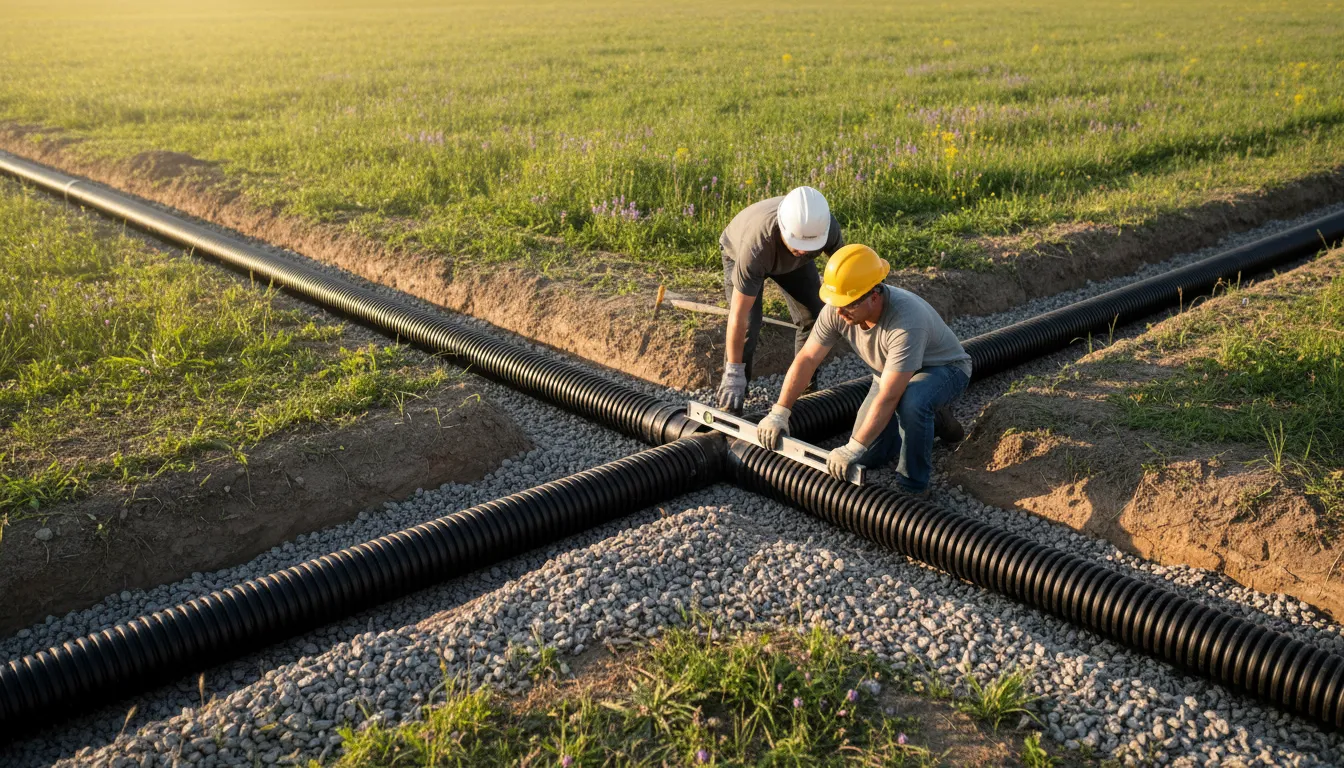
The drain field is a network of perforated pipes buried in trenches filled with gravel or other aggregate. After solids settle in the septic tank, the liquid effluent flows into this field, where it slowly percolates into the soil for final treatment. In League City, the most common indicators that your leach field needs attention include:
- Persistently soggy or spongy ground over the drain field area, even during dry weather.
- Sewage odors near the tank, drain field, or inside the home.
- Slowly draining sinks, toilets, and showers.
- Unusually green and lush grass over the field, indicating a nutrient surge from surfacing effluent.
- Standing water or surfacing sewage in your yard.
If you notice any of these signs, a professional inspection is the crucial first step to determine if a repair or full replacement is necessary.
League City and Texas Regulatory Landscape
All work on septic system drain fields in Texas is governed by the Texas Commission on Environmental Quality (TCEQ) under Title 30, Chapter 285 of the Texas Administrative Code (30 TAC §285). League City and Galveston County act as the local permitting authorities, enforcing these state standards.
A core rule for homeowners is that a permit is required for any repair that involves replacing or altering the drain field 1. The only exception is for certain emergency repairs that don't involve excavating the field, and even those must be reported to the permitting authority within 72 hours. Working without a permit can result in fines and an order to remove the unapproved system.
The process is overseen by licensed professionals. A site evaluator or professional engineer must design the system based on a mandatory site evaluation, and the work itself must be performed by a licensed installer. Final inspections by the city or county are required before the system can be covered.
The Critical Role of Soil in League City
Soil type is the single most important factor in designing a functional drain field. League City's coastal location presents a significant challenge: much of the area has heavy clay soil with a naturally high water table.
Clay soil has very small pores, which severely limits its permeability. This means wastewater percolates very slowly, dramatically increasing the risk of drain field failure and groundwater contamination. A standard gravel-and-pipe trench system often cannot function properly in these conditions.
Consequently, many properties in League City require an engineered aerobic treatment system (ATS) instead of a conventional septic system. Aerobic systems use oxygen to break down waste more efficiently, producing a higher quality effluent that can be treated in challenging soils or even sprayed over the ground surface in some cases. The mandatory site evaluation will determine your soil's classification, percolation rate, slope, and groundwater depth to dictate the legally approved system type for your property 2.
The Drain Field Repair and Replacement Process
Addressing a failed absorption field is a multi-step process that ensures the new system is safe, legal, and long-lasting.
- Professional Site Evaluation and Inspection: A licensed professional will inspect your entire system. They look for the visual signs of failure, may perform a soil test, and assess the tank's condition to provide a complete diagnosis 3 4.
- System Design and Permit Application: Based on the evaluation, a licensed designer creates a plan that complies with TCEQ regulations for your specific soil and lot. This plan, along with the permit application, is submitted to League City or Galveston County for review and approval.
- Excavation and Installation: Once permitted, the old, failed drain field is excavated. For a replacement, new trenches are dug according to the engineered plan-typically 18 inches to 3 feet deep with specific spacing requirements 5. The new piping and aggregate are installed.
- Final Inspection and Approval: Before the new trenches are covered, a city or county inspector must visit the site to verify the installation matches the permitted design. Only after passing this inspection can the field be backfilled and the yard restored 6.
Find the perfect drain field repair companies for your needs
Get personalized recommendations and expert advice
Cost Considerations for Drain Field Work
The cost for drain field repair or replacement in League City varies widely based on system type, soil conditions, and yard restoration needs. It's important to budget for both professional services and permitting.
- Design and Permitting: The initial site evaluation, soil testing, engineering design, and permit fees typically range from $500 to $3,000.
- Drain Field Replacement: The core work of removing an old leach field and installing a new one can range from $5,500 to $21,500 or more. The high end of this range often involves moving the field to a new location on the property or dealing with significant access challenges.
- Full Aerobic System Installation: If your property requires an engineered aerobic system, the total cost for a full system replacement (tank and field) often falls between $10,000 and $20,000 7.
- Yard Restoration: After installation, you'll need to regrade and re-sod the disturbed area. Regrading can cost $1,000 to $3,300, and new sod generally runs $1 to $2 per square foot 8 9.
Always get detailed, written estimates from multiple licensed installers that break down all expected costs, including permits, installation, and restoration.
Maintaining Your New Drain Field
Protecting your investment is key. Once your new leach field is installed, proper maintenance is non-negotiable. This includes regular septic tank pumping (every 3-5 years, typically), avoiding pouring grease or chemicals down drains, and never driving or parking heavy vehicles over the field area. For aerobic systems, regular maintenance visits by a licensed operator are a legal requirement to ensure the mechanical components function correctly 10 11.
Choosing the right professional is critical. Look for a contractor licensed by the TCEQ with extensive experience installing systems in the heavy clay soils of the Galveston County area. They should be fully versed in local permit processes and able to provide references from past projects in League City.
Frequently asked questions
Sources
Footnotes
-
Are There Regulations or Guidelines for Septic Tank Drain Field ... - https://weebeewasteservices.com/are-there-regulations-or-guidelines-for-septic-tank-drain-field-maintenance-in-texas/ ↩
-
SEPTIC SYSTEM LAWS IN TEXAS - https://www.terseptic.com/posts/septic-systems-its-the-law ↩
-
Can a Septic Drain Field Be Repaired - https://www.benjaminfranklinplumbing.com/league-city/blog/2025/april/can-a-septic-drain-field-be-repaired-key-considerations-and-solutions/ ↩
-
Septic Inspection, League City, TX - https://texassepticsewer.com/residential-septic-league-city-tx/septic-inspection/ ↩
-
Texas Septic System Regulations - https://dillonseptic.com/texas-septic-system-regulations/ ↩
-
Wastewater | The League City Official Website! - https://www.leaguecitytx.gov/2163/Wastewater ↩
-
Aerobic Septic System Cost in Texas (Updated 2026) - https://dillonseptic.com/aerobic-septic-system-cost-in-texas/ ↩
-
Septic Drain Field Replacement Cost - https://dillonseptic.com/septic-drain-field-replacement-cost/ ↩
-
Cost to Replace Septic Tank and Drain Field [2026 Data] | Angi - https://www.angi.com/articles/how-much-new-drain-fields-foot.htm ↩
-
Advice for an Owner of an On-Site Sewage Facility (Septic ... - https://www.tceq.texas.gov/permitting/ossf/ossfadvice.html ↩
-
Septic Tank Laws in Texas - https://dillonseptic.com/septic-tank-laws-in-texas/ ↩